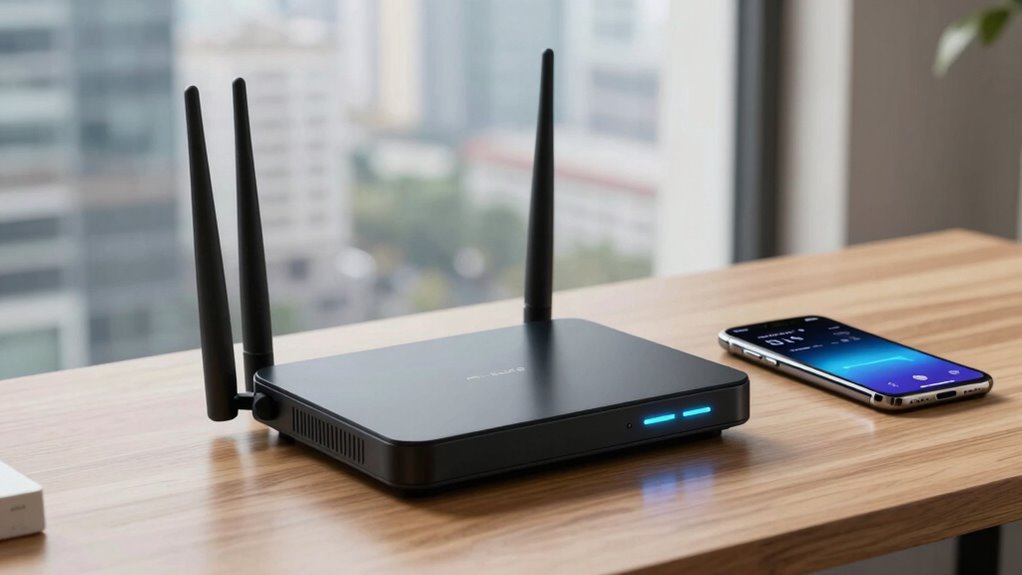
An LTE router with failover keeps a connection available when wired internet drops, but the right choice depends on how much backup control and coverage you need. My best overall pick is the GL.iNet GL-X2000 Spitz Plus, whose dual-SIM design and Wi-Fi 6 make it a flexible fit for many small networks. For a managed business setup, the Cradlepoint E3000 pairs 5G with LTE fallback, while the Ubiquiti UniFi LTE Backup Pro is aimed at UniFi networks seeking a simpler backup path. The main tradeoffs are automatic failover features, carrier flexibility, management overhead, and whether you need Wi-Fi or industrial connectivity. Read on for the full comparison and guidance on matching a router to your backup plan.

Get privacy and security gear delivered free with Prime
- Fast, free delivery on millions of items
- Prime Video, Amazon Music and more included
- Member-only deals all year
Key Takeaways
- Dual SIM matters when carrier diversity is part of the plan: the GL-X2000, GL-XE3000, and LINOVISION model offer two SIM slots, while many other picks rely on one.
- Failover depends on the whole setup: check how the router detects a primary connection outage and switches back, rather than treating a SIM slot as proof of automatic WAN failover.
- Business management changes the ranking: Cradlepoint‘s E3000 combines 5G, LTE fallback, and a NetCloud plan, making it a stronger fit for managed branches than basic SIM routers.
- Industrial models trade home-network features for deployment tools: Teltonika, LINOVISION, and InHand options suit remote equipment and wired integrations better than buyers seeking an easy household Wi-Fi upgrade.
- Battery backup is a distinct need: the GL-XE3000 includes a 6400mAh battery, giving it a portable role that fixed routers such as the RUTM50 do not fill.
| Hitron D60 5G Cellular Router with SIM Card Slot | AX3000 WiFi 6 |  | Best Overall for Home 5G Failover | Cellular: 5G NSA/SA and 4G LTE | Maximum 5G download: 3.4 Gbps (NSA) | Wi-Fi: Wi-Fi 6, dual-band 2.4 GHz and 5 GHz | VIEW ON AMAZON | See Our Full Breakdown |
| GL.iNet Spitz (GL-X750V2) 4G LTE VPN Router | 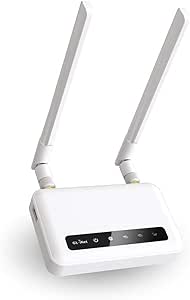 | Best for VPN and Network Tinkering | Cellular module: Quectel EC25-AFFA CAT4 | Carrier compatibility: AT&T and T-Mobile | Average 4G speed: 15–20 Mbps | VIEW ON AMAZON | See Our Full Breakdown |
| Dual-Band 4G LTE Router with SIM Card Slot |  | Best Value for Basic Broadband Failover | Cellular: 4G LTE | Maximum cellular download: 150 Mbps | Maximum cellular upload: 50 Mbps | VIEW ON AMAZON | See Our Full Breakdown |
| LINOVISION Industrial 4G LTE Wi-Fi Router with Dual SIM and RS485 |  | Best for Industrial Dual-SIM Failover | Cellular: 4G LTE Cat 4 | Maximum cellular speed: 150 Mbps download and 50 Mbps upload | SIM slots: 2 | VIEW ON AMAZON | See Our Full Breakdown |
| Ubiquiti UniFi LTE Backup Pro |  | Best for Existing UniFi Networks | Gateway compatibility: UniFi Cloud Gateway or UniFi Gateway | Mobile network: AT&T LTE | SIM: Removable data-only nano-SIM | VIEW ON AMAZON | See Our Full Breakdown |
| Cradlepoint E3000 5G Router with LTE Fallback and 1-Year NetCloud Enterprise Branch Essentials Plan |  | Best Enterprise Branch Pick | Modem: 5G with Cat20 LTE fallback | Wi-Fi: Wi-Fi 6, dual-band | Max throughput: 940 Mbps | VIEW ON AMAZON | See Our Full Breakdown |
| GL.iNet GL-X2000 Spitz Plus 4G LTE CAT 12 Wi-Fi 6 Dual-SIM Router (North America) |  | Best Value for Dual-SIM Failover | Cellular: 4G LTE Cat 12 | SIM: Dual-SIM (single standby) | Wi-Fi: Wi-Fi 6, 574Mbps + 2402Mbps | VIEW ON AMAZON | See Our Full Breakdown |
| GL.iNet GL-XE3000 Puli AX 5G Router with Dual SIM and 6400mAh Battery |  | Best Portable Failover Solution | Cellular: 5G (NSA/SA), 4G LTE | SIM: Dual-SIM (single standby) | Battery: 6400mAh, up to 8 hours | VIEW ON AMAZON | See Our Full Breakdown |
| Cradlepoint IBR600C 4G LTE Cat 4 Router with 3G Fallback |  | Best for Vehicle and Mobile Deployments | Cellular: 4G LTE Cat 4 with 3G fallback | Ports: 3 (100 Mbps LAN) | Max upstream: 50 Mbps | VIEW ON AMAZON | See Our Full Breakdown |
| N300 4G LTE Wi-Fi Router with SIM Card Slot |  | Best Budget Backup Router | Cellular: 4G LTE Cat 4, up to 150 Mbps | Wi-Fi: N300, up to 300 Mbps | LTE bands: B2/B3/B4/B5/B7/B8/B12/B13/B17/B25/B26/B66/B41 | VIEW ON AMAZON | See Our Full Breakdown |
| GL.iNet GL-X3000 Spitz AX 5G Cellular Router |  | Best for Flexible 5G Failover | Cellular support: 5G NSA/SA, 4G LTE, and 3G | SIM: Dual SIM, single standby | Wi-Fi: Wi-Fi 6; 574 Mbps (2.4 GHz) + 2402 Mbps (5 GHz) | VIEW ON AMAZON | See Our Full Breakdown |
| Teltonika RUT241 Industrial 4G LTE Cat 4 Router with Wi-Fi and Dual Ethernet |  | Best Compact Industrial LTE Pick | Cellular: 4G LTE Cat 4 with 3G and 2G fallback | Wi-Fi: Dual-band 2.4 GHz, 802.11b/g/n (Wi-Fi 4) | Ethernet: 2 ports, 10/100 Mbps | VIEW ON AMAZON | See Our Full Breakdown |
| Teltonika RUTM50 5G Industrial Router |  | Best for Industrial 5G Resilience | Cellular: 5G | SIM: Dual SIM with failover and load balancing | Wi-Fi: Wi-Fi 5 | VIEW ON AMAZON | See Our Full Breakdown |
| TUOSHI LT16S AC1200 4G LTE Wi-Fi 5 Router |  | Best for Home Broadband Failover | Cellular: 4G LTE Cat 4; download up to 150 Mbps, upload up to 50 Mbps | Compatible networks: AT&T and T-Mobile | Wi-Fi: Wi-Fi 5 (802.11ac), dual-band AC1200 up to 1167 Mbps | VIEW ON AMAZON | See Our Full Breakdown |
| InHand Networks IR302 Industrial IoT 4G LTE VPN Cellular Router |  | Best for Unattended Remote Sites | Cellular: 4G LTE Cat 4 | SIM: Dual SIM with carrier failover | Carrier support: Verizon, AT&T, and T-Mobile in North America | VIEW ON AMAZON | See Our Full Breakdown |
| lte router with failover | Wi-Fi | Cellular |
|---|---|---|
| Hitron D60 5G Cellular Router | Wi-Fi 6, dual-band 2.4 GHz and 5 GHz | 5G NSA/SA and 4G LTE |
| GL.iNet Spitz | Dual-band; 300 Mbps (2.4 GHz) + 433 Mbps (5 GHz) | — |
| Dual-Band 4G LTE Router with S | Dual-band 2.4 GHz and 5 GHz | 4G LTE |
| LINOVISION Industrial 4G LTE W | 2.4 GHz 802.11b/g/n; access point and client modes | 4G LTE Cat 4 |
| Ubiquiti UniFi LTE Backup Pro | — | — |
| Cradlepoint E3000 5G Router wi | Wi-Fi 6, dual-band | — |
| GL.iNet GL-X2000 Spitz Plus 4G | Wi-Fi 6, 574Mbps + 2402Mbps | 4G LTE Cat 12 |
| GL.iNet GL-XE3000 Puli AX 5G R | Wi-Fi 6, 574Mbps + 2402Mbps | 5G (NSA/SA), 4G LTE |
| Cradlepoint IBR600C 4G LTE Cat | — | 4G LTE Cat 4 with 3G fallback |
| N300 4G LTE Wi-Fi Router with | N300, up to 300 Mbps | 4G LTE Cat 4, up to 150 Mbps |
| GL.iNet GL-X3000 Spitz AX 5G C | Wi-Fi 6; 574 Mbps (2.4 GHz) + 2402 Mbps (5 GHz) | — |
| Teltonika RUT241 Industrial 4G | Dual-band 2.4 GHz, 802.11b/g/n (Wi-Fi 4) | 4G LTE Cat 4 with 3G and 2G fallback |
| Teltonika RUTM50 5G Industrial | Wi-Fi 5 | 5G |
| TUOSHI LT16S AC1200 4G LTE Wi- | Wi-Fi 5 (802.11ac), dual-band AC1200 up to 1167 Mbps | 4G LTE Cat 4; download up to 150 Mbps, upload up to 50 Mbps |
| InHand Networks IR302 Industri | 802.11b/g/n | 4G LTE Cat 4 |
More Details on Our Top Picks
Hitron D60 5G Cellular Router with SIM Card Slot | AX3000 WiFi 6
5G speed and Wi-Fi 6 capacity make the Hitron D60 the strongest fit here for a home or small office that wants cellular backup without settling for a basic LTE connection. It supports 5G and LTE, with failover capability, and its carrier certification covers T-Mobile, AT&T, and US Cellular. Compared with the Dual-Band 4G LTE Router with SIM Card Slot, the D60 has a faster cellular ceiling and broader stated network options, though that LTE model includes more Ethernet ports and supports up to 32 devices. The tradeoff is its three-month limited warranty and reliance on a compatible carrier SIM or eSIM. I would choose it for fast home backup, but skip it if long warranty coverage or a more industrial setup matters more.
Pros:- Supports 5G and LTE cellular connectivity with failover capability
- Wi-Fi 6 and 4×4 5 GHz MIMO support busy home networks
- Certified for T-Mobile, AT&T, and US Cellular
- Supports Nano SIM and eSIM
Cons:- Three-month limited warranty is short
- Requires service and a compatible SIM or eSIM from a certified carrier
Best for: Households and small offices that want 5G-capable cellular failover and Wi-Fi 6 for multiple devices
Not ideal for: Buyers who need a long warranty, industrial interfaces, or a router with extensive wired port options
- Cellular:5G NSA/SA and 4G LTE
- Maximum 5G download:3.4 Gbps (NSA)
- Wi-Fi:Wi-Fi 6, dual-band 2.4 GHz and 5 GHz
- Maximum Wi-Fi speed:5.4 Gbps
- MIMO:4×4 on 5 GHz
- SIM support:Nano SIM and eSIM
- Certified carriers:T-Mobile, AT&T, and US Cellular
- LAN:Gigabit Ethernet
- Security:WPA3
Our verdict“Choose the Hitron D60 for fast, Wi-Fi 6 home or SOHO connectivity with 5G failover, provided its short warranty is acceptable.”
GL.iNet Spitz (GL-X750V2) 4G LTE VPN Router
The GL.iNet Spitz makes the most sense when VPN control and OpenWrt flexibility matter more than cellular speed. OpenVPN and WireGuard are built in, and the software offers room to configure a network beyond the basics. That gives it a different role from the Hitron D60, which is the better fit for 5G speeds and modern home Wi-Fi. The Spitz is a 4G LTE Cat 4 model with stated average speeds of 15–20 Mbps, so it is better suited to modest backup use than bandwidth-heavy work. Two Ethernet ports, USB, and microSD expansion add useful options, but the Ethernet links top out at 100 Mbps. I would shortlist it for a technically confident buyer who values tunability; its regional cellular restrictions and modest throughput make it a poor pick for buyers seeking simple, fast broadband replacement.
Pros:- Includes OpenVPN and WireGuard
- OpenWrt/LEDE software can be extended and configured
- Two SMA antennas and dual-band Wi-Fi
- MicroSD slot supports expansion up to 128 GB
Cons:- Average stated 4G speed is 15–20 Mbps
- Ethernet ports are limited to 10/100 Mbps
- Cellular coverage is restricted in some regions
Best for: Technically confident home users or remote workers who want configurable OpenWrt networking and built-in VPN options
Not ideal for: Buyers needing 5G speeds, gigabit wired connections, or cellular compatibility outside supported regions
- Cellular module:Quectel EC25-AFFA CAT4
- Carrier compatibility:AT&T and T-Mobile
- Average 4G speed:15–20 Mbps
- Wi-Fi:Dual-band; 300 Mbps (2.4 GHz) + 433 Mbps (5 GHz)
- Software:OpenWrt/LEDE
- VPN:OpenVPN and WireGuard
- Ports:USB 2.0 and two 10/100 Mbps Ethernet
- Storage expansion:MicroSD up to 128 GB
- Warranty:2 years
Our verdict“Pick the Spitz when VPN features and OpenWrt control outweigh the need for high cellular throughput or gigabit Ethernet.”
Dual-Band 4G LTE Router with SIM Card Slot
For a household that wants straightforward LTE fallback and several wired connections, this router covers the essentials: it can switch to 4G when broadband drops, offers four Ethernet ports, and supports up to 32 connected devices. Compared with the Hitron D60, it trades 5G capability and Wi-Fi 6 for a simpler LTE setup; compared with the GL.iNet Spitz, it offers more Ethernet ports but fewer stated network-tuning features. Its 150 Mbps cellular download limit is a practical ceiling for backup use, not a promise of real-world speed. Carrier compatibility is limited to AT&T and T-Mobile, and the SIM card is not included, so buyers need to arrange service separately. I would favor it for a modest home network where port count matters more than advanced controls.
Pros:- Can switch to 4G when broadband disconnects
- Four Ethernet ports support several wired devices
- Dual-band Wi-Fi supports 2.4 GHz and 5 GHz clients
- Supports up to 32 connected devices
Cons:- Compatible only with AT&T and T-Mobile
- SIM card is not included
- LTE download speed is capped at a stated 150 Mbps
Best for: Households with an existing broadband line, several wired devices, and a need for basic AT&T or T-Mobile LTE backup
Not ideal for: Buyers who need 5G, carrier flexibility beyond AT&T and T-Mobile, or VPN and OpenWrt controls
- Cellular:4G LTE
- Maximum cellular download:150 Mbps
- Maximum cellular upload:50 Mbps
- Wi-Fi:Dual-band 2.4 GHz and 5 GHz
- Maximum Wi-Fi speed:Up to 1200 Mbps
- Connected devices:Up to 32
- Ethernet ports:1 WAN and 4 Ethernet
- Compatible carriers:AT&T and T-Mobile
- SIM card:Not included
Our verdict“Choose this model for basic LTE broadband failover with multiple wired connections, if its carrier limits suit your service.”
LINOVISION Industrial 4G LTE Wi-Fi Router with Dual SIM and RS485
The LINOVISION is built for installations where connection continuity and equipment interfaces matter more than fast Wi-Fi. Dual SIM slots and automatic network failover can help keep remote monitoring online when one cellular path is unavailable, while RS485 and digital I/O let it connect with industrial and IoT equipment. Its die-cast aluminum enclosure and stated operating range from -40°F to 158°F also set it apart from the home-focused Dual-Band 4G LTE Router. The tradeoff is older 2.4 GHz 802.11b/g/n Wi-Fi and 10/100 Mbps LAN, so it is not designed for a high-speed household network. SIM cards and data plans are separate. I would choose it for remote or harsh-site deployments that can use its interfaces and dual-SIM failover, not as a general home router.
Pros:- Dual SIM slots with automatic network failover
- RS485 and digital I/O support industrial equipment
- Wide stated operating temperature range
- Supports multiple VPN protocols and includes a two-year cloud subscription
Cons:- Wi-Fi is limited to 2.4 GHz 802.11b/g/n
- LAN ports are limited to 10/100 Mbps
- SIM cards and data plans are sold separately
Best for: Industrial and IoT operators who need dual-SIM failover, RS485 connectivity, and operation across a wide temperature range
Not ideal for: Home users seeking fast dual-band Wi-Fi, high-speed wired networking, or a ready-to-use cellular plan
- Cellular:4G LTE Cat 4
- Maximum cellular speed:150 Mbps download and 50 Mbps upload
- SIM slots:2
- LTE bands:B2/B4/B5/B12/B13/B14/B66/B71
- Wi-Fi:2.4 GHz 802.11b/g/n; access point and client modes
- Interfaces:RS485, digital I/O, and 3 ports
- LAN:10/100 Mbps
- Power input:9–48 V DC
- Operating temperature:-40°F to 158°F
Our verdict“Choose LINOVISION for industrial deployments that need dual-SIM failover and wired equipment interfaces, rather than fast home Wi-Fi.”
Ubiquiti UniFi LTE Backup Pro
The UniFi LTE Backup Pro is a focused add-on for buyers who already run a compatible UniFi gateway and want a separate AT&T LTE path during an ISP outage. Its role is narrower than the Hitron D60: it provides LTE backup for a UniFi network rather than serving as a general-purpose 5G router. Two Gigabit Ethernet ports, PoE input and output, and a small status display make it easier to place and monitor within a compatible setup. The main tradeoff is ecosystem dependence: it requires a UniFi Cloud Gateway or UniFi Gateway and an AT&T data-only nano-SIM. Its listed maximum upstream transfer rate is 150 Mbps, and the provided specs do not state a download rate. I would pick it for an existing UniFi installation, but skip it if you need a standalone router or carrier choice.
Pros:- Provides LTE backup for compatible UniFi gateways during ISP outages
- Gigabit Ethernet ports include PoE+ input and PoE output
- Status display provides local device information
- Internal LTE antenna with an option for an external antenna
Cons:- Requires a compatible UniFi gateway
- Requires an AT&T data-only nano-SIM
- Listed maximum upstream rate is 150 Mbps; download speed is not specified
Best for: Small offices and home network owners already using a compatible UniFi gateway who want dedicated AT&T LTE backup
Not ideal for: Buyers without a compatible UniFi gateway or those who need a standalone router, 5G, or a choice of cellular carrier
- Gateway compatibility:UniFi Cloud Gateway or UniFi Gateway
- Mobile network:AT&T LTE
- SIM:Removable data-only nano-SIM
- Ethernet:Two Gigabit RJ45 ports
- Power over Ethernet:PoE+ input and PoE output
- Maximum upstream transfer rate:150 Mbps
- Antenna:Internal LTE antenna; RP-SMA connector for optional external antenna
- Status display:1.54-inch display
- Control:App
Our verdict“Choose the UniFi LTE Backup Pro if you already use a compatible UniFi gateway and want an AT&T LTE backup link managed through that setup.”
Cradlepoint E3000 5G Router with LTE Fallback and 1-Year NetCloud Enterprise Branch Essentials Plan
Most routers in this roundup treat failover as a feature; the E3000 treats it as an ecosystem. The 5G modem with Cat20 LTE fallback means a branch office keeps running at full speed on 5G and drops to a still-usable LTE tier only when 5G disappears — a far softer landing than the Cat 4 fallback you get on the Cradlepoint IBR600C. The bundled 1-year NetCloud plan adds remote fleet management that GL.iNet’s OpenWrt-based approach can’t match for IT teams who need policy enforcement across sites. The tradeoffs are real: a single LAN port and a single antenna make this awkward as a wiring hub, so it works best as a managed gateway in front of your own switch and Wi-Fi. You’re paying a premium for manageability, not port density.
Pros:- 5G primary with Cat20 LTE fallback keeps branch speeds usable during outages
- Includes 1-year NetCloud Enterprise Branch Essentials for remote, centralized management
- Wi-Fi 6 and a 5 Gbps LAN port provide modern local throughput
- Purpose-built enterprise security and OS with app-based control
Cons:- Only one LAN port forces an external switch for wired devices
- Single-antenna design limits wireless coverage compared to multi-antenna rivals
- Ongoing subscription cost after the first year
Best for: IT managers running multiple branch or retail locations who need centrally managed 5G-with-LTE-failover connectivity
Not ideal for: Home users or small offices — the NetCloud subscription model and single LAN port add cost and complexity they won’t use
- Modem:5G with Cat20 LTE fallback
- Wi-Fi:Wi-Fi 6, dual-band
- Max throughput:940 Mbps
- LAN port:1x 5 Gbps
- Security:WPA2-PSK
- Management:NetCloud (1-year Essentials plan included)
- OS:Cradlepoint Embedded OS
Our verdict“This is the pick for businesses that need carrier-grade failover with cloud management across sites — not for anyone wanting a simple plug-and-play home backup.”
GL.iNet GL-X2000 Spitz Plus 4G LTE CAT 12 Wi-Fi 6 Dual-SIM Router (North America)
The Spitz Plus nails the core failover formula most buyers actually need: two SIM slots, multi-WAN input, and Cat 12 LTE — fast enough that a failover event doesn’t feel like a downgrade. Compared with the budget N300 4G LTE router, it trades raw port count for Wi-Fi 6, dual-SIM redundancy, and pre-installed OpenVPN and WireGuard, which matters if your backup connection carries sensitive traffic. Its four SMA connectors let you add external antennas for weak-signal locations, something the battery-powered Puli AX can’t match in deployment flexibility. The catch is scope: it’s certified for AT&T and T-Mobile only in North America, and the single-standby SIM design means one connection at a time, not true simultaneous bonding. VPN throughput is also modest on OpenVPN, so WireGuard is the practical choice.
Pros:- Dual-SIM slots enable automatic failover between carriers
- Wi-Fi 6 with combined speeds up to 3000Mbps for local devices
- Pre-installed WireGuard and OpenVPN with no licensing fees
- Four SMA connectors for external antenna upgrades in weak-signal areas
Cons:- Limited to AT&T and T-Mobile in North America
- Dual-SIM is single standby, not simultaneous
- Real-world cellular speeds often fall well below Cat 12 maximums
Best for: Home offices and small businesses wanting affordable dual-SIM cellular failover with VPN security on AT&T or T-Mobile
Not ideal for: Verizon customers or anyone outside North America — the modem’s carrier and regional restrictions rule it out
- Cellular:4G LTE Cat 12
- SIM:Dual-SIM (single standby)
- Wi-Fi:Wi-Fi 6, 574Mbps + 2402Mbps
- VPN:OpenVPN (30 Mbps), WireGuard (190 Mbps)
- Antennas:4x SMA connectors
- WAN modes:Ethernet, repeater, tethering, cellular
- Region:North America only
Our verdict“The smartest budget-conscious failover router here for AT&T or T-Mobile users who want dual-SIM redundancy plus VPN without subscription costs.”
GL.iNet GL-XE3000 Puli AX 5G Router with Dual SIM and 6400mAh Battery
Failover usually means network redundancy, but the Puli AX adds power redundancy too: a 6400mAh battery keeps the router — and your internet — alive for up to 8 hours when the outage takes out electricity as well as broadband. That’s a scenario neither the Spitz Plus nor the Cradlepoint E3000 addresses without external UPS hardware. With 5G, dual-SIM automatic failover, and multi-WAN modes, it layers three levels of backup into a device you can toss in a bag. The OpenWrt firmware and 5,000+ plug-ins give tinkerers room the Cradlepoint’s closed ecosystem denies them. Tradeoffs: the eSIM must be purchased separately, it’s certified mainly for AT&T and T-Mobile, and as a portable unit it sacrifices the antenna flexibility of the Spitz Plus’s four SMA connectors.
Pros:- Built-in 6400mAh battery delivers up to 8 hours of uptime during power cuts
- 5G with dual-SIM automatic failover for layered redundancy
- Fast WireGuard throughput up to 300 Mbps for encrypted traffic
- Customizable OpenWrt firmware with over 5,000 plug-ins
Cons:- Physical eSIM must be purchased separately
- Carrier certification limited to AT&T and T-Mobile with regional restrictions
- Advertised maximum speeds rarely materialize in real network conditions
Best for: Remote workers, field teams, and event coordinators who need 5G failover that survives both internet and power outages
Not ideal for: Fixed installations wanting maximum antenna flexibility and port density — a stationary router like the Spitz Plus serves better
- Cellular:5G (NSA/SA), 4G LTE
- SIM:Dual-SIM (single standby)
- Battery:6400mAh, up to 8 hours
- Wi-Fi:Wi-Fi 6, 574Mbps + 2402Mbps
- VPN:OpenVPN (150 Mbps), WireGuard (300 Mbps)
- WAN modes:Ethernet, repeater, cellular, tethering
- Firmware:OpenWrt-based
Our verdict“The only pick here that fails over across network, SIM, and power simultaneously — ideal for anyone whose work moves or whose outages cut the lights.”
Cradlepoint IBR600C 4G LTE Cat 4 Router with 3G Fallback
Where the E3000 is built for branch offices, the IBR600C is built to be bolted into things that move. Its DIN-rail, wall, and vehicle mounting options, compact 16-ounce body, and integrated Cat 4 modem with 3G fallback make it a natural fit for vans, kiosks, and remote cabinets — the same territory the Teltonika RUT241 plays in, but with Cradlepoint’s cloud management behind it. WAN failover, VPN, and firewall come standard, so a fixed-line drop in a mobile depot flips cleanly to cellular. Be clear-eyed about the aging specs: Cat 4 speeds top out around 150 Mbps, the 100 Mbps LAN ports are dated, and the Wi-Fi side is essentially legacy. Compared with the Spitz Plus’s Cat 12 modem, this is a reliability-and-mounting story, not a speed story.
Pros:- Vehicle, DIN-rail, and wall mounting for genuinely mobile installs
- Integrated Cat 4 modem with 3G and WAN failover built in
- Enterprise VPN and firewall included out of the box
- Cloud management support across dispersed deployments
Cons:- Cat 4 cellular speeds are modest by current standards
- 100 Mbps LAN ports and 802.11b-era Wi-Fi limit local performance
- 3G fallback is increasingly obsolete as carriers shut down legacy networks
Best for: Fleet operators, kiosk builders, and field-service teams needing a rugged, mountable failover router with cloud management
Not ideal for: Anyone prioritizing throughput — Cat 4 cellular, 100 Mbps LAN ports, and legacy Wi-Fi make it slow by modern standards
- Cellular:4G LTE Cat 4 with 3G fallback
- Ports:3 (100 Mbps LAN)
- Max upstream:50 Mbps
- Security:VPN, firewall, WAN failover
- Mounting:Wall, DIN rail, vehicle
- Weight:16 oz
- OS:Cradlepoint OS
Our verdict“Choose this for mounting brackets and fleet manageability rather than speed — it’s the mobile-install workhorse of the group.”
N300 4G LTE Wi-Fi Router with SIM Card Slot
Sometimes failover just means “cheap second internet,” and this N300 router delivers exactly that. It’s the only sub-enterprise option here with four Ethernet ports and support for up to 32 devices, so a small office can keep wired gear online when the primary line dies. Its broad LTE band support covers AT&T and T-Mobile cleanly, and the four high-gain antennas plus mesh capability give it better coverage than its price suggests. Compared with the GL.iNet Spitz Plus, you give up Wi-Fi 6, dual-SIM redundancy, and serious VPN throughput — this is single-SIM, single-carrier failover with aging N300 Wi-Fi. Verizon users face a fiddly workaround, needing TTL settings of 64 or 65 depending on the plan. For a cabin, backup line, or light remote site, those compromises are acceptable.
Pros:- Four Ethernet ports and support for up to 32 connected devices
- Wide LTE band compatibility with AT&T and T-Mobile
- Four high-gain antennas with mesh capability for broader coverage
- WPA3 and OpenVPN support at a budget-friendly tier
Cons:- Verizon use requires manual TTL configuration depending on the data plan
- N300 Wi-Fi and Cat 4 modem are dated for modern bandwidth demands
- No dual-SIM or automatic carrier failover
Best for: Budget-conscious buyers who need simple single-SIM cellular internet or a low-cost broadband backup for a small space
Not ideal for: Anyone needing genuine multi-carrier failover or fast encrypted traffic — no dual-SIM, dated Wi-Fi, and weak VPN performance
- Cellular:4G LTE Cat 4, up to 150 Mbps
- Wi-Fi:N300, up to 300 Mbps
- LTE bands:B2/B3/B4/B5/B7/B8/B12/B13/B17/B25/B26/B66/B41
- Ethernet ports:4
- Antennas:4x high-gain
- Supported devices:Up to 32
- Security:L2TP, PPTP, OpenVPN, WPA3
Our verdict“A sensible, no-frills backup line for light-duty locations — just don’t expect redundancy or speed beyond the basics.”
GL.iNet GL-X3000 Spitz AX 5G Cellular Router
The GL-X3000 Spitz AX suits buyers who want cellular backup to do more than keep basic devices online. Its 5G support, dual SIM, and multi-WAN failover give it several paths to maintain a connection, while Wi-Fi 6 can serve a busy home or RV. Compared with the 4G-only TUOSHI LT16S, it offers a newer cellular generation and stronger wireless capabilities, but costs more in setup complexity: the SIMs operate in single standby, and using eSIM requires a separate physical eSIM card. OpenWrt customization and built-in OpenVPN and WireGuard make it a better fit for users who want network control than for someone seeking a plug-and-forget backup box. Detachable antennas help with placement, though actual cellular speeds depend on coverage and carrier conditions.
Pros:- 5G, 4G LTE, and 3G support with dual-SIM failover
- Wi-Fi 6 supports faster local wireless connections than the Wi-Fi 5 TUOSHI LT16S
- OpenVPN and WireGuard are included
- Six detachable antennas and OpenWrt allow flexible placement and customization
Cons:- Dual SIM is single standby rather than simultaneous
- Physical eSIM card is sold separately
- OpenWrt customization may be more involved than a basic router setup
Best for: RV owners and rural households who want 5G cellular backup, flexible antenna placement, and hands-on network control
Not ideal for: Buyers who want a simple LTE-only failover router or need two SIMs active at the same time
- Cellular support:5G NSA/SA, 4G LTE, and 3G
- SIM:Dual SIM, single standby
- Wi-Fi:Wi-Fi 6; 574 Mbps (2.4 GHz) + 2402 Mbps (5 GHz)
- Antennas:6 detachable
- Firmware:OpenWrt v21.02
- VPN:OpenVPN up to 150 Mbps; WireGuard up to 300 Mbps
- Carrier certification:T-Mobile and AT&T
- eSIM:Supported with separately sold physical eSIM card
Our verdict“Choose the GL-X3000 if you want a customizable 5G router with multiple failover paths and can manage its more involved setup.”
Teltonika RUT241 Industrial 4G LTE Cat 4 Router with Wi-Fi and Dual Ethernet
The Teltonika RUT241 is aimed at compact installations where predictable LTE backup and remote administration matter more than fast Wi-Fi or high-throughput Ethernet. It combines LTE Cat 4 with 3G and 2G fallback, WAN failover, two Ethernet ports, and compatibility with Teltonika RMS, giving an installer ways to monitor distributed equipment without frequent site visits. Compared with the more rugged InHand Networks IR302, the RUT241 is smaller and lighter, but the supplied data does not list the IR302’s digital I/O or temperature range for the RUT241. Its Wi-Fi 4 and 10/100 Mbps ports are limiting for modern office traffic, so I’d place it at a remote kiosk, controller, or CCTV site rather than as a primary home router. It also offers no stated dual-SIM capability.
Pros:- LTE Cat 4 fallback to 3G and 2G
- WAN failover and Teltonika RMS compatibility support remote operations
- Two Ethernet ports and a Wi-Fi hotspot in a compact unit
- RutOS is OpenWrt-based
Cons:- Wi-Fi 4 is an older standard
- 10/100 Mbps Ethernet ports limit wired throughput
- No dual-SIM failover is specified
Best for: Installers connecting a small remote IoT, vending, or CCTV site that needs LTE WAN backup and centralized monitoring
Not ideal for: Businesses that need dual-SIM carrier failover, gigabit wired speeds, or modern high-speed Wi-Fi
- Cellular:4G LTE Cat 4 with 3G and 2G fallback
- Wi-Fi:Dual-band 2.4 GHz, 802.11b/g/n (Wi-Fi 4)
- Ethernet:2 ports, 10/100 Mbps
- Maximum data rate:150 Mbps; upstream up to 50 Mbps
- Remote management:Teltonika RMS compatible
- Operating system:RutOS, OpenWrt-based Linux
- Power:30 V DC
- Dimensions and weight:2.91 × 3.27 × 0.98 in; 125 g
Our verdict“Pick the RUT241 for a compact, remotely managed LTE backup at a modest industrial site, provided its single cellular path and slower ports fit the job.”
Teltonika RUTM50 5G Industrial Router
The Teltonika RUTM50 is the industrial choice here for sites that need 5G, dual-SIM failover, and load balancing in one managed router. Multiple gigabit LAN/WAN ports make it a better match for wired equipment and higher-throughput links than the 10/100 Mbps Teltonika RUT241. Its Wi-Fi 5 is less current than the Wi-Fi 6 in the GL.iNet GL-X3000, but this model’s focus is industrial connectivity, with VPN options and Teltonika RMS remote configuration rather than consumer-oriented wireless flexibility. The tradeoff is sparse performance detail: the provided product data gives no temperature range or speed figures, so buyers planning a demanding deployment should confirm those against the exact hardware version. It is a stronger fit for managed sites than for buyers who mainly want a home hotspot.
Pros:- 5G connectivity with dual-SIM failover and load balancing
- Multiple gigabit LAN/WAN ports suit wired industrial equipment
- OpenVPN, IPsec, and WireGuard support
- Teltonika RMS supports remote monitoring and configuration
Cons:- Wi-Fi 5 is older than the Wi-Fi 6 offered by the GL-X3000
- Provided specifications omit speed and operating temperature figures
- Industrial management features may be unnecessary for a basic home backup link
Best for: Industrial IT teams connecting wired equipment at remote sites that need 5G, dual-SIM redundancy, and centralized management
Not ideal for: Home users seeking an easy consumer setup or buyers who need documented temperature and throughput limits before deployment
- Cellular:5G
- SIM:Dual SIM with failover and load balancing
- Wi-Fi:Wi-Fi 5
- Ethernet:Multiple gigabit LAN/WAN ports
- VPN:OpenVPN, IPsec, and WireGuard
- Remote management:Teltonika RMS
- Enclosure:Rugged industrial design
Our verdict“Choose the RUTM50 for a managed industrial site where 5G redundancy and gigabit wired connections matter more than the newest Wi-Fi generation.”
TUOSHI LT16S AC1200 4G LTE Wi-Fi 5 Router
The TUOSHI LT16S offers a straightforward way to add LTE as a backup path for a home or small office. Its WAN/WISP/cellular failover can switch between a wired service, wireless uplink, and a SIM connection, while four LAN ports give fixed devices a direct connection. Compared with the 5G-capable GL.iNet GL-X3000, the LT16S is limited to LTE Cat 4, but its standard SIM slot and conventional port layout may better suit a basic home setup that does not need OpenWrt-level customization. The main compromise is at the wired edge: 100 Mbps LAN ports can bottleneck faster broadband, and the supplied device-capacity claims conflict between wireless and smart-home counts. It’s a practical fallback router for modest connections, though buyers should verify network compatibility and capacity for their own setup.
Pros:- WAN, WISP, and cellular failover options
- Standard SIM slot and support for AT&T and T-Mobile
- Dual-band Wi-Fi 5 and four LAN ports
- Supports L2TP, PPTP, and OpenVPN
Cons:- 100 Mbps LAN ports can constrain faster broadband
- LTE Cat 4 is slower-generation cellular than the 5G GL-X3000
- Provided device-capacity figures conflict
Best for: Households or small offices with compatible AT&T or T-Mobile service that want LTE backup and several wired connections
Not ideal for: Users with gigabit broadband, a need for 5G, or a requirement for clearly specified simultaneous device capacity
- Cellular:4G LTE Cat 4; download up to 150 Mbps, upload up to 50 Mbps
- Compatible networks:AT&T and T-Mobile
- Wi-Fi:Wi-Fi 5 (802.11ac), dual-band AC1200 up to 1167 Mbps
- Failover:WAN, WISP, and cellular
- SIM:Standard SIM
- Ethernet:1 WAN and 4 LAN ports; LAN bandwidth 100 Mbps
- VPN:L2TP, PPTP, and OpenVPN
- Antennas:6
Our verdict“The LT16S fits a modest home or office that needs LTE as one of several backup paths and can work within 100 Mbps Ethernet limits.”
InHand Networks IR302 Industrial IoT 4G LTE VPN Cellular Router
The InHand Networks IR302 is designed for equipment rooms and remote installations where a lost connection can require an expensive site visit. Dual-SIM carrier failover across Verizon, AT&T, and T-Mobile gives it a fallback path, while the hardware watchdog and self-recovery features help restore service without someone on location. Its digital I/O, DIN-rail mounting, and -20°C to 70°C operating range make it more suited to industrial monitoring than the compact consumer-oriented TUOSHI LT16S. That focus comes with limits: cellular is 4G LTE Cat 4, and both Ethernet ports are 10/100 Mbps, so it won’t serve as a high-speed 5G gateway. Buyers should also account for separate SIM cards and data plans. For unattended North American sites, its recovery and control features are the differentiators.
Pros:- Dual-SIM failover across Verizon, AT&T, and T-Mobile
- Hardware watchdog and self-recovery reduce reliance on on-site resets
- Digital I/O supports remote monitoring and control
- DIN-rail mounting and -20°C to 70°C operating range suit industrial sites
Cons:- 4G LTE Cat 4 rather than 5G, unlike the Teltonika RUTM50
- Two Ethernet ports are limited to 10/100 Mbps
- SIM cards and data plans are not included
Best for: North American operators connecting unattended machines or remote control cabinets that need carrier failover, digital I/O, and DIN-rail installation
Not ideal for: Sites that need 5G throughput, gigabit Ethernet, or cellular service outside the listed North American carriers
- Cellular:4G LTE Cat 4
- SIM:Dual SIM with carrier failover
- Carrier support:Verizon, AT&T, and T-Mobile in North America
- Wi-Fi:802.11b/g/n
- Ports:2 switchable 10/100 Ethernet WAN/LAN ports; 2 digital I/O
- Power:DC 9–36 V
- Operating temperature:-20°C to 70°C (-4°F to 158°F)
- Mounting and security:DIN-rail; SPI firewall, DoS defense, OpenVPN, IPsec, WireGuard, and ZeroTier
Our verdict“Choose the IR302 for an unattended North American industrial site where automated recovery and dual-carrier options outweigh the need for gigabit or 5G speeds.”

How We Picked
I ranked these routers by how directly they serve the LTE failover use case: connection options, SIM flexibility, support for wired and wireless clients, and the tools available to manage a backup link. A faster cellular category can help when the mobile network is capable, but it does not guarantee better failover or coverage. I gave more weight to clear fit and practical flexibility than to peak wireless claims alone.
The order also reflects setup burden and audience. The GL-X2000 earns the lead for combining dual SIM, Wi-Fi 6, and broad everyday use; the E3000 ranks highly for managed business deployments, while simpler single-SIM routers suit narrower needs. Industrial units remain valuable picks for equipment networks, but sit lower for general buyers because their strengths are specialized. Product details provided here do not establish every model’s WAN detection, failback, or carrier compatibility, so buyers should verify those capabilities against their own network before choosing.
Factors to Consider When Choosing Lte Router With Failover
Choosing a backup router starts with the failure you need it to cover. These checks help distinguish a true automatic backup path from a router that simply provides internet over a SIM.
Confirm what triggers failover
A router may offer cellular internet without switching automatically when your wired provider fails. Look for configurable health checks, such as testing an external address, and find out how quickly the device marks the primary link unavailable. Ask whether it switches back automatically when the main connection returns or needs manual intervention. A modem outage and a wider internet outage can look different, so the detection method matters. For a home connection, a short interruption may be acceptable; for payment terminals or remote operations, even a brief gap can disrupt service. Verify the behavior in the router documentation before treating a SIM slot as failover.
Plan for carrier coverage and SIM switching
Dual-SIM hardware helps only when the second SIM provides a useful alternative. If both SIMs use the same carrier, they may share the same local outage or weak signal. Check supported LTE and 5G bands against the carriers available at the installation site, and confirm whether SIM switching is automatic, scheduled, or manual. Data limits and roaming rules can also affect a backup link that stays active for hours or days. A strong signal from one carrier can outperform a higher cellular category on a weaker network. Choose carrier diversity based on local coverage evidence, not slot count alone.
Size the backup connection for actual demand
List what must remain online during an outage: a few point-of-sale devices, video calls, cloud applications, or an entire office. Cellular backup plans can have data caps, deprioritization, and latency that make normal broadband habits costly or frustrating. Set priorities for critical traffic and decide whether guest Wi-Fi should be disabled while the backup link is in use. A router’s Wi-Fi generation does not tell you how fast its mobile connection will be. For modest needs, a simpler LTE model may be sufficient; multiple users or demanding applications may justify 5G where coverage supports it. Estimate monthly backup use under a realistic outage scenario.
Choose management that matches your support capacity
A household may prefer a local setup with a clear status page, while a business with many sites may need centralized monitoring and remote configuration. Subscription-based management can make fleet oversight easier, but adds an ongoing service relationship and setup requirements. Industrial routers often expose tools for networking, VPNs, serial links, or equipment access that are useful to technical teams and unnecessary for a basic home backup. Decide who will receive outage alerts and who can fix a failed connection when the primary network is down. If no one can administer complex settings, favor a straightforward configuration and test it after installation. Include ongoing maintenance in the choice, not just initial setup.
Match the router to the installation environment
Signal quality depends on placement, obstructions, and antenna options, so a router near a window may work better than one hidden in a wiring cabinet. Remote equipment sites may need industrial construction, wired interfaces, or serial support; a home office may benefit more from integrated Wi-Fi. Portable use brings another requirement: battery capacity and a plan for charging or replacing power during a long outage. Check whether external antennas are supported if the router will sit where cellular reception is poor. Also account for temperature, mounting, and power conditions at the installation point. Buying a rugged or portable feature you will not use can add setup complexity without improving failover for your specific site.
Frequently Asked Questions
Does an LTE router with a SIM slot automatically provide failover?
No. A SIM slot provides a cellular connection, but automatic failover also requires the router to monitor the primary WAN and switch when it becomes unavailable. Check the product documentation for health checks, switch timing, and failback behavior. Some systems may need configuration or a separate controller. Test the exact wired connection and outage conditions you expect before relying on the backup.
Should I choose dual SIM if my main internet is already reliable?
Dual SIM can help when you need backup carrier choice or a way to keep service available if one mobile network has poor coverage. It does not protect against every outage if both SIMs use the same carrier or share a local failure. Compare the carriers’ coverage at your site and confirm how the router changes between SIMs. If one well-covered carrier meets your needs and outages have low impact, a single-SIM model may be simpler.
Will my devices stay connected when the router switches from broadband to LTE?
That depends on how the router handles the change and how each application responds to a new internet route. Devices connected to the router’s local Wi-Fi may remain associated, while active calls, VPN sessions, or downloads can still drop as the external connection changes. Ask whether the router keeps the same local network and how quickly it detects failure. Run a real failover test with the applications your household or business depends on. Do not assume that uninterrupted Wi-Fi means uninterrupted internet sessions.
Is a 5G router worth choosing for failover if LTE coverage is stronger here?
Not by itself. A 5G modem can offer more capacity where the network supports it, but location, signal, supported bands, and plan terms determine what you will actually get. If LTE is more reliable at your site, a model with strong LTE support may be the safer backup. Consider 5G when local coverage and your data plan support it, or when the router’s other features justify the choice. Check whether the specific model also supports the LTE networks you may need to fall back to.
How much cellular data should I budget for an outage?
Start with the devices and services that must remain online, then estimate their use over the longest outage you want to cover. Video meetings, cloud backups, and security cameras can consume far more data than email or payment terminals. If the router supports traffic rules, decide which uses should pause when it switches to cellular. Review your carrier’s data cap, throttling, and roaming terms alongside that estimate. A backup connection can stay available while still being too limited for every normal activity.
Conclusion
For a capable all-around backup setup, I recommend the GL.iNet GL-X2000 Spitz Plus as best overall because dual SIM and Wi-Fi 6 give it flexibility across home and small-office uses. My best value direction is the GL.iNet Spitz GL-X750V2 for buyers who want a more basic 4G router with VPN features and do not need 5G or dual SIM. The Cradlepoint E3000 is my best premium pick for organizations that want managed branch networking with 5G and LTE fallback. Beginners who already use UniFi should look at the UniFi LTE Backup Pro for a more focused ecosystem fit, while non-UniFi beginners should favor whichever single-SIM model has the clearest setup and carrier support for their location. For portable backup, choose the battery-equipped GL-XE3000; for industrial sites, compare the Teltonika, LINOVISION, and InHand units against the ports and environmental requirements of the equipment being connected. Before ordering, confirm WAN failover behavior, carrier bands, and data-plan limits for the exact model.
Halloween Picks
halloween
As an affiliate, we earn on qualifying purchases.