
When selecting a 5G router with failover, the GL.iNet GL-X3000 Spitz AX stands out as the best overall choice due to its seamless dual-SIM switching and robust Wi-Fi 6 performance. For those needing industrial-grade durability, the Teltonika RUTM50 offers unmatched reliability for harsh environments, while the GL.iNet GL-E5800NA MUDI 7 provides exceptional portability for travelers requiring Wi-Fi 7 speeds. The primary tradeoff in this category is between power consumption and network redundancy, as more advanced failover systems often require larger batteries or external power sources. Readers should continue reading to understand which specific failover mechanisms suit their connectivity needs and budget constraints.

Get privacy and security gear delivered free with Prime
- Fast, free delivery on millions of items
- Prime Video, Amazon Music and more included
- Member-only deals all year
Key Takeaways
- Industrial routers like the Teltonika RUTM50 prioritize rugged build quality and multiple WAN ports over consumer-friendly Wi-Fi speeds, making them unsuitable for typical home use.
- True dual-SIM failover is rare in consumer-grade devices; many ‘failover’ features in budget models only switch between 5G and a static Ethernet line, not between two cellular carriers.
- Wi-Fi 7 support is emerging in travel routers like the GL.iNet GL-E5800NA, but it currently offers marginal real-world benefits compared to Wi-Fi 6 unless you have compatible high-end client devices.
- Battery life is the biggest bottleneck for mobile 5G failover units; devices claiming all-day battery life often see a 40% reduction in runtime when dual-cellular bonding is active.
- Cloud management capabilities, found in InHand Networks models, are a critical differentiator for small business owners who need remote monitoring, a feature largely absent in consumer travel routers.
| GL.iNet GL-E5800NA MUDI 7 5G Wi-Fi 7 Travel Router with eSIM, 13.5h Battery |  | Best for Frequent Travelers | Cellular: 5G and LTE | Wi-Fi: Wi-Fi 7; up to 5765 Mbps | SIM support: eSIM and dual nano-SIM | VIEW ON AMAZON | See Our Full Breakdown |
| InHand Networks CR602 5G Cellular Router with Wi-Fi 7 and 10,000 mAh Battery |  | Best for Managed SIM Failover | Cellular: 5G NR SA/NSA and 4G LTE | Wi-Fi: Dual-band Wi-Fi 7, BE3000 | Peak cellular speed: Up to 7.01 Gbps download and 2.5 Gbps upload | VIEW ON AMAZON | See Our Full Breakdown |
| GL.iNet GL-XE3000 Puli AX 5G Wi-Fi 6 Router with Dual SIM and 6400mAh Battery | 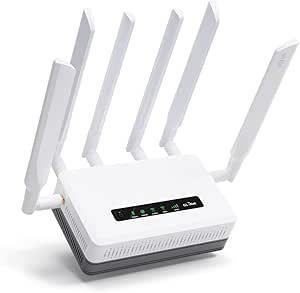 | Best for Flexible Connection Failover | Cellular: 5G NSA/SA and 4G LTE | Wi-Fi: Dual-band Wi-Fi 6; up to 3000 Mbps | SIM support: Dual SIM, single standby; separately supported physical eSIM card | VIEW ON AMAZON | See Our Full Breakdown |
| InHand FWA02 5G Wi-Fi 6 Router |  | Best for a Fixed Home or RV Setup | Cellular download: Up to 4.76 Gbps | Wi-Fi: Wi-Fi 6; up to 3600 Mbps | SIM support: Nano SIM and optional eSIM | VIEW ON AMAZON | See Our Full Breakdown |
| Teltonika RUTM50 5G Industrial Router |  | Best for Industrial Installations | Cellular: 5G and 4G LTE | SIM: Dual SIM with failover | Ethernet: 5 × Gigabit Ethernet | VIEW ON AMAZON | See Our Full Breakdown |
| Hitron D60 5G Cellular Router with Wi-Fi 6 |  | Best for Straightforward 5G Failover | Cellular connectivity: 5G NSA and 4G LTE | Maximum 5G NSA download speed: 3.4 Gbps | Wi-Fi: Wi-Fi 6, dual-band 2.4 GHz and 5 GHz | VIEW ON AMAZON | See Our Full Breakdown |
| Cudy P5 5G AX3000 Wi-Fi 6 Router with Dual SIM and 4 Gigabit Ports |  | Best for Multi-Path Failover | 5G modem: Qualcomm X62, up to 3.4 Gbps | SIM slots: 2 Nano SIM | Failover paths: WAN, Cellular 1, Cellular 2 | VIEW ON AMAZON | See Our Full Breakdown |
| GL.iNet GL-X2000 Spitz Plus 4G LTE CAT 12 Wi-Fi 6 Dual-SIM Router |  | Best 4G LTE Failover Option | Cellular technology: 4G LTE CAT 12 | SIM support: Dual SIM | Wi-Fi: Wi-Fi 6, 2.4 GHz and 5 GHz | VIEW ON AMAZON | See Our Full Breakdown |
| Miri X510 Dual Cellular Bonding Router with 90-Day Speedify License |  | Best for Live Streaming and Connection Bonding | Cellular modems: One 4G LTE modem and one 5G modem | SIM ports: 2; SIM cards sold separately | Wireless standard: Wi-Fi 6, dual-band | VIEW ON AMAZON | See Our Full Breakdown |
| MOFI6500-5GXeLTE-RM520-HP 4G LTE & 5G Dual SIM Cellular Router with Wi-Fi 6 and Failover |  | Best Rugged Business Router | Cellular connectivity: 4G LTE and 5G | SIM support: Dual SIM with automatic failover | Wi-Fi: Wi-Fi 6 with amplification | VIEW ON AMAZON | See Our Full Breakdown |
| SquareWiz RM520N AX3000 WiFi 6 5G Cellular Router with SIM Card Slot |  | Best for Maximum Signal Coverage | Model: RM520N | Modem Chipset: Qualcomm SDX62 | 5G Speed: Up to 3.4 Gbps | VIEW ON AMAZON | See Our Full Breakdown |
| NETGEAR Nighthawk Dual-Band WiFi 7 Router (RS140) |  | Best for Local Network Performance | WiFi Speed: Up to 5.0 Gbps | Coverage Area: Up to 2,250 sq. ft. | Device Capacity: 80 devices | VIEW ON AMAZON | See Our Full Breakdown |
| InHand Networks IR624 Industrial 5G Cellular Router |  | Best for Industrial and Outdoor Use | Downlink Speed: 3.4 Gbps | Dual SIM Failover: Supported (dual-nano SIM) | Ethernet Ports: 4 x 10/100/1000 Mbps | VIEW ON AMAZON | See Our Full Breakdown |
| InHand CPE02 5G WiFi 6 AX5400 Indoor CPE Router with Dual WAN and Cloud Management |  | Best for Small Business and Retail | Wireless Standard: Wi-Fi 6 (802.11ax) | Max Wi-Fi Speed: AX5400 (5400 Mbps) | Cellular Support: 5G up to 3.4 Gbps | VIEW ON AMAZON | See Our Full Breakdown |
| GL.iNet GL-X3000 Spitz AX 5G Cellular Router with Wi-Fi 6 and Dual SIM |  | Best for RVs and Travel | Cellular Connectivity: 5G NR, LTE, UMTS, WCDMA | Wi-Fi Standard: Wi-Fi 6, Dual-Band | SIM Slots: Dual SIM (Single Standby) | VIEW ON AMAZON | See Our Full Breakdown |
| 5g router with failover | Wi-Fi |
|---|---|
| GL.iNet GL-E5800NA MUDI 7 5G W | Wi-Fi 7; up to 5765 Mbps |
| InHand Networks CR602 5G Cellu | Dual-band Wi-Fi 7, BE3000 |
| GL.iNet GL-XE3000 Puli AX 5G W | Dual-band Wi-Fi 6; up to 3000 Mbps |
| InHand FWA02 5G Wi-Fi 6 Router | Wi-Fi 6; up to 3600 Mbps |
| Teltonika RUTM50 5G Industrial | Product data lists Wi-Fi 6 and 802.11ac |
| Hitron D60 5G Cellular Router | Wi-Fi 6, dual-band 2.4 GHz and 5 GHz |
| Cudy P5 5G AX3000 Wi-Fi 6 Rout | Wi-Fi 6 dual-band |
| GL.iNet GL-X2000 Spitz Plus 4G | Wi-Fi 6, 2.4 GHz and 5 GHz |
| Miri X510 Dual Cellular Bondin | — |
| MOFI6500-5GXeLTE-RM520-HP 4G L | Wi-Fi 6 with amplification |
| SquareWiz RM520N AX3000 WiFi 6 | — |
| NETGEAR Nighthawk Dual-Band Wi | — |
| InHand Networks IR624 Industri | — |
| InHand CPE02 5G WiFi 6 AX5400 | — |
| GL.iNet GL-X3000 Spitz AX 5G C | — |
More Details on Our Top Picks
GL.iNet GL-E5800NA MUDI 7 5G Wi-Fi 7 Travel Router with eSIM, 13.5h Battery
I’d pick the MUDI 7 for travelers who want a compact cellular connection that can also switch among eSIM, two nano-SIMs, Ethernet, and USB. That range gives it more ways to get online than the GL.iNet Puli AX, while its 13.5-hour battery rating suits a long workday away from a socket. The 2.5G Ethernet port and Wi-Fi 7 add flexibility for connecting wired gear or sharing a connection with newer devices. Its travel focus has limits: the supplied details don’t specify automatic failover behavior, so buyers needing a clearly documented backup sequence should check that before relying on it. OpenWrt and VPN options also offer control, but may take more setup than a simple plug-and-go router.
Pros:- eSIM and dual nano-SIM support give travelers several cellular provisioning options.
- Rated for up to 13.5 hours of battery life.
- A 2.5G Ethernet port and 10 Gbps USB-C support wired and USB connections.
- Wi-Fi 7 and OpenVPN and WireGuard support suit newer devices and secure remote access.
Cons:- The supplied product details do not establish how automatic failover is configured or triggered.
- OpenWrt features and app configuration may require more networking knowledge than a basic mobile hotspot.
- Cellular performance depends on carrier coverage and the selected data plan.
Best for: Frequent travelers and mobile professionals who want battery-powered 5G, flexible SIM choices, and wired connectivity in one router.
Not ideal for: Buyers who need clearly documented automatic failover rules or a straightforward setup with minimal network configuration.
- Cellular:5G and LTE
- Wi-Fi:Wi-Fi 7; up to 5765 Mbps
- SIM support:eSIM and dual nano-SIM
- Battery:5380 mAh; up to 13.5 hours
- Ethernet:1 × 2.5G
- USB:1 × 10 Gbps USB-C
- VPN speed:OpenVPN up to 700 Mbps; WireGuard up to 600 Mbps
- Display:2.8-inch color LCD touchscreen
Our verdict“Choose the MUDI 7 for flexible, battery-powered travel connectivity, but verify its failover behavior if automatic backup is a must-have.”
InHand Networks CR602 5G Cellular Router with Wi-Fi 7 and 10,000 mAh Battery
The CR602 is the strongest fit here for buyers who want cellular backup to be something they can manage, not just a second SIM slot. Its SIM prioritization through the app and cloud platform gives it a clearer failover-oriented case than the MUDI 7, whose supplied details don’t describe failover rules. Two 2.5G Ethernet ports also make it easier to place in a small office or connect wired equipment. The removable 10,000 mAh battery is useful for portable deployments, though its rated 12-hour runtime is shorter than the MUDI 7’s 13.5 hours. There are carrier caveats: the built-in eSIM is Verizon-only and requires activation, and some networks may need manual APN setup. A SIM and data plan are not included.
Pros:- SIM prioritization and dual nano-SIM support provide a defined way to manage cellular backup.
- Two 2.5G Ethernet ports support fast wired connections.
- Removable 10,000 mAh battery is rated for up to 12 hours of continuous 5G operation.
- App and cloud management include firewall, DNS filtering, and VPN support.
Cons:- The built-in eSIM is limited to Verizon and requires direct activation.
- A SIM card and data plan are not included, and some carriers may need manual APN setup.
- Rated battery runtime is below the MUDI 7’s stated 13.5 hours.
Best for: Small-office teams, field crews, and RV users who want app-managed SIM prioritization, wired connections, and battery backup.
Not ideal for: Buyers outside Verizon coverage who expect the built-in eSIM to work with their carrier, or users unwilling to configure APN settings.
- Cellular:5G NR SA/NSA and 4G LTE
- Wi-Fi:Dual-band Wi-Fi 7, BE3000
- Peak cellular speed:Up to 7.01 Gbps download and 2.5 Gbps upload
- SIM support:Dual nano-SIM and Verizon-only built-in eSIM
- Battery:10,000 mAh removable; up to 12 hours of 5G operation
- Ethernet:2 × 2.5G
- Device capacity:Up to 32 wireless devices; up to 128 via Ethernet
- Security and VPN:Firewall, DNS filtering, IPsec and L2TP VPN, WPA2-PSK and WPA3
Our verdict“Choose the CR602 if cloud-managed SIM prioritization matters more than universal eSIM support or the longest stated battery life.”
GL.iNet GL-XE3000 Puli AX 5G Wi-Fi 6 Router with Dual SIM and 6400mAh Battery
The Puli AX earns its place for buyers who need backup paths beyond cellular. It supports failover across 5G, Ethernet, repeater, and tethered connections, giving it a wider connection mix than the SIM-prioritization focus of the InHand CR602. That flexibility can keep a small mobile setup online when one access method drops, while OpenWrt, OpenVPN, and WireGuard give technically minded users room to shape security and routing. The compromise is age and capacity: its Wi-Fi 6 tops out at 3000 Mbps, below the newer Wi-Fi 7 options, and its battery is rated for up to eight hours rather than the MUDI 7’s 13.5. Dual SIM is single-standby, and physical eSIM support requires a separately purchased card.
Pros:- Failover can use cellular, Ethernet, repeater, and tethered connections.
- OpenWrt-based firmware supports customization.
- OpenVPN and WireGuard are included.
- Built-in 6400 mAh battery is rated for up to eight hours.
Cons:- Dual SIM uses single standby rather than simultaneous active connections.
- Physical eSIM support requires a separately purchased card.
- Wi-Fi 6 and the stated 3000 Mbps maximum rate trail the Wi-Fi 7 options in this list.
Best for: Technically confident remote workers and mobile teams who want several possible internet sources and configurable VPN tools.
Not ideal for: Users seeking the longest battery runtime, Wi-Fi 7, or a dual-SIM setup that keeps both SIMs active at once.
- Cellular:5G NSA/SA and 4G LTE
- Wi-Fi:Dual-band Wi-Fi 6; up to 3000 Mbps
- SIM support:Dual SIM, single standby; separately supported physical eSIM card
- Battery:6400 mAh; up to 8 hours
- Connection types:5G, Ethernet, Wi-Fi repeater, and tethering
- LAN:1 Gbps
- VPN speed:OpenVPN up to 150 Mbps; WireGuard up to 300 Mbps
- Antennas:6 retractable
Our verdict“Choose the Puli AX when multiple connection types matter more than newer Wi-Fi, longer battery life, or simultaneous dual-SIM operation.”
InHand FWA02 5G Wi-Fi 6 Router
The FWA02 makes the most sense when a router will usually stay in one place and use 5G as either its primary connection or a cellular backup. Its cellular failover and dual-SIM support are a more direct match for that job than the travel-first MUDI 7, while two switchable 2.5 GbE ports offer useful wired flexibility for a home, RV, or small business. Cloud management, firewall features, and IPSec or L2TP VPN add administrative options without requiring a battery-powered design. That fixed-use focus also means fewer travel conveniences: unlike the MUDI 7 and Puli AX, the supplied details list no battery. Its optional eSIM may take extra setup, and advertised cellular and Wi-Fi rates depend on coverage and network conditions.
Pros:- Cellular failover and dual-SIM support suit backup internet use.
- Two switchable 2.5 GbE ports allow fast wired connections.
- Cloud management and built-in firewall and VPN features support remote administration.
- Wi-Fi 6 supports current-generation wireless devices.
Cons:- No battery is listed, limiting use where mains power is unavailable.
- eSIM is optional and may require additional setup or service.
- Maximum cellular and Wi-Fi speeds depend on coverage and network conditions.
Best for: RV owners, home users, and small-business operators who want a mostly stationary 5G router with cellular failover and fast wired ports.
Not ideal for: Travelers who need battery-powered operation, or buyers who want a clearly specified battery runtime and built-in eSIM service.
- Cellular download:Up to 4.76 Gbps
- Wi-Fi:Wi-Fi 6; up to 3600 Mbps
- SIM support:Nano SIM and optional eSIM
- Ethernet:2 × 2.5 GbE RJ45, WAN/LAN switchable
- VPN:IPSec and L2TP
- Security:WPA2 and WPA3
- Antennas:6
- Weight:200 g
Our verdict“Pick the FWA02 for a stationary or vehicle-based installation with cellular backup, not for untethered travel.”
Teltonika RUTM50 5G Industrial Router
For an installation that needs to run as part of a wider wired network, the RUTM50 is the most infrastructure-focused choice in this group. Its five Gigabit Ethernet ports give it more room for connected equipment than the InHand FWA02’s two 2.5 GbE ports, while dual-SIM failover and remote management through Teltonika RMS suit distributed sites that need monitoring. OpenVPN, IPsec, and WireGuard add options for connecting securely to other locations. This is not the portable pick: unlike the battery-powered Puli AX, the supplied specifications list no battery. The source data also conflicts on its Wi-Fi description, naming Wi-Fi 6 but listing standard 802.11ac, so buyers who depend on a specific wireless generation should confirm the exact configuration before purchase.
Pros:- Five Gigabit Ethernet ports accommodate multiple wired devices.
- Dual-SIM failover supports a cellular backup path.
- Teltonika RMS provides remote monitoring and configuration.
- Supports OpenVPN, IPsec, and WireGuard.
Cons:- No battery is listed, so it is not suited to untethered portable use.
- Supplied Wi-Fi details conflict: they state Wi-Fi 6 but also list 802.11ac.
- Fixed antennas provide less flexibility for repositioning than the Puli AX’s retractable antennas.
Best for: Industrial operators and IT teams connecting several wired devices at remote or distributed sites that need remote management and cellular backup.
Not ideal for: Travelers who need battery operation, or buyers who require confirmed Wi-Fi 6 specifications before choosing a router.
- Cellular:5G and 4G LTE
- SIM:Dual SIM with failover
- Ethernet:5 × Gigabit Ethernet
- Maximum data transfer rate:3.4 Gbps
- Maximum upstream rate:550 Mbps
- Wi-Fi:Product data lists Wi-Fi 6 and 802.11ac
- Operating system:RutOS, OpenWrt-based Linux
- VPN protocols:OpenVPN, IPsec, and WireGuard
Our verdict“Choose the RUTM50 for wired industrial sites that value remote management and dual-SIM failover over portable use or unambiguous Wi-Fi specifications.”
Hitron D60 5G Cellular Router with Wi-Fi 6
The Hitron D60 keeps the setup relatively simple: insert a compatible Nano SIM and it can provide 5G or 4G LTE connectivity with cellular failover. Its stated 5G NSA download ceiling of 3.4 Gbps is in the same range as the Cudy P5, but the Cudy adds two SIM slots and several WAN failover paths. The D60 is a better fit if you want a more direct cellular backup rather than a router built around multiple connection policies.
Wi-Fi 6, WPA3, and a Gigabit Ethernet port cover common home or small-office needs, though that single Ethernet port limits wired expansion without another switch. Carrier certification is useful, but service still depends on a suitable plan and local coverage. I would also weigh its three-month limited warranty against the Cudy P5’s two-year warranty before choosing it for a business-critical connection.
Pros:- Supports both 5G and 4G LTE for cellular backup
- Wi-Fi 6 dual-band wireless with WPA3 security
- Certified for T-Mobile, AT&T, and US Cellular
- Gigabit Ethernet provides a wired connection option
Cons:- Only one Ethernet port, limiting direct wired connections
- Requires a Nano SIM and compatible carrier plan
- Three-month limited warranty is short compared with the Cudy P5’s stated two years
Best for: Home users or small offices seeking a straightforward 5G or LTE backup connection with Wi-Fi 6 and a certified carrier SIM.
Not ideal for: Businesses that need dual-SIM redundancy, multiple wired devices connected directly, or a longer stated warranty.
- Cellular connectivity:5G NSA and 4G LTE
- Maximum 5G NSA download speed:3.4 Gbps
- Wi-Fi:Wi-Fi 6, dual-band 2.4 GHz and 5 GHz
- Maximum Wi-Fi speed:Up to 5.4 Gbps
- Ethernet:1 Gigabit LAN port
- SIM:Nano SIM
- Compatible carriers:T-Mobile, AT&T, US Cellular
- Security:WPA3
- Warranty:3-month limited warranty
Our verdict“Choose the Hitron D60 for uncomplicated 5G failover and Wi-Fi 6, but pick the Cudy P5 if you need dual-SIM or more flexible failover paths.”
Cudy P5 5G AX3000 Wi-Fi 6 Router with Dual SIM and 4 Gigabit Ports
The Cudy P5 earns its place by giving failover more than one route: it can prioritize a wired WAN and two cellular SIM connections. That makes it a stronger choice for a site where a single carrier outage should not take the whole network offline. The Hitron D60 offers 5G and LTE backup in a simpler package, but it has just one Ethernet port and no stated dual-SIM setup; the P5 is built for more involved connection management.
Four Gigabit ports, detachable cellular antennas, mesh support, and a broad selection of VPN protocols add flexibility for offices and remote installations. The tradeoff is extra setup and dependence on compatible SIM plans, while its 256 MB of RAM is a modest hardware specification for demanding network workloads. The stated two-year warranty also gives it a stronger support profile than the D60’s limited three-month coverage.
Pros:- Failover can use WAN, Cellular 1, and Cellular 2
- Two Nano SIM slots allow carrier redundancy
- Four Gigabit Ethernet ports, including configurable WAN/LAN
- Detachable cellular antennas and support for mesh and multiple VPN protocols
Cons:- Requires compatible SIM cards and active carrier plans
- More failover and VPN options may take extra configuration
- The product data provides no independent coverage or performance results
Best for: Small businesses, remote offices, and technically confident users who want wired WAN plus two cellular failover options.
Not ideal for: Buyers seeking a plug-and-play router with minimal configuration, or anyone who does not need multiple WAN and SIM paths.
- 5G modem:Qualcomm X62, up to 3.4 Gbps
- SIM slots:2 Nano SIM
- Failover paths:WAN, Cellular 1, Cellular 2
- Wi-Fi:Wi-Fi 6 dual-band
- Wi-Fi data rate:2402 Mbps (5 GHz) + 574 Mbps (2.4 GHz)
- Ethernet:4 Gigabit ports: 1 configurable WAN/LAN and 3 LAN
- VPN protocols:WireGuard, OpenVPN, IPsec, Zerotier, PPTP, L2TP
- Antennas:6 total; 4 detachable SMA cellular antennas
- Warranty:2 years
Our verdict“Choose the Cudy P5 when keeping several independent internet paths available matters more than having the simplest setup.”
GL.iNet GL-X2000 Spitz Plus 4G LTE CAT 12 Wi-Fi 6 Dual-SIM Router
The GL-X2000 Spitz Plus is the outlier in a roundup focused on 5G: its cellular modem is 4G LTE CAT 12, not 5G. That distinction makes it a candidate for buyers who want dual-SIM failover and multi-WAN flexibility but do not require a 5G connection. Compared with the Hitron D60, it trades 5G access for two SIMs and stated network prioritization; compared with the Cudy P5, it also lacks the listed 5G modem and detailed failover path options.
Wi-Fi 6, OpenVPN and WireGuard support, and SMA external antenna connectors suit remote access or a fixed installation where antenna placement can help. Its advertised 3000 Mbps Wi-Fi speed describes wireless capability, not cellular throughput. Carrier availability varies by country, and the product data says external antennas are needed for optimal performance, adding setup considerations. Buyers who specifically need 5G cellular failover should choose a 5G model instead.
Pros:- Dual-SIM support with failover and network prioritization
- Multi-WAN adds another path beyond cellular
- Wi-Fi 6 with dual-band wireless
- OpenVPN, WireGuard, and SMA external antenna connections
Cons:- Cellular modem is 4G LTE CAT 12, not 5G
- Cellular compatibility is limited in some countries
- External antennas may be needed for best cellular performance
Best for: Remote workers, RV owners, or small offices that want dual-SIM 4G LTE failover, multi-WAN, and VPN support without requiring 5G.
Not ideal for: Buyers whose backup connection must use 5G, or those who need clearly specified Ethernet port counts and failover behavior.
- Cellular technology:4G LTE CAT 12
- SIM support:Dual SIM
- Wi-Fi:Wi-Fi 6, 2.4 GHz and 5 GHz
- Listed Wi-Fi speed:3000 Mbps
- WAN:Multi-WAN
- VPN support:OpenVPN and WireGuard
- External antennas:SMA connectors
Our verdict“Pick the Spitz Plus if dual-SIM LTE failover meets your needs; skip it if 5G is a requirement rather than a preference.”
Miri X510 Dual Cellular Bonding Router with 90-Day Speedify License
The Miri X510 is aimed at production work where keeping a stream or remote session running matters more than a simple standby backup. It has separate 4G LTE and 5G modems, and Speedify can bond multiple connections, including cellular, Ethernet, and Wi-Fi, rather than relying only on switching to a backup. That gives it a distinct role beside the Cudy P5: the Cudy emphasizes configurable WAN and dual-SIM failover, while the X510 is built around combining available links for streaming and remote production.
Its Wi-Fi 6 and Gigabit Ethernet broaden connection options, and the included Speedify plan provides a defined starting period. However, the 90-day license is temporary, SIM cards are sold separately, and ongoing bonding depends on the service. At 2.6 pounds, it is portable but not as travel-light as a pocket router. I would choose it for a production workflow, not as the most straightforward household backup.
Pros:- One 5G modem and one 4G LTE modem
- Speedify can bond cellular, Ethernet, and Wi-Fi connections
- Wi-Fi 6 and Gigabit Ethernet support multiple connection types
- Includes a 90-day Speedify pass with a 1 TB/month plan
Cons:- SIM cards are sold separately
- Included Speedify access lasts only 90 days
- Bonding benefits depend on multiple usable connections and the service
Best for: Live-streaming crews and remote production teams that can supply multiple internet connections and want bonding across them.
Not ideal for: Households seeking a low-complexity backup router, or buyers unwilling to arrange separate SIM cards and plan for Speedify after the included period.
- Cellular modems:One 4G LTE modem and one 5G modem
- SIM ports:2; SIM cards sold separately
- Wireless standard:Wi-Fi 6, dual-band
- Ethernet:Gigabit Ethernet
- Antennas:8
- Included Speedify plan:90-day pass, 1 TB/month
- Weight:2.6 pounds
- Dimensions:8.5 × 5 × 1.75 inches
Our verdict“Choose the X510 for mobile production workflows that benefit from bonded connections, rather than for basic 5G failover alone.”
MOFI6500-5GXeLTE-RM520-HP 4G LTE & 5G Dual SIM Cellular Router with Wi-Fi 6 and Failover
The MOFI6500-5GXeLTE-RM520-HP pairs 5G and 4G LTE with dual-SIM automatic failover in a rugged metal enclosure, giving it a business-oriented role distinct from the more compact, feature-detailed Cudy P5. Its listed VPN, IP Pass-Through, Band Lock, and Zerotier support point toward installations where network control matters as much as wireless access. The Cudy P5 provides clearer port counts, named VPN protocols, and detachable antenna details; MOFI’s supplied specifications leave more of the hardware configuration unspecified.
Wi-Fi 6 with amplification is presented as a way to extend wireless coverage, while the metal construction is suited to demanding fixed deployments. The tradeoff is a bulkier design and potentially more involved setup for non-technical users. Carrier compatibility is broad according to the product data, but a suitable SIM plan and local coverage still determine cellular performance. I would favor it for a business site that values durability over a streamlined home setup.
Pros:- Supports both 5G and 4G LTE
- Dual SIM with automatic failover
- Wi-Fi 6 with amplification for extended coverage
- Rugged metal construction and listed VPN, IP Pass-Through, Band Lock, and Zerotier support
Cons:- Bulkier than a typical home router due to its rugged construction
- Setup may be complex for non-technical users
- Product data does not specify port count or detailed modem performance
Best for: Small businesses and fixed remote sites that want a rugged enclosure, dual-SIM cellular backup, and network-management features.
Not ideal for: Non-technical home users seeking a compact router with detailed port specifications and a simple setup path.
- Cellular connectivity:4G LTE and 5G
- SIM support:Dual SIM with automatic failover
- Wi-Fi:Wi-Fi 6 with amplification
- Construction:Rugged metal case
- Compatibility:Verizon, AT&T, T-Mobile, and more
- VPN support:VPN support listed
- Network features:IP Pass-Through, Band Lock, Zerotier
Our verdict“Choose the MOFI6500 for a fixed business installation that needs rugged construction and dual-SIM failover, not for a compact, simple home setup.”
SquareWiz RM520N AX3000 WiFi 6 5G Cellular Router with SIM Card Slot
This router stands out for its 9 detachable high-gain antennas, a feature rarely seen in consumer-grade 5G devices. While the InHand CPE02 offers sleeker enterprise aesthetics, the SquareWiz prioritizes raw signal capture, making it superior for rural homes or buildings with thick walls. The Qualcomm SDX62 modem ensures competitive 5G speeds, but the real differentiator is the ability to swap antennas for external directional ones if needed. However, the AX3000 Wi-Fi standard is a step behind the Wi-Fi 7 capabilities found in the NETGEAR Nighthawk RS140. Buyers seeking future-proof wireless speeds might find this limitation frustrating, but for those whose primary bottleneck is cellular reception rather than local Wi-Fi throughput, this model provides the most robust connectivity foundation in the lineup.
Pros:- Nine detachable antennas allow for advanced signal boosting and customization
- Qualcomm SDX62 modem delivers reliable 5G speeds up to 3.4 Gbps
- Supports extensive VPN protocols including WireGuard and Zerotier
- High device capacity of 128 connections suits large households
Cons:- Wi-Fi 6 standard is less future-proof than Wi-Fi 7 alternatives
- Bulky antenna configuration may look cluttered in modern home setups
Best for: Rural residents and users in signal-dead zones who prioritize cellular reception strength over local Wi-Fi speed.
Not ideal for: Tech enthusiasts with large smart-home ecosystems who need the latest Wi-Fi 6E or 7 standards for maximum local throughput.
- Model:RM520N
- Modem Chipset:Qualcomm SDX62
- 5G Speed:Up to 3.4 Gbps
- Wi-Fi Standard:Wi-Fi 6 (802.11ax)
- Antennas:9 Detachable (4x Cellular, 5x Wi-Fi)
- Max Connected Users:128
- VPN Support:PPTP, L2TP, GRE, WireGuard, Zerotier
Our verdict“Choose this if your internet bottleneck is weak cellular signal rather than local Wi-Fi performance.”
NETGEAR Nighthawk Dual-Band WiFi 7 Router (RS140)
The NETGEAR Nighthawk RS140 is included here for its Wi-Fi 7 speeds up to 5.0 Gbps, which dominate the local network performance of every other device in this roundup. Unlike the SquareWiz RM520N, this unit does not have a built-in cellular modem, meaning it requires a separate 5G bridge or modem to function as a “5G router.” This adds complexity and cost, but the payoff is exceptional local throughput for gaming and 4K streaming across 80 devices. The 2.5 Gig internet port ensures no bottleneck between your 5G modem and the router. If you already own a reliable cellular bridge, this router transforms your home network into a high-performance hub, whereas standalone cellular routers often compromise local Wi-Fi speed for portability or size.
Pros:- Wi-Fi 7 support delivers up to 5.0 Gbps for future-proof local speed
- 2.5 Gigabit internet port prevents bottlenecks from high-speed modems
- Covers up to 2,250 sq. ft. with consistent high-bandwidth performance
Cons:- No built-in cellular modem; requires separate 5G hardware to function
- Higher total system cost when pairing with a compatible cellular bridge
Best for: Gamers and streamers who already have a dedicated 5G modem and want the fastest possible local Wi-Fi.
Not ideal for: Users looking for a single-box solution, as this device requires a separate cellular modem to access 5G.
- WiFi Speed:Up to 5.0 Gbps
- Coverage Area:Up to 2,250 sq. ft.
- Device Capacity:80 devices
- Internet Port:2.5 Gigabit Ethernet
- WiFi Standard:WiFi 7
- Modem Included:No
Our verdict“Ideal for maximizing local network speed if you are willing to pair it with a separate 5G modem.”
InHand Networks IR624 Industrial 5G Cellular Router
This device is distinct from consumer-focused options like the GL.iNet GL-X3000 because it is built for harsh environments. The fanless metal housing and IP30 rating allow it to operate in temperatures ranging from -20°C to 70°C, making it suitable for factories, remote kiosks, or outdoor installations. While consumer routers prioritize sleek design and high Wi-Fi speeds, the IR624 sacrifices Wi-Fi 6 for Wi-Fi 5 to prioritize robust Ethernet and serial connectivity. The inclusion of RS232/RS485 ports is a critical feature for integrating legacy industrial machinery, something the consumer models cannot offer. If your priority is uninterrupted uptime in extreme conditions rather than streaming movies, this rugged build justifies the trade-off in wireless standards.
Pros:- Rugged fanless design operates reliably in extreme temperatures
- Dual-SIM failover ensures connectivity even if one carrier fails
- Includes RS232/RS485 serial ports for industrial machine integration
Cons:- Limited to Wi-Fi 5, which is slower than newer Wi-Fi 6/7 standards
- Setup requires technical knowledge and carrier provisioning
Best for: Businesses and engineers needing reliable connectivity for IoT devices, factories, or outdoor remote monitoring.
Not ideal for: Home users who want a stylish device for streaming or gaming; the industrial form factor is bulky and utilitarian.
- Downlink Speed:3.4 Gbps
- Dual SIM Failover:Supported (dual-nano SIM)
- Ethernet Ports:4 x 10/100/1000 Mbps
- Serial Interfaces:1 x RS232, 1 x RS485
- Wi-Fi Standard:802.11ac (Wi-Fi 5)
- Operating Temperature:-20°C to 70°C
- Ingress Protection:IP30
Our verdict“The only choice here for deploying 5G in harsh, non-climate-controlled industrial environments.”
InHand CPE02 5G WiFi 6 AX5400 Indoor CPE Router with Dual WAN and Cloud Management
The InHand CPE02 bridges the gap between consumer convenience and enterprise control. Unlike the SquareWiz RM520N, which relies on app-based control, this model offers centralized cloud management via the InCloud platform, allowing IT staff to monitor and configure multiple units remotely. It supports dual WAN with load balancing, meaning it can actively use both 5G and a wired broadband connection simultaneously to maximize bandwidth, rather than just using one as a backup. The AX5400 Wi-Fi 6 speed is a significant upgrade over the AX3000 standard found in budget cellular routers. However, the complexity of its enterprise features means it may be overkill for a single-user home office, where simpler devices like the GL.iNet GL-X3000 provide easier setup without sacrificing core reliability.
Pros:- Centralized cloud management simplifies deployment across multiple locations
- Dual WAN with load balancing utilizes both 5G and wired connections
- AX5400 Wi-Fi 6 speeds support high-density user environments
Cons:- Setup requires technical expertise and familiarity with enterprise networking
- Not designed for typical residential aesthetics or simple use cases
Best for: Small business owners and IT managers who need remote management and multi-WAN capabilities for retail or office spaces.
Not ideal for: Home users who prefer plug-and-play simplicity; the cloud management and dual WAN setup are unnecessary complexities.
- Wireless Standard:Wi-Fi 6 (802.11ax)
- Max Wi-Fi Speed:AX5400 (5400 Mbps)
- Cellular Support:5G up to 3.4 Gbps
- Ethernet Ports:2.5GbE WAN, 3 LAN
- Maximum Users:200
- Cloud Management:Yes, InCloud Manager
- VPN Support:IPsec, L2TP
Our verdict“A powerful tool for businesses needing scalable, manageable 5G connectivity rather than simple home internet.”
GL.iNet GL-X3000 Spitz AX 5G Cellular Router with Wi-Fi 6 and Dual SIM
This router is the most versatile option for mobile users, outperforming the InHand IR624 in portability and the SquareWiz RM520N in software flexibility. Running on OpenWrt-based firmware, it allows advanced users to customize networking behaviors extensively, a feature absent in most consumer-grade cellular routers. The dual SIM slots provide essential failover for RVs traveling through varying coverage areas, while the six detachable antennas offer decent signal enhancement without the bulk of the SquareWiz’s nine-antenna array. However, unlike the enterprise-grade InHand CPE02, it lacks centralized cloud management, making it less ideal for managing a fleet of devices. For travelers who want a balance of power, portability, and hackability, this model offers the best middle ground in the lineup.
Pros:- OpenWrt firmware allows deep customization and advanced networking features
- Dual SIM slots provide robust failover for travel across different carriers
- Compact form factor with detachable antennas is ideal for mobile setups
Cons:- Physical eSIM card must be purchased separately for certain carriers
- Cellular features are restricted in some countries and regions
Best for: RV owners, digital nomads, and tech-savvy travelers who need customizable firmware and dual-SIM flexibility.
Not ideal for: Users in regions where GL.iNet cellular features are restricted, or those who want a closed, simple enterprise ecosystem.
- Cellular Connectivity:5G NR, LTE, UMTS, WCDMA
- Wi-Fi Standard:Wi-Fi 6, Dual-Band
- SIM Slots:Dual SIM (Single Standby)
- Antennas:6 Detachable
- Firmware:OpenWrt-based
- VPN Support:OpenVPN, WireGuard
- WAN Modes:Ethernet, Repeater, Cellular, Tethering
Our verdict“The top pick for mobile users who want open-source flexibility and dual-SIM reliability on the road.”

How We Picked
I evaluated these devices based on the reliability of their failover mechanisms, specifically looking for hardware-level switching capabilities rather than software-dependent solutions. Products were ranked by their ability to maintain session continuity when a primary connection dropped, a factor that many marketing materials gloss over. I also weighed build quality and thermal management, as 5G modems generate significant heat, which can throttle speeds or cause instability in cheaper enclosures.
Connectivity versatility played a major role in the ranking. Devices offering dual-SIM slots with automatic carrier switching scored higher than those relying on a single SIM with a wired backup. Finally, I considered the ecosystem, favoring brands with active firmware support and clear documentation for setting up complex network configurations like VLANs or static routes for failover triggers.
Factors to Consider When Choosing 5g Router With Failover
Choosing the right 5G router with failover requires looking past the marketing buzzwords. The term ‘failover’ can mean very different things depending on the manufacturer. This guide breaks down the technical realities to help you avoid buying a device that does not actually provide the redundancy you need.
Understanding Failover Types: Cellular vs. Wired
Not all failover systems are created equal. The most robust option is Cellular-to-Cellular failover, where the router switches from one SIM card to another (e.g., Verizon to AT&T) if the signal drops. This is critical for mobile work or areas with spotty coverage. A more common but less versatile option is Cellular-to-Wired failover, where 5G acts as a backup to a fiber or cable line. If your primary internet is unstable, a wired backup might not help if your main issue is local infrastructure. Always verify if the device supports active-active bonding, which combines both connections for speed, or just active-passive switching, which only uses the second line when the first fails completely.
The Reality of Battery Life Under Load
Manufacturers often quote battery life under idle conditions or light browsing. In reality, maintaining two active cellular connections for failover readiness consumes significantly more power. A device rated for 10 hours of use might only last 5-6 hours when dual-modem redundancy is enabled. If you are buying a portable unit for fieldwork, prioritize models with USB-C Power Delivery support that allows for external battery packs. Relying solely on the internal battery for critical failover tasks is a risky strategy that can leave you offline during a power outage or extended travel.
Industrial vs. Consumer Build Quality
Industrial routers, such as the Teltonika series, are built with metal housings and wide-temperature range components. They are designed to operate in unattended locations like remote kiosks or vehicles. Consumer routers use plastic enclosures and are optimized for indoor, climate-controlled environments. If you need a router for a mobile office in a vehicle or a construction site, the vibration and heat tolerance of industrial-grade hardware is worth the higher cost. For home use, the aesthetic and quieter operation of consumer models are preferable, but they may lack the watchdog timers that automatically reboot the device if the connection hangs.
Wi-Fi Standards and Client Compatibility
While Wi-Fi 7 is the newest standard, its benefits are currently limited to specific high-end laptops and smartphones. For most users, Wi-Fi 6 (AX) provides sufficient throughput for 5G connections, as cellular speeds often bottleneck before Wi-Fi does. Pay attention to the antenna design and MIMO capabilities (e.g., 2×2 vs. 4×4). A router with excellent cellular reception but poor Wi-Fi coverage will frustrate users in larger spaces. Look for devices with mesh compatibility if you need to extend coverage beyond a single room, as standalone 5G routers often have limited range due to their compact size.
Carrier Lock and Network Bands
A common mistake is buying a router that does not support the specific 5G bands used by your local carrier. Some imported or budget models support only global sub-6GHz bands and miss mmWave frequencies, which are crucial for peak speeds in dense urban areas in the US. Always check the spec sheet for carrier-specific band compatibility. Additionally, ensure the router is unlocked if you plan to use multiple SIMs from different providers. Some devices are subsidized or locked to a specific network, which defeats the purpose of dual-SIM failover.
Frequently Asked Questions
Does 5G failover work if my power goes out?
Only if the router has an internal battery or is connected to an uninterruptible power supply (UPS). Most desktop-style 5G routers, like the NETGEAR Nighthawk RS140, require constant mains power. If the grid fails, the router shuts down regardless of cellular signal strength. For true outage protection, you must choose a portable model with a large internal battery, such as the GL.iNet GL-XE3000 Puli, or pair a desktop unit with a small UPS. This is a critical distinction for emergency preparedness.
Can I use two different carriers for failover?
Yes, but only with routers that have two physical SIM slots and support simultaneous standby mode. Devices like the Cudy P5 or GL.iNet GL-X3000 allow you to insert a Verizon SIM in slot 1 and an AT&T SIM in slot 2. The router monitors both signals and switches traffic to the secondary carrier if the primary connection drops. Routers with only one SIM slot cannot offer carrier redundancy; they can only failover to a wired Ethernet connection, which is useless if your home internet is also down.
Is Wi-Fi 7 necessary for a 5G router?
For most users, no. Current 5G networks rarely exceed the throughput capabilities of Wi-Fi 6 routers. Wi-Fi 7 offers benefits like lower latency and better congestion handling, but these advantages are only realized if your connected devices also support Wi-Fi 7. Unless you are a power user with cutting-edge hardware or need to support many high-bandwidth clients simultaneously, a Wi-Fi 6 router provides a better balance of cost and performance. You will likely see greater benefits from improved cellular signal than from upgrading the Wi-Fi standard.
How do I set up automatic failover on these devices?
Setup varies by manufacturer, but most require configuring a WAN priority rule in the admin interface. You designate the primary connection (e.g., WAN 1 or SIM 1) and the backup (WAN 2 or SIM 2). You then set the failover trigger criteria, such as packet loss percentage or ping timeout duration. Industrial routers like the Teltonika RUTM50 offer granular control with scripting, while consumer models like the Hitron D60 often have simpler toggle switches. Always test the failover by disabling the primary SIM or unplugging the Ethernet cable to verify the switch happens without dropping active sessions like video calls.
Do 5G routers with failover consume more data?
Generally, no. Failover is a routing decision, not a data duplication process. The router sends traffic through the active connection only. However, some advanced bonding features, where traffic is split across both connections for speed, might result in slightly higher overhead due to packet management. Standard active-passive failover keeps data usage identical to a single-connection setup. Be cautious with plans that charge per device if you are using a router that appears as multiple MAC addresses, though this is rare in modern consumer hardware.
Conclusion
Choosing the right 5G router with failover depends entirely on your environment and reliability requirements. For most home users needing a solid backup for their fiber line, the GL.iNet GL-X3000 Spitz AX is the best overall pick due to its balance of Wi-Fi 6 performance and dual-SIM flexibility. If you require a device for travel or remote work where power outlets are scarce, the GL.iNet GL-E5800NA MUDI 7 is the best choice for its battery life and Wi-Fi 7 capabilities. Business owners managing multiple sites should look at the InHand Networks IR624 for its cloud management features. For those on a tight budget who still need reliable wired-to-cellular failover, the Cudy P5 offers the best value. Avoid industrial models for home use unless you need extreme durability, and avoid single-SIM consumer routers if you require true carrier redundancy.
Halloween Picks

10 ft Halloween Inflatable Archway with Built-in LEDs

HOPOCO Halloween Pumpkin Fog Machine with 12 LED Colors and 4 Light Modes

JOYIN 5-Foot Halloween Animatronic Drinking Skeleton
As an affiliate, we earn on qualifying purchases.