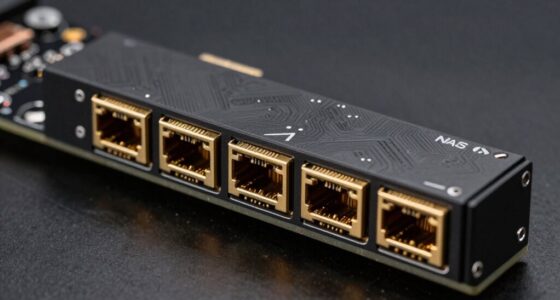
A 48-port managed switch gives a growing office, school, or surveillance network room to connect many devices while keeping traffic and access under control. My best overall pick is the TP-Link Omada SG3452XP, which pairs 48 Gigabit ports with PoE+ and 10Gbps uplinks for networks that need both device power and faster backbone links. The TP-Link Omada SG3452 suits buyers who want managed 48-port switching without PoE, while the HPE Instant On 1930 is a strong fit for teams that value approachable management and PoE. The main tradeoffs are PoE power capacity, uplink speed, management complexity, and whether a renewed or less-established option fits your support needs. Read on for how the 13 options compare and which one best fits your network.

Get privacy and security gear delivered free with Prime
- Fast, free delivery on millions of items
- Prime Video, Amazon Music and more included
- Member-only deals all year
Key Takeaways
- The SG3452XP is the most balanced fit for networks that need 48 Gigabit connections, PoE+, and 10Gbps uplinks in one switch.
- The SG3452 is the simpler non-PoE choice when endpoints have their own power and the budget should go toward managed switching rather than PoE hardware.
- PoE models serve different loads: count powered devices and check total PoE budget before choosing among TP-Link, NETGEAR, Zyxel, and HPE options.
- 10Gbps uplinks distinguish a few models, including the YuanLey and SG3452XP, but those uplinks help only when the rest of the network can use their capacity.
- Renewed and legacy switches bring support tradeoffs: the Brocade ICX6610 and renewed NETGEAR GS752TP may appeal for specific deployments, but buyers should verify firmware, condition, and compatibility.
| TP-Link Festa FS352GP 52-Port Gigabit Smart Managed PoE+ Switch |  | Best for Festa Cloud PoE Deployments | Total ports: 52 | RJ45 ports: 48 × Gigabit PoE+ | SFP slots: 4 × Gigabit | VIEW ON AMAZON | See Our Full Breakdown |
| NETGEAR GS752TP 52-Port Gigabit Ethernet Smart Managed PoE+ Switch |  | Best for Insight and SNMP Management | Model: GS752TP | Total ports: 52 | Ethernet ports: 48 × 1 Gbps | VIEW ON AMAZON | See Our Full Breakdown |
| TP-Link SG2452LP 48-Port Gigabit Omada Managed Switch |  | Best Quiet Switch for Security-Conscious Networks | Ports: 48 Gigabit | Management: Omada cloud, web GUI, CLI, SNMP, RMON | Cooling: Fanless passive cooling | VIEW ON AMAZON | See Our Full Breakdown |
| NETGEAR 52-Port Gigabit Ethernet PoE Smart Managed Switch (GS348TPv2) |  | Best for Flexible Desktop or Rack Placement | Model: GS348TPv2 | Total ports: 52 | Ethernet ports: 48 × 1 Gbps | VIEW ON AMAZON | See Our Full Breakdown |
| TP-Link Omada SG3452 48-Port Gigabit L2+ Smart Managed Switch |  | Best for Flexible Standalone or Omada Control | Ethernet ports: 48 × 10/100/1000 Mbps RJ45 | SFP slots: 4 × Gigabit SFP | Switch type: L2+ smart managed | VIEW ON AMAZON | See Our Full Breakdown |
| Zyxel GS1920-48HPV2 48-Port Smart Managed Gigabit PoE+ Switch |  | Best for Flexible Management | Ports: 48 total | PoE+ ports: 44 Gigabit RJ-45 | Combo ports: 4 RJ-45/SFP | VIEW ON AMAZON | See Our Full Breakdown |
| Brocade ICX6610-48P-E 48-Port PoE Gigabit Ethernet Switch (Renewed) |  | Best for Existing Brocade Networks | Model: ICX6610-48P-E | Ports: 48 | Switch type: Managed | VIEW ON AMAZON | See Our Full Breakdown |
| TP-Link Omada SG3452XP 48-Port Gigabit Managed PoE+ Switch |  | Best for High-Bandwidth Uplinks | Ethernet ports: 48 × 10/100/1000 Mbps RJ45 | PoE standard: IEEE 802.3at/af (PoE+) | Maximum PoE per port: 30 W | VIEW ON AMAZON | See Our Full Breakdown |
| NETGEAR GS748T 48-Port Gigabit Ethernet Smart Managed Switch |  | Best Silent 48-Port Option | Ethernet ports: 48 × 1 Gbps | SFP ports: 4 × 1G (2 shared) | Management: Smart managed; SNMP support | VIEW ON AMAZON | See Our Full Breakdown |
| HPE Networking Instant On 1930 48-Port Gigabit Smart-Managed PoE Switch |  | Best for App-Based Business Management | Ports: 48 | PoE: Class 4, 370 W | Uplink ports: 4 dedicated 1G/10G SFP+ | VIEW ON AMAZON | See Our Full Breakdown |
| YuanLey 48-Port Gigabit Managed PoE+ Switch with 6 10Gbps SFP+ Ports |  | Best for Quiet, High-Uplink PoE Networks | Total ports: 54 | PoE ports: 48 Gigabit PoE+ (IEEE 802.3at/af) | SFP+ slots: 6, 10Gbps | VIEW ON AMAZON | See Our Full Breakdown |
| TP-Link TL-SG3452P 48-Port Gigabit L2+ Managed PoE+ Switch |  | Best for Omada-Centered Networks | Model: TL-SG3452P | Ethernet ports: 48 Gigabit RJ45 PoE+ | SFP slots: 4 Gigabit | VIEW ON AMAZON | See Our Full Breakdown |
| NETGEAR ProSafe GS752TP 48-Port Gigabit Smart Switch (Renewed) |  | Best for Basic Port Expansion | Model: GS752TP | Ports: 48 | Interface: RJ45 | VIEW ON AMAZON | See Our Full Breakdown |
| port managed switch | Management |
|---|---|
| TP-Link Festa FS352GP 52-Port | Festa app or web cloud management |
| NETGEAR GS752TP 52-Port Gigabi | Smart managed; SNMP and NETGEAR Insight |
| TP-Link SG2452LP 48-Port Gigab | Omada cloud, web GUI, CLI, SNMP, RMON |
| NETGEAR 52-Port Gigabit Ethern | Smart managed interface; SNMP (NMS 300) |
| TP-Link Omada SG3452 48-Port G | Omada SDN, web, CLI, SNMP, RMON |
| Zyxel GS1920-48HPV2 48-Port Sm | Standalone web GUI or NebulaFlex cloud |
| Brocade ICX6610-48P-E 48-Port | — |
| TP-Link Omada SG3452XP 48-Port | Omada SDN or standalone |
| NETGEAR GS748T 48-Port Gigabit | Smart managed; SNMP support |
| HPE Networking Instant On 1930 | — |
| YuanLey 48-Port Gigabit Manage | Web, CLI, SNMP V1/V2/V3 |
| TP-Link TL-SG3452P 48-Port Gig | Omada SDN, web, CLI, SNMP, RMON |
| NETGEAR ProSafe GS752TP 48-Por | — |
More Details on Our Top Picks
TP-Link Festa FS352GP 52-Port Gigabit Smart Managed PoE+ Switch
The FS352GP fits small businesses that need PoE on all 48 access ports and want cloud administration through the Festa app or web interface. Its 384 W PoE budget and four Gigabit SFP slots support a substantial set of cameras, access points, or phones, with fiber uplinks available for connecting to the rest of the network. Compared with the non-PoE TP-Link Omada SG3452, this model adds power delivery at every RJ45 port, but it gives up that switch’s standalone management options and Omada integration. Festa Cloud is required, so this is a better fit for teams committed to that management platform than for buyers seeking flexible local control. The three fans and 40 °C operating limit also make rack placement and airflow worth planning.
Pros:- 48 Gigabit PoE+ ports support powered devices throughout the access layer
- 384 W shared PoE budget supports multiple devices
- Four Gigabit SFP slots provide fiber uplink options
- Static routing, VLAN, ACL, and IGMP snooping support network controls
Cons:- Festa Cloud management is required; standalone mode is unsupported
- Not compatible with Omada controllers
- Three fans may be unsuitable for noise-sensitive spaces
Best for: Small businesses deploying many PoE cameras, phones, or access points and standardizing on Festa Cloud management
Not ideal for: Teams that need standalone administration or manage their network with TP-Link Omada controllers
- Total ports:52
- RJ45 ports:48 × Gigabit PoE+
- SFP slots:4 × Gigabit
- PoE standard:IEEE 802.3at/af
- Maximum PoE per port:30 W
- Total PoE budget:384 W
- Management:Festa app or web cloud management
- Cooling and mounting:3 fans; rack-mountable
- Warranty:3 years
Our verdict“Choose the FS352GP if you need 48 PoE+ ports and are prepared to manage them through Festa Cloud.”
NETGEAR GS752TP 52-Port Gigabit Ethernet Smart Managed PoE+ Switch
The GS752TP brings 48 Gigabit PoE+ ports and four 1G SFP ports together with NETGEAR Insight and SNMP management. That combination suits an office that wants remote oversight while retaining SNMP-based network monitoring. Its 380 W shared budget is close to the TP-Link Festa FS352GP’s 384 W, so neither has a large power advantage; the practical distinction is management fit and deployment details. The product data specifies desktop or rack mounting, giving it more placement flexibility than a rack-only option. However, the supplied details do not list advanced switching features or a standalone web interface, so buyers who need a documented feature set for segmentation or routing may find the TP-Link Omada SG3452 easier to evaluate. Insight is included for one year, so account for the management term when planning ongoing use.
Pros:- 48 Gigabit PoE+ ports support powered devices across a full access switch
- 380 W shared PoE capacity
- Four 1G SFP ports support fiber connections
- Desktop and rack mounting allow flexible placement
Cons:- 380 W is shared across all PoE ports, limiting simultaneous device draw
- Included NETGEAR Insight remote management is specified for one year
- Provided product details do not specify advanced VLAN or routing capabilities
Best for: Small IT teams that want 48 PoE+ connections with remote Insight oversight and SNMP monitoring
Not ideal for: Buyers who need documented advanced routing and segmentation features or a specified long-term Insight entitlement
- Model:GS752TP
- Total ports:52
- Ethernet ports:48 × 1 Gbps
- PoE+ ports:48
- PoE budget:380 W
- SFP ports:4 × 1G
- Management:Smart managed; SNMP and NETGEAR Insight
- Included remote management:1 year NETGEAR Insight
- Mounting:Desktop or rack mount
Our verdict“Pick the GS752TP if Insight and SNMP oversight matter more to your deployment than a clearly documented advanced feature set.”
TP-Link SG2452LP 48-Port Gigabit Omada Managed Switch
The SG2452LP is the quiet, security-focused pick for a 48-port network that does not need PoE. Its fanless passive cooling avoids fan noise, while features such as 802.1X, DHCP snooping, ACLs, and VLANs give administrators tools to separate and control traffic. Unlike the PoE-equipped TP-Link Festa FS352GP, it cannot power access points, cameras, or phones over Ethernet; its appeal is managed connectivity without that power requirement. It also offers a wider choice of management paths than the Festa, including a web GUI, CLI, SNMP, and RMON, alongside Omada cloud management. Those controls bring a learning curve, and the product description flags that advanced setup may require networking expertise. The five-year warranty is a further advantage for organizations planning a longer deployment.
Pros:- Fanless passive cooling supports quiet operation
- Management through Omada cloud, web GUI, CLI, SNMP, or RMON
- Broad security and segmentation features include 802.1X, ACL, and DHCP snooping
- Five-year warranty
Cons:- No PoE is listed, so connected devices need separate power
- Advanced setup may require networking expertise
- Only 48 Gigabit ports are specified, with no SFP uplinks listed
Best for: Quiet offices and technically staffed networks that need 48 managed Gigabit ports, security controls, and no PoE
Not ideal for: Installers powering cameras, phones, or wireless access points directly from the switch
- Ports:48 Gigabit
- Management:Omada cloud, web GUI, CLI, SNMP, RMON
- Cooling:Fanless passive cooling
- VLAN:802.1Q VLAN
- Security:802.1X, IP-MAC-Port binding, DHCP snooping, ACL, DoS/DDoS protection, flood control
- Network features:Failover connection, IGMP, port isolation, loop detection
- Warranty:5 years
Our verdict“Choose the SG2452LP for quiet, security-rich wired switching when PoE is not part of the plan.”
NETGEAR 52-Port Gigabit Ethernet PoE Smart Managed Switch (GS348TPv2)
The GS348TPv2 is a practical match for a network that needs 48 PoE+ connections and may place the switch on a desktop or in a rack. It has the same 380 W shared PoE budget and four 1G SFP ports as the NETGEAR GS752TP, so the supplied specifications do not show a power or uplink advantage over that alternative. Its stated management options are a smart managed interface and SNMP through NMS 300, which gives administrators a defined path for network monitoring. The shared budget can constrain installations where many devices draw close to their maximum at once, and the listed details do not specify per-port PoE limits or advanced routing features. Compared with the TP-Link Festa FS352GP, it offers flexible mounting but a slightly smaller total PoE budget.
Pros:- 48 Gigabit PoE+ ports cover a high-density powered-device deployment
- Four 1G SFP ports provide fiber connectivity
- Smart managed interface and SNMP support network administration
- Desktop or rack mounting accommodates different installation spaces
Cons:- 380 W shared budget may constrain simultaneous PoE demand
- Provided specifications do not state a per-port PoE maximum
- Provided details do not list advanced VLAN or routing features
Best for: Offices that need 48 PoE+ ports, SNMP monitoring, and a choice of desktop or rack installation
Not ideal for: Deployments needing a higher stated PoE budget or detailed confirmation of advanced switching capabilities
- Model:GS348TPv2
- Total ports:52
- Ethernet ports:48 × 1 Gbps
- PoE+ ports:48
- PoE budget:380 W
- SFP ports:4 × 1G
- Management:Smart managed interface; SNMP (NMS 300)
- Mounting:Desktop or rack mount
Our verdict“Choose the GS348TPv2 if flexible placement and SNMP matter for a 48-port PoE+ installation.”
TP-Link Omada SG3452 48-Port Gigabit L2+ Smart Managed Switch
The Omada SG3452 suits an administrator who wants a dense 48-port switch with L2+ controls and freedom to manage it locally or through a controller. Its static routing, VLAN, ACL, and security features make it more capable on the wired network than a basic smart switch, while four Gigabit SFP slots leave room for fiber uplinks. The management range—web, CLI, SNMP, and RMON—also gives it more local control options than the Festa FS352GP, which requires Festa Cloud. The tradeoff is clear: the SG3452 has no PoE listed, so access points, phones, and cameras need separate power or a PoE model such as the NETGEAR GS752TP. Controller compatibility depends on matching SDN firmware and devices, which adds a planning step for Omada deployments.
Pros:- 48 Gigabit RJ45 ports and four Gigabit SFP slots
- Supports Omada SDN as well as standalone web, CLI, SNMP, and RMON management
- Static routing provides L2+ network control
- Security features include VLAN, ACL, 802.1X, and DHCP snooping
Cons:- No PoE is listed
- Omada SDN compatibility depends on matching firmware and devices
- Advanced management features may require networking expertise
Best for: Network administrators who need L2+ routing and 48 Gigabit ports with either standalone or Omada SDN management
Not ideal for: Teams that need switch-provided power for access points, cameras, or VoIP phones
- Ethernet ports:48 × 10/100/1000 Mbps RJ45
- SFP slots:4 × Gigabit SFP
- Switch type:L2+ smart managed
- Management:Omada SDN, web, CLI, SNMP, RMON
- Routing:Static routing
- Security features:802.1Q VLAN, IP-MAC-Port binding, ACL, Port Security, DoS defense, Storm control, DHCP Snooping, 802.1X RADIUS
- Warranty:5 years
Our verdict“Pick the SG3452 if you need L2+ controls and flexible management for a wired network without PoE devices.”
Zyxel GS1920-48HPV2 48-Port Smart Managed Gigabit PoE+ Switch
The Zyxel GS1920-48HPV2 suits teams that want PoE across most access ports and a choice between local setup and cloud oversight. Its 44 PoE+ ports and 375 W budget can power a substantial camera or wireless deployment, while VLAN, QoS, ACL, and IGMP snooping provide useful controls as that network grows. Compared with the TP-Link Omada SG3452XP, Zyxel has a smaller stated PoE budget and lacks its four 10 Gbps SFP+ uplinks, so it is less suited to heavy uplink traffic. In return, NebulaFlex offers cloud management alongside the standalone web interface. The fan is specified at 26.5 dBA under stated conditions, but temperature-based cooling may become audible. This is a balanced fit for managed Gigabit access, rather than a choice for fast fiber aggregation.
Pros:- 44 Gigabit PoE+ ports support many powered devices
- 375 W PoE budget is suited to a broad access-layer deployment
- NebulaFlex and standalone web management provide deployment flexibility
- VLAN, QoS, LACP, ACL, and IGMP snooping cover common business network controls
Cons:- Only two SFP slots are listed, limiting high-speed fiber uplink options
- Temperature-controlled fan may be audible in quiet spaces
- The product data also lists a 16 Gbps data transfer rate alongside 100 Gbps switching capacity, so those figures describe different or unclear measures
Best for: Small and midsize offices or campuses that need PoE for access points and cameras with a choice of local or NebulaFlex cloud management.
Not ideal for: Networks needing four 10 Gbps uplinks or a larger PoE reserve; the TP-Link Omada SG3452XP is better equipped for those needs.
- Ports:48 total
- PoE+ ports:44 Gigabit RJ-45
- Combo ports:4 RJ-45/SFP
- SFP slots:2
- PoE budget:375 W
- Switching capacity:100 Gbps
- Management:Standalone web GUI or NebulaFlex cloud
- Listed noise level:26.5 dBA at 25°C / 77°F
Our verdict“Choose the Zyxel for flexible local or cloud management and PoE across a large Gigabit network, provided its uplink options meet your needs.”
Brocade ICX6610-48P-E 48-Port PoE Gigabit Ethernet Switch (Renewed)
The Brocade ICX6610-48P-E is the specialist pick here: its strongest case is continuity for an organization already running Brocade equipment and familiar with its configuration. The listing confirms 48 managed PoE ports and VLAN and QoS support, but gives no PoE budget or uplink capacity, leaving less deployment detail than the Zyxel GS1920-48HPV2, which specifies a 375 W budget and cloud management. That makes the Brocade harder to evaluate for a new build, where device power needs and management preferences should be clear before purchase. Its 24.8-pound weight also makes moves and desktop placement less convenient than lighter listed switches. The renewed unit’s 90-day limited warranty is another constraint. I’d consider it when matching an existing Brocade environment matters more than current-generation feature detail.
Pros:- 48 ports provide high-density wired connectivity
- Managed configuration supports VLANs and QoS
- PoE support can power compatible devices such as phones and access points
- Listed for rack or desktop mounting
Cons:- The provided specifications do not state a PoE budget or per-port power limit
- At 24.8 pounds, it is heavier than the listed Zyxel GS1920-48HPV2
- Renewed unit has a 90-day limited warranty
Best for: IT teams maintaining an existing Brocade deployment that can confirm compatibility, PoE requirements, and configuration support before adding a renewed unit.
Not ideal for: Buyers building a new PoE network who need a published power budget, clearly specified uplinks, or a longer warranty; the Zyxel GS1920-48HPV2 supplies more deployment detail.
- Model:ICX6610-48P-E
- Ports:48
- Switch type:Managed
- Interfaces:PoE, SFP
- Mounting:Rack-mountable or desktop-mountable
- Weight:24.8 lb
- Warranty:90-day limited warranty
- Condition:Renewed
Our verdict“Consider this renewed Brocade when you need to extend an existing Brocade network and can verify its power and uplink fit first.”
TP-Link Omada SG3452XP 48-Port Gigabit Managed PoE+ Switch
For a 48-port PoE switch that also needs to move traffic quickly between access and aggregation layers, the TP-Link Omada SG3452XP has the clearest advantage in this lineup: four 10 Gbps SFP+ slots. Those uplinks offer more headroom than the two SFP slots listed for the Zyxel GS1920-48HPV2, especially when many connected devices share traffic to servers or core switches. Its 500 W PoE budget and 48 PoE+ ports also suit dense deployments. Omada SDN can centralize management across hardware, software, or cloud controllers, while standalone operation remains available. The tradeoff is ecosystem commitment: buyers wanting remote cloud control should check controller plan details, which the supplied data says require contacting TP-Link. For a small site with modest uplink needs, this may be more switch and management overhead than necessary.
Pros:- All 48 Gigabit RJ-45 ports support PoE+
- 500 W total PoE budget supports a dense powered-device deployment
- Four 10 Gbps SFP+ slots provide substantial uplink capacity
- Extensive listed security controls include ACL, 802.1X, DHCP snooping, and DoS defense
Cons:- Cloud controller plan details require contacting TP-Link
- Omada SDN may add management overhead for a network that needs only standalone operation
Best for: Growing offices, schools, or hospitality networks running many PoE devices and needing multiple 10 Gbps fiber uplinks with centralized Omada management.
Not ideal for: Smaller deployments with limited uplink traffic or teams seeking simple, clearly specified cloud-management terms; the Zyxel GS1920-48HPV2 offers a simpler local-or-cloud path.
- Ethernet ports:48 × 10/100/1000 Mbps RJ45
- PoE standard:IEEE 802.3at/af (PoE+)
- Maximum PoE per port:30 W
- Total PoE budget:500 W
- Uplink slots:4 × 10 Gbps SFP+
- Management:Omada SDN or standalone
- Security features:802.1Q VLAN, IP-MAC-Port binding, ACL, port security, DoS defense, storm control, DHCP snooping, 802.1X RADIUS
Our verdict“Pick the SG3452XP when 48 PoE+ ports and four 10 Gbps uplinks matter more than keeping management simple.”
NETGEAR GS748T 48-Port Gigabit Ethernet Smart Managed Switch
The NETGEAR GS748T is the quieter, non-PoE choice for a room where fan noise matters more than powering devices from the switch. Its fanless metal design suits an office or shared workspace, and 48 Gigabit ports plus four 1G SFP ports cover ordinary wired access and fiber connectivity. Two SFP ports are shared, however, so the listed uplink count does not mean all four provide separate connections in every configuration. Compared with the TP-Link Omada SG3452XP, the GS748T gives up PoE and 10 Gbps uplinks, making it a poor fit for powering access points or building a high-throughput fiber backbone. Smart management and SNMP add monitoring and configuration options, with one year of Insight remote management included. Check ongoing remote-management needs before relying on that service.
Pros:- Fanless metal design avoids fan noise
- 48 Gigabit Ethernet ports handle dense wired access
- Four listed 1G SFP ports provide fiber connectivity
- Desktop or rack mounting and SNMP support add placement and monitoring flexibility
Cons:- No PoE is listed, so connected devices need separate power
- Two of the four SFP ports are shared
- NETGEAR Insight remote management is included for one year
Best for: Small offices, studios, or shared workspaces needing 48 quiet Gigabit ports, basic smart management, and occasional fiber connections without PoE.
Not ideal for: Installations powering phones, cameras, or access points, or those requiring 10 Gbps uplinks; the TP-Link Omada SG3452XP is better equipped for both.
- Ethernet ports:48 × 1 Gbps
- SFP ports:4 × 1G (2 shared)
- Management:Smart managed; SNMP support
- Remote management:1 year of NETGEAR Insight included
- Mounting:Desktop or rack mount
- Cooling:Fanless
- Energy efficiency:IEEE 802.3az
Our verdict“Choose the GS748T for silent, managed Gigabit access when you do not need PoE or 10 Gbps uplinks.”
HPE Networking Instant On 1930 48-Port Gigabit Smart-Managed PoE Switch
The HPE Networking Instant On 1930 pairs 48 PoE ports with four dedicated 1G/10G SFP+ uplinks and Layer 2+ features, making it a strong access switch for businesses that want room for faster fiber connections. Web and mobile app management gives it a different appeal from the NETGEAR GS748T, which is fanless but has no listed PoE and only 1G SFP ports. The HPE’s 370 W PoE capacity is ample for many access point, phone, and camera deployments, though it is below the TP-Link Omada SG3452XP’s 500 W budget. Its listed maximum power draw of 520 W is a planning factor for a rack with several powered devices. This is a business-oriented switch, with more capability than a basic home network typically needs.
Pros:- 48 Gigabit Ethernet ports with Class 4 PoE
- Four dedicated 1G/10G SFP+ uplink ports
- Web-based and mobile app management
- Layer 2+ functionality and network access controls
Cons:- 370 W PoE budget is below the TP-Link Omada SG3452XP’s 500 W
- Listed maximum power consumption of 520 W calls for power planning
- Business networking features may be unnecessary for a basic home network
Best for: Small and midsize businesses wanting app or web management, PoE for workplace devices, and dedicated 10G-capable fiber uplinks.
Not ideal for: Basic home networks or installations with unusually large PoE demand; the listed 370 W budget is lower than the TP-Link Omada SG3452XP’s 500 W.
- Ports:48
- PoE:Class 4, 370 W
- Uplink ports:4 dedicated 1G/10G SFP+
- Switch type:Smart-managed PoE
- Network layers:Layer 2+
- Maximum power:520 W
- Dimensions:12.7 × 17.4 × 1.7 in
- Weight:10.1 lb
Our verdict“Choose the HPE Instant On 1930 for a managed business access network that needs PoE, mobile control, and dedicated 10G-capable uplinks.”
YuanLey 48-Port Gigabit Managed PoE+ Switch with 6 10Gbps SFP+ Ports
The YuanLey pairs 48 Gigabit PoE+ ports with six 10Gbps SFP+ slots, giving a business network room to connect many powered devices while building faster uplinks between switches or to core equipment. Compared with the TP-Link TL-SG3452P, it offers more and faster fiber slots, plus a larger stated PoE budget. Its fanless design also suits spaces where switch noise would be unwelcome. The tradeoff is that its 460W PoE budget is shared: 48 ports do not mean every connected device can draw its 30W maximum at once. It also asks buyers to choose a less familiar platform than TP-Link’s Omada ecosystem. I would shortlist it for a quiet, feature-rich installation that can make use of 10Gbps uplinks.
Pros:- 48 Gigabit PoE+ ports support a large set of powered endpoints
- Six 10Gbps SFP+ slots provide faster uplinks than the TP-Link TL-SG3452P’s four Gigabit SFP slots
- Web, CLI, and SNMP management with VLAN, QoS, ACL, and multicast features
- Fanless rackmount design avoids fan noise
Cons:- The 460W PoE budget is shared across all 48 ports
- The product data does not identify a centralized cloud management ecosystem comparable to Omada SDN
- Its six high-speed uplinks may be unnecessary for networks built around Gigabit-only connections
Best for: Small and midsize businesses powering many access points or cameras that need several 10Gbps fiber uplinks and low operating noise
Not ideal for: Networks committed to Omada centralized management, or installations where nearly all 48 PoE devices need close to 30W simultaneously
- Total ports:54
- PoE ports:48 Gigabit PoE+ (IEEE 802.3at/af)
- SFP+ slots:6, 10Gbps
- Maximum PoE budget:460W
- Maximum PoE per port:30W
- Switching capacity:216Gbps
- Switch type:Managed, Layer 3
- Management:Web, CLI, SNMP V1/V2/V3
- Design:Fanless, rackmount
Our verdict“Choose the YuanLey if you need quiet operation, 48 PoE+ connections, and multiple 10Gbps uplinks, and can plan around its shared power budget.”
TP-Link TL-SG3452P 48-Port Gigabit L2+ Managed PoE+ Switch
The TL-SG3452P is the more natural fit for a network already using TP-Link Omada SDN: centralized management can make it easier to oversee compatible network equipment alongside this 48-port switch. It provides 48 Gigabit PoE+ ports, static routing, and security features including VLAN, ACL, and 802.1X. Compared with the YuanLey, it has a smaller 384W PoE budget and four Gigabit SFP slots instead of six 10Gbps SFP+ slots, so it is less suited to high-bandwidth fiber uplinks or a heavy PoE load. Its advantage is the Omada management option and a stated five-year warranty. That cloud workflow depends on compatible or upgradable devices and controllers, though, so it is less compelling as a standalone purchase for a network without Omada plans.
Pros:- 48 Gigabit PoE+ ports with up to 30W per port
- Omada SDN supports centralized cloud management with compatible equipment
- Static routing and security features such as VLAN, ACL, and 802.1X
- Five-year warranty is specified
Cons:- 384W total PoE budget is lower than the YuanLey’s 460W
- Four SFP slots are Gigabit rather than 10Gbps SFP+
- Omada SDN depends on compatible or upgradable devices and controllers
Best for: IT teams building or maintaining a TP-Link Omada network that want centralized oversight of 48 PoE+ connections
Not ideal for: Buyers needing 10Gbps fiber uplinks or a higher PoE budget, or those who do not plan to use Omada-compatible equipment and controllers
- Model:TL-SG3452P
- Ethernet ports:48 Gigabit RJ45 PoE+
- SFP slots:4 Gigabit
- PoE standards:IEEE 802.3at/af
- Maximum PoE per port:30W
- Total PoE budget:384W
- Layer 3 feature:Static routing
- Management:Omada SDN, web, CLI, SNMP, RMON
- Warranty:5 years
Our verdict“Pick the TL-SG3452P if Omada management and its stated warranty matter more to your network than 10Gbps uplinks or a larger PoE budget.”
NETGEAR ProSafe GS752TP 48-Port Gigabit Smart Switch (Renewed)
This renewed GS752TP is the simplest choice here: it supplies 48 managed Gigabit RJ45 ports for wired devices such as computers, printers, and consoles. That makes it a possible fit when a network needs many wired connections and PoE+, 10Gbps uplinks, or advanced routing are not part of the brief. Compared with the TP-Link TL-SG3452P, its supplied data does not list PoE capacity, SFP uplinks, or specific management features beyond describing it as managed, so buyers have less information to plan a business deployment. The renewed condition, plastic case, and 90-day limited warranty also make it a less reassuring choice for a new or critical installation. I would consider it for straightforward port expansion only after confirming that its actual configuration meets the network’s needs.
Pros:- Provides 48 Gigabit RJ45 ports for wired devices
- Managed switch designation offers more capability than an unmanaged port expander
- Supports common endpoint types including desktops, laptops, and printers
Cons:- Renewed condition may mean wear or variation in unit condition
- Plastic case and 90-day limited warranty offer less reassurance for a critical installation
- Provided product data does not specify PoE, uplink slots, or detailed management capabilities
Best for: Budget-conscious home labs or small offices that need many wired Gigabit connections and have independently confirmed the unit’s configuration
Not ideal for: Businesses needing PoE for access points or cameras, documented fiber uplinks, longer warranty coverage, or a new unit for a critical network
- Model:GS752TP
- Ports:48
- Interface:RJ45
- Switch type:Managed
- Number of layers:1
- Case material:Plastic
- Item weight:13.7 pounds
- Condition:Renewed
- Warranty:90-day limited
Our verdict“Consider this renewed NETGEAR for basic 48-port Gigabit expansion only if PoE and uplink needs are covered and its configuration is confirmed.”

How We Picked
I ranked these switches around the decisions that matter in a 48-port deployment: usable port count, PoE support and power budget, uplink capacity, management features, and fit for the people who will maintain the network. A switch with PoE can simplify installs for access points, cameras, and phones, but it earns its place only when its power budget matches the connected load. Faster uplinks matter most when traffic from many edge devices converges on servers or a core switch; they add less value in a network whose backbone remains Gigabit.
The ordering favors models that balance these needs for a clear buyer type, then distinguishes specialized picks from broad-use choices. I also weighed management accessibility and the practical risks of renewed or less-established hardware. A model is not ranked higher just for having more ports or features: the recommendation depends on whether those capabilities solve a likely network need without adding avoidable complexity.
Factors to Consider When Choosing 48 Port Managed Switch
Before choosing a 48-port switch, I would map the network it needs to serve over the next few years, not just count today’s plugged-in devices. The right choice depends on power delivery, traffic flow, maintenance skills, and how much room the network needs to grow.
Count endpoints, then plan for growth
Start with the number of wired endpoints that need simultaneous connections, including access points, printers, cameras, phones, and uplinks to other switches. Leave some ports free for moves, temporary equipment, and future devices; filling all 48 on day one can force an early second-switch purchase. Check whether a listed total includes SFP or SFP+ uplink slots in addition to copper ports, since those slots usually serve backbone links rather than ordinary endpoints. A 52-port model may provide useful flexibility, but its extra ports do not automatically mean better value if the rack, power, or management setup cannot use them. Sketching port assignments before buying can also reveal whether devices need to be grouped across VLANs or locations. That simple inventory helps prevent choosing on the headline port count alone.
Match PoE budget to the devices, not the port count
PoE support lets the switch power compatible cameras, phones, and wireless access points over Ethernet, which can simplify cabling and placement. The number of PoE-capable ports does not tell you how many high-draw devices the switch can power at once; check the total PoE budget and each device’s expected draw. Leave headroom for startup peaks and future endpoints, especially when cameras or access points may be upgraded. A non-PoE model can be the better choice when endpoints use local power or separate injectors, since paying for unused power capacity adds little operational value. Also confirm the PoE standard supported by the endpoints so the switch can supply their required power. For mixed installations, group the highest-draw devices and estimate their combined load before settling on a model.
Treat uplinks as part of the switching plan
Forty-eight Gigabit edge ports can generate more combined traffic than a single Gigabit uplink can carry, especially when users access shared storage or many cameras send streams to a recorder. SFP and SFP+ slots can connect to a core switch, server, or fiber run at higher speeds, but only if the equipment at the other end supports the same link type and speed. Check whether the listed uplink slots are separate from the copper ports and whether you need fiber, DAC, or copper modules. Buying 10Gbps uplinks makes sense when traffic patterns or planned upgrades call for them; it does not speed up ordinary Gigabit connections by itself. A buyer with light office traffic may get more from dependable management and PoE than unused high-speed uplinks. Plan the full path from endpoint to server so a faster port does not lead into a slower bottleneck.
Choose management that fits your support skills
Managed switches can support features such as VLANs, traffic prioritization, link aggregation, and monitoring, but the exact feature set and interface vary. A small team without dedicated network staff may prefer a clear web interface or a management system that makes routine changes easy to review. More advanced controls help when separate departments, guest Wi-Fi, voice, and camera traffic need deliberate isolation. Before buying, check which features are available in the specific hardware revision and whether management depends on a controller, an account, or local configuration. Consider who will maintain credentials, firmware updates, and configuration backups after installation. A switch is easier to live with when the people responsible can diagnose it without relying on a single specialist.
Weigh lifecycle, noise, and support
A 48-port switch is often installed in a rack or wiring closet and may run continuously, so fan noise, heat, power draw, and mounting depth affect where it can go. Confirm the physical dimensions and cooling needs before placing a full-size unit in a quiet office or shallow cabinet. For renewed hardware, verify what is included, the condition of the unit, firmware availability, and whether its features fit the current network. Older enterprise equipment may offer capabilities that suit an existing deployment, yet it can call for more specialist knowledge and a clearer replacement plan. Newer small-business lines may favor easier administration over the flexibility of older platforms. Consider support and replacement availability as part of the deployment cost, especially for a switch that will carry business-critical traffic.
Decide where paying for capability makes sense
Spend more when a feature removes a real constraint: PoE can avoid separate power supplies, and faster uplinks can prevent congestion between edge switches and the core. If neither need exists, a non-PoE managed model may provide the right control without paying for unused hardware. Include the cost of compatible optics, cables, mounting, and any management requirements when comparing configurations. Check whether your router, firewall, or core switch can use the VLAN and link features you plan to configure; a feature mismatch can leave paid-for capability idle. It is also useful to compare the cost of one high-capacity switch with a pair of smaller switches, accounting for rack space, power, and management effort. The better choice is the one that fits the network plan and support capacity, not the one with the longest feature list.
Frequently Asked Questions
Do I need PoE on a 48-port switch if only some devices need power?
Possibly: a PoE switch can power compatible endpoints on the ports that need it while serving ordinary wired devices on the rest. The deciding factor is the combined power draw, not just the number of powered devices, so compare their requirements with the switch’s total PoE budget. If only one or two devices need power, separate injectors may be simpler, though they add equipment and outlets. If cameras, phones, or access points will be added later, an adequate PoE budget can prevent replacing the switch. Check that the switch supports the power standard each endpoint requires.
Will 10Gbps uplinks make every connected device faster?
No. End devices connected to Gigabit ports still have Gigabit links, while a 10Gbps uplink can carry more combined traffic between the switch and a compatible core switch or server. That can help when many users access shared resources at once or when high-volume video streams converge on another device. The faster link only helps if the equipment and cabling on the other end support the same speed. For a network with light traffic and a Gigabit backbone, a 10Gbps uplink may have little immediate benefit.
Should I choose a smart-managed switch or a fully managed model?
Choose based on the controls your network needs and who will maintain them. Smart-managed options can cover common small-business needs such as VLANs and basic monitoring with a more approachable interface. A more advanced managed feature set can help with complex segmentation, policy control, or deeper troubleshooting, but brings more configuration work. Check the exact features rather than relying on the product label, since terminology differs between manufacturers. If an outside IT provider supports the network, ask which features and management methods fit its existing setup.
Is a renewed enterprise switch a sensible choice for a small office?
It can be, particularly when the office already uses the same platform or has someone comfortable maintaining it. The tradeoff is that hardware age, firmware support, included accessories, noise, and replacement options may be less predictable than with a current small-business model. Verify the hardware revision and feature compatibility before connecting it to an existing network. Consider whether the person responsible can restore its configuration and troubleshoot it if the original supplier is no longer supporting the product. If easy administration and predictable support matter most, a current model may be a safer fit.
Can I connect two 48-port switches and manage them as one network?
Yes, but the switches still need a properly planned link between them, and devices on each switch should be assigned consistently to the network segments they need. A faster uplink or aggregated links may help prevent the connection between switches from becoming a traffic bottleneck. Features such as stacking and centralized management vary by model, so do not assume two switches can be configured or monitored as one device. Check whether the switches support the same VLAN and link settings and whether their management tools work together. For a growing network, decide where the second switch will connect to the core and how much traffic will cross that link.
Conclusion
For most growing networks that need powered endpoints and room for backbone traffic, I would start with the TP-Link Omada SG3452XP as the best overall pick. Buyers seeking best value without PoE should look at the TP-Link Omada SG3452, while the HPE Instant On 1930 is my beginner-friendly choice for teams prioritizing approachable management and PoE. For a premium fit where higher-speed uplinks are part of the network plan, compare the SG3452XP with the YuanLey 48-port model, checking management and support fit alongside its 10Gbps SFP+ ports. Choose the Zyxel or other PoE models when their power capabilities match your endpoint load; consider renewed Brocade or NETGEAR hardware when platform familiarity and verified condition justify the lifecycle tradeoff. The best switch is the one whose power, uplinks, and management match the network you actually need to run.
Columbus Day / Indigenous Peoples' Day Picks
long weekend sales
As an affiliate, we earn on qualifying purchases.