
Personal VPN routers route connected devices through a VPN without configuring each one separately. My best overall pick is the GL.iNet GL-MT3000 Beryl AX, which balances portable design, Wi-Fi 6, and VPN-focused features. The GL.iNet GL-MT3600BE Beryl 7 stands out for travelers who want newer Wi-Fi 7 hardware, while the ASUS RT-AX1800S is a more home-oriented choice. The main tradeoffs are portability versus home coverage, wired versus wireless connections, and VPN throughput versus cost and setup effort. Read on for how all 15 options compare and which type of router fits your needs.

Get privacy and security gear delivered free with Prime
- Fast, free delivery on millions of items
- Prime Video, Amazon Music and more included
- Member-only deals all year
Key Takeaways
- The Beryl AX is the strongest all-round travel choice: it pairs a compact format with Wi-Fi 6 and VPN-focused functionality, avoiding the limitations of the smallest basic travel routers.
- Wi-Fi 7 is not automatically the best buy: the Beryl 7, Slate 7, and TP-Link Roam 7 suit buyers seeking newer wireless hardware, but VPN speed and network compatibility still matter more than the Wi-Fi label alone.
- Travel routers and home routers solve different problems: portable GL.iNet and TP-Link Roam models are suited to temporary networks, while the ASUS and GL.iNet Flint 3e better match fixed home use.
- Wired VPN routers prioritize network control over Wi-Fi convenience: the TP-Link ER605 and Cudy R700 fit users who can add separate wireless access points and want wired or multi-WAN flexibility.
- The cheapest, smallest options involve clearer compromises: the GL.iNet Mango and Opal are compact entry points, but buyers should check their speed and Wi-Fi needs before choosing them over newer travel models.
| GL.iNet GL-MT3000 Beryl AX Wi-Fi 6 Travel Router | 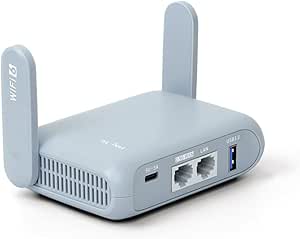 | Best Overall for Travel Privacy and Flexibility | Wi-Fi generation: Wi-Fi 6 | Frequency bands: Dual-band, 2.4 GHz and 5 GHz | Wireless speed: 574 Mbps (2.4 GHz) + 2402 Mbps (5 GHz) | VIEW LATEST PRICE | See Our Full Breakdown |
| ASUS RT-AX1800S Dual-Band WiFi 6 Router |  | Best for Multi-Device Home and Office Networks | Wi-Fi generation: Wi-Fi 6 (802.11ax) | Wireless bands: Dual-band | Maximum data transfer rate: 1800 Mbps | VIEW LATEST PRICE | See Our Full Breakdown |
| GL.iNet GL-SFT1200 Opal AC1200 Dual-Band Travel Router | 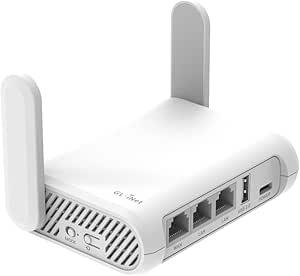 | Best Lightweight Travel VPN Router for Basic Security | Wi-Fi standard: Wi-Fi 5 (802.11a/b/g/n/ac) | Frequency bands: 2.4 GHz and 5 GHz | Maximum wireless data rate: 1200 Mbps | VIEW LATEST PRICE | See Our Full Breakdown |
| TP-Link Roam 7 BE3600 Wi-Fi 7 Portable Travel Router |  | Best for High-Speed, Large-Device Support in Travel Settings | Wi-Fi standard: Wi-Fi 7 | Wireless bands: Dual-band 2.4 GHz and 5 GHz | Maximum wireless speed: Up to 2882 Mbps (5 GHz) | VIEW LATEST PRICE | See Our Full Breakdown |
| TP-Link Roam 6 AX1500 Portable Wi-Fi 6 Travel Router (TL-WR1502X) |  | Best for Compact, Secure Travel Network Creation | Wi-Fi standard: Wi-Fi 6 (802.11ax) | Wi-Fi speed: Up to 1500 Mbps | Modes: Router, Hotspot, Access Point, Range Extender | VIEW LATEST PRICE | See Our Full Breakdown |
| TP-Link Roam 6 AX1500 Portable Dual-Band Wi-Fi 6 Travel Router |  | Best for Larger Travel Groups | Wi-Fi standard: Wi-Fi 6 | Wi-Fi bands: Dual-band, 2.4 GHz and 5 GHz | Maximum Wi-Fi speed: 1,201 Mbps (5 GHz); 300 Mbps (2.4 GHz) | VIEW LATEST PRICE | See Our Full Breakdown |
| GL.iNet Flint 3e Wi-Fi 7 Router with VPN |  | Best for High-Capacity Home VPN | Wi-Fi standard: Wi-Fi 7 (802.11be) | Maximum Wi-Fi speed: Up to 6.5 Gbps | VPN speed: Up to 1,100 Mbps with OpenVPN and WireGuard | VIEW LATEST PRICE | See Our Full Breakdown |
| Cudy R700 Gigabit Multi-WAN Router |  | Best for OpenWrt and Multi-WAN Control | Model: Cudy R700 | Ports: 5 Gigabit Ethernet RJ45 ports | Supported ISP connections: Up to 5 | VIEW LATEST PRICE | See Our Full Breakdown |
| TP-Link ER605 Wired Gigabit VPN Router |  | Best for Omada-Managed Wired VPN | Model: TP-Link ER605 | Ethernet ports: 5 Gigabit ports: 1 WAN, 2 WAN/LAN, and 2 LAN | USB WAN: 1 port for compatible 4G/3G modem backup | VIEW LATEST PRICE | See Our Full Breakdown |
| GL.iNet GL-A1300 Slate Plus Portable Dual-Band Travel Router |  | Best for OpenWrt Travel Customization | Wi-Fi standard: Dual-band Wi-Fi 5 (802.11ac) | Wireless speed: 400 Mbps (2.4 GHz) + 867 Mbps (5 GHz) | Processor and memory: IPQ4018 at 717 MHz; 256 MB RAM | VIEW LATEST PRICE | See Our Full Breakdown |
| GL.iNet GL-AXT1800 Slate AX Wi-Fi 6 Travel Router with VPN |  | Best for Public Wi-Fi Sharing | Wi-Fi: Wi-Fi 6, dual-band 2.4 GHz and 5 GHz | Combined wireless speed: Up to 1800 Mbps | VPN protocols: OpenVPN and WireGuard | VIEW LATEST PRICE | See Our Full Breakdown |
| GL.iNet GL-BE3600 Slate 7 Wi-Fi 7 Travel Router |  | Best for On-Device Controls | Wi-Fi: Wi-Fi 7, dual-band 2.4 GHz and 5 GHz | Wireless speed: 688 Mbps at 2.4 GHz + 2882 Mbps at 5 GHz | Ethernet: 2 × 2.5G ports: 1 WAN and 1 LAN | VIEW LATEST PRICE | See Our Full Breakdown |
| GL.iNet GL-MT300N-V2 Mango Portable Travel Wi-Fi Router |  | Best Ultra-Compact Pick | Wi-Fi: 802.11b/g/n (Wi-Fi 4), 2.4 GHz | Maximum data rate: 300 Mbps | VPN: OpenVPN client | VIEW LATEST PRICE | See Our Full Breakdown |
| TP-Link Roam 6 AX3000 Dual-Band Wi-Fi 6 Travel Router (TL-WR3002X) |  | Best for Multi-Mode Flexibility | Wi-Fi: Wi-Fi 6, AX3000 | Wireless speed: Up to 2402 Mbps at 5 GHz and 574 Mbps at 2.4 GHz | Ethernet: 1 × 2.5 Gbps WAN/LAN; 1 × 1 Gbps LAN | VIEW LATEST PRICE | See Our Full Breakdown |
| GL.iNet GL-MT3600BE Beryl 7 Dual-Band Wi-Fi 7 Travel Router |  | Best for Fast VPN Throughput | Wi-Fi: Wi-Fi 7, dual-band 2.4 GHz and 5 GHz | Wireless speed: 688 Mbps at 2.4 GHz + 2882 Mbps at 5 GHz | Ethernet: 2 × 2.5G ports: 1 WAN and 1 LAN | VIEW LATEST PRICE | See Our Full Breakdown |
More Details on Our Top Picks
GL.iNet GL-MT3000 Beryl AX Wi-Fi 6 Travel Router
This travel router stands out for combining Wi-Fi 6 support with robust VPN capabilities in a compact form. Unlike the GL.iNet GL-SFT1200, which is lightweight but lacks Wi-Fi 6, the Beryl AX offers faster wireless speeds and newer security features, making it ideal for frequent travelers needing secure, high-speed connections. Its 2.5G WAN port and dual-band Wi-Fi ensure reliable performance, while support for OpenVPN and WireGuard provides flexible VPN options. The main tradeoff is that VPN service subscriptions are necessary, and the toggle switch requires pre-configuration, which might be inconvenient for on-the-fly use. Overall, this router is best suited for tech-savvy travelers who prioritize speed and security without wanting to compromise portability.
Pros:- Supports Wi-Fi 6 for faster, more efficient wireless connections
- Includes a 2.5G WAN port for high-speed internet access
- Supports OpenWrt, OpenVPN, and WireGuard for flexible VPN setup
- Compact design suitable for travel
Cons:- Requires active VPN service subscriptions, adding ongoing costs
- Physical toggle switch needs pre-configuration, less intuitive for quick changes
Best for: Travelers who need a portable, high-performance VPN router with Wi-Fi 6 and multiple security options.
Not ideal for: Users seeking a simple plug-and-play device without the need for VPN configurations or active subscriptions.
- Wi-Fi generation:Wi-Fi 6
- Frequency bands:Dual-band, 2.4 GHz and 5 GHz
- Wireless speed:574 Mbps (2.4 GHz) + 2402 Mbps (5 GHz)
- WAN port:2.5G
- LAN port:1 Gbps
- VPN support:OpenVPN and WireGuard
- Security protocols:WPA3, DNS-over-HTTPS/TLS
- Operating system:Linux (OpenWrt 21.02)
Our verdict“This pick is ideal for frequent travelers who want a powerful, secure, and portable VPN router with future-proof Wi-Fi 6 technology.”
ASUS RT-AX1800S Dual-Band WiFi 6 Router
Compared with the travel-focused GL.iNet models, the ASUS RT-AX1800S excels in handling multiple devices simultaneously thanks to MU-MIMO and OFDMA, making it ideal for busy households or small offices. Its four external antennas enhance coverage, but actual Wi-Fi speeds and reliability can vary based on environment and device compatibility. The inclusion of AiProtection security, parental controls, and VPN access makes it a versatile choice for secure, managed networks. However, it’s less portable and more suited for fixed locations, and Wi-Fi performance may not match the latest Wi-Fi 6E or Wi-Fi 7 routers in high-density environments. This router is best for users seeking robust, multi-device Wi-Fi in a semi-permanent setup.
Pros:- Supports Wi-Fi 6 with MU-MIMO and OFDMA for multiple devices
- Five Gigabit Ethernet ports for wired connections
- Includes AiProtection security and VPN compatibility
- Supports AiMesh for extending coverage
Cons:- Wi-Fi speeds and coverage depend heavily on environment and device placement
- Lacks advanced Wi-Fi 6E or Wi-Fi 7 features for future-proofing
Best for: Small office or home users needing reliable Wi-Fi 6 coverage with security and VPN features.
Not ideal for: Travelers or mobile users who prioritize portability and quick setup over extensive device support.
- Wi-Fi generation:Wi-Fi 6 (802.11ax)
- Wireless bands:Dual-band
- Maximum data transfer rate:1800 Mbps
- Ethernet ports:1 WAN, 4 LAN
- Antennas:4 external
- Security:AiProtection, WPA2/WPA3
Our verdict“This router offers a reliable, high-capacity Wi-Fi 6 solution for fixed setups demanding security and multi-device support.”
GL.iNet GL-SFT1200 Opal AC1200 Dual-Band Travel Router
This compact router is well-suited for travelers who need simple yet secure Wi-Fi sharing. Compared with the Beryl AX, it lacks Wi-Fi 6 and faster speeds but compensates with a lightweight build and OpenWrt support, making it easy to create a private network over public Wi-Fi. Its three gigabit ports support wired connections, and VPN protocols like OpenVPN and WireGuard are preinstalled, streamlining setup. The main tradeoff is that the physical toggle switch must be pre-configured, which limits quick adjustments during travel. It’s less suitable for users who require high-speed, high-performance Wi-Fi but perfect for those prioritizing portability and secure access in basic scenarios.
Pros:- Lightweight and compact for travel
- Supports OpenWrt for advanced customization
- Preinstalled OpenVPN and WireGuard support
- Creates private networks from public Wi-Fi
Cons:- Requires pre-configuration of toggle switch, less flexible on the go
- Limited wireless speed compared to Wi-Fi 6 models
Best for: Travelers needing a lightweight, secure VPN router with OpenWrt support for basic internet privacy.
Not ideal for: Power users or those requiring Wi-Fi 6 speeds or advanced network features in a travel device.
- Wi-Fi standard:Wi-Fi 5 (802.11a/b/g/n/ac)
- Frequency bands:2.4 GHz and 5 GHz
- Maximum wireless data rate:1200 Mbps
- Ports:2 LAN, 1 WAN
- Weight:145 g
- VPN protocols:OpenVPN, WireGuard
Our verdict“This router is ideal for infrequent travelers seeking a portable, secure VPN setup with basic Wi-Fi sharing capabilities.”
TP-Link Roam 7 BE3600 Wi-Fi 7 Portable Travel Router
Compared to the Beryl AX, the Roam 7 leverages Wi-Fi 7 to deliver significantly higher speeds and support for up to 90 devices, making it suitable for busy environments. Its multiple operating modes, including router, hotspot, and access point, provide versatile deployment options. However, it does not support the 6 GHz band or OpenWrt, limiting customization and future-proofing. The inclusion of VPN client and server options, plus USB sharing, enhances its utility for secure, multi-device travel setups. This model makes the most sense for users who need ultra-fast Wi-Fi and extensive device support in a portable form, despite the absence of some advanced features like Wi-Fi 6E or open-source firmware.
Pros:- Supports Wi-Fi 7 for maximum speed and capacity
- Supports up to 90 devices simultaneously
- Multiple operating modes for versatile use
- Includes VPN client/server and USB sharing
Cons:- Does not support Wi-Fi 6E or 6 GHz band
- No open-source firmware like OpenWrt
Best for: Travelers or small groups requiring high-speed Wi-Fi 7 with support for many devices and multiple modes.
Not ideal for: Tech enthusiasts looking for open-source firmware or Wi-Fi 6E support for cutting-edge performance.
- Wi-Fi standard:Wi-Fi 7
- Wireless bands:Dual-band 2.4 GHz and 5 GHz
- Maximum wireless speed:Up to 2882 Mbps (5 GHz)
- Maximum connected devices:90
- Ports:1 Gbps WAN, 1 Gbps LAN, USB 3.0
- Supported modes:Router, Hotspot, Access Point, Range Extender, Client
Our verdict“This router is best for travelers who prioritize ultra-fast Wi-Fi 7 and device capacity over open-source flexibility.”
TP-Link Roam 6 AX1500 Portable Wi-Fi 6 Travel Router (TL-WR1502X)
Compared with the GL.iNet GL-MT3000 Beryl AX, the Roam 6 is a more compact option focused on creating private networks from public Wi-Fi, Ethernet, or USB tethering. It supports Wi-Fi 6, offering better future-proofing and faster speeds than older standards, but it doesn’t have the advanced features or open-source flexibility of the Beryl AX. Its multiple modes—including router, hotspot, and extender—make it flexible for travelers seeking secure connections without complex setup. However, it isn’t a dedicated mobile hotspot and lacks OpenWrt support, which limits customization. This device is ideal for users who need a small, reliable VPN router for frequent travel, prioritizing security and simplicity over open firmware or the latest Wi-Fi 7 technology.
Pros:- Creates private networks from public Wi-Fi, Ethernet, or tethering
- Supports Wi-Fi 6 for improved performance
- Multiple modes for flexible use
- USB-C power option for convenience
Cons:- Not a dedicated mobile hotspot, no cellular support
- Lacks open-source firmware like OpenWrt
Best for: Travelers needing a compact, secure VPN router with Wi-Fi 6 and multiple modes for basic privacy needs.
Not ideal for: Power users requiring open-source firmware or Wi-Fi 7 support for high-end performance.
- Wi-Fi standard:Wi-Fi 6 (802.11ax)
- Wi-Fi speed:Up to 1500 Mbps
- Modes:Router, Hotspot, Access Point, Range Extender
- Ports:2 Gigabit Ethernet, 1 USB 2.0
- Power:USB-C, 5V/3A
- Size:Approximately 4.09 × 3.54 × 1.10 in
Our verdict“This router is well-suited for travelers who want a small, secure, and versatile VPN device without the need for open firmware or the latest Wi-Fi standards.”
TP-Link Roam 6 AX1500 Portable Dual-Band Wi-Fi 6 Travel Router
The TP-Link Roam 6 AX1500 suits travelers who want one VPN-capable private network for a crowd of devices. Its listed support for up to 60 devices gives it an advantage over the more customization-focused GL.iNet GL-A1300 Slate Plus when sharing a hotel or public connection with family or coworkers. OpenVPN and WireGuard support let buyers route traffic through a VPN, while router, access point, repeater, and client modes offer flexibility across different network setups. USB-C power also makes it easier to use with a compatible 5V/3A source. The tradeoff is limited tinkering: it does not support OpenWrt, and its speed figures describe Wi-Fi links rather than guaranteed VPN throughput. Pick the Slate Plus if OpenWrt customization matters more than device capacity.
Pros:- Supports up to 60 connected devices
- Creates a private network from public Wi-Fi
- Supports OpenVPN and WireGuard
- USB-C power and four operating modes suit varied travel setups
Cons:- Does not support OpenWrt customization
- Actual Wi-Fi speeds depend on the source network and environment
Best for: Families or small work groups that want to share a VPN-ready travel network across many devices
Not ideal for: OpenWrt hobbyists or buyers who need published VPN throughput figures before choosing
- Wi-Fi standard:Wi-Fi 6
- Wi-Fi bands:Dual-band, 2.4 GHz and 5 GHz
- Maximum Wi-Fi speed:1,201 Mbps (5 GHz); 300 Mbps (2.4 GHz)
- Maximum connected devices:60
- VPN support:OpenVPN and WireGuard
- Ethernet ports:1 Gbps WAN/LAN and 1 Gbps LAN
- Operating modes:Router, access point, repeater, and client
- Power:USB-C; 5V/3A power source
Our verdict“Choose the Roam 6 AX1500 when group device capacity and flexible travel modes matter more than OpenWrt controls.”
GL.iNet Flint 3e Wi-Fi 7 Router with VPN
The GL.iNet Flint 3e is the home-scale pick here: its stated coverage of up to 2,500 square feet and capacity for over 100 devices make it a better fit for a busy household than the portable Roam 6 AX1500. Wi-Fi 7 features such as MLO and 4K-QAM target compatible devices, while listed OpenVPN and WireGuard speeds of up to 1,100 Mbps give VPN-heavy homes a stronger stated throughput ceiling than the travel routers in this group. AdGuard Home and parental controls add household management tools. Those figures are manufacturer specifications, not independent performance results, and real VPN speed depends on the internet connection and VPN service. Its dual-band design also has less band flexibility than tri-band alternatives. Choose it for a fixed home network, not a suitcase.
Pros:- Wi-Fi 7 support with MLO and 4K-QAM
- Listed VPN speeds reach up to 1,100 Mbps for OpenVPN and WireGuard
- Designed for coverage up to 2,500 square feet and over 100 devices
- AdGuard Home and parental controls provide household management options
Cons:- Performance claims are not accompanied by independent reliability results
- Dual-band configuration offers fewer frequency bands than tri-band routers
Best for: Households with many connected devices that want a Wi-Fi 7 home router with VPN and parental controls
Not ideal for: Frequent travelers or buyers who need independently documented real-world VPN performance
- Wi-Fi standard:Wi-Fi 7 (802.11be)
- Maximum Wi-Fi speed:Up to 6.5 Gbps
- VPN speed:Up to 1,100 Mbps with OpenVPN and WireGuard
- Coverage:Up to 2,500 sq ft
- Frequency band:Dual-band
- RAM:1 GB DDR4
- Ports:5; LAN bandwidth up to 2,500 Mbps
- Features:MLO, 4K-QAM, AdGuard Home support, and parental controls
Our verdict“Choose the Flint 3e for a high-capacity home VPN network, and choose the Roam 6 AX1500 for portable use.”
Cudy R700 Gigabit Multi-WAN Router
The Cudy R700 takes a wired, configurable approach to personal VPN routing. Its support for up to five ISP connections, load balancing, and automatic failover serves buyers who need resilient internet links, while OpenWrt support gives network tinkerers room to shape VLAN, firewall, and QoS rules. That makes it more adaptable for a custom wired setup than the TP-Link ER605, whose appeal centers on Omada SDN management and compatible USB modem backup. The R700 also lists WireGuard, OpenVPN, and IPsec among its VPN options. The key compromise is that its five ports are all Gigabit Ethernet, with no listed multi-gigabit port, and it provides no Wi-Fi. Its compact plastic case is practical, but this is a configuration-first gateway rather than an all-in-one travel router.
Pros:- Load balancing and automatic failover support up to five ISP connections
- OpenWrt supports extensive network customization
- Includes WireGuard, OpenVPN, and IPsec options
- Compact dimensions suit a small wired network setup
Cons:- No built-in Wi-Fi
- All five Ethernet ports are Gigabit, with no listed multi-gigabit option
- Plastic case may be less appealing for buyers seeking a metal enclosure
Best for: Network hobbyists or small offices combining multiple wired internet links with customizable VPN and VLAN rules
Not ideal for: Travelers or households that need built-in Wi-Fi or multi-gigabit Ethernet
- Model:Cudy R700
- Ports:5 Gigabit Ethernet RJ45 ports
- Supported ISP connections:Up to 5
- VPN protocols:WireGuard, OpenVPN, IPsec, PPTP, and L2TP
- Management:Web GUI, Cudy App, and TR-069
- Power:12 V DC, 1 A
- Dimensions:4.68 × 3.34 × 1.1 in
- Weight:455 g
Our verdict“Choose the R700 for a customizable, multi-WAN wired VPN gateway; choose the ER605 if Omada management and USB modem backup are priorities.”
TP-Link ER605 Wired Gigabit VPN Router
The TP-Link ER605 is a straightforward choice for buyers building a wired network around Omada SDN. Its five Gigabit Ethernet ports, support for up to three WAN connections, and USB WAN option for compatible 4G/3G modems make it useful when a fixed internet line needs backup or load balancing. Compared with the Cudy R700, the ER605 lists fewer supported ISP connections but adds a defined Omada management path and a five-year manufacturer warranty. It also lists capacity for several simultaneous VPN connections across IPsec, OpenVPN, L2TP, and PPTP. The main limitation for a personal VPN router is that it has no built-in Wi-Fi; you will need a separate access point for wireless devices. USB modem support also depends on compatibility, so check the supported list before relying on it.
Pros:- Supports up to three WAN connections and load balancing
- Omada SDN integration offers centralized network management
- Includes firewall, DoS defense, and IP/MAC/URL filtering
- USB WAN can support compatible 4G/3G modem backup
Cons:- No built-in Wi-Fi, so wireless use requires a separate access point
- USB modem backup depends on compatibility with supported models
- Gigabit ports do not provide a listed multi-gigabit connection
Best for: Small offices or home network builders who already use Omada and want wired VPN with WAN backup options
Not ideal for: Buyers who want a standalone wireless travel router or need support for more than three WAN ports
- Model:TP-Link ER605
- Ethernet ports:5 Gigabit ports: 1 WAN, 2 WAN/LAN, and 2 LAN
- USB WAN:1 port for compatible 4G/3G modem backup
- WAN support:Up to 3 WAN ports
- VPN connection capacity:Up to 20 IPsec, 16 OpenVPN, 16 L2TP, and 16 PPTP connections
- Security:SPI firewall, DoS defense, and IP/MAC/URL filtering
- Management:Omada SDN integration
- Dimensions:6.22 × 3.98 × 0.98 in
Our verdict“Choose the ER605 for an Omada-managed wired VPN network with WAN backup, and the R700 for broader multi-WAN and OpenWrt flexibility.”
GL.iNet GL-A1300 Slate Plus Portable Dual-Band Travel Router
The GL.iNet GL-A1300 Slate Plus is for travelers who want to tune their VPN setup instead of relying on a simpler managed interface. Running OpenWrt 21.02, it supports OpenVPN and WireGuard client and server functions, VPN routing policies, guest Wi-Fi, USB tethering, and configurable AdGuard Home. That flexibility gives it a stronger customization case than the TP-Link Roam 6 AX1500, which supports more connected devices but does not support OpenWrt. The Slate Plus is still a compact travel option, with USB network storage adding a useful way to share files. Its tradeoff is speed: the listed VPN ceiling is 28 Mbps on OpenVPN and 170 Mbps on WireGuard, so the latter is the better fit for bandwidth-sensitive use. Its physical toggle also needs configuration before it works.
Pros:- OpenWrt supports customization and app installation
- Offers OpenVPN and WireGuard client and server functions
- VPN routing policies and guest Wi-Fi support flexible travel setups
- USB network storage and tethering add connection and file-sharing options
Cons:- Listed VPN speed is limited to 28 Mbps with OpenVPN and 170 Mbps with WireGuard
- Physical toggle button must be configured in the admin panel
- Wi-Fi 5 is an older standard than the Wi-Fi 6 Roam 6 AX1500
Best for: Technically confident travelers who want OpenWrt policies, guest networking, and control over VPN routing
Not ideal for: Users who need high OpenVPN throughput or a travel router that works with no admin configuration
- Wi-Fi standard:Dual-band Wi-Fi 5 (802.11ac)
- Wireless speed:400 Mbps (2.4 GHz) + 867 Mbps (5 GHz)
- Processor and memory:IPQ4018 at 717 MHz; 256 MB RAM
- VPN support:OpenVPN and WireGuard
- Maximum VPN speed:28 Mbps (OpenVPN); 170 Mbps (WireGuard)
- Operating system:OpenWrt 21.02
- Ports:3; LAN bandwidth up to 1,000 Mbps
- Dimensions and weight:118 × 84 × 33 mm; 429 g
Our verdict“Choose the Slate Plus for customizable OpenWrt travel networking, especially if WireGuard meets your VPN needs.”
GL.iNet GL-AXT1800 Slate AX Wi-Fi 6 Travel Router with VPN
The Slate AX is a strong fit for travelers who want to turn hotel or café internet into one private network for their devices. Its public Wi-Fi repeating feature, including captive portal support, can simplify connecting a laptop, phone, and tablet through a single router login. Compared with the tiny GL.iNet GL-MT300N-V2 Mango, it offers dual-band Wi-Fi 6 and much higher stated VPN throughput, making it better suited to several connected devices. The tradeoff is that its physical feature switch needs setup in the admin panel before it can control VPN or AdGuard Home. Public Wi-Fi time limits can also mean reconnecting the router, so it cannot remove every hotel-network hassle.
Pros:- Repeats public Wi-Fi, including captive portal networks, into a private connection
- Dual-band Wi-Fi 6 supports more demanding travel use than single-band Wi-Fi 4 models
- Includes OpenVPN and WireGuard with stated VPN speeds up to 500 Mbps and 550 Mbps
- USB storage can be shared through SAMBA and WebDAV
Cons:- The physical switch must be configured in the admin panel before use
- Public Wi-Fi time limits may require reconnecting the router
- Two fixed antennas offer less placement flexibility than detachable designs
Best for: Frequent hotel travelers who want to share one public Wi-Fi login across several personal devices
Not ideal for: Travelers seeking the smallest, simplest router or who need public networks to reconnect automatically after time limits
- Wi-Fi:Wi-Fi 6, dual-band 2.4 GHz and 5 GHz
- Combined wireless speed:Up to 1800 Mbps
- VPN protocols:OpenVPN and WireGuard
- VPN speeds:Up to 500 Mbps OpenVPN; up to 550 Mbps WireGuard
- Operating system:OpenWrt 21.02
- Ethernet:3 ports; 1000 Mbps LAN bandwidth
- File sharing:SAMBA and WebDAV via connected USB storage
- Maximum connected devices:120
Our verdict“Choose the Slate AX if sharing public Wi-Fi across multiple devices matters more than having a pocket-small setup.”
GL.iNet GL-BE3600 Slate 7 Wi-Fi 7 Travel Router
The Slate 7 puts connection status and supported controls on a touchscreen, a useful distinction for travelers who want a quick read of the network without opening an admin page. Its two 2.5G Ethernet ports and USB 3.0 also give it more wired flexibility than the GL.iNet GL-AXT1800 Slate AX. Wi-Fi 7 is the headline, but the listed VPN performance matters more to a VPN-router buyer: WireGuard reaches up to 540 Mbps, while OpenVPN is listed at 100 Mbps. That gap makes it a better match for WireGuard users than for those who prioritize OpenVPN throughput. The screen’s button needs configuration before it does anything, and using a VPN service requires a separate active subscription.
Pros:- Touchscreen displays network status and provides supported controls
- Two 2.5G Ethernet ports support fast wired connections
- Includes OpenVPN and WireGuard clients and servers
- WPA3 and encrypted DNS options add security controls
Cons:- Listed OpenVPN speed is 100 Mbps, well below its WireGuard figure
- The touchscreen button has no function until configured
- A VPN service subscription is required for use with a provider
Best for: Travelers who want visible network status, quick controls, and multi-gigabit wired connections in a portable router
Not ideal for: OpenVPN-focused buyers who need higher listed VPN throughput or anyone expecting the touchscreen button to work without setup
- Wi-Fi:Wi-Fi 7, dual-band 2.4 GHz and 5 GHz
- Wireless speed:688 Mbps at 2.4 GHz + 2882 Mbps at 5 GHz
- Ethernet:2 × 2.5G ports: 1 WAN and 1 LAN
- VPN protocols:OpenVPN and WireGuard clients and servers
- Maximum VPN speed:100 Mbps OpenVPN; 540 Mbps WireGuard
- Firmware:OpenWrt 23.05, Kernel 5.4.213
- USB:USB 3.0
- Security:WPA3, DNS over HTTPS, and DNS over TLS
Our verdict“Pick the Slate 7 if touchscreen controls and 2.5G ports matter more to you than fast OpenVPN performance.”
GL.iNet GL-MT300N-V2 Mango Portable Travel Wi-Fi Router
At 39 g, the Mango is the most compact choice here for a traveler who wants a basic private Wi-Fi network and an OpenVPN client in a very small package. It can convert wired or public internet and supports tethering, while its app and web panel offer two setup routes. Compared with the larger GL.iNet GL-AXT1800 Slate AX, it gives up Wi-Fi 6, 5 GHz, and faster VPN options; its single 2.4 GHz Wi-Fi 4 band and 100 Mbps LAN make it a modest-use device. That tradeoff is reasonable for light browsing and a few devices, but it limits room for faster connections or heavier VPN traffic. The power adapter is sold separately.
Pros:- Lightweight at 39 g for easy packing
- Can create private Wi-Fi from public or wired internet and supports tethering
- OpenWrt and an OpenVPN client are pre-installed
- Can be managed through a mobile app or web panel
Cons:- Single-band 2.4 GHz Wi-Fi 4 limits wireless capacity and speed
- 100 Mbps LAN port is a bottleneck for faster wired service
- Power adapter is sold separately
Best for: Light-packing solo travelers who need a small OpenVPN router for basic browsing on wired or public internet
Not ideal for: Multi-device households, 5 GHz users, or travelers who need high VPN throughput and gigabit wired networking
- Wi-Fi:802.11b/g/n (Wi-Fi 4), 2.4 GHz
- Maximum data rate:300 Mbps
- VPN:OpenVPN client
- Ethernet:2 ports; 100 Mbps LAN bandwidth
- Operating system:OpenWrt
- USB:USB 2.0
- Memory:128 MB RAM; 16 MB flash
- Weight:39 g (1.41 oz)
Our verdict“Choose the Mango for the lightest basic OpenVPN travel setup, provided Wi-Fi 4 speeds meet your needs.”
TP-Link Roam 6 AX3000 Dual-Band Wi-Fi 6 Travel Router (TL-WR3002X)
The Roam 6 AX3000 suits travelers who want one compact router to shift between hotel hotspot, access point, repeater, and standard router duties. Its Wi-Fi 6 radios and 2.5 Gbps WAN/LAN port give it a stronger wired and wireless foundation than the GL.iNet GL-MT300N-V2 Mango. It also supports OpenVPN and WireGuard client and server connections, with USB 3.0 and microSD file sharing for travelers carrying local media. The key compromise for VPN-router enthusiasts is that it does not support OpenWrt, so buyers have less firmware customization than with the Slate AX or Slate 7. Actual Wi-Fi speeds also depend on the network and environment, so the AX3000 class is not a promise of real-world throughput.
Pros:- Router, Hotspot, AP, and RE modes cover varied travel setups
- Supports OpenVPN and WireGuard client and server connections
- 2.5 Gbps WAN/LAN and 1 Gbps LAN ports support fast wired links
- USB 3.0 and microSD support enable local file sharing
Cons:- OpenWrt is not supported, limiting firmware customization
- Actual Wi-Fi speeds vary with bandwidth, distance, and environment
Best for: Travelers who want several network modes, current VPN protocols, and local USB or microSD file sharing
Not ideal for: OpenWrt users who want firmware customization or buyers seeking guaranteed wireless speeds in every hotel
- Wi-Fi:Wi-Fi 6, AX3000
- Wireless speed:Up to 2402 Mbps at 5 GHz and 574 Mbps at 2.4 GHz
- Ethernet:1 × 2.5 Gbps WAN/LAN; 1 × 1 Gbps LAN
- VPN protocols:OpenVPN, WireGuard, PPTP, and L2TP
- Network modes:Router, Hotspot, AP, and RE
- USB:USB-C power; USB 3.0 for file sharing
- microSD:Supports cards up to 512 GB
- Dimensions:4.1 × 3.5 × 1.1 inches
Our verdict“Choose the Roam 6 AX3000 if you value flexible modes and fast wired ports more than OpenWrt access.”
GL.iNet GL-MT3600BE Beryl 7 Dual-Band Wi-Fi 7 Travel Router
The Beryl 7 is the performance-minded pick for buyers who want a portable personal VPN router with Wi-Fi 7 and unusually high stated VPN speeds. Its listed WireGuard throughput reaches 1100 Mbps, while OpenVPN-DCO reaches 1000 Mbps, making it a stronger fit for VPN-heavy use than the Slate 7, whose listed OpenVPN speed is 100 Mbps. Two 2.5G Ethernet ports, support for up to 120 devices, and OpenWrt add flexibility for a travel network that serves more than one laptop. That capability comes with setup tradeoffs: VPN provider use requires an active subscription, and the physical toggle switch needs configuration in the admin panel. Real-world throughput will also depend on network conditions and configuration.
Pros:- Listed VPN speeds reach 1100 Mbps with WireGuard and 1000 Mbps with OpenVPN-DCO
- Wi-Fi 7 and dual 2.5G Ethernet ports suit faster travel connections
- OpenWrt supports customization and plugins
- Supports up to 120 devices and VPN client and server features
Cons:- A VPN provider subscription is required for provider-based VPN use
- The physical toggle switch must be configured in the admin panel
- Real-world speeds vary with network configuration
Best for: VPN-focused travelers who want high listed WireGuard or OpenVPN-DCO throughput and multi-gigabit wired ports
Not ideal for: Buyers who want a plug-and-play physical toggle or do not need Wi-Fi 7 and advanced VPN throughput
- Wi-Fi:Wi-Fi 7, dual-band 2.4 GHz and 5 GHz
- Wireless speed:688 Mbps at 2.4 GHz + 2882 Mbps at 5 GHz
- Ethernet:2 × 2.5G ports: 1 WAN and 1 LAN
- VPN protocols:WireGuard and OpenVPN
- VPN speeds:Up to 1100 Mbps WireGuard; up to 1000 Mbps OpenVPN-DCO
- Firmware:OpenWrt 21.02, Kernel 5.4.281
- USB:USB 3.0
- Maximum supported devices:Up to 120
Our verdict“Pick the Beryl 7 if VPN throughput is your priority and you are comfortable configuring its controls.”

How We Picked
I compared these 15 personal VPN routers by how well they fit distinct real-world needs: travel, home use, wired network management, and entry-level VPN sharing. The ranking favors practical VPN support, usable Wi-Fi, portability where relevant, connection options, and how much setup the buyer must handle. A newer wireless standard earns credit only when it adds value to the intended use; it does not by itself make a router a better VPN choice.
I also weighed build and maintenance, including whether a model makes sense as a compact travel companion or a permanent network device, and whether its role requires extra equipment such as a wireless access point. The top position goes to the Beryl AX for its balance across common travel needs. Specialized wired routers rank lower for general buyers, not because they lack value, but because they serve a narrower setup. Compact and older-standard options remain relevant for buyers who prioritize simplicity or size over higher wireless capability.
Factors to Consider When Choosing Personal VPN Routers
Before choosing a router, I would start with the network you need it to manage—not the newest Wi-Fi number on the box. These decisions affect VPN performance, device compatibility, and whether the router will be useful after a trip.
Match the Router to Travel or Permanent Home Use
A travel router is designed to fit temporary setups, such as a hotel connection or a shared workspace, while a home router needs to support a fixed network and broader everyday coverage. Buying a small travel model for an entire home can leave rooms with weak wireless service or require extra access points. A home-focused router can be awkward to pack and may offer features you will not use on the road. Think about where the router will live most of the time, not only where it might be useful once. If you travel often but also want whole-home coverage, a dedicated pair of devices may work better than asking one router to serve both roles.
Check VPN Protocols, Service Compatibility, and Throughput
A router can support VPN connections, but that does not mean it works with every VPN provider or configuration. Check the provider’s setup instructions and confirm the router supports a protocol and configuration you can use. VPN encryption adds processing work, so advertised Wi-Fi speeds do not tell you how fast a protected connection will be. Your actual result can also depend on the VPN server, internet connection, and number of active devices. If you rely on video calls, large downloads, or streaming while connected, prioritize credible VPN performance information over a headline wireless speed. Leave room for lower throughput when traffic is encrypted.
Decide Whether Wi-Fi 6 or Wi-Fi 7 Solves a Real Problem
Newer Wi-Fi standards can help with compatible devices and busy wireless environments, but only when the rest of your network can take advantage of them. A Wi-Fi 7 travel router will not make an older phone or a slow hotel connection faster by itself. For many travelers, a stable connection, convenient setup, and workable VPN speed matter more than having the newest standard. At home, consider how many compatible devices you own and whether you plan to keep the router for several years. Avoid paying for wireless features that cannot improve the connection you actually have.
Count Ports and Plan for Wired Devices
Ethernet ports can be useful for a laptop, console, smart TV, or a network connection that is more reliable than shared Wi-Fi. A wired VPN router may provide network controls without providing wireless access, so it can require a separate access point. That setup can be a good fit for buyers who already maintain a network, but it adds equipment and configuration for everyone else. Check whether the router has the WAN and LAN connections you need, especially if you want to connect multiple wired devices. Do not assume a router’s VPN label means it is a complete wireless solution.
Choose a Setup You Can Maintain
VPN routers vary in how much configuration they ask of the owner, and a feature-rich setup can take more time to manage. Before buying, check how the router handles initial setup, firmware updates, and reconnecting after a network change. A travel router may need to work with captive portals or unfamiliar Wi-Fi networks, which can add steps even when the VPN itself is configured. Consider whether you are comfortable troubleshooting a router when away from home. If not, favor a straightforward workflow over advanced controls you are unlikely to use.
Balance Portability, Power, and Future Needs
Compact routers are easier to pack, but small size can come with fewer ports or more modest wireless capability. Also check how a travel router receives power and whether its cabling fits your luggage and usual travel setup. A model that is convenient for a single laptop may feel limiting when several people connect phones, tablets, and work devices. Conversely, carrying a larger router for occasional use can add bulk without improving the internet connection available at your destination. Choose for your typical number of devices and travel pattern, then treat future-proofing as a bonus rather than the main reason to buy.
Frequently Asked Questions
Can one personal VPN router protect every device on my Wi-Fi?
It can route traffic from connected devices through a VPN when the router and VPN service are configured to do so. That can be useful for devices that do not offer convenient VPN apps, but the router does not automatically cover devices connected to a different network. Check whether the router supports the VPN provider’s setup and whether you can choose which traffic uses the VPN. Some services or network features may behave differently when all traffic is routed through a remote server. Keep a separate way to connect without the VPN if a work service or local device requires it.
Will a travel VPN router work with hotel Wi-Fi that requires a sign-in page?
Many travel routers are intended to share an existing connection, but a hotel sign-in page can add a step before the router has internet access. The router may need to connect to the hotel network first, then complete its captive-portal login using a connected device. The exact process varies by hotel network and router software, so confirm the setup workflow before relying on it for a trip. Some networks limit connected devices or block certain traffic, which a router may not bypass. A phone hotspot is a useful fallback when the hotel network does not cooperate.
Is a wired VPN router enough for a home network?
Not by itself if you need wireless internet access and the router does not provide Wi-Fi. A wired model can manage VPN traffic and Ethernet connections, but a separate wireless access point may be needed for phones, laptops, and other Wi-Fi devices. This arrangement can suit someone who already has network equipment or wants to choose a separate access point. It adds setup and troubleshooting compared with an all-in-one wireless router. Check the complete equipment list before choosing a wired-only model.
Should I choose a Wi-Fi 7 travel router over a Wi-Fi 6 model?
Choose Wi-Fi 7 if you have compatible devices, expect to use networks that can benefit from it, and value having newer wireless hardware. If most of your devices are older or your travel internet connection is the limiting factor, Wi-Fi 6 may be enough. VPN speed depends on more than the Wi-Fi standard, including router processing, VPN configuration, and the remote server. Compare portability, ports, and setup as well as the wireless generation. Paying for Wi-Fi 7 makes less sense when the features will sit unused.
Can a personal VPN router replace the VPN app on my phone or laptop?
It may cover those devices while they are connected through the router and the router’s VPN tunnel is active. It cannot protect the device when it leaves that network, such as when a phone switches to cellular data or a laptop joins another Wi-Fi network. A device-level VPN app can travel with the device, while a router can cover several connected devices at once. Some buyers use both approaches for different situations. Check your VPN provider’s rules and decide which devices need protection away from the router.
Conclusion
For most travelers, I would choose the GL.iNet GL-MT3000 Beryl AX as the best overall balance of portability, Wi-Fi 6, and VPN-oriented use. The GL.iNet GL-Opal is the value pick for buyers who want a simpler, more modest travel router, while the GL.iNet GL-MT300N-V2 Mango suits those who put compact size and basic needs first. For a newer premium travel option, look at the GL.iNet GL-MT3600BE Beryl 7; beginners should compare setup simplicity and their VPN provider’s instructions before choosing, with the Beryl AX offering a capable middle ground. For home Wi-Fi, consider the ASUS RT-AX1800S or GL.iNet Flint 3e; for wired network control and multi-WAN needs, the TP-Link ER605 or Cudy R700 is a better fit, provided you account for any separate wireless access point.
Fall Picks
fall essentials
As an affiliate, we earn on qualifying purchases.