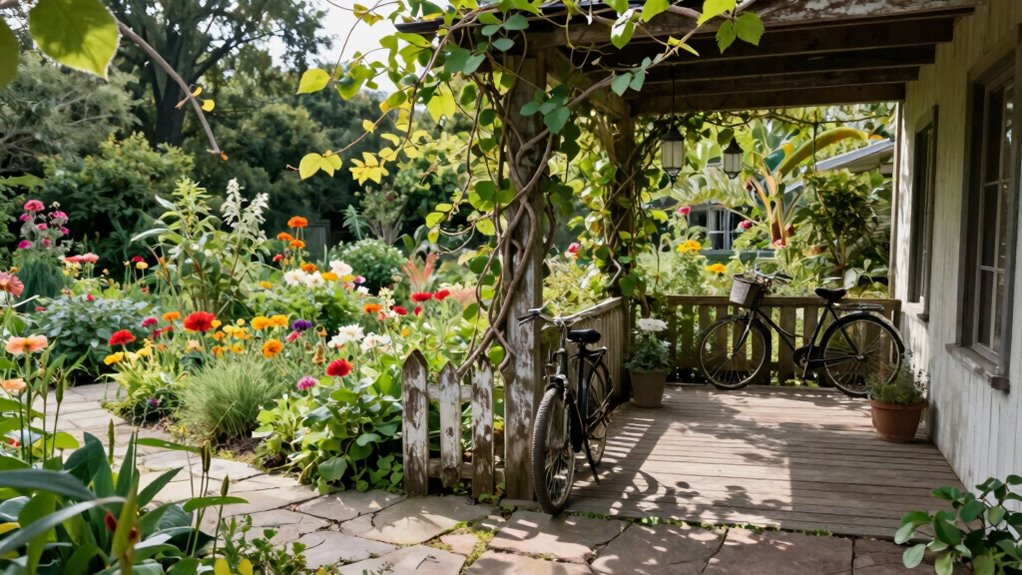

Your environment becomes part of your personality by shaping your beliefs, behaviors, and emotional responses from the moment you’re born. Your family, community, and cultural norms influence your values, social skills, and worldview. Physical surroundings and life experiences help develop resilience, curiosity, and adaptability. Recognizing how your environment influences your traits can give you deeper self-understanding. If you explore further, you’ll discover ways to consciously shape your environment for continued personal growth.

Get privacy and security gear delivered free with Prime
- Fast, free delivery on millions of items
- Prime Video, Amazon Music and more included
- Member-only deals all year
Key Takeaways
- Your environment influences your beliefs, attitudes, and behaviors from birth, shaping your personality over time.
- Family and cultural settings establish foundational values and emotional patterns that become part of your identity.
- Physical surroundings and social contexts provide experiences that develop your social skills and worldview.
- External circumstances like education and socioeconomic status impact traits such as confidence, resilience, and adaptability.
- Ongoing interactions and challenges in your environment contribute to personal growth and evolving personality traits.

Have you ever wondered how your surroundings shape who you are? It’s a question that taps into the core of your identity and the subtle ways your environment influences your personality development. From the moment you’re born, your environment plays an essential role in molding your behaviors, beliefs, and attitudes. Environmental influences aren’t just passive backdrops; they actively shape your emotional responses, social skills, and even your outlook on life. Whether you’re raised in a bustling city or a quiet countryside, the circumstances around you leave an imprint that, over time, becomes part of your personality story.
Your family environment, for example, is often the first and most significant influence. The values they instill, the way they handle challenges, and the emotional climate at home contribute heavily to your sense of self. A nurturing, supportive family encourages confidence and openness, while a tense or unpredictable environment may lead to anxiety or guardedness. These early experiences set the foundation for your social interactions and emotional resilience, illustrating how environmental influences shape who you become. Recognizing the importance of early childhood environment can help you understand the roots of your personality traits better. Additionally, understanding how environments actively shape behaviors can empower you to make conscious choices about your surroundings. For instance, the physical environment, such as a calm or chaotic setting, can influence your stress levels and overall mental health.
Family environment shapes your self-identity, emotional resilience, and social skills through values, challenges, and emotional climate.
As you grow, your social surroundings continue to mold your personality. The friends you keep, the community you engage with, and the cultural norms you absorb all contribute to your worldview. In environments that emphasize independence, you might develop a strong sense of self-reliance. Conversely, in settings that value collectivism, you may prioritize group harmony and cooperation. These social cues and cultural expectations become embedded in your personality, guiding your choices and how you relate to others. For example, exploring cultural diversity can reveal how exposure to different traditions and perspectives influences your openness and adaptability.
External circumstances like education, economic status, and even geographic location further influence your personality development. For instance, access to quality education can boost your confidence and curiosity, while socioeconomic challenges might foster resilience or caution. Your environment teaches you how to navigate the world, and through repeated interactions, these lessons become part of your personality fabric. Over time, your reactions, habits, and attitudes are shaped by the environment’s demands and opportunities. Recognizing the impact of geographic location can help you appreciate how physical surroundings contribute to your personality. Additionally, specific environments can nurture particular traits, such as creativity or adaptability, depending on the resources and opportunities available.
Ultimately, your environment isn’t just a background element; it actively contributes to your personal growth. Every interaction, challenge, and support system helps sculpt your identity. Recognizing this can empower you to understand how your surroundings have influenced your traits and behaviors. It also highlights the potential for change—by intentionally modifying your environment or seeking new experiences, you can continue to evolve and redefine your personality story.
self-awareness journal for personal growth
As an affiliate, we earn on qualifying purchases.
As an affiliate, we earn on qualifying purchases.
Frequently Asked Questions
How Quickly Does Environment Influence Personality Development?
Environmental psychology shows that your environment can influence personality development surprisingly quickly, sometimes within weeks or months. You adapt through personality adaptation, shaping traits based on your surroundings. As you interact with your environment, your behaviors and attitudes shift, reflecting its impact. The more consistent your environment, the more it molds your personality over time, demonstrating how powerful environmental factors are in shaping who you become.
Can Changing Environments Alter Long-Term Personality Traits?
Changing environments can indeed alter long-term personality traits, especially if you embrace personality adaptation and develop environmental resilience. Research suggests that, with consistent effort, you can reshape certain aspects of yourself, like increasing openness or reducing stress responses. Your environment influences your behavior over time, and by intentionally shifting your surroundings, you foster growth and resilience, ultimately leading to lasting changes in your personality.
What Environmental Factors Have the Strongest Impact on Personality?
Environmental factors like social settings, physical spaces, and cultural influences have the strongest impact on your personality. Environmental psychology shows how these elements shape your behaviors and attitudes over time. You adapt your personality through these surroundings, leading to personality adaptation. For example, a supportive community encourages confidence, while a stressful environment can foster anxiety. Recognizing these influences helps you understand how your environment molds who you are.
Does Environment Affect Personality Differently at Various Life Stages?
Yes, environment affects your personality differently at various life stages. During childhood, environmental stability shapes your foundational traits, while in adulthood, resilience in facing changing circumstances influences your personality growth. You adapt and develop through life’s shifts, with stable environments fostering consistency and volatile ones promoting flexibility. In each phase, your environment molds your personality by challenging or supporting your ability to grow and adapt over time.
How Do Cultural Environments Shape Personality Differences?
Cultural environments shape your personality through norms and social interactions. When you grow up in a culture with specific expectations, you tend to adopt behaviors aligned with those norms. Your social interactions reinforce these traits, influencing your attitudes, values, and even emotional responses. Over time, this cultural shaping becomes a core part of your identity, guiding how you see the world and relate to others.
environmental stress relief products
As an affiliate, we earn on qualifying purchases.
As an affiliate, we earn on qualifying purchases.
Conclusion
Remember, your environment shapes who you are just as much as you shape it. Every space you inhabit leaves an imprint on your personality, influencing your thoughts, habits, and outlook. As the saying goes, “You are the company you keep,” and that’s true of your surroundings too. Embrace your environment’s power to nurture growth or challenge you, and choose wisely. Ultimately, your environment isn’t just a backdrop—it’s an essential part of your personal story.
emotional resilience training tools
As an affiliate, we earn on qualifying purchases.
As an affiliate, we earn on qualifying purchases.
cultural diversity books for self-understanding
As an affiliate, we earn on qualifying purchases.
As an affiliate, we earn on qualifying purchases.
Halloween Picks
halloween
As an affiliate, we earn on qualifying purchases.