
Structured interviews still matter because they guarantee consistency, fairness, and objectivity in the hiring process, which personality tests alone can’t guarantee. They help you ask the same questions to all candidates, reducing bias and making it easier to compare responses. Training interviewers improves their ability to interpret answers accurately and avoid unconscious biases. When combined, these methods give you a fuller picture of candidates. Keep exploring to find out how integrating these tools can boost your hiring success.

Get privacy and security gear delivered free with Prime
- Fast, free delivery on millions of items
- Prime Video, Amazon Music and more included
- Member-only deals all year
Key Takeaways
- Structured interviews ensure fairness and consistency, reducing biases that personality tests alone may not address.
- They enable objective comparison of candidates’ skills and experience, complementing personality insights.
- Proper interviewer training enhances interpretation and minimizes subjective biases during structured interviews.
- Combining both methods provides a more comprehensive understanding of a candidate’s suitability.
- Structured interviews promote reliable, fair hiring decisions, reducing turnover and improving overall selection quality.
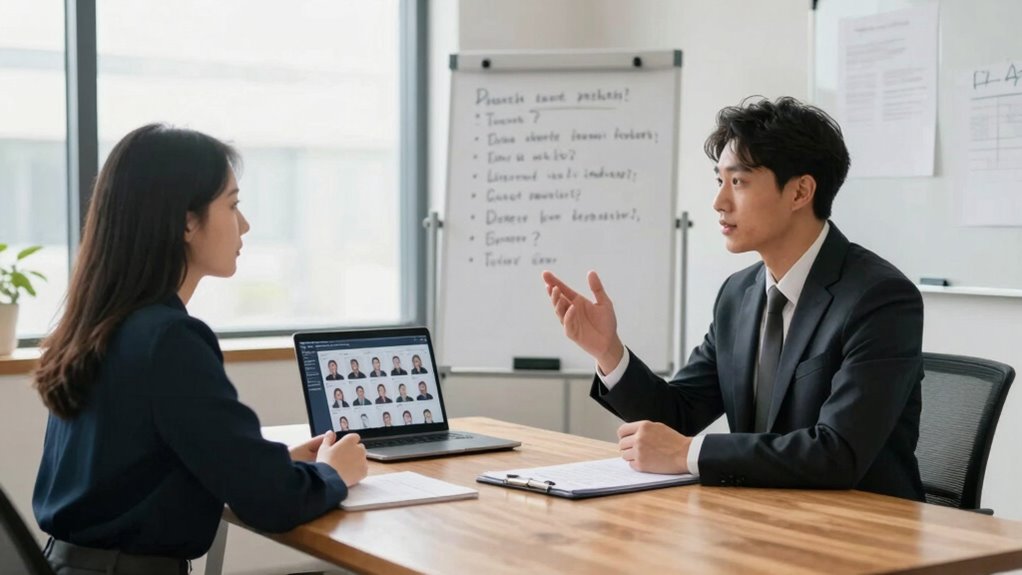
Have you ever wondered how employers decide who’s the best fit for a job? It’s not just about resumes or gut feelings. Instead, many companies rely on structured interviews to make fair, consistent decisions. These interviews are carefully planned, asking all candidates the same set of questions, which helps reduce biases and improves the reliability of the hiring process. These practices are especially important in candidate evaluation to ensure fairness and accuracy. But why do they still matter when personality tests are also in play? The answer lies in how these tools complement each other to create a well-rounded evaluation.
Structured interviews focus on candidate engagement; they give you and the interviewer a clear framework to explore a candidate’s skills, experience, and problem-solving abilities. Because the questions are standardized, you can compare candidates more objectively. This consistency makes it easier to assess who truly aligns with the role’s requirements. Hiring managers and interviewers benefit from interviewer training, which is vital to ensure they ask questions consistently and interpret answers correctly. Well-trained interviewers know how to avoid leading questions or unintentional biases, creating a fair process that respects every applicant. Additionally, training can enhance the interviewers’ ability to recognize unconscious biases, further improving the fairness of the process.
Structured interviews ensure fairness and consistency, helping you identify the best-fit candidates objectively.
While personality tests offer insights into a candidate’s traits, values, and behavioral tendencies, they don’t tell the full story of how someone performs in a real work environment. Personality assessments are valuable, but they can sometimes be too abstract or easy to interpret incorrectly without context. Structured interviews, on the other hand, allow you to see firsthand how a candidate thinks on their feet, handles pressure, or communicates. These are qualities that often predict on-the-job success more accurately than personality traits alone. Moreover, incorporating structured interview techniques can help mitigate potential biases that may arise from subjective personality interpretations. Additionally, combining these methods can help identify hidden strengths that might not be immediately apparent through personality tests alone.
Integrating structured interviews with personality tests creates a comprehensive picture of each candidate. You get the objectivity and fairness of a standardized approach combined with the depth of understanding provided by personality insights. This dual approach improves candidate engagement, as candidates feel they’re being evaluated fairly and transparently. It also streamlines the interview process, making it more efficient for both sides. When interviewers are properly trained, they can better interpret personality test results within the context of structured questions, making the overall assessment more precise. Furthermore, the reliability of structured interviews enhances confidence in the hiring decisions, reducing the chances of future turnover. Proper validation and calibration of interview questions further ensure consistency and fairness across different candidates and hiring rounds.
In the end, structured interviews still matter because they ground your hiring decisions in consistent, fair practices while complementing the insights gained from personality tests. Together, they help you identify not just the most qualified, but also the most suitable candidate—someone who will thrive in your organization and contribute meaningfully.
Products Worth Considering

Logitech MX Mechanical Wireless Illuminated Keyboard, Clicky

Logitech MX Vertical Wireless Ergonomic Mouse – Graphite
Apple MacBook Pro 16.2-inch with M5 Pro, 18-Core CPU, 20-Core GPU, 48GB Memory, 1TB SSD, Wi-Fi 7, Silver
As an affiliate, we earn on qualifying purchases.
Frequently Asked Questions
How Do Structured Interviews Improve Hiring Accuracy?
Structured interviews improve your hiring accuracy by promoting behavioral consistency, ensuring you evaluate each candidate fairly and systematically. By using interview standardization, you ask the same set of questions, making it easier to compare responses objectively. This process reduces biases, helps you identify truly qualified candidates, and increases the likelihood of selecting someone who fits your company culture and role requirements effectively.
Are Personality Tests Legally and Ethically Fair?
Personality tests can be legally and ethically fair if you carefully consider legal considerations and ethical implications. Guarantee tests are validated, non-discriminatory, and relevant to the job, avoiding biases that could lead to unfair treatment. By following these guidelines, you promote fairness while respecting candidates’ rights. Regularly reviewing your testing procedures helps maintain compliance and ethical standards, making sure you use personality assessments responsibly in your hiring process.
Can Structured Interviews Reduce Interviewer Bias Effectively?
Structured interviews can effectively reduce interviewer bias by promoting candidate consistency, ensuring each applicant is evaluated on the same criteria. Your interviewers need thorough training to follow standardized questions and scoring methods, which minimizes subjective judgments. This approach helps create a fairer, more objective hiring process, making it easier to compare candidates accurately. Proper training and consistency are key to leveraging structured interviews’ full potential in reducing bias.
What Are Common Pitfalls in Conducting Structured Interviews?
Imagine you’re guiding a maze of candidate anxiety—common pitfalls in structured interviews include inconsistent questions that hamper interview consistency. You might unintentionally increase candidate anxiety if you stray from your script or ask irrelevant questions. To avoid this, stick to a standardized format, stay calm, and make certain each candidate faces the same questions. This keeps the process fair, reduces bias, and helps you accurately evaluate their true potential.
How Do Organizations Integrate Both Methods Seamlessly?
You can integrate structured interviews and personality tests seamlessly by aligning your questions with job requirements, ensuring interview consistency. Engage candidates by clearly explaining each step and the purpose behind them, making the process transparent and motivating. Use structured interview scores to complement personality test results, providing a holistic view of candidates. This approach enhances candidate engagement and helps you make fair, well-informed hiring decisions.
Conclusion
But what if relying solely on personality tests isn’t enough? Imagine walking into an interview where every question is carefully crafted to reveal the real you—beyond just your answers on a sheet. Structured interviews hold that power, uncovering hidden traits and true potential. So, as you prepare for your next opportunity, remember: combining these tools might just be the key to revealing your future. Are you ready to show them who you really are?