
Personality assessments at work are designed to predict how you’ll behave, interact, and adapt in a professional setting. They help employers understand your traits like teamwork, empathy, independence, or resilience. These tools also forecast how you handle stress and change, your leadership style, and your fit within a team or company culture. By exploring these insights, organizations aim to build stronger teams and support your growth—you’ll discover more about what these assessments reveal as you go along.

Get privacy and security gear delivered free with Prime
- Fast, free delivery on millions of items
- Prime Video, Amazon Music and more included
- Member-only deals all year
Key Takeaways
- Future job performance and overall suitability for specific roles or tasks
- Interpersonal skills, teamwork, and potential for collaboration
- Ability to adapt to change, handle stress, and manage workplace challenges
- Leadership style, motivation, and potential for growth within the organization
- Compatibility with organizational culture and contribution to a positive work environment
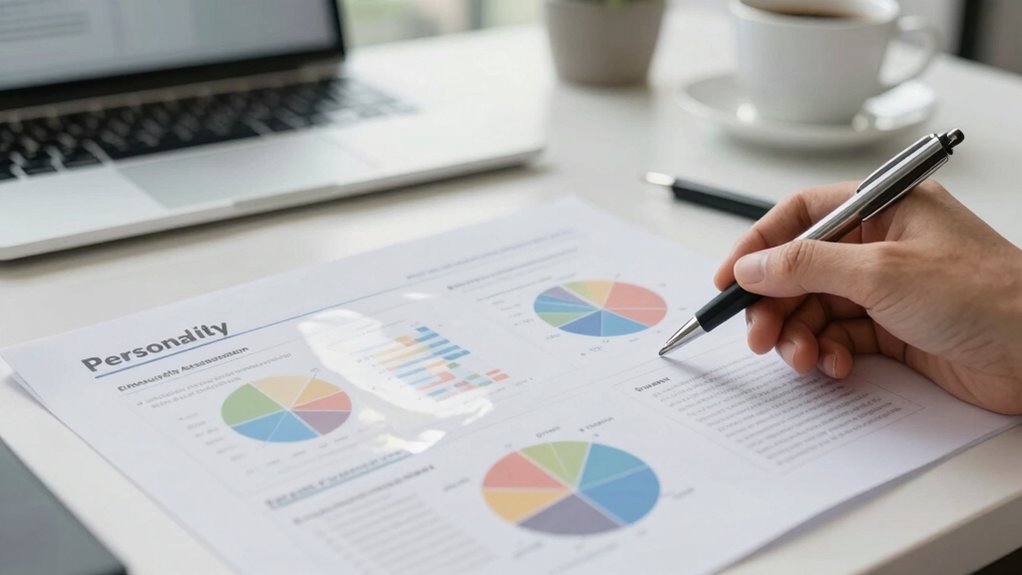
Have you ever wondered how employers determine if someone will thrive in a specific role? They often turn to personality assessments, tools designed to gauge your traits and predict how you’ll perform in a work environment. But these assessments aren’t just about labeling; they aim to give insights into how you interact with others, adapt to change, and handle stress. When companies evaluate your personality, they’re really trying to understand how you’ll fit into the team dynamic and what leadership style you might naturally embody. This helps them assemble balanced teams and identify potential leaders who can inspire or manage others effectively.
Personality assessments look beyond skills and experience. They’re designed to predict how you’ll behave in various workplace situations, which directly influences team cohesion and productivity. For example, if you’re naturally collaborative and empathetic, you’re likely to enhance team dynamics by fostering open communication and trust. Conversely, if you tend to be more independent or reserved, employers might consider how you’ll contribute to group projects or handle feedback. By understanding these traits, companies can better anticipate how well you’ll work with colleagues and whether you’ll support a positive work culture. Personality assessments also aim to identify behavioral tendencies that influence workplace interactions. Additionally, resale value of certain traits or skills can provide clues about how well an individual might adapt or remain valuable over time. A deeper understanding of natural behaviors can help employers tailor development programs to foster your growth, especially considering the importance of cultural significance in crafting authentic and meaningful workplace environments.
Personality traits like empathy and collaboration boost team harmony and workplace success.
Leadership styles are another key aspect these assessments try to predict. Some people have a natural tendency to lead by example, motivate others, and make decisions confidently. Others may prefer a more supportive or analytical approach. When employers identify these tendencies through personality tests, they can assign roles that align with your strengths or develop leadership training tailored to your style. This helps create a leadership pipeline within the organization, ensuring that managers and team leads are well-suited to their roles.
Ultimately, personality assessments aren’t just about categorizing employees; they’re strategic tools that help organizations understand how individuals will behave, collaborate, and lead. They provide a window into your interpersonal skills, decision-making tendencies, and adaptability—all of which are critical for predicting success in a given role. By focusing on these areas, employers aim to build effective teams and cultivate leadership from within. So, when you take a personality test, remember it’s not just about fitting a mold but about helping both you and the company find the right fit—one that maximizes your strengths and supports your growth in the workplace.
personality assessment tools for workplace
As an affiliate, we earn on qualifying purchases.
As an affiliate, we earn on qualifying purchases.
Frequently Asked Questions
How Accurate Are Personality Assessments in Predicting Job Performance?
Personality assessments can offer useful insights, but their accuracy in predicting job performance isn’t foolproof. Validity concerns mean they might not always reflect real work behavior, and biases can skew results. However, when used alongside other methods and with bias mitigation strategies, they can help identify traits that align with job success. Keep in mind, no assessment guarantees perfect predictions, so use them as one part of a broader hiring process.
Can Personality Tests Determine an Employee’s Potential for Leadership Roles?
Personality tests are like crystal balls, offering glimpses into leadership potential. They provide valuable leadership insights by highlighting traits such as confidence, resilience, and interpersonal skills. Through potential evaluation, you can identify employees with qualities that suggest they’re ready to lead. While not foolproof, these assessments help you spot future leaders early, guiding development plans and fostering a strong leadership pipeline.
Are Personality Assessments Reliable Across Different Cultural Backgrounds?
You should be cautious about relying on personality assessments across different cultural backgrounds because cultural biases can influence results. These biases may affect assessment fairness, making the tools less reliable for diverse groups. To guarantee fairness, it’s vital to take cultural context into account and use assessments designed or adapted to minimize bias. This helps you make more accurate, equitable decisions in the workplace.
How Do Personality Assessments Influence Hiring Decisions Ethically?
Personality assessments act like a compass guiding hiring decisions, but they can sometimes lead you astray if bias lurks beneath. To navigate ethically, you focus on bias mitigation and guarantee transparency, so candidates see the process clearly. This honesty fosters trust, making the assessment a fair mirror reflecting genuine qualities rather than stereotypes. By doing so, you create a level playing field where talent shines, not prejudice.
What Are Common Misconceptions About Personality Assessments in the Workplace?
You might think personality assessments reveal your true character, but many people believe workplace stereotypes or assessment biases influence results more than actual traits. Misconceptions include thinking these tests are the sole way to determine job fit or that they can predict future success perfectly. In reality, assessments can be biased and should be used as one of many tools, not definitive judgments, to understand employee potential.
As an affiliate, we earn on qualifying purchases.
Conclusion
Think of personality assessments as a compass guiding you through the workplace jungle. They don’t predict every twist or turn, but they help you understand your strengths and weaknesses, steering you toward roles where you can thrive. While they’re not crystal balls, these tools are like a map that highlights your natural pathways. Use them wisely, and you’ll navigate your career with clearer direction and confidence, turning potential into real opportunity.
leadership style assessment books
As an affiliate, we earn on qualifying purchases.
As an affiliate, we earn on qualifying purchases.
team collaboration personality tests
As an affiliate, we earn on qualifying purchases.
As an affiliate, we earn on qualifying purchases.
Columbus Day / Indigenous Peoples' Day Picks
long weekend sales
As an affiliate, we earn on qualifying purchases.