TL;DR

Get privacy and security gear delivered free with Prime
- Fast, free delivery on millions of items
- Prime Video, Amazon Music and more included
- Member-only deals all year
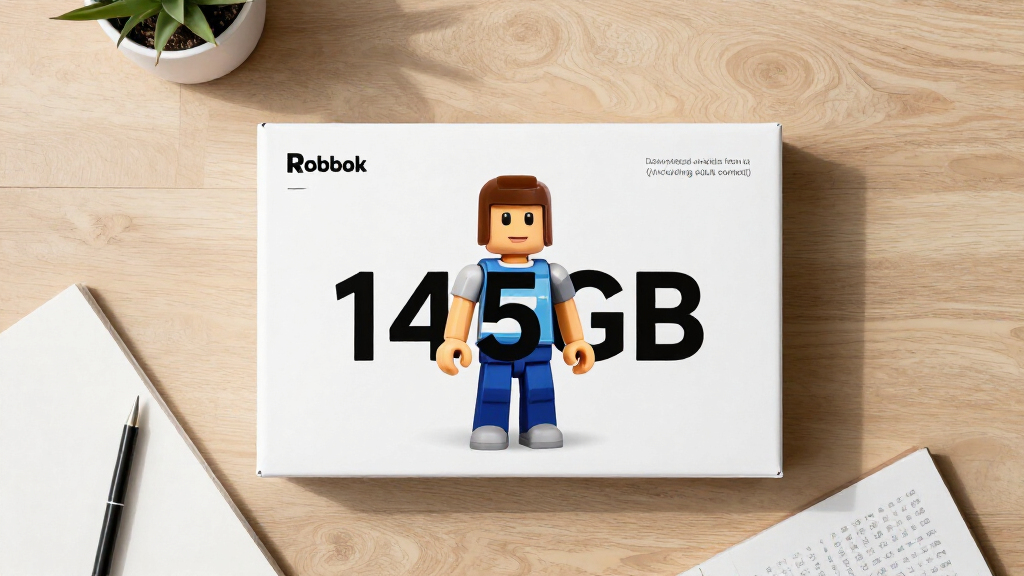
Open3DLab says a crawler identifying itself as Roblox downloaded 1,027 files totaling 145.5 GB from Open3DLab, SFMLab and SmutBase on Oct. 15–16, 2026. The site says the files included adult content and projects with non-commercial licenses; it suspects collection for Roblox’s 3D model research but says it cannot confirm the purpose or whether the files were used to train a model. Roblox had not responded to the site’s requests for comment, according to its report.
Open3DLab says a web crawler identifying itself as a Roblox 3D foundation model research tool downloaded 1,027 files totaling 145.5 GB from Open3DLab, SFMLab and SmutBase on Oct. 15 and 16, 2026. The site says the collection included adult content and files covered by non-commercial licenses; it blocked further attempts and says Roblox had not answered its requests for comment.
In a report published Oct. 18, Open3DLab said the crawler first read the main pages of 18,926 projects through 26,429 requests over 34 hours, then downloaded complete copies of files from 712 projects. Its requests used the user agent “trellis2-data-sourcing/1.0”, followed by a description of 3D foundation model research and a redacted Roblox email address. The site said the requests came from one Amazon Web Services address.
Open3DLab said 364 files totaling 54.8 GB came from 224 SmutBase projects, a site it describes as exclusively adult. Including projects marked adult on SFMLab, it classified 345 of the 712 projects as adult content, totaling 62.6 GB. It also said 423 projects were licensed for non-commercial use only. Those figures and the account of the crawl come from Open3DLab’s own server logs; the report does not include a response from Roblox.
The site said it detected the crawler on Oct. 18 and blocked further activity that morning. It reported that the crawler tried again on Oct. 19 and Oct. 20, with requests blocked by its servers, and that activity ended around 3 p.m. CEST on Oct. 20. Open3DLab said it emailed the address shown in the user agent twice seeking comment and received no reply by the time it published its account.
Creator Licenses and Adult Models
The report raises questions about how online creator work is collected for commercial research, particularly when files carry terms limiting their use. Open3DLab alleges that the crawler ignored its terms of service, its robots.txt instructions and creators’ licenses. The report does not establish whether Roblox used the files, whether any model was trained on them, or whether the company considers the collection authorized.
The reported inclusion of adult models also matters because it points to a potential mismatch between the content of a dataset and the intended use of a 3D-generation system. Open3DLab says the crawler collected adult projects at the same rate as other projects in the sample. That is the site’s observation from the files it says were downloaded, not evidence that Roblox’s model can generate adult content or that the material influenced a model.
For creators, the central issue is whether material posted on specialist asset sites can be gathered and used beyond the permissions attached to it. The reported volume—145.5 GB across three sites—makes the incident more than a single-file dispute, while the lack of a Roblox response leaves the company’s account and any explanation of its data practices unavailable.
Products Worth Considering

LG UltraGear 27-Inch QHD OLED Gaming Monitor, 240Hz, 0.03ms, G-SYNC Compatible, FreeSync Premium Pro, HDMI 2.1

LG 24G414B-B 24-Inch UltraGear Full HD IPS Gaming Monitor

LG UltraGear 32GX870A-B 32-inch 4K OLED Gaming Monitor
As an affiliate, we earn on qualifying purchases.
Roblox’s 3D Model Research
Open3DLab links the crawler to Roblox’s publicly described work on Cube, which Roblox introduced in March 2025 as a generative AI system for 3D and 4D. The company’s accompanying paper described an ambition to build a foundation model for 3D intelligence. According to Open3DLab’s summary, the initial shape model was trained on about 1.5 million assets from licensed and public datasets, as well as free Creator Store assets whose makers had opted in. Roblox began rolling out 4D generation built on Cube in February 2026.
The site noted that the email address embedded in the crawler’s user agent belongs to a researcher listed among the Cube paper’s more than 40 authors, and that the researcher’s public profile describes work on a Roblox 3D foundation model. Open3DLab said it does not allege the researcher acted independently; it places responsibility for a data-collection run on the company. It also cautioned that “trellis2” in the user agent might refer to Microsoft’s TRELLIS.2 model, but said it could instead be an internal project name. The connection and the proposed purpose remain the site’s interpretation, not confirmation from Roblox.
““145.5 GB of our creators’ work, downloaded for what we assume are AI training purposes.””
— Open3DLab
Purpose and Use Remain Unconfirmed
Roblox’s explanation is not included in the report: Open3DLab said it had sent two requests for comment and had not received a reply. The available account does not establish who authorized the crawl, whether it was connected to Cube or another research project, or what “trellis2” meant in the user agent.
It is also unclear whether the downloaded files were retained, shared, used for evaluation or training, or deleted. Open3DLab says it cannot determine whether any files made their way into a model. The report describes the sites’ logs and the files they say were downloaded, but it does not provide Roblox’s records or an independent review of the underlying activity.
Further Logs and Roblox Response
Open3DLab said it planned to publish a more detailed account of its logs at a later date. That could clarify the request pattern and the scope of the downloads, though it would not by itself establish how the files were used after collection.
The next key development would be a response from Roblox addressing the crawler, the reason for the requests, the files’ handling and whether the collection complied with applicable licenses and site rules. Until the company comments or additional evidence is made public, the stated volume and content categories remain Open3DLab’s account, while the suspected AI-training purpose remains unverified.
Key Questions
What does Open3DLab say the crawler downloaded?
Open3DLab says it recorded 1,027 complete files totaling 145.5 GB from 712 projects across Open3DLab, SFMLab and SmutBase on Oct. 15 and 16, 2026.
Did the downloads include adult content?
Yes, according to Open3DLab. It says 364 files from SmutBase projects totaled 54.8 GB, and that adult-marked SFMLab projects brought the total to 345 adult projects and 62.6 GB.
Has Roblox confirmed that it collected the files for AI training?
No confirmation is included in the report. Open3DLab suspects a connection to 3D model research based on the user agent and public information, but says it cannot prove the purpose or whether files were used in a model.
What happened after the sites detected the crawler?
Open3DLab says it blocked requests on Oct. 18, then blocked further attempts on Oct. 19 and 20. It says activity stopped around 3 p.m. CEST on Oct. 20.
Source: hn