🔍 Read the full analysis: How Signal’s Screenshot Restrictions Aim To Keep AI Agents Out Of Chats on ThorstenMeyerAI.com

Get privacy and security gear delivered free with Prime
- Fast, free delivery on millions of items
- Prime Video, Amazon Music and more included
- Member-only deals all year
TL;DR
Signal introduced screen protections aimed at stopping built-in AI assistants from capturing or reading chats on supported iPhones and Android phones. The controls can block screenshots and hide chat previews, but Signal says they do not cover every device or all ways information may be exposed.
Signal has added default screen protections to supported versions of its iPhone app and an automatic screen-security response on Android, aiming to stop built-in AI assistants from reading or capturing private chats. Announced on November 20, 2026, the controls block screenshots in supported iOS versions and activate on Android when Signal detects an assistant trying to read its screen.
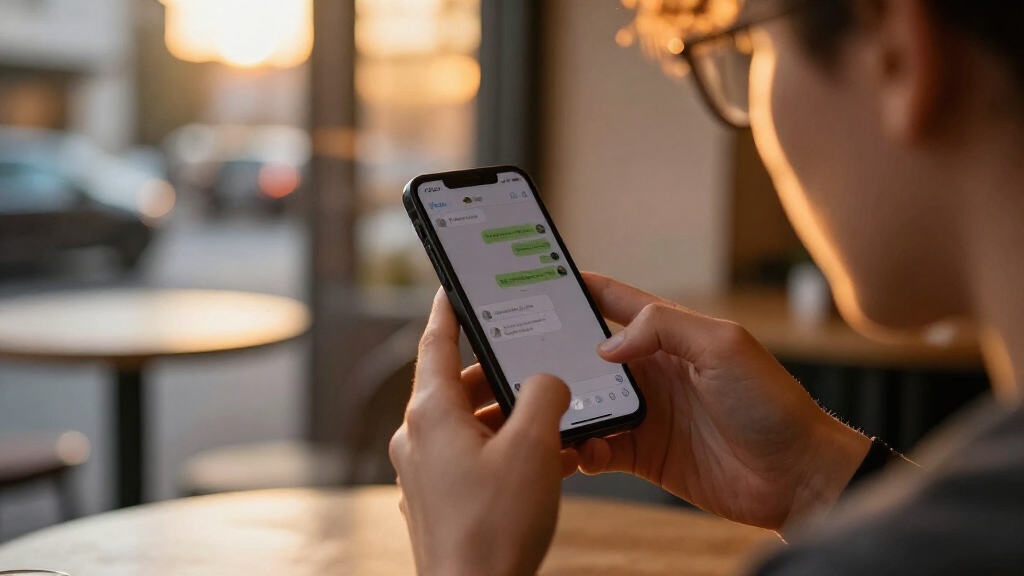
On iPhone, Signal says the “Block Siri AI” setting is on by default for Signal 8.37 or later running iOS 27 or later. While enabled, it blocks screenshots and screen recordings inside Signal, hides chats in the App Switcher and prevents on-device AI assistants from reading Signal’s screen. A user can choose to turn the protection off, leave it on, or disable it for 10 minutes before it switches back on.
On Android, Signal 8.35.1 or later uses its “Screen security” setting. Signal says it turns on automatically the first time an AI assistant attempts to read the app’s screen, and the user receives an explanation. When enabled, the setting also blocks screenshots and hides Signal in the recent-apps list. Signal says users can disable it in settings; if they turn it off from the prompt, the app will enable it again after 90 days, while disabling it in settings does not prompt a reminder.
Signal’s support instructions list the iPhone control under Settings → Privacy → Block Siri AI and the Android control under Settings → Privacy → App security → Screen security. The company says these controls do not change message encryption or who can access messages through Signal itself. They address what an assistant may see on a device’s display, rather than changing the underlying messaging system.
The Screen Becomes a Privacy Boundary
End-to-end encryption protects messages as they travel between devices, but it cannot by itself prevent information from being captured after it appears on a screen. Signal’s move addresses that gap: an assistant with permission to inspect screen contents may encounter messages in their readable form, outside the encrypted transmission process.
For users, the new controls offer a way to limit that particular exposure, but they also create a trade-off. Blocking screenshots can interfere with ordinary tasks such as saving or sharing an image of a conversation. Signal provides a temporary iPhone option and allows users to disable the setting, while warning that turning it off may expose their own and their contacts’ messages to AI assistants.
The announcement also points to a product-design dispute between messaging services and operating-system makers. Signal is asking Apple, Google and Microsoft for a documented way for apps to opt out of AI data access. If other apps adopt similar protections, AI agents that rely on reading screens may find some services inaccessible, while users and businesses will need clearer controls over what agents can see.
Products Worth Considering

LG 27G810A-B 27-inch UltraGear 4K UHD IPS Gaming Monitor

Logitech MX Brio Ultra HD 4K Webcam

Trezor Safe 7 Crypto Hardware Wallet with Bluetooth and Color Touchscreen
As an affiliate, we earn on qualifying purchases.
From Windows Recall to Phone Assistants
This is not Signal’s first attempt to limit automated screen capture. In May 2025, the company turned on a Screen security setting by default in Signal Desktop on Windows 11 to protect chats from Microsoft’s Recall feature. Signal described Recall as capturing the screen periodically, extracting text from images and storing it in a searchable on-device database.
The current announcement targets mobile assistants that can use information displayed on a phone. Apple described its Siri AI, released in September 2026, as having “onscreen awareness” that can respond to or act on screen content. Google announced Gemini Intelligence for Android in May 2026 and said app automation can use screen or image context.
Reuters reported Signal’s announcement on November 20. Signal president Meredith Whittaker described operating-system AI agents as “an existential threat to Signal, and our ability to responsibly uphold our mission,” while also calling the company’s fix “incomplete.” Those remarks are Signal’s assessment of the risk and of its own controls, not evidence that every assistant has captured Signal messages.
Coverage Gaps and Detection Limits
Signal says the protections do not cover Mac computers, where it cannot reliably block screenshots, or Android devices on which it cannot detect the assistant. The controls also do not cover notifications and files, or the device belonging to the person a Signal user is messaging. The source material does not specify which Android devices or assistants may fall outside detection.
Signal’s announcement describes a risk from screen access, but the available information does not establish how often assistants have captured chats, what data any particular assistant stores, or whether captured information is sent to a remote server. A separate report cited in the source material said Meta’s Muse agent read Signal messages after receiving permissions during setup; further details about that incident are not provided here. Signal itself called its fix incomplete.
OS Makers Face an Opt-Out Request
Signal says it is seeking a simple, documented opt-out from Apple, Google and Microsoft that would let apps block AI access to their data. The company has not announced a response from those firms or a timetable for any platform-level change. For now, users can review Signal’s privacy settings and decide whether the screen protections fit how they use screenshots and assistants.
The next practical test will be how the controls perform across supported phones and assistant versions, including cases where Signal cannot detect screen access. Signal has not given a schedule for expanding protection to Macs or other unsupported situations. Until it does, the company’s guidance and device-specific limits remain the clearest available description of what the feature covers.
Key Questions
What does Signal’s new protection do?
On supported iPhones, it blocks screenshots and screen recordings, hides chats in the App Switcher and prevents on-device assistants from reading Signal’s screen. On supported Android phones, Screen security activates when Signal detects an AI assistant trying to read the screen and also blocks screenshots while on.
Which Signal versions and operating systems are required?
Signal lists version 8.37 or later on iOS 27 or later for the iPhone setting, and version 8.35.1 or later for the Android setting. The source material does not provide a more detailed device compatibility list.
Can I turn the protection off?
Yes. On iPhone, the setting can be turned off or disabled for 10 minutes, after which it turns back on. On Android, it can be disabled in Signal’s privacy settings. Signal warns that disabling the feature may allow an assistant to access chats displayed on the screen.
Does this change Signal’s end-to-end encryption?
No. Signal says the screen-security controls do not change message encryption or who can see messages through Signal. They are intended to limit screen capture and on-device screen reading.
Does the feature protect Signal on every device?
No. Signal says it cannot reliably block screenshots on macOS, and the Android protection may not work on devices where it cannot detect an assistant. It also does not cover notifications, files or the recipient’s device.
Source: ThorstenMeyerAI.com