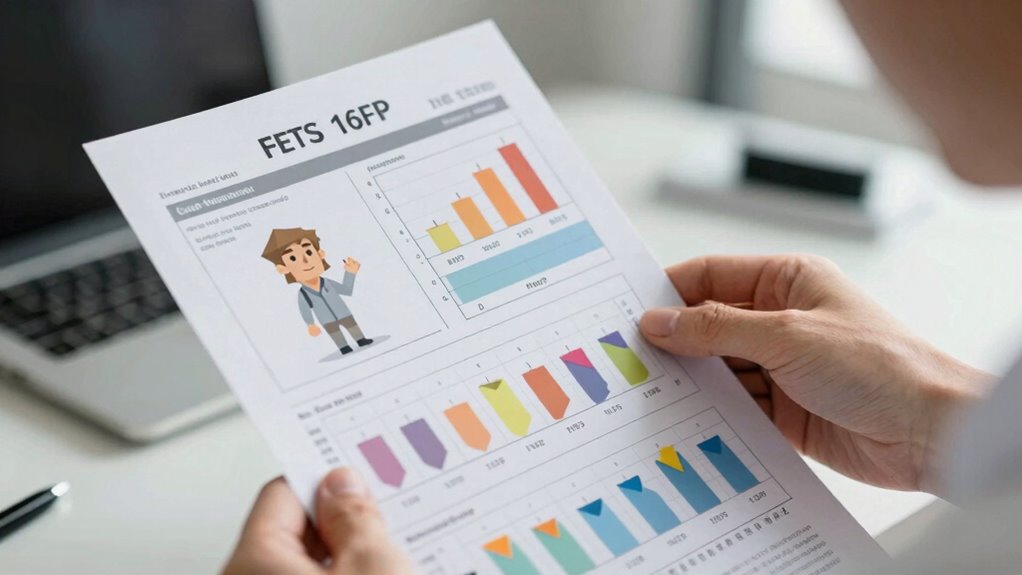

You need human interpretation of 16PF results because automated scores don’t consider cultural influences, test anxiety, or testing conditions that can distort responses. Your personality responses are shaped by these factors, and only a trained evaluator can see beyond the numbers to understand the nuances. They help adjust for biases and contextual influences, making results more meaningful. If you want to learn how expert judgment guarantees accurate insights, keep exploring this crucial topic.

Get privacy and security gear delivered free with Prime
- Fast, free delivery on millions of items
- Prime Video, Amazon Music and more included
- Member-only deals all year
Key Takeaways
- Human interpretation captures nuanced personality traits that automated scoring may overlook or misrepresent.
- It accounts for cultural influences, biases, and testing conditions affecting responses.
- Human judgment adjusts for test anxiety, mood, and external factors impacting test results.
- Professionals contextualize scores within environmental and situational factors for accurate insights.
- Interpretation by humans ensures meaningful, valid assessments beyond raw numerical data.

When reviewing 16PF results, it’s important to remember that these assessments provide valuable data, but they don’t tell the whole story on their own. The results serve as a foundation, but human interpretation is essential to understand the nuances behind the numbers. No matter how advanced the scoring system, it can’t account for the complex factors that influence a person’s responses, such as cultural influences or test anxiety. These elements can greatly sway the results, making it necessary for a trained professional to analyze and contextualize what the data actually reveals about an individual. Recognizing psychological factors like motivation and mood during testing can further enhance interpretation accuracy. Cultural influences play a key role in shaping how people respond to personality assessments like the 16PF. Different cultural backgrounds can lead to varied interpretations of questions, responses, and behaviors. For example, someone from a collectivist culture might emphasize harmony and conformity, which could influence their answers to reflect social desirability rather than their true traits. Without human insight, these responses might be misinterpreted as personality flaws or strengths, leading to inaccurate conclusions. A skilled evaluator recognizes these cultural nuances and adjusts their interpretation accordingly, making sure the results reflect the person’s authentic personality rather than cultural biases. Test anxiety is another factor that can distort 16PF results. When someone feels nervous or overwhelmed during testing, their responses might not accurately reflect their typical behavior or traits. For some, anxiety causes them to answer in ways that seem overly cautious or guarded, while others might act out or become less responsive. An automated score might flag these responses as traits, but only a human can consider the context—was the person genuinely anxious? Did they have a stressful day? Did they understand the questions clearly? Interpreting these factors helps prevent misjudging a person’s true personality profile based solely on their test-taking state. Ultimately, human interpretation guarantees that the results are meaningful and accurate. It allows professionals to consider factors like cultural influences and test anxiety, which raw scores alone can’t capture. This process involves listening carefully, asking the right questions, and applying professional judgment to piece together an in-depth understanding of the individual’s personality. Guesswork might lead to errors, but trained interpretation bridges the gap between raw data and real-world insights. It transforms numbers into a nuanced portrait, providing a reliable foundation for decision-making, whether in clinical, organizational, or personal contexts. Recognizing the impact of external factors on testing outcomes ensures a more comprehensive and accurate personality assessment. Additionally, understanding the testing environment can significantly influence the results and should be considered during interpretation. Moreover, being aware of cultural biases helps interpret responses more accurately and fairly. Incorporating contextual analysis allows evaluators to better differentiate between true traits and situational influences, improving the overall accuracy of the interpretation.
16PF personality assessment interpretation guide
As an affiliate, we earn on qualifying purchases.
As an affiliate, we earn on qualifying purchases.
Frequently Asked Questions
How Does Human Interpretation Improve 16PF Accuracy?
Human interpretation improves 16PF accuracy by providing qualitative insights and contextual understanding that raw data alone can’t offer. You can recognize patterns and nuances in personality traits, considering individual backgrounds and circumstances. This tailored approach helps avoid misinterpretations, ensuring the results genuinely reflect a person’s unique personality. Your expertise helps translate complex data into meaningful insights, ultimately enhancing the reliability and usefulness of the 16PF assessment.
Can Automated Tools Replace Expert Analysis of 16PF Results?
Can automated analysis replace expert insight? Think of it as trying to read poetry with just a dictionary—lacking nuance. Automated tools can process data quickly, but they can’t replicate emotional intelligence, which is essential for understanding subtle personality traits. Human experts interpret context, emotions, and complexities that algorithms overlook. So, while automation aids, it can’t fully substitute for the depth of human analysis in interpreting 16PF results.
What Common Mistakes Occur Without Professional Interpretation?
Without professional interpretation, you risk missing vital interpretation nuances and emotional insights embedded in the 16PF results. You might oversimplify or misread personality traits, leading to inaccurate conclusions. This can cause misguided decisions in hiring, development, or therapy. Professionals bring experience to understand subtle patterns, ensuring you get an all-encompassing, accurate picture. Relying solely on guesswork can undermine trust and effectiveness, so expert analysis remains essential.
How Do Cultural Differences Affect 16PF Result Interpretation?
Just like a foreign landscape can seem unfamiliar without a guide, cultural differences impact 16PF result interpretation. Cultural biases may skew perceptions, and cross-cultural validity highlights that traits can manifest differently across cultures. You need a human expert to navigate these nuances, ensuring accurate, meaningful insights rather than misinterpretations. Without this expertise, you’re risking a distorted view—like reading a map without understanding its cultural cartography.
Is Training Required to Interpret 16PF Outcomes Effectively?
Yes, training is essential to interpret 16PF outcomes effectively. You need training essentials that build your interpretation skills, helping you understand complex personality data accurately. Without proper training, you risk misreading results or overlooking nuances. By honing your interpretation skills through structured training, you guarantee that you evaluate 16PF results reliably, making informed decisions that truly reflect an individual’s personality traits and behavior patterns.
professional personality test analysis services
As an affiliate, we earn on qualifying purchases.
As an affiliate, we earn on qualifying purchases.
Conclusion
Just as a master chef knows that a perfect dish depends on skilled hands rather than mere ingredients, interpreting 16PF results requires your human touch. You’re the artist who brings depth and nuance to the raw data, transforming it from a mere chart into a vivid portrait of personality. Without your insight, the numbers are just shadows. So, trust your judgment—because in this delicate dance of understanding, it’s your human intuition that truly brings the picture to life.
cultural bias in personality tests
As an affiliate, we earn on qualifying purchases.
As an affiliate, we earn on qualifying purchases.
As an affiliate, we earn on qualifying purchases.
Halloween Picks
halloween
As an affiliate, we earn on qualifying purchases.