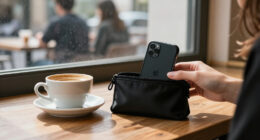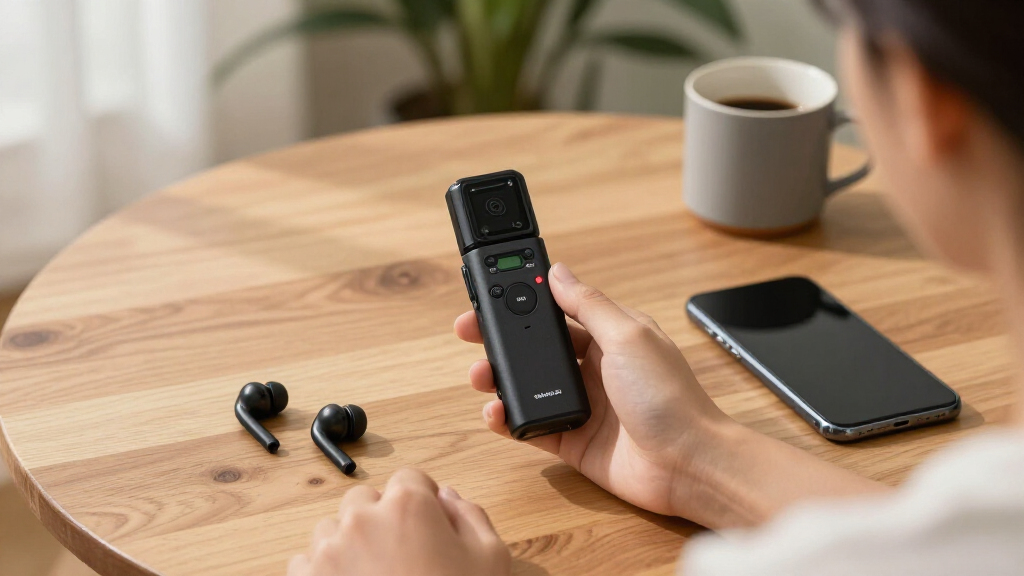

Discreet portable voice recorders have shrunk to the size of a key fob or a small USB stick, which makes choosing between them harder than ever — the differences now hide in battery life, storage capacity, and whether voice activation actually works. For most buyers, the Elasound Voice Activated Digital Recorder is the best overall pick, pairing 128GB of storage, AI noise reduction, and a 100-hour battery in a body small enough to slip into a pocket unnoticed. If budget is the priority, the 8GB Digital Voice Recorder with MP3 Player covers basic lecture and meeting capture for very little money, while the Nanezan NZ007 Magnetic Recorder stands out for hands-free placement under a desk or inside a vehicle. The main tradeoff you’ll face is between raw recording hours and audio clarity — models with massive claimed capacities often compress audio heavily. Keep reading for the full breakdown of all 14 models and which one fits your situation.

Get privacy and security gear delivered free with Prime
- Fast, free delivery on millions of items
- Prime Video, Amazon Music and more included
- Member-only deals all year
Key Takeaways
- Voice activation quality separated the top picks more than any other feature — models like the Elasound and Nanezan wake reliably at conversational volume, while several budget options miss the first few seconds of speech.
- Magnetic housing (Nanezan NZ007, Tallkcoder, and the 136GB magnetic model) is a genuine discretion advantage, letting recorders attach hidden under metal surfaces instead of sitting exposed on a table.
- Claimed recording hours are heavily inflated by low-bitrate modes; the 18,800-hour and 9,775-hour figures assume lowest-quality settings, so real-world capacity at usable quality is a fraction of those numbers.
- AI noise reduction appeared in only five models, and it matters most in open rooms and vehicles — buyers recording quiet one-on-one conversations can skip it and save money.
- One-touch operation proved more common than playback screens, and models lacking built-in playback force you to transfer files to a computer before you can verify a recording succeeded.
| 72GB Portable Voice Recorder with USB-C, One-Touch Voice Activated Recording, Playback |  | Best Overall | Storage: 72GB | Audio Capacity: Up to 7,600 hours at low bitrate | Battery Life: Up to 35 hours continuous recording | VIEW LATEST PRICE | See Our Full Breakdown |
| Elasound Voice Activated Digital Recorder, 128GB, 9,800 Hours, AI Noise Reduction, 100H Battery |  | Best for Marathon Recording Sessions | Storage: 128GB TF card | Max Recording Capacity: Up to 9,800 hours at 32 kbps | Battery Life: Up to 100 hours continuous | VIEW LATEST PRICE | See Our Full Breakdown |
| 8GB Digital Voice Recorder with Voice Activation, Microphone, USB Cable, and MP3 Player |  | Best Budget Pick for Beginners | Storage: 8GB | Formats: MP3, WAV | Battery Life: Up to 20 hours recording / 8 hours playback | VIEW LATEST PRICE | See Our Full Breakdown |
| 64GB Digital Voice Recorder with Playback and Voice Activation |  | Best Truly Discreet Design | Storage: 64GB | Recording Time: Up to 4,660 hours (low bitrate) | Battery Life: Up to 100 hours (varies with use) | VIEW LATEST PRICE | See Our Full Breakdown |
| Tonfarb 64GB Digital Voice Recorder with Playback |  | Best for Scheduled and Hands-Off Recording | Storage: 64GB | Max Recording Time: 4,600 hours (low bitrate) | Battery: 1 AAA, 600mAh equivalent, up to 48 hours | VIEW LATEST PRICE | See Our Full Breakdown |
| Digital Voice Recorder 16GB with Playback and USB Rechargeable |  | Best for Simplicity | Storage: 16 GB | Battery Life: 30 hours | Recording Format: WAV | VIEW LATEST PRICE | See Our Full Breakdown |
| Xelarvex 72GB Digital Voice Recorder with Voice Activation and AI Noise Reduction |  | Best High Capacity | Storage: 72 GB | Battery Life: Up to 48 hours continuous | Charging Time: 1.5 hours via USB Type-C | VIEW LATEST PRICE | See Our Full Breakdown |
| ZIPCIDE 64GB Digital Voice Recorder with AI Noise Reduction and Voice Activation |  | Best Ultra-Compact Pick | Storage: 64 GB (expandable) | Continuous Recording: Up to 15 hours | Headphone Playback: Up to 30 hours | VIEW LATEST PRICE | See Our Full Breakdown |
| Tallkcoder Magnetic Voice Activated Recorder, 64GB, Up to 7000 Hours, AI Noise Cancellation |  | Best Hands-Free Mounting | Storage: 64 GB TF card | Recording Capacity: Up to 7000 hours at 32 kbps | Bitrate: Adjustable, 512–3072 kbps | VIEW LATEST PRICE | See Our Full Breakdown |
| 64GB USB Digital Voice Recorder with Voice Activation and Noise Reduction |  | Best Value All-Rounder | Storage: 64 GB | Recording Time: 750 hours | Battery Life: 13 hours average | VIEW LATEST PRICE | See Our Full Breakdown |
| Nanezan NZ007 Magnetic Voice Activated Audio Recorder, 128GB, USB-C |  | Best for Hands-Free Magnetic Placement | Storage: 128GB | Recording Capacity: Up to 1600 hours | Battery Life: Up to 70 hours | VIEW LATEST PRICE | See Our Full Breakdown |
| Digital Voice Recorder, Vandlion V11 32GB (2450Hrs) HD Clear Recording |  | Best Budget Starter Pick | Storage: 32GB | Recording Capacity: Up to 450 hours (160kbps) | Battery Life: Up to 30 hours | VIEW LATEST PRICE | See Our Full Breakdown |
| Tonfarb 136GB Digital Voice Recorder with Playback, 9775 Hours Audio Record |  | Best Feature-Rich All-Rounder | Storage: 8GB built-in + 128GB TF card (136GB total) | Recording Capacity: Up to 9,775 hours | Battery Life: Up to 68 hours (1100mAh) | VIEW LATEST PRICE | See Our Full Breakdown |
| 136GB Magnetic Voice Activated Recorder with AI Noise Reduction, 18800H Recording |  | Best Premium Endurance Pick | Storage: 136GB | Recording Capacity: Up to 18,800 hours | Battery Life: Up to 100 hours continuous | VIEW LATEST PRICE | See Our Full Breakdown |
| discreet portable voice recorder | Storage | Battery Life | Dimensions | Connectivity |
|---|---|---|---|---|
| 72GB Portable Voice Recorder w | 72GB | Up to 35 hours continuous recording | — | — |
| Elasound Voice Activated Digit | 128GB TF card | Up to 100 hours continuous | 4.5" D x 4" W x 1.1" H | USB-C |
| 8GB Digital Voice Recorder wit | 8GB | Up to 20 hours recording / 8 hours playback | — | Micro USB, USB 2.0 Type B |
| 64GB Digital Voice Recorder wi | 64GB | Up to 100 hours (varies with use) | 0.47" D x 1.2" W x 3.86" H, 2.24 oz | — |
| Tonfarb 64GB Digital Voice Rec | 64GB | — | 0.47" D x 1.45" W x 4" H | — |
| Digital Voice Recorder 16GB wi | 16 GB | 30 hours | 0.5"D x 1.4"W x 3.3"H | — |
| Xelarvex 72GB Digital Voice Re | 72 GB | Up to 48 hours continuous | — | — |
| ZIPCIDE 64GB Digital Voice Rec | 64 GB (expandable) | — | 0.77 x 0.77 x 0.33 inches | — |
| Tallkcoder Magnetic Voice Acti | 64 GB TF card | — | 4 x 0.98 x 4.5 inches | USB Type-C, 3.5 mm headphone jack |
| 64GB USB Digital Voice Recorde | 64 GB | 13 hours average | 0.8 x 2.6 x 0.4 inches | — |
| Nanezan NZ007 Magnetic Voice A | 128GB | Up to 70 hours | — | USB-C |
| Digital Voice Recorder | 32GB | Up to 30 hours | — | USB-C |
| Tonfarb 136GB Digital Voice Re | 8GB built-in + 128GB TF card (136GB total) | Up to 68 hours (1100mAh) | — | USB 2.0 |
| 136GB Magnetic Voice Activated | 136GB | Up to 100 hours continuous | 1.38 x 1.68 x 0.38 in | OTG direct connection |
More Details on Our Top Picks
72GB Portable Voice Recorder with USB-C, One-Touch Voice Activated Recording, Playback
This model earns the top spot because it balances storage, battery, and everyday usability better than anything else in this lineup. The 72GB capacity and 35-hour battery cover a full week of lectures or meetings without panic-checking the device, and timestamped files mean you can actually find yesterday’s recording without scrubbing through dozens of unnamed clips. Compared with the Tonfarb 64GB recorder, it trades the larger screen for USB-C convenience and a longer practical battery life. The voice-activated mode is genuinely useful for skipping dead air, though very quiet speakers can trip the pause threshold. The tradeoff: those headline 7,600 hours only apply at low bitrates, so quality-focused users will fill the drive faster than the marketing implies.
Pros:- 72GB storage handles months of regular recording
- 35-hour battery survives multi-day use without recharging
- Built-in USB-C makes transfers fast and cable-free friendly
- Timestamped filenames keep large archives searchable
Cons:- Maximum capacity only applies at low-bitrate settings
- Voice activation can pause during quiet or distant speech
Best for: Students and professionals who record daily and need reliable battery life plus organized, timestamped files
Not ideal for: Anyone recording at high bitrates who expects the full 7,600-hour capacity, or users without USB-C ports on their computer
- Storage:72GB
- Audio Capacity:Up to 7,600 hours at low bitrate
- Battery Life:Up to 35 hours continuous recording
- Connector:Built-in USB-C
- Microphone:360° omnidirectional with DSP noise reduction
- Recording Modes:One-touch, voice activated
- Segment Saving:Adjustable 10 to 240 minutes
Our verdict“The most well-rounded pick here — buy it if you want one recorder that does everything reasonably well without a big compromise.”
Elasound Voice Activated Digital Recorder, 128GB, 9,800 Hours, AI Noise Reduction, 100H Battery
Where most recorders in this guide are sized for a class or a meeting, the Elasound is built for endurance. Its 100-hour battery nearly triples the 35 hours of the 72GB USB-C recorder, and 128GB of storage means you can leave it running across a multi-day conference or field project without offloading files. The inclusion of OTG adapters for both USB-C and Lightning is a thoughtful touch — it lets you pull recordings onto a phone directly, which most competitors here can’t do. The clip-on microphone also gives it an edge for interview work. On the flip side, the 9,800-hour figure assumes 32 kbps audio, which sounds noticeably compressed, and there’s no wireless transfer at all. It’s also the heaviest option in this batch.
Pros:- 100-hour battery leads this entire roundup
- 128GB capacity for long-term archives
- OTG adapters enable direct phone file transfers
- Clip-on microphone improves interview audio
Cons:- 9,800-hour capacity only applies at 32 kbps, which sounds compressed
- No wireless or Bluetooth file transfer
- Heavier and bulkier than slimmer rivals like the 64GB B07CPNR79C
Best for: Journalists, researchers, and field workers who record for days at a time and need to offload files to a phone
Not ideal for: Casual users who record occasionally — the size, weight, and capacity will go largely unused
- Storage:128GB TF card
- Max Recording Capacity:Up to 9,800 hours at 32 kbps
- Battery Life:Up to 100 hours continuous
- Connectivity:USB-C
- Audio Format:MP3
- Dimensions:4.5″ D x 4″ W x 1.1″ H
- Included Accessories:Clip-on mic, headphones, OTG-C and OTG-Lightning adapters, USB-C cable
Our verdict“The endurance champion — pick this when battery life and capacity matter more than pocketability or audio fidelity.”
8GB Digital Voice Recorder with Voice Activation, Microphone, USB Cable, and MP3 Player
This is the cheapest credible entry point in the roundup, and it earns its place by front-loading the features beginners actually need: voice activation, A-B repeat, variable playback speed, and password protection — study tools the pricier Tonfarb 64GB doesn’t package this cohesively. The 1.1-inch screen, small as it is, still beats the 64GB B07CPNR79C, which has no display at all. The real cost of the low price is 8GB of storage and a 20-hour battery, both roughly half or less of what mid-tier options offer, plus an aging Micro USB port when everything else here has moved to USB-C. For a semester of lectures offloaded weekly, though, it’s plenty — and the MP3/WAV flexibility plus doubles as a music player adds value budget buyers will appreciate.
Pros:- A-B repeat and variable playback speed are ideal for language learning and lecture review
- Password protection for sensitive recordings
- Doubles as an MP3 player
- Small screen still provides more feedback than display-free rivals
Cons:- 8GB storage fills quickly with regular high-quality recording
- Micro USB is dated and slower than the USB-C on competing models
- 20-hour battery falls short of multi-day use
Best for: Students and first-time buyers who want core recording and study features at the lowest possible price
Not ideal for: Heavy users or anyone archiving months of high-bitrate audio — 8GB fills up fast and offloading is tedious
- Storage:8GB
- Formats:MP3, WAV
- Battery Life:Up to 20 hours recording / 8 hours playback
- Connectivity:Micro USB, USB 2.0 Type B
- Screen:1.1 inches
- Voice Activation:Yes
- Digital Recording Time:128 hours
Our verdict“The smart spend if you’re testing whether a recorder fits your workflow before committing to a bigger, pricier unit.”
64GB Digital Voice Recorder with Playback and Voice Activation
If discretion is the whole point of your purchase, this is the most unassuming option in the batch — a slim 0.47-inch profile that slips into a shirt pocket and draws zero attention, where the chunkier Elasound looks like a gadget you’d have to explain. Operation is deliberately minimal: one-touch recording with no screen, no menus, nothing to fumble with mid-conversation. That simplicity is also its biggest liability. Without any display, you’re recording blind — no battery indicator, no level meters, no confirmation of what mode you’re in — so it rewards users who set it up once and trust it. Compared with the 8GB beginner model, you get eight times the storage and USB-C, but fewer study-friendly extras like A-B repeat. The 100-hour battery claim is optimistic under real-world conditions, too.
Pros:- Slim 0.47-inch profile is the most pocketable in this lineup
- 64GB capacity for extensive archives
- USB-C interface keeps transfers current
- One-touch operation with no learning curve
Cons:- No display means no recording or battery feedback on the device
- Advanced features may require consulting the manual
- Stated 100-hour battery life varies considerably with settings and use
Best for: Buyers who prioritize a slim, screenless, pocket-invisible device over feedback and control
Not ideal for: Anyone who wants to see recording status, battery level, or file navigation on the device itself
- Storage:64GB
- Recording Time:Up to 4,660 hours (low bitrate)
- Battery Life:Up to 100 hours (varies with use)
- Microphone:Built-in stereo
- Formats:MP3, WAV
- Interface:USB Type-C
- Dimensions:0.47″ D x 1.2″ W x 3.86″ H, 2.24 oz
Our verdict“Buy this for maximum stealth and simplicity; skip it if recording blind makes you nervous.”
Tonfarb 64GB Digital Voice Recorder with Playback
The Tonfarb’s differentiator is scheduled recording — set a start time and it captures a lecture or meeting automatically, something no other model in this batch offers. Add PCM recording for higher-fidelity audio than the MP3-focused Elasound, a 1.44-inch screen larger than the 8GB budget pick’s, and password protection, and it becomes the most feature-dense mid-range option here. The tradeoff is power: it runs on a single AAA battery, which sounds convenient until you’re mid-conference with no spare. The 48-hour runtime is respectable but sits far below the Elasound’s 100 hours, and AAA batteries mean ongoing cost and environmental waste that rechargeable rivals avoid. USB 2.0 rather than USB-C also dates it slightly. For planned, scheduled capture in classrooms or boardrooms near a supply of batteries, though, it’s a strong fit.
Pros:- Scheduled recording automates capture for fixed timetables
- PCM recording delivers higher fidelity than MP3-only rivals
- Larger 1.44-inch screen aids navigation
- Password protection and one-click operation balance security with simplicity
Cons:- AAA battery dependency creates ongoing cost and replacement hassle
- USB 2.0 is slower than the USB-C ports on competing models
- Small screen can still be fiddly for detailed file management
Best for: Students and professionals who want to schedule recordings in advance and prefer replaceable batteries over recharging
Not ideal for: Travelers and field recorders who can’t reliably source AAA batteries on the go
- Storage:64GB
- Max Recording Time:4,600 hours (low bitrate)
- Battery:1 AAA, 600mAh equivalent, up to 48 hours
- Recording Format:WAV (PCM), MP3
- Screen:1.44 inches
- Interface:USB 2.0
- Dimensions:0.47″ D x 1.45″ W x 4″ H
Our verdict“The right pick when automated, scheduled capture matters more than battery endurance or modern connectivity.”
Digital Voice Recorder 16GB with Playback and USB Rechargeable
Not everyone needs a feature-heavy recorder, and that is exactly where this model earns its spot. The one-button operation means there is no menu fumbling mid-lecture — a contrast to the ZIPCIDE, which buries its voice activation behind a computer setup step. The tradeoff is clear: 16GB of storage is a quarter of what most rivals offer, and the mono microphone with no display screen keeps it firmly in the basics camp. Compared with the 64GB USB recorder, this option gives up both capacity and battery runtime. What it delivers instead is reliability with zero learning curve, plus noise-reduced audio that holds up for lecture-hall capture. Buyers wanting timestamped files or AI processing should look further down this list.
Pros:- Genuinely simple one-button recording and playback
- Noise reduction produces clear lecture audio
- 30+ hours of battery life per charge
- Light 35g body slips unnoticed into a pocket
Cons:- Only 16GB of storage, the smallest in this lineup
- No display screen, so no way to confirm recording status at a glance
Best for: Students and note-takers who want a no-frills recorder they can operate without reading a manual
Not ideal for: Anyone recording multi-day conferences or interviews — 16GB fills up fast and mono audio limits archival quality
- Storage:16 GB
- Battery Life:30 hours
- Recording Format:WAV
- Microphone:Mono with noise cancellation
- Weight:35 g
- Dimensions:0.5″D x 1.4″W x 3.3″H
- Connections:USB, 3.5 mm headphone jack
Our verdict“This pick makes the most sense for buyers who prioritize foolproof operation over capacity and advanced features.”
Xelarvex 72GB Digital Voice Recorder with Voice Activation and AI Noise Reduction
For sheer recording endurance, this model outmuscles nearly everything here. Its 72GB of storage comfortably exceeds the 64GB offered by both the ZIPCIDE and the Tallkcoder, and 48 hours of continuous recording nearly triples the 15-hour runtime of the ZIPCIDE. The voice-activated mode with automatic file saving is a real advantage for long seminars — silence gaps get skipped rather than eating through memory. Two caveats temper the enthusiasm: the advertised storage estimates swing between 4,800 and 8,800 hours depending on bitrate, so treat the headline number loosely, and the nonstandard battery means a replacement is not a drugstore purchase. Compared with the simpler 16GB recorder, this one suits marathon capture, not casual use.
Pros:- 72GB capacity is the largest in this batch
- 48-hour battery outlasts most competitors by a wide margin
- Voice activation trims dead air from long sessions
- Fast 1.5-hour charging via USB-C
Cons:- Nonstandard battery is awkward to replace
- Storage hour claims vary widely between 4,800 and 8,800 hours
- Voice activation can miss very quiet speakers
Best for: Journalists and grad students recording days of interviews or lectures who cannot offload files regularly
Not ideal for: Buyers who want predictable, clearly documented specs — the variable hour estimates and proprietary battery invite uncertainty
- Storage:72 GB
- Battery Life:Up to 48 hours continuous
- Charging Time:1.5 hours via USB Type-C
- Recording Capacity:Up to 4,800–8,800 hours depending on bitrate
- Weight:1 oz
- Special Features:Voice-activated recording, AI noise cancellation, automatic save
- Headphone Jack:3.5 mm
Our verdict“If recording volume matters more than anything else, this is the capacity champion of the group.”
ZIPCIDE 64GB Digital Voice Recorder with AI Noise Reduction and Voice Activation
At 0.77 x 0.77 x 0.33 inches, this is the smallest recorder in the batch — small enough to sit in a shirt pocket without a visible outline, which is the whole point of a discreet purchase. It still packs 64GB of storage, AI noise reduction, and timestamped files, so it does not feel like a stripped-down gadget despite its size. The compromises are real, though. The 270 mAh battery manages only 15 hours of continuous recording, far behind the Xelarvex’s 48, and voice activation ships turned off by default, requiring a computer session before it works hands-free. Micro USB instead of USB-C also feels dated next to the Xelarvex. Still, for pocketability, nothing else in this lineup comes close.
Pros:- Smallest footprint of any recorder in this roundup
- 64GB storage with timestamped file organization
- Doubles as a USB flash drive for file transfers
- AI noise reduction improves voice clarity in busy rooms
Cons:- Only 15 hours of continuous recording per charge
- Voice activation requires computer setup before first use
- Micro USB port instead of USB-C
Best for: Professionals who need a nearly invisible recorder for meetings and want timestamped files for organized playback
Not ideal for: All-day or overnight recording — the small battery and default-off voice activation make long unattended sessions unreliable
- Storage:64 GB (expandable)
- Continuous Recording:Up to 15 hours
- Headphone Playback:Up to 30 hours
- Charging Time:1.5 hours
- Recording Time:Up to 776 hours at 192 kbps
- Audio Format:MP3
- Dimensions:0.77 x 0.77 x 0.33 inches
- Interface:Micro USB 2.0
Our verdict“This option stands out for buyers who put pocketability first and can live with shorter battery life.”
Tallkcoder Magnetic Voice Activated Recorder, 64GB, Up to 7000 Hours, AI Noise Cancellation
The magnetic backing is the differentiator here: unlike the pocket-sized ZIPCIDE or the stick-shaped 16GB model, this one attaches to desks, rails, and car frames, so it can be positioned close to the speaker without anyone holding it. That mounting flexibility makes it a better fit for workplace capture than anything else in this batch. The HD stereo microphone and adjustable bitrate (up to 3072 kbps) also give it the best raw audio quality of the group. Two honest caveats: the 7000-hour figure assumes a low 32 kbps setting, which will sound noticeably worse than the high-bitrate modes people actually buy this for, and the magnet only helps near metal surfaces. The Nanezan NZ007 offers a similar magnetic concept with USB-C, so spec-shoppers should compare the two.
Pros:- Strong magnet mounts to desks, rails, and car seats hands-free
- HD stereo microphone with adjustable bitrate up to 3072 kbps
- 64GB TF card storage with one-touch recording
- AI triple noise cancellation improves clarity in open spaces
Cons:- 7000-hour claim only holds at a low-quality 32 kbps setting
- Magnetic mounting is useless on non-metal surfaces
- Nonstandard battery requirement
Best for: Field workers, drivers, and office staff who want to mount a recorder on metal furniture or vehicle surfaces for hands-free capture
Not ideal for: Buyers wanting a pocketable pen-style recorder — its 4 x 4.5 inch footprint is the largest in this lineup and shows in a pocket
- Storage:64 GB TF card
- Recording Capacity:Up to 7000 hours at 32 kbps
- Bitrate:Adjustable, 512–3072 kbps
- Microphone:Built-in HD stereo
- Audio Format:WAV
- Connectivity:USB Type-C, 3.5 mm headphone jack
- Dimensions:4 x 0.98 x 4.5 inches
- Mounting:Magnetic attachment to metal surfaces
Our verdict“This model is better suited to fixed, mounted recording scenarios than pocket carry, and its audio quality justifies the placement.”
64GB USB Digital Voice Recorder with Voice Activation and Noise Reduction
This recorder lands in the sweet spot between price, capacity, and usability. It matches the ZIPCIDE with 64GB of storage and roughly 750 hours of recording, but adds a low-battery auto-save feature that protects long sessions — something the Xelarvex and ZIPCIDE do not advertise as explicitly. At under 14 grams, it is lighter than the 16GB one-button model while holding four times the files. The 13-hour battery is the weak point: shorter than the ZIPCIDE’s 15 hours and far behind the Xelarvex’s 48, so plan around a midday recharge for full-day events. Some features also require an actual read of the manual rather than blind button-poking. For a first serious recorder, though, the balance here is hard to beat.
Pros:- 64GB storage holds up to 750 hours of audio
- Low-battery auto-save protects recordings from corruption
- Noise-canceling mic with 360-degree pickup
- Featherlight 13.99 g body with 12-month warranty
Cons:- 13-hour battery life is the shortest among the 64GB models here
- Features require reading the manual to operate correctly
Best for: First-time buyers who want big storage and safety features like auto-save without paying for premium battery runtime
Not ideal for: Full-day or overnight recording without access to a charger — the 13-hour battery cuts sessions short
- Storage:64 GB
- Recording Time:750 hours
- Battery Life:13 hours average
- Charging Time:About 2 hours
- Audio Format:WAV
- Weight:13.99 g
- Dimensions:0.8 x 2.6 x 0.4 inches
- Special Features:Voice activation, low-battery auto-save
- Warranty:12 months
Our verdict“The best-balanced budget pick for newcomers who need capacity and file protection more than marathon battery life.”
Nanezan NZ007 Magnetic Voice Activated Audio Recorder, 128GB, USB-C
The Nanezan NZ007 stands out in this lineup for its magnetic zinc-alloy body, which lets you stick it under a metal desk, shelf, or vehicle surface and walk away — something no clip-style recorder here can match. Its 128GB capacity and 70-hour battery put it ahead of the Tonfarb 64GB model on endurance, though it trails the Tonfarb 136GB on raw storage. The one-touch recording is genuinely discreet: no screen, no menus, just a single press and it’s capturing.
The tradeoff is control. Unlike the Tonfarb A20 with its LCD and password protection, the NZ007 offers no on-device playback or file management — you’re committed to USB-C transfers. And its voice-activated mode can feel imprecise if you need guaranteed continuous capture of a full meeting.
Pros:- Magnetic mounting enables truly hands-free, hidden placement on metal surfaces
- 128GB storage with up to 1600 hours of recordings
- 70-hour battery outlasts most recorders in this guide
- One-touch operation keeps usage subtle and simple
Cons:- No screen or on-device playback means you must transfer files to review them
- Magnetic mounting is useless on wood, plastic, or drywall surfaces
Best for: Buyers who want to hide a recorder on a metal surface for long, unattended sessions — field work, vehicle use, or office monitoring
Not ideal for: Anyone who wants to review and organize recordings on the device itself — there’s no screen or playback
- Storage:128GB
- Recording Capacity:Up to 1600 hours
- Battery Life:Up to 70 hours
- Connectivity:USB-C
- Audio Format:MP3
- Weight:1 oz
- Body:Zinc alloy with magnetic attachment
Our verdict“Buy the NZ007 if placement flexibility and long unattended recording matter more than on-device file management.”
Digital Voice Recorder, Vandlion V11 32GB (2450Hrs) HD Clear Recording
The Vandlion V11 is the lowest-commitment entry point in this roundup — 32GB, a slide-switch for one-touch recording, and an aluminum body that feels more expensive than it is. Where the Nanezan NZ007 hides everything behind a single button, the V11 adds AI noise reduction claiming to strip 95% of background noise, plus voice activation that trims dead air and stretches the 30-hour battery further.
Its compromises are clear next to bigger siblings. Storage is a quarter of the NZ007’s, and there’s no magnetic mounting or screen-based navigation like the Tonfarb A20 offers. Voice activation also ships disabled by default, so buyers who skip the manual may never use the feature. The 3.5mm headphone jack and USB-C transfer to phones and PCs soften the blow for casual users.
Pros:- Very affordable entry point with a solid aluminum housing
- AI noise reduction improves clarity in noisy classrooms and cafés
- Slide-switch one-touch recording is faster than menu-driven rivals
- Works with Mac, Windows, and Android via USB-C
Cons:- 32GB is the smallest capacity in this lineup
- Voice activation is disabled out of the box and requires manual setup
Best for: Students and first-time buyers who want a cheap, pocketable recorder for lectures and occasional interviews without paying for storage they won’t fill
Not ideal for: Heavy users recording multi-day events — 32GB and a 30-hour battery fill up and run down faster than larger models
- Storage:32GB
- Recording Capacity:Up to 450 hours (160kbps)
- Battery Life:Up to 30 hours
- Connectivity:USB-C
- Audio Formats:MP3, WAV
- Headphone Jack:3.5mm
- Weight:34 g
- Warranty:2 years
Our verdict“The V11 makes sense as a first recorder or backup device where price matters more than capacity.”
Tonfarb 136GB Digital Voice Recorder with Playback, 9775 Hours Audio Record
The Tonfarb A20 earns its spot by being the most complete package here: a 1.44-inch LCD screen, password protection, A-B repeat for transcription work, and 1536kbps PCM recording that outclasses the MP3-only Vandlion V11 on fidelity. With 136GB of combined storage and a 1100mAh battery good for 68 hours, it covers long lecture series without the file-management guesswork of screenless models like the Nanezan NZ007.
The catch is discretion. At 100 grams and four inches tall, it’s the bulkiest recorder in this batch — closer to a dedicated dictaphone than something you forget is in your pocket. Its USB 2.0 port also transfers large archives slower than the USB-C models, which adds friction when you’re offloading weeks of PCM files.
Pros:- 1536kbps PCM recording delivers noticeably higher fidelity than MP3-only rivals
- On-device playback with A-B repeat speeds up transcription
- Password protection secures sensitive recordings
- 136GB total storage plus a 68-hour battery handles extended use
Cons:- Largest and heaviest recorder in this lineup at 100g
- USB 2.0 transfers are slower than the USB-C alternatives
Best for: Journalists, students, and researchers who review, transcribe, and organize recordings on the device and want premium audio quality
Not ideal for: Buyers prioritizing covert recording — the screen and larger size make it far less discreet than the magnetic minis
- Storage:8GB built-in + 128GB TF card (136GB total)
- Recording Capacity:Up to 9,775 hours
- Battery Life:Up to 68 hours (1100mAh)
- Audio Quality:1536kbps PCM, dual noise-reduction mics
- Screen:1.44-inch LCD
- Connectivity:USB 2.0
- Weight:100 g
- Extras:Password protection, A-B repeat, MP3 player
Our verdict“The A20 is the pick when you need to manage and review recordings directly on the device rather than just capture them.”
136GB Magnetic Voice Activated Recorder with AI Noise Reduction, 18800H Recording
This 136GB magnetic recorder is the endurance champion of the batch: a claimed 18,800 hours of capacity and 100 hours of continuous recording on a single charge, with fast charging and low-battery auto-save to protect your files when power runs low. Compared with the Nanezan NZ007 — its closest magnetic rival — it adds a DSP 5.0 AI chip and a defined 45dB voice-activation threshold, giving you more predictable triggering instead of the NZ007’s vaguer behavior.
Two caveats temper the spec sheet. The 45dB threshold means quiet whispers or distant speech may never trigger recording at all — a real risk in libraries or soft-spoken interviews. And like the NZ007, the magnet only helps on steel surfaces; everything else still demands creative concealment.
Pros:- Highest capacity in the roundup at 18,800 claimed hours
- 100-hour battery with fast charging and auto-save protection
- AI noise reduction and defined 45dB activation threshold improve capture consistency
- OTG transfer moves files directly to a phone without a computer
Cons:- Sub-45dB sounds may fail to trigger voice activation
- Magnetic mounting depends entirely on nearby metal surfaces
- OTG transfer compatibility varies by phone model
Best for: Professionals who record daily — contractors, investigators, journalists — and need maximum capacity plus multi-day battery between charges
Not ideal for: Anyone recording quiet speakers or distant audio, since sounds below 45dB won’t activate the recorder
- Storage:136GB
- Recording Capacity:Up to 18,800 hours
- Battery Life:Up to 100 hours continuous
- Voice Activation Threshold:45dB
- Audio Chip:DSP 5.0 AI
- Connectivity:OTG direct connection
- Dimensions:1.38 x 1.68 x 0.38 in
- Weight:35 g
Our verdict“This is the model for buyers who record constantly and can’t afford to offload files or recharge mid-week.”
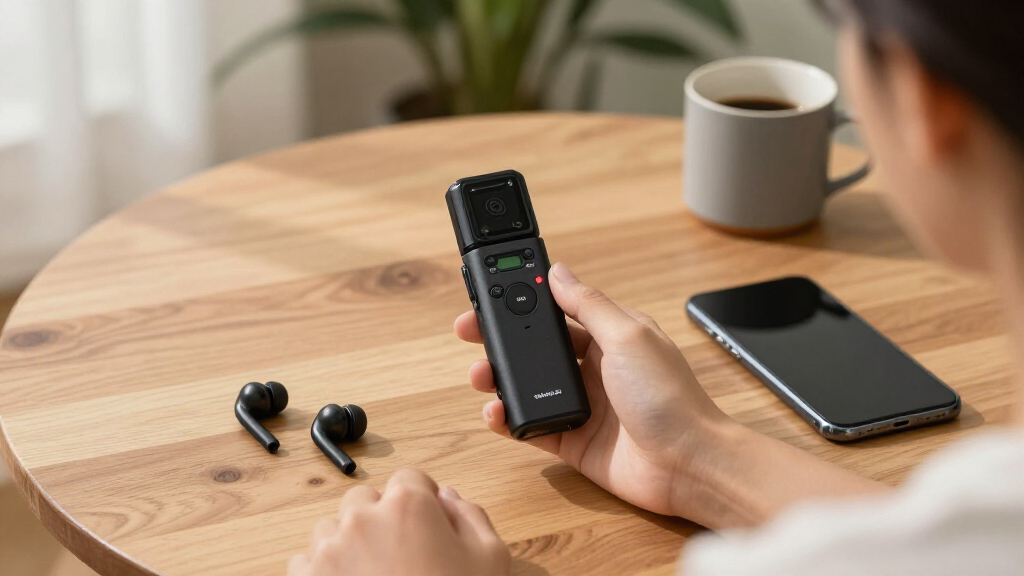
How We Picked
I evaluated these 14 recorders against the criteria that actually matter for discreet, portable use: physical size and how easily a device draws attention, battery endurance per charge, and whether voice activation triggers quickly and cleanly. I also weighed storage capacity against realistic recording quality, because a 128GB chip means nothing if the device only records at a bitrate that produces muddy audio. Finally, I factored in usability — one-touch recording, built-in playback, file transfer convenience, and whether features like magnetic mounting or AI noise reduction genuinely improved outcomes or just padded the spec sheet.
The ranking reflects a simple logic: models that combine reliable voice activation, long battery life, and small footprints sit at the top, while larger or feature-thin models fall lower even when their storage numbers look impressive. Value picks earned their spots by covering the essentials at a fraction of the price, and premium picks justified their position through features — magnetic mounting, AI noise cancellation, USB-C — that measurably improve discreet recording rather than marketing bulk.
| discreet portable voice recorder | Connectivity |
|---|---|
| 72GB Portable Voice Recorder w | — |
| Elasound Voice Activated Digit | USB-C |
| 8GB Digital Voice Recorder wit | Micro USB, USB 2.0 Type B |
| 64GB Digital Voice Recorder wi | — |
| Tonfarb 64GB Digital Voice Rec | — |
| Digital Voice Recorder 16GB wi | — |
| Xelarvex 72GB Digital Voice Re | — |
| ZIPCIDE 64GB Digital Voice Rec | — |
| Tallkcoder Magnetic Voice Acti | USB Type-C, 3.5 mm headphone jack |
| 64GB USB Digital Voice Recorde | — |
| Nanezan NZ007 Magnetic Voice A | USB-C |
| Digital Voice Recorder | USB-C |
| Tonfarb 136GB Digital Voice Re | USB 2.0 |
| 136GB Magnetic Voice Activated | OTG direct connection |
Factors to Consider When Choosing Discreet Portable Voice Recorders
Before choosing a recorder, it helps to understand what actually drives performance in this category — and where buyers most often go wrong. These are the factors I weighed most heavily, along with the mistakes that tend to cost people usable recordings.True Discretion Means Behavior, Not Just Size
Almost every recorder in this category is small enough to fit in a palm, but physical size is only part of the equation. What actually exposes a recorder is behavior: fumbling with buttons, indicator lights, or pulling the device out mid-conversation to check it. Look for one-touch recording with no audible startup beep, and think about where the device will live — a magnetic model like the Nanezan NZ007 can hide under a table edge, while a stick-shaped recorder needs a pocket or bag. Indicator LEDs that can’t be disabled are a common dealbreaker for true discreet use. Buyers who skip this thinking often end up with a capable recorder they’re too nervous to actually use.
Storage Numbers vs. Real-World Capacity
Marketing figures like 9,775 or 18,800 hours of recording are calculated at extremely low bitrates that produce robotic, hard-to-transcribe audio. At a usable 128kbps setting, a 64GB recorder holds roughly 1,100 hours — far more than most people will ever need, which means paying extra for 128GB or 136GB only makes sense for extended, unattended recording. A more useful question is whether the device lets you choose quality settings at all. Fixed low-bitrate recorders in this price range are the most common source of disappointed buyers. Match capacity to your actual recording schedule, not the biggest number on the box.
Voice Activation Is the Feature That Fails Most
Voice-activated recording (VAR) is what turns a recorder into a set-and-forget device, saving battery and storage by pausing during silence. The problem is that cheap implementations either miss the first seconds of speech or trigger constantly from HVAC hum and background noise, creating hundreds of tiny useless files. The best implementations let you adjust sensitivity — a feature worth confirming before buying. If a model’s VAR reviews are inconsistent, plan to record continuously instead and verify the battery supports it. Continuous recording at 15–20 hours is more reliable than faulty activation for anything important.
Battery Life and Charging Method
Battery claims range from under 20 hours to 100 hours, and the honest number usually sits between the marketing figure and half of it, especially with VAR cycling on and off. For all-day meetings or overnight capture, aim for a model rated at least 40 hours with voice activation. USB-C charging (found on the Elasound, Nanezan, and several others here) is quietly becoming the standard and means one less cable to carry. Older micro-USB models still work fine but charge slower and use a port standard that’s disappearing. Also check whether the device can record while plugged in — some can’t, which limits truly long deployments.
Playback: On-Device or Not at All
Many compact recorders in this list skip built-in playback entirely, requiring a computer or headphones to verify a recording succeeded. For students reviewing a lecture that night, that’s fine. For anyone capturing something they can’t re-do, on-device playback is cheap insurance against discovering hours of silence after the fact. Models with small screens and playback — the Elasound, Tonfarb units, and several 64GB options — let you spot-check within seconds. This is also where AI noise reduction matters: it can rescue a recording made across a large room, but it occasionally over-processes quiet voices, so it’s a benefit rather than a must-have.
Legal and Ethical Boundaries Before You Buy
Recording laws vary dramatically by jurisdiction — many regions require one-party consent (yours), while others require all parties to know, and some contexts like courts and medical settings have separate rules entirely. No recorder feature can make an illegal recording legal, so this belongs in your decision process before checkout, not after. Workplace policies can also prohibit recording even where the law technically allows it. The discreet nature of these devices makes accidental violations easy, and ‘I didn’t know’ is not a defense anywhere. Spend ten minutes checking your local rules first; it may change which features you even need.
Frequently Asked Questions
Can a recorder this small actually capture clear audio across a room?
Yes, but with limits you should plan around. The microphones in these devices handle a normal desk or small meeting room well, and models with AI noise reduction — like the Elasound, Xelarvex, and ZIPCIDE — clean up HVAC hum and distant echo noticeably. Beyond roughly 15–20 feet, though, every recorder in this category struggles, and voice-to-text transcription accuracy drops sharply. Placement matters more than brand: a recorder clipped near the speaker at table height will outperform a premium model buried in a bag. If you regularly record large rooms or lecture halls, prioritize noise reduction and position the device centrally rather than paying for more storage.
Is voice activation worth having, or should I just record continuously?
Voice activation earns its keep when you’re recording intermittently — meetings with pauses, lectures with breaks, or overnight monitoring. It saves enormous amounts of battery and storage, and the best implementations in this roundup (Elasound, Nanezan) trigger almost instantly at conversational volume. The catch is that cheaper implementations can clip the first syllable of speech or false-trigger on background noise, fragmenting your files. My practical rule: if VAR sensitivity is adjustable, use it; if it isn’t, test the device on something low-stakes before relying on it for anything important. Continuous recording remains the safer fallback when battery life allows it.
Do I really need 128GB or 136GB of storage?
For most people, no. At a solid 128kbps quality setting, 64GB holds roughly 1,100 hours — more than a year of daily meetings. The 128GB and 136GB models make sense in two situations: extended unattended recording (a vehicle, a worksite, multi-day events) where you can’t swap or offload files, or when you want maximum headroom at higher bitrates. Otherwise, extra storage is money better spent on better microphones, noise reduction, or a model with built-in playback. The giant ‘hours of recording’ figures on listings assume the lowest quality mode, which produces audio that’s painful to transcribe. Buy capacity for how you’ll actually record, not the headline number.
What does the magnetic case actually do on recorders like the Nanezan or Tallkcoder?
The built-in magnets let you attach the recorder to any steel surface — under a desk, inside a filing cabinet, on a vehicle’s frame — which solves the hardest problem in discreet recording: where to put the thing. Instead of a device sitting visibly on a table or poking out of a pocket, a magnetic recorder hides completely and starts with one touch. This makes them popular for monitoring workspaces, vehicles, and equipment rooms. The tradeoff is that magnets add a little thickness, and if you’ll mostly hand-carry the recorder, the feature is dead weight. If your use case involves fixed locations rather than on-body recording, magnetic mounting is arguably the single most useful feature in the category.
How do I get recordings off these devices and onto my phone or computer?
Most models here work as USB mass storage: plug them in and drag files off like a flash drive, no software needed. USB-C models (the Elasound, Nanezan, and 72GB one-touch unit) connect directly to modern phones and laptops without an adapter, which is a real convenience advantage. Older or cheaper units with fixed cables or micro-USB still transfer fine but need the right cable on hand. Files are typically MP3 or WAV, playable anywhere, though timestamps and file naming vary in usefulness between brands. If you record daily and transcribe often, prioritize USB-C and confirm the format before buying — conversion headaches add up fast.
Conclusion
For the best overall balance of discretion, capacity, and battery, the Elasound 128GB Voice Activated Recorder is the pick that handles nearly every scenario without compromise. The best value goes to the 8GB Digital Voice Recorder with MP3 Player — modest capacity, but it covers lectures and meetings for a fraction of the price, and the 16GB USB Rechargeable model is a close runner-up for beginners who want dead-simple operation. On the premium end, the 136GB Magnetic Voice Activated Recorder with AI Noise Reduction offers the most storage and unattended deployment time in the lineup. For specific needs: the Nanezan NZ007 and Tallkcoder excel at hidden, fixed-location monitoring thanks to magnetic mounting, the Xelarvex 72GB suits noisy open offices with its AI noise reduction, and the Tonfarb 136GB fits long events where offloading files mid-week isn’t an option. Whatever you choose, verify your local recording laws first, test voice activation on something low-stakes, and match storage to your real schedule rather than the biggest number on the listing.
Halloween Picks
halloween
As an affiliate, we earn on qualifying purchases.