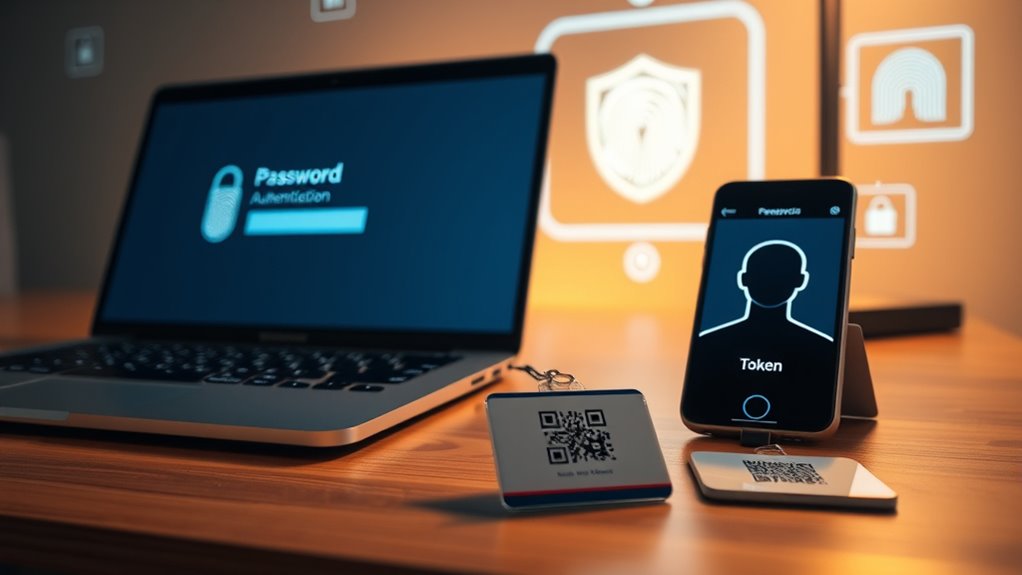

Multi-factor authentication enhances your online security by requiring two or more verification methods, such as passwords, biometric scans, or device checks. It combines something you know, have, or are to make it much harder for hackers to access your accounts. Best practices include using strong, unique passwords alongside biometrics and enabling risk-based authentication features. If you want to discover more effective strategies and how to implement them, keep exploring for detailed insights.

Get privacy and security gear delivered free with Prime
- Fast, free delivery on millions of items
- Prime Video, Amazon Music and more included
- Member-only deals all year
Key Takeaways
- MFA combines multiple verification methods such as passwords, biometrics, and tokens to enhance security.
- Biometric verification (fingerprints, facial recognition) provides a highly secure, user-friendly authentication factor.
- Implement risk-based authentication to adapt security measures based on login context, reducing user friction.
- Follow best practices like using strong passwords, enabling biometric options, and keeping devices updated.
- Incorporate clear user alerts and feedback to improve understanding and trust in MFA processes.
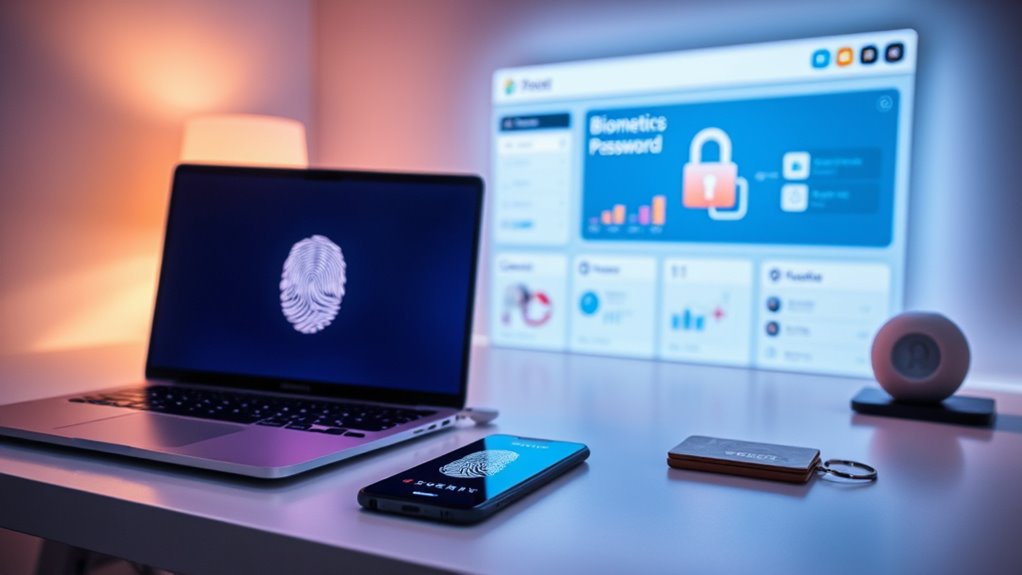
Have you ever wondered how to better protect your online accounts from unauthorized access? Multi-factor authentication (MFA) offers a robust solution by requiring multiple forms of verification before granting access. Instead of relying solely on a password, MFA combines something you know, like a password or PIN; something you have, such as a smartphone or security token; and something you are, which includes biometric verification. This layered approach makes it considerably harder for hackers to breach your accounts, even if one factor gets compromised.
One of the most advanced forms of MFA involves biometric verification. This method uses unique biological traits—like fingerprints, facial recognition, or iris scans—to confirm your identity. Biometrics are highly secure because they’re difficult to replicate or steal, adding an extra layer of protection that’s both convenient and reliable. When integrated into MFA, biometric verification can be seamlessly used on smartphones, laptops, or biometric security devices, ensuring that only you can access sensitive information. This method not only enhances security but also improves user experience by reducing reliance on remembering complex passwords.
Risk-based authentication takes MFA a step further by evaluating the context of each login attempt. Instead of applying the same security measures universally, it assesses factors such as your location, device, IP address, and behavior patterns. If something seems unusual—like a login attempt from a different country or a new device—it prompts additional verification steps. This adaptive approach minimizes friction during routine logins while increasing security when risks are higher. Implementing risk-based authentication helps protect your accounts without inconveniencing you, balancing security with usability.
Additionally, incorporating sound design principles into MFA systems—such as clear alerts and feedback—can improve user understanding and experience, making security measures more intuitive and less disruptive. To optimize your online security, it’s best to combine multiple MFA factors, including biometric verification and risk-based authentication. Use strong, unique passwords alongside biometric data whenever possible, and enable risk-based authentication features available on many platforms. Keep your devices and authentication apps up to date to ensure the latest security patches are in place. Be cautious about the information you share online and remain vigilant for suspicious activity.
As an affiliate, we earn on qualifying purchases.
Frequently Asked Questions
How Does MFA Impact User Convenience?
Multi-factor authentication can slightly impact your user experience by adding extra steps during login, which may feel inconvenient. However, it also enhances security, giving you peace of mind. Accessibility challenges might arise for users with disabilities if steps aren’t designed thoughtfully. Overall, while MFA adds some complexity, implementing user-friendly methods like biometric options helps balance security with convenience, ensuring a smoother experience for everyone.
Can MFA Be Bypassed by Cybercriminals?
Like a fortress guarding its gates, MFA critically blocks cybercriminals, but isn’t foolproof. Skilled attackers can exploit vulnerabilities through credential theft or sophisticated phishing attacks, potentially bypassing MFA. While it adds a crucial layer of security, no system is invulnerable. You should stay vigilant, keep your authentication methods updated, and combine MFA with other security practices to better defend against these cunning threats.
What Are the Costs of Implementing MFA?
Implementing MFA involves costs that you need to take into account, including a thorough cost analysis of tools and ongoing maintenance. You might face implementation challenges like user resistance and integration issues with existing systems. While the upfront expenses can be notable, the enhanced security often outweighs these costs. Investing in MFA ultimately reduces risks and potential breach costs, making it a valuable addition to your cybersecurity strategy.
How Does MFA Integrate With Existing Security Systems?
You can integrate MFA with your existing security systems by ensuring biometric integration and legacy system compatibility. This means updating your infrastructure to support biometric methods like fingerprint or facial recognition, and making sure your current systems can communicate with new MFA tools. You’ll want to work with vendors that offer seamless integration options, simplifying deployment and maintaining security without disrupting your existing workflows.
Are There Specific Industries Where MFA Is Mandatory?
Yes, certain industries require MFA due to industry regulation and compliance standards. Financial services, healthcare, and government agencies mandate MFA to protect sensitive data and meet strict security requirements. You need to implement MFA to adhere to regulations like HIPAA, GDPR, or PCI DSS. These standards aim to prevent unauthorized access, ensuring your organization stays compliant and secure. Ignoring MFA in these industries could lead to penalties or data breaches.
multi-factor authentication hardware token
As an affiliate, we earn on qualifying purchases.
As an affiliate, we earn on qualifying purchases.
Conclusion
Implementing multi-factor authentication substantially boosts your security, making it 99.9% harder for hackers to access your accounts. Imagine your data protected by multiple layers, like a fortress with walls, guards, and traps. With cyber threats growing daily, using the right types and best practices for MFA isn’t just smart — it’s essential. Stay vigilant, stay protected, and remember: the more factors you add, the safer your digital world becomes.
As an affiliate, we earn on qualifying purchases.
As an affiliate, we earn on qualifying purchases.
Halloween Picks
halloween
As an affiliate, we earn on qualifying purchases.