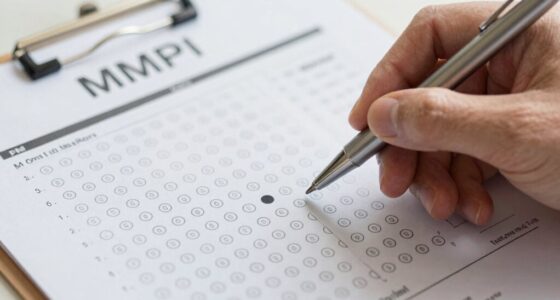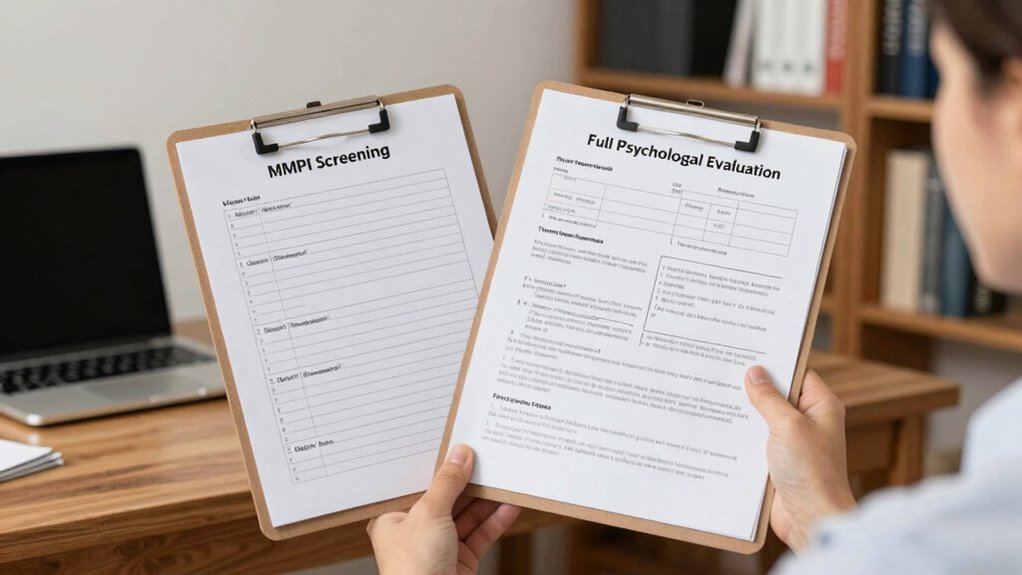

A quick way to understand the difference is that an MMPI screening uses a short, true-or-false questionnaire to identify potential concerns like anxiety or depression quickly. It’s not meant to diagnose but to flag areas that need further investigation. A full psychological evaluation, on the other hand, involves detailed interviews, behavioral assessments, and tests to get a complete picture of your mental health, guiding treatment and legal decisions. If you’re curious, there’s more to explore.
Key Takeaways
- MMPI is a brief, standardized questionnaire primarily used for quick screening of psychological concerns, while a full evaluation is comprehensive and diagnostic.
- MMPI focuses on identifying potential issues like depression or anxiety, whereas a full evaluation assesses a wide range of mental health, developmental, and cognitive factors.
- MMPI provides a snapshot of mental state; full evaluations involve clinical interviews, behavioral observations, and additional testing for in-depth understanding.
- MMPI is efficient and easy to administer but not conclusive; full evaluations support diagnosis and treatment planning with detailed data.
- Both tools are complementary: MMPI screens for concerns, while full evaluations offer detailed insights for treatment and legal decisions.
Have you ever wondered what sets apart an MMPI screening from a full psychological evaluation? Both are essential tools in mental health, but they serve different purposes and involve varying levels of assessment. When you’re trying to understand your mental health or someone else’s, knowing the distinction can help you make informed decisions. The MMPI, or Minnesota Multiphasic Personality Inventory, is primarily a personality assessment used to identify psychological conditions and personality structure. It’s a standardized questionnaire that offers quick insights into a person’s mental state, often used for initial screening or specific diagnostic questions. On the other hand, a full psychological evaluation is an exhaustive process that includes numerous diagnostic procedures designed to provide a detailed picture of an individual’s mental health, cognitive abilities, emotional functioning, and overall personality.
The core difference lies in the scope and depth of each assessment. The MMPI is a targeted tool that uses a series of true-or-false questions to measure different psychological traits and potential mental health issues. It’s efficient, standardized, and widely used to flag possible concerns, such as depression, anxiety, or personality disorders. However, it doesn’t offer a complete picture of someone’s mental health — it’s more of a screening instrument rather than a diagnostic procedure. When you undergo an MMPI screening, you’re getting a snapshot that helps professionals determine whether further testing or assessment is needed.
In contrast, a full psychological evaluation digs deeper. It involves multiple diagnostic procedures, including clinical interviews, behavioral observations, cognitive testing, and sometimes neuropsychological assessments. These procedures help psychologists gather extensive information about your mental health, developmental history, learning abilities, and emotional well-being. The goal is to develop a nuanced understanding of your strengths and challenges, which can guide treatment plans or legal decisions. If you’re facing complex mental health issues, a full evaluation provides the detailed analysis necessary to develop targeted interventions. Additionally, understanding psychological assessment techniques can help you better appreciate the thoroughness involved in full evaluations.
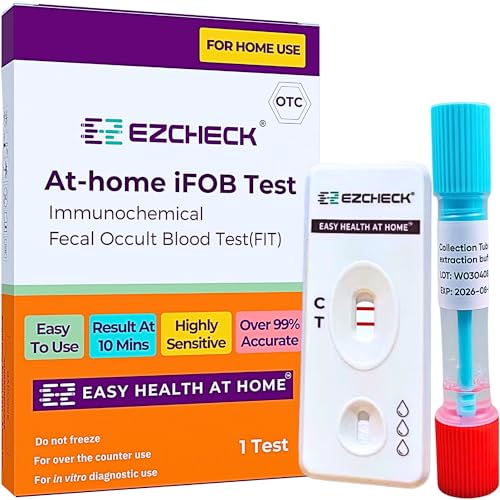
EZCHECK® At-Home iFOB Test (1 Test) Immunochemical Fecal Occult Blood Test (FIT) for Colon Health Screening, Colon Cancer Screening, Colorectal Cancer Screening, Colon Disease Test
Preferred Screening Method – The EZCHECK At-home iFOB Test is a FIT test, the preferred annual stool screening…
As an affiliate, we earn on qualifying purchases.
As an affiliate, we earn on qualifying purchases.
Frequently Asked Questions
How Long Does Each Assessment Typically Take to Complete?
The assessment duration varies: a typical MMPI screening takes about 1 to 2 hours, offering a quick overview of your mental health. In contrast, a full psychological evaluation usually requires 4 to 6 hours spread across multiple sessions, demanding a higher time commitment. This longer process provides an extensive understanding of your psychological state, making it ideal for in-depth insights.
Are MMPI Screenings Suitable for Children or Adolescents?
You’re wondering if MMPI screenings suit children or adolescents. While the MMPI is primarily designed for adults, there’s a specialized version called MMPI-A tailored specifically for adolescents. It’s crafted to assess teen-specific issues, making it suitable for adolescent assessment. However, for younger children, other tests might be more appropriate. So, if you’re considering this screening, make sure it’s the right fit for the age group to get accurate insights.
What Qualifications Do Professionals Need to Administer These Tests?
You need to guarantee that professionals administering MMPI tests are licensed psychologists or qualified mental health experts, as they follow strict ethical guidelines and ensure test validity. These professionals have specialized training in psychological assessment, enabling accurate interpretation of results. Their qualifications guarantee the test’s reliability and ethical administration, helping you receive valid, trustworthy insights into mental health or personality concerns.
Can Results of the MMPI Impact Legal or Employment Decisions?
Yes, the results of the MMPI can impact legal implications and employment decisions. In legal cases, they might be used to assess mental health or competency, influencing judgments. For employment impact, they can help determine if a candidate’s psychological profile fits the role, but misuse or misinterpretation may lead to legal issues. Always guarantee qualified professionals interpret MMPI results to avoid potential legal pitfalls.
How Much Do These Evaluations Usually Cost?
Think of psychological evaluations as different-sized treasure chests. A basic MMPI screening might cost around $200 to $500, like a small chest, while a full evaluation could be $1,000 to $3,000, akin to a large, ornate box. Cost comparison varies by provider, and insurance coverage often helps offset expenses. Always check if your insurance covers these assessments to avoid surprises, and remember, investing in mental clarity can be priceless.

Essentials of PAI Assessment (Essentials of Psychological Assessment)
As an affiliate, we earn on qualifying purchases.
As an affiliate, we earn on qualifying purchases.
Conclusion
Think of MMPI screening like a quick peek through a keyhole—helpful for a glimpse, but not the whole picture. A full psychological evaluation is like opening the door to the entire room, revealing deeper insights and understanding. If you’re seeking clarity on complex mental health issues, don’t settle for just a snapshot. Instead, consider the full evaluation—because sometimes, the full story can be the key to your next chapter of growth.

Psychiatric Mental Health Assessment Questionnaires
As an affiliate, we earn on qualifying purchases.
As an affiliate, we earn on qualifying purchases.

FOUNDATIONS OF BEHAVIORAL,SOCIAL,+.
As an affiliate, we earn on qualifying purchases.
As an affiliate, we earn on qualifying purchases.