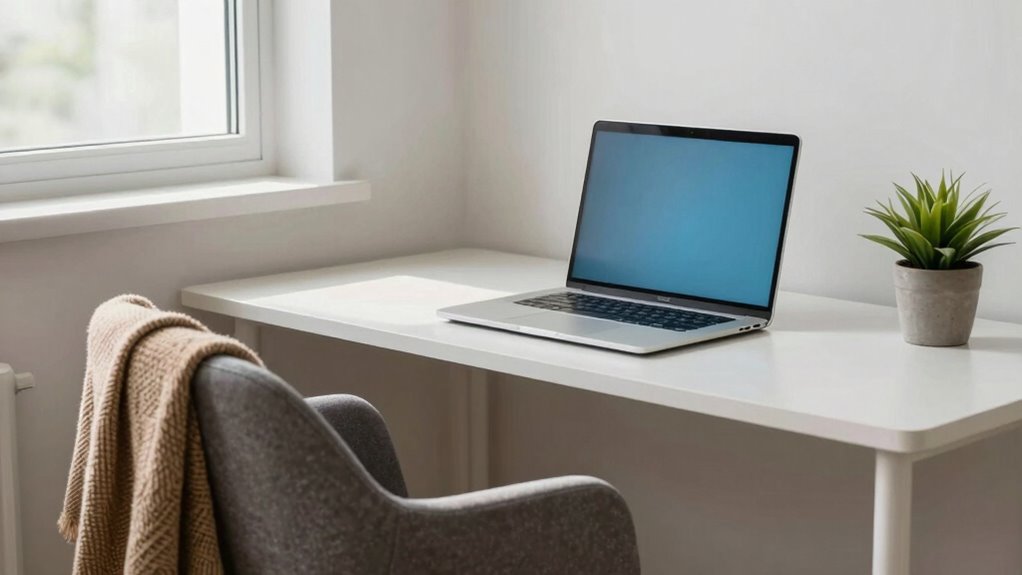

To recover faster, create a personal zone at your desk using privacy screens or tall plants to block distractions. Choose an ergonomic chair and position your desk away from high-traffic areas to minimize noise and visual interruptions. Incorporate calming elements like soft lighting, photos, or cozy accessories, and use noise-canceling headphones or white noise machines to manage sound. Small adjustments like these can turn your workspace into a sanctuary, helping you recharge more quickly and comfortably—discover more ways to optimize your space.

Get privacy and security gear delivered free with Prime
- Fast, free delivery on millions of items
- Prime Video, Amazon Music and more included
- Member-only deals all year
Key Takeaways
- Creating a personal zone with privacy screens or plants reduces distractions and provides a mental retreat.
- Positioning the desk away from high-traffic areas minimizes visual and auditory disturbances.
- Using noise-canceling headphones or white noise machines helps block background chatter and reset focus.
- Personalizing the workspace with comforting items fosters relaxation and mental detachment.
- Incorporating calming lighting and air quality improvements enhances overall well-being and recovery.

If you’re an introvert looking to create a workspace that feels comfortable and focused, the right desk setup can make all the difference. In environments with collaborative work and an open office environment, it’s easy to feel overwhelmed or drained after interactions with colleagues. The key is designing a space that helps you recover quickly and maintain your energy levels. One simple but effective trick is to incorporate a personal zone within your desk area. You can do this by adding a privacy screen or a tall plant that acts as a visual barrier, giving you a sense of separation from the surrounding activity. This small adjustment creates a semi-private space where you can retreat mentally, even in the midst of a lively open office.
Another crucial element is your seating arrangement. Opt for an ergonomic chair that offers good back support and allows you to adjust your position easily. Proper posture isn’t just about comfort; it influences your mental state and energy. Position your desk so that you’re facing away from high-traffic areas or common walkways. This orientation minimizes visual and auditory distractions, helping you focus and recover faster when you need a break from social interactions. When you’re not actively collaborating, having a setup that shields you from constant stimuli will help you regain your composure more quickly. Incorporating environmental considerations can also enhance your workspace’s calming effect. Paying attention to a healthy workspace environment can further improve your overall sense of well-being, especially when combined with mindful organization and lighting choices. Additionally, integrating smart home technology such as automated lighting or noise management devices can create a more tailored environment that supports your need for focus and relaxation.
In addition, consider incorporating noise management tools into your setup. Noise-canceling headphones or a white noise machine can block out the background chatter typical of open office environments. These tools aren’t just for working; they serve as mental cues that it’s time to reset and recharge. Using them during breaks allows you to detach from the noise and re-center yourself, speeding up your recovery after social interactions or periods of intense concentration. Paying attention to the environmental impact of tissue paper can inspire you to choose eco-friendly supplies that contribute to a healthier workspace. Remember that air quality also plays a significant role in maintaining a calming environment, so consider adding an air purifier if needed.
Finally, personalize your workspace with items that bring you comfort—such as a small lamp, a cozy blanket, or favorite photos. These familiar elements create an inviting atmosphere that helps you feel more at ease. When your environment aligns with your preferences, it’s easier to mentally detach and recover after engaging in collaborative work. This setup trick—creating a personal sanctuary within a shared space—empowers you to navigate an open office environment more effectively, bouncing back faster from social fatigue and maintaining your focus throughout the day.
As an affiliate, we earn on qualifying purchases.
Frequently Asked Questions
How Long Does It Typically Take to See Benefits From This Desk Setup?
You might start noticing benefits from ergonomic accessories and lighting adjustments within a few days to a week. As you adapt your workspace, your comfort and focus can improve quickly. Consistent use of ergonomic tools like supportive chairs or adjustable desks, combined with proper lighting, helps reduce fatigue. Keep tracking your comfort levels, and you’ll likely see positive changes in your energy and productivity in just a few days.
Can This Trick Be Customized for Different Workspace Sizes?
Yes, you can customize this desk setup trick for different workspace sizes. Focus on workspace customization by adjusting your desk and chair placement to maximize comfort. Make comfort adjustments, such as adding ergonomic accessories or reorganizing items, to fit your space. Experiment with different arrangements to find what works best. This flexibility guarantees you can implement the trick effectively, regardless of your workspace’s dimensions, enhancing your comfort and recovery.
Is This Setup Suitable for Shared Office Environments?
About 70% of employees report that noise levels in shared spaces impact their focus. This setup isn’t ideal for shared office environments, as it might not block out noise effectively. If you work in a shared space, consider adding sound barriers or noise-canceling headphones to improve your focus and recovery. The trick works best when you can control your immediate environment, so adapt it to suit noisy or collaborative settings.
What Materials Are Recommended for Creating This Desk Setup?
You should use ergonomic accessories like adjustable chairs, wrist supports, and monitor stands to guarantee comfort. Incorporate acoustic panels to reduce noise and create a quieter environment, which helps introverts recover faster. Opt for materials that are soft, sound-absorbing, and adjustable, such as foam or fabric-covered panels. These materials make your setup more comfortable and private, boosting focus and relaxation during work breaks.
Are There Any Common Mistakes to Avoid When Implementing This Trick?
Avoid cluttering your personal space, as it can make you feel overwhelmed and hinder your recovery. Also, be mindful of noise control; loud sounds can disrupt your focus and increase stress. Make sure your desk setup promotes a calm environment by keeping it organized and using noise-canceling headphones if needed. These small adjustments help you maintain a peaceful space, allowing you to recharge more effectively and avoid common pitfalls.
ergonomic office chair with lumbar support
As an affiliate, we earn on qualifying purchases.
As an affiliate, we earn on qualifying purchases.
Conclusion
By optimizing your desk setup, you create a personal sanctuary that helps introverts recharge quickly. For instance, consider Sarah, a freelance writer who added a cozy corner with noise-canceling headphones and a calming plant. She reports feeling more refreshed and focused after her work sessions. Implementing small tweaks, like a dedicated quiet space, can make a significant difference. With the right environment, you’ll find it easier to recover and stay energized throughout your day.
white noise machine for workspace
As an affiliate, we earn on qualifying purchases.
As an affiliate, we earn on qualifying purchases.
noise-canceling headphones for focus
As an affiliate, we earn on qualifying purchases.
As an affiliate, we earn on qualifying purchases.
Halloween Picks
halloween
As an affiliate, we earn on qualifying purchases.