The psychology of escape room challenges shows that success depends on teamwork, communication, and effective problem-solving. Staying calm under pressure helps clear your mind, while emotional regulation keeps the group focused and resilient. Sharing ideas and leveraging individual strengths boost your chances of solving puzzles quickly. Group cohesion and positive interactions foster creativity and persistence. Keep exploring, and you’ll uncover how these mental strategies can turn tough challenges into rewarding wins.
Key Takeaways
- Effective teamwork, communication, and division of tasks enhance problem-solving success in escape rooms.
- Staying calm under pressure and emotional regulation improve focus and decision-making during challenging puzzles.
- Group cohesion and positive interactions foster resilience, reduce frustration, and maintain momentum.
- Leveraging individual strengths and shared strategies maximizes collective intelligence and puzzle-solving efficiency.
- The experience promotes skills like collaboration, adaptability, and stress management, applicable beyond escape rooms.
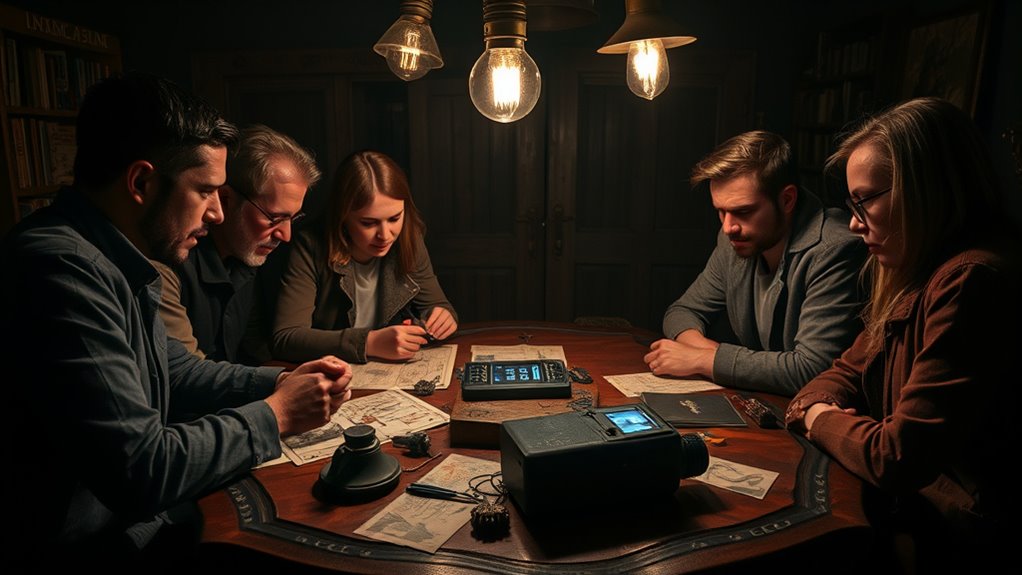
Escape room challenges tap into your mind’s ability to problem-solve, collaborate, and stay calm under pressure. As you work through puzzles and riddles, you naturally tap into your problem solving strategies, but what’s equally important is how your group dynamics influence your success. When you enter an escape room, you’re not just testing individual intelligence—you’re engaging in a collective effort that relies heavily on how well everyone communicates, shares ideas, and adapts to new information. Your ability to leverage group dynamics can make or break the experience, highlighting the importance of effective teamwork.
In these scenarios, your problem solving strategies aren’t just about finding the right clues; they involve understanding how to coordinate with others, delegate tasks, and build on each other’s insights. For example, if one person is good at pattern recognition, they might focus on solving visual puzzles, while someone else takes on deciphering codes. This division of labor allows the group to maximize its strengths and approach challenges from multiple angles. Recognizing when to ask for help or to suggest a new approach is *key* in maintaining momentum and avoiding frustration. The interplay between individual skills and group cohesion creates a dynamic environment where your collective intelligence shines. Additionally, understanding the importance of essential oils and their properties can help manage stress and promote focus, which is crucial during high-pressure situations like escape rooms.
Your ability to stay calm under pressure is also *essential*. When time runs out or you hit a tough puzzle, anxiety can take over, clouding your judgment. However, if your group maintains a supportive atmosphere, it encourages open communication and keeps everyone engaged. Your problem solving strategies become more effective when the group remains focused, instead of panicking or blaming each other. This resilience helps you think more clearly and explore alternative solutions without losing composure. The social aspect of escape rooms demonstrates how emotional regulation and group cohesion are intertwined—calm, positive interactions boost problem-solving efficiency and foster creative thinking.
Staying calm under pressure enhances teamwork, fosters creativity, and improves problem-solving during escape room challenges.
Ultimately, the psychology behind escape room challenges shows that success hinges on more than just individual intelligence. It’s about how you work together, how your group dynamics evolve, and how you adapt your problem solving strategies to the ever-changing landscape of puzzles. When you approach these challenges with a collaborative mindset, maintaining calmness and leveraging each other’s strengths, you’re more likely to *access* the final door. This experience not only tests your mental agility but also highlights the importance of teamwork, communication, and resilience—traits that extend well beyond the game itself.

iDventure Cluebox The Trial of Camelot | Escape Room Puzzle Box | Challenging 3D Puzzle | Brain Teaser for Adults | Unique Gift Idea
🔑 ESCAPE ROOM GAME – iDventure Cluebox “The secret of Camelot” is a brain teaser puzzle featuring a…
As an affiliate, we earn on qualifying purchases.
As an affiliate, we earn on qualifying purchases.
Frequently Asked Questions
How Do Escape Rooms Affect Participants’ Stress Levels?
Escape rooms can boost your emotional resilience by pushing you to stay calm under pressure, which reduces stress levels. Practicing mindfulness training during these challenges helps you stay focused and manage anxiety effectively. As you work through puzzles and solve problems, you build confidence, making it easier to handle stressful situations outside the game. Overall, escape rooms can be a fun way to strengthen your emotional resilience and lower stress.
What Personality Traits Predict Success in Escape Rooms?
They say, “Know thyself,” and that’s key when it comes to escape rooms. Your success often depends on personality traits like openness, extraversion, and problem-solving skills. High participant engagement and quick thinking boost your chances. If you’re curious about what predicts success, focus on traits that foster teamwork, resilience, and adaptability. These qualities help you stay calm, solve puzzles efficiently, and ultimately escape faster.
Can Escape Room Experiences Improve Problem-Solving Skills?
Escape room experiences can definitely boost your problem-solving skills by increasing your cognitive engagement. As you tackle puzzles of varying complexity, you challenge your brain to think critically and creatively. This active engagement helps improve your ability to analyze situations and develop solutions. Over time, repeatedly facing puzzle complexity in escape rooms sharpens your problem-solving abilities, making you more confident and effective in real-life challenges.
How Does Teamwork Influence Individual Performance in Escape Rooms?
They say “many hands make light work,” and in escape rooms, teamwork markedly boosts individual performance. Your group dynamics, including clear leadership roles and open communication, help you solve puzzles faster. When you collaborate effectively, each person’s strengths shine, reducing stress and increasing success. Emphasizing cooperation and assigning roles optimizes everyone’s contribution, making the experience more enjoyable and productive for you all.
Are There Long-Term Psychological Benefits From Participating in Escape Rooms?
Participating in escape rooms can offer long-term psychological benefits, such as strengthening your memory and boosting creativity. As you solve puzzles and navigate challenges, you enhance your ability to recall information (long-term memory) and think outside the box (creativity enhancement). These activities also promote problem-solving skills and reduce stress, providing lasting mental health advantages that extend beyond the game itself.

Sonyabecca Hole Tarp Team Building Exercise Activities Games Teamwork Group Learning Fun Playing Yellow,85''Lx57''W
Team Building Challenge : Thrill your team with this engaging challenge that involves maneuvering a ball around a…
As an affiliate, we earn on qualifying purchases.
As an affiliate, we earn on qualifying purchases.
Conclusion
So, next time you find yourself frantically searching for clues in an escape room, remember: it’s all about testing your brain’s resilience—and maybe exposing your hidden obsession with puzzles. Who knew that getting locked in a room could reveal so much about your personality? But don’t worry, whether you escape or not, you’ve just experienced the ultimate psychological rollercoaster—proving once again that humans are wired to love a good challenge… or at least pretend to.

Stress Relief Essential Oil Blend 30 ml – Stress Relief & Calm Essential Oil for Diffusers & Aromatherapy – Promotes Relaxation & Rest – Nexon Botanics
Comforting Aroma: It helps create a fresh and pleasant ambiance.
As an affiliate, we earn on qualifying purchases.
As an affiliate, we earn on qualifying purchases.

iDventure Cluebox Schroedingers Cat | Escape Room Puzzle Box | Challenging 3D Puzzle | Unique Gift Idea for Men an Women
🔑 ESCAPE ROOM GAME – iDventure Cluebox Schrödinger’s Cat is a brain teaser puzzle featuring a series of…
As an affiliate, we earn on qualifying purchases.
As an affiliate, we earn on qualifying purchases.