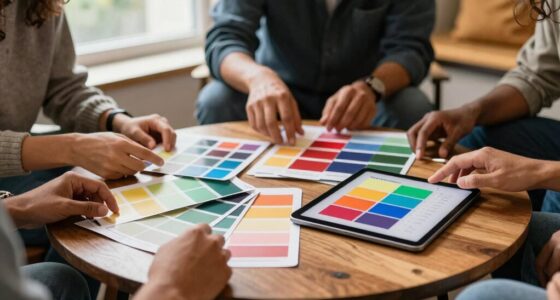

Your favorite color can hint at aspects of your personality, like passion, trust, growth, or happiness, but it doesn’t define who you are. Personal memories and cultural influences shape your preferences far more than societal meanings. Remember, your choice isn’t linked to traits like morality or intelligence, nor does it predict your future. If you explore further, you’ll discover even more about what your color choices reveal and what they don’t.

Get privacy and security gear delivered free with Prime
- Fast, free delivery on millions of items
- Prime Video, Amazon Music and more included
- Member-only deals all year
Key Takeaways
- Favorite colors reflect personal memories and experiences more than specific personality traits or characteristics.
- Cultural differences can influence color preferences, but they do not determine individual morality or intelligence.
- Personal associations with colors often override societal meanings, shaping individual preferences uniquely.
- A preferred color provides only a small glimpse into personality and does not predict behavior or success.
- Color preferences are influenced by both societal symbolism and personal life experiences, making them complex and nuanced.
Have you ever wondered what your favorite color reveals about your personality? It’s a question many people ask, and the answer isn’t always straightforward. Your favorite color can reflect certain aspects of your character, but it’s essential to remember that it doesn’t define you entirely. When exploring what your color choice says, you should consider the concepts of color symbolism and personal associations. These elements shape the meanings we attach to colors and influence how we perceive ourselves and others.
Color symbolism plays a significant role in understanding why you might be drawn to a particular hue. For example, red often symbolizes passion, energy, or urgency. If you favor red, you might be someone who’s bold, enthusiastic, or assertive. Blue, on the other hand, tends to signify calmness, trust, and stability. If blue is your favorite, you could be someone who values peace, reliability, or deep thinking. Green is associated with growth, balance, and health, often appealing to those who seek harmony or connection with nature. Yellow is linked to happiness, optimism, and creativity, attracting individuals who are cheerful or innovative. These general interpretations of color symbolism can offer insight into your personality traits, but they aren’t set in stone.
Color symbolism reveals traits like passion, calmness, growth, or happiness, but personal meaning shapes your true connection to each hue.
Your personal associations with colors also shape your preferences. For example, if you have fond memories of a particular shade from childhood or a loved one, that color might become your favorite because of the emotional connections tied to it. These personal associations often override more generalized color symbolism. For instance, you might love purple not because it signifies luxury or spirituality, but because it reminds you of a special person or a meaningful event. Recognizing your personal associations helps you understand that your favorite color is as much about your experiences and memories as it is about societal meanings. Additionally, understanding the influence of cultural differences can deepen your insight into why certain colors hold specific meanings in different societies. Being aware of cultural variations in color symbolism can help you appreciate how diverse perceptions shape individual preferences. Moreover, scientific research on color psychology indicates that personal context plays a crucial role in interpreting color preferences, emphasizing that individual experiences often outweigh societal meanings.
However, it’s important to note what your favorite color does not say about you. It doesn’t determine your morality, intelligence, or success. A preference for a certain hue isn’t an indicator of your entire personality. People can like the same color for vastly different reasons, and their personalities can be completely different. Your favorite color is just one small window into your complex identity, not a exhaustive portrait. It can reveal some tendencies or preferences, but it doesn’t define your entire character or predict your future. Moreover, scientific research on color psychology suggests that the influence of color on personality traits is often more complex and nuanced than simple associations.
In the end, your favorite color offers a glimpse into your personality—shaped by both societal symbols and personal memories. It’s a piece of your puzzle, but not the whole picture. Recognizing this helps you appreciate the nuanced reasons behind your preferences and reminds you that you’re far more than your favorite color.
As an affiliate, we earn on qualifying purchases.
Frequently Asked Questions
Can Your Favorite Color Change Your Personality Over Time?
Yes, your favorite color can change your personality over time. Through color therapy and emotional associations, you might find yourself drawn to different hues as your mood and experiences evolve. These shifts can influence your feelings, behaviors, and outlooks. As you explore new colors, you may develop new traits or perspectives, showing that your personality is dynamic and responsive to the colors you prefer at various life stages.
Do Cultural Differences Affect Color Preferences and Their Meanings?
Did you know that in China, red symbolizes luck, while in Western cultures, it often signifies love? Cultural symbolism and regional variations notably influence color preferences and meanings. You’ll find that what’s considered positive in one culture might carry different connotations elsewhere. So, your favorite color’s significance isn’t universal; it’s shaped by your cultural background, making color meanings a fascinating blend of tradition and regional influence.
Is There Scientific Evidence Linking Color Choice to Personality Traits?
Scientific evidence linking color choice to personality traits is limited, but some studies in color psychology suggest personal associations with colors can reflect aspects of your personality. For example, liking bold colors might indicate confidence, while soft hues could suggest a gentle nature. However, these links aren’t definitive, and your favorite color is influenced by personal experiences and cultural factors more than strict personality traits.
How Do Fashion Trends Influence Our Color Preferences?
Fashion trends dramatically shape your color preferences, almost like a giant magnet pulling you into a whirlwind of choices. You can’t escape it—color psychology is heavily influenced by what’s in style, dictating what shades dominate your wardrobe. As fashion cycles spin faster than ever, they sway your mood and mood swings, making your favorite hues a mirror of current trends rather than true personality traits.
Can Your Favorite Color Reveal Hidden Aspects of Your Subconscious?
Your favorite color can reveal subconscious associations rooted in color symbolism. For example, choosing red might indicate passion or energy, while blue suggests calmness or introspection. These preferences often reflect hidden parts of your personality or emotions. By paying attention to your color choices, you can gain insight into your subconscious mind. Your favorite color acts as a window, revealing feelings and traits you may not consciously recognize.
personal color association journal
As an affiliate, we earn on qualifying purchases.
As an affiliate, we earn on qualifying purchases.
Conclusion
Ultimately, your favorite color offers a compelling glimpse into your personality, passions, and preferences. It reveals your relaxed, rebellious, or refined tendencies, subtly shaping how others see you. By understanding what your color choice conveys, you gain a deeper self-awareness and a dash of distinction. So, embrace your hues with confidence, and let your luminous, lively, or calm color choices craft your unique character’s canvas. Your color’s core can connect, communicate, and create your enthralling character.
As an affiliate, we earn on qualifying purchases.
As an affiliate, we earn on qualifying purchases.
Fall Picks
fall essentials
As an affiliate, we earn on qualifying purchases.