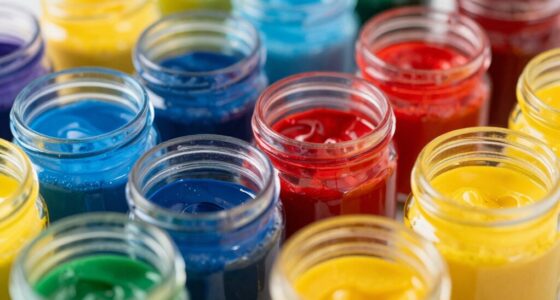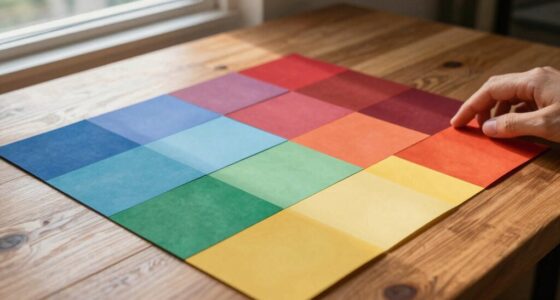

Color personality tests can spark meaningful conversations by helping you understand different traits within your team. Recognizing styles like red for directness, blue for detail, yellow for enthusiasm, and green for support allows you to communicate more effectively. It encourages empathy, reduces conflicts, and boosts team cohesion. When you use these insights, everyone feels valued and understood. If you want to discover how to apply these colors for better teamwork, keep exploring the possibilities.

Get privacy and security gear delivered free with Prime
- Fast, free delivery on millions of items
- Prime Video, Amazon Music and more included
- Member-only deals all year
Key Takeaways
- Color personality tests facilitate understanding diverse communication styles, leading to more effective team interactions.
- They help identify each member’s strengths, encouraging tailored roles and responsibilities within the team.
- Recognizing personality colors fosters empathy, reducing conflicts and enhancing collaboration.
- These tests reveal how different personalities process information, improving clarity and decision-making.
- They promote an inclusive culture by valuing diversity and encouraging open-mindedness in team conversations.

Have you ever wondered how understanding different personality styles can improve team conversations? When you recognize the variety of personality types within your team, you unlock the potential for more effective communication. Color personality tests are a practical tool to help you identify these styles quickly and intuitively. By categorizing personalities into colors, you can better understand how team members process information, express themselves, and respond to others. This awareness fosters a culture of personality diversity, where everyone’s strengths are acknowledged, and communication strategies are tailored accordingly.
Using color personality tests in team conversations sparks insights that often go unnoticed in traditional discussions. For example, someone with a red personality might be direct and decisive, eager to get straight to the point. In contrast, a blue personality may prefer to analyze details thoroughly before making decisions. Recognizing these differences helps you frame conversations in ways that resonate with each person. When you adapt your communication strategies—using clear, concise messages for reds or providing detailed data for blues—you make interactions more productive and less frustrating.
Adapting communication to personality styles makes team interactions more effective and less frustrating.
Color personality tests also encourage empathy and patience. If a team member’s style is more reserved or cautious, you’ll understand that their hesitation isn’t a lack of interest but a different approach to processing information. This understanding can prevent misinterpretations and reduce conflicts. As you become more aware of personality diversity, you learn to listen actively and respond thoughtfully, making team conversations more inclusive and engaging. Additionally, understanding personality styles can help you identify the most effective ways to motivate and support each team member. Recognizing the diversity of personality types can also help in designing team projects that leverage each member’s unique strengths. Incorporating personality assessments into team development can foster a more cohesive and adaptable environment overall. Moreover, embracing personality diversity promotes a more open-minded workplace where different perspectives are valued and integrated.
Furthermore, these tests can reveal how certain personalities contribute to team dynamics. For instance, yellow personalities tend to be enthusiastic and creative, often inspiring others. When you recognize these traits, you can assign roles that allow their strengths to shine, boosting morale and collaboration. Additionally, knowing each other’s personality colors helps in resolving misunderstandings quickly, as you can see conflicts as differences in styles rather than personal attacks. Interestingly, some teams find that understanding these personality types enhances their overall problem-solving capabilities by combining diverse approaches.
In the end, integrating color personality tests into team conversations isn’t about labeling people but about understanding them better. It’s about developing communication strategies rooted in personality diversity, so everyone feels heard and valued. It also helps create an environment where team members can grow and adapt based on their individual traits. This approach not only improves daily interactions but also strengthens your team’s overall cohesion, productivity, and morale. When you harness the insights from these tests, you create a more harmonious environment where diverse personalities enhance collective success rather than hinder it.
color personality test cards for team building
As an affiliate, we earn on qualifying purchases.
As an affiliate, we earn on qualifying purchases.
Frequently Asked Questions
How Do Color Personality Tests Influence Team Dynamics Long-Term?
Color personality tests influence team dynamics long-term by promoting personality consistency and understanding among members. As you recognize each person’s unique traits, you foster better communication and collaboration, strengthening team cohesion. Over time, this awareness helps prevent conflicts, encourages mutual respect, and builds a supportive environment where everyone’s strengths are valued. Ultimately, these tests serve as tools that cultivate lasting trust and synergy within your team.
Can Color Personality Tests Predict Team Members’ Future Performance?
Imagine a vibrant palette where each color symbolizes unique personality traits, painting a picture of potential team performance. While color symbolism offers insights into current strengths, it doesn’t reliably predict future performance. You see, personality traits can evolve, and team dynamics depend on many factors. So, use these tests as guiding brushes, not crystal balls, to foster understanding rather than foresee exact outcomes.
Are Color Personality Tests Culturally Universal or Region-Specific?
Color personality tests are influenced by cultural interpretations and regional differences, so they’re not entirely universal. In some cultures, certain colors may symbolize specific traits, affecting how team members perceive their personalities. You should be aware of these regional nuances because they can impact team dynamics and interpretations. Tailoring the approach to each region’s cultural context helps guarantee the tests foster understanding rather than misunderstandings.
How Accurate Are Color Personality Tests Compared to Other Assessment Tools?
Color personality tests can be somewhat accurate in highlighting personality traits, but their test reliability varies. They offer quick insights, yet often lack the depth of more extensive assessment tools like the Myers-Briggs or DISC. You should view them as a starting point for understanding team dynamics, rather than definitive measures. Keep in mind, their simplicity can sometimes oversimplify complex personalities, so use them alongside other evaluation methods.
What Are Common Misconceptions About Color Personality Tests?
You might believe color personality tests are foolproof, but beware of misconceptions. Many assume they rely on color stereotypes, oversimplifying complex human traits. They also question test validity, assuming these assessments are scientifically rigorous. In reality, these tests offer fun insights rather than definitive labels. Recognizing their limitations helps you use them wisely, fostering genuine understanding without falling into the trap of oversimplified stereotypes or overestimating their accuracy.
team communication style assessment tools
As an affiliate, we earn on qualifying purchases.
As an affiliate, we earn on qualifying purchases.
Conclusion
Understanding color personality tests can truly open up team conversations, helping you see colleagues in a new light. When you recognize different traits, you build bridges rather than walls, fostering trust and collaboration. It’s like finding the missing puzzle piece—suddenly, everything fits together seamlessly. So, don’t be afraid to embrace these insights; they’re your secret weapon for stronger, more connected teams. After all, teamwork makes the dream work.
personality color coding posters for office
As an affiliate, we earn on qualifying purchases.
As an affiliate, we earn on qualifying purchases.
team collaboration and personality assessment kit
As an affiliate, we earn on qualifying purchases.
As an affiliate, we earn on qualifying purchases.
Halloween Picks
halloween
As an affiliate, we earn on qualifying purchases.