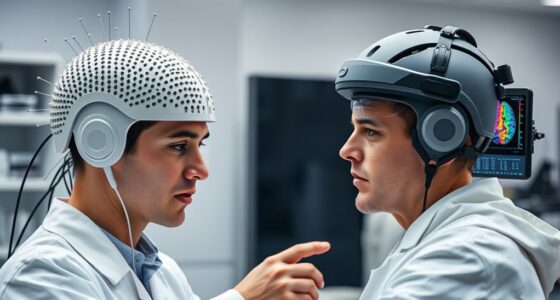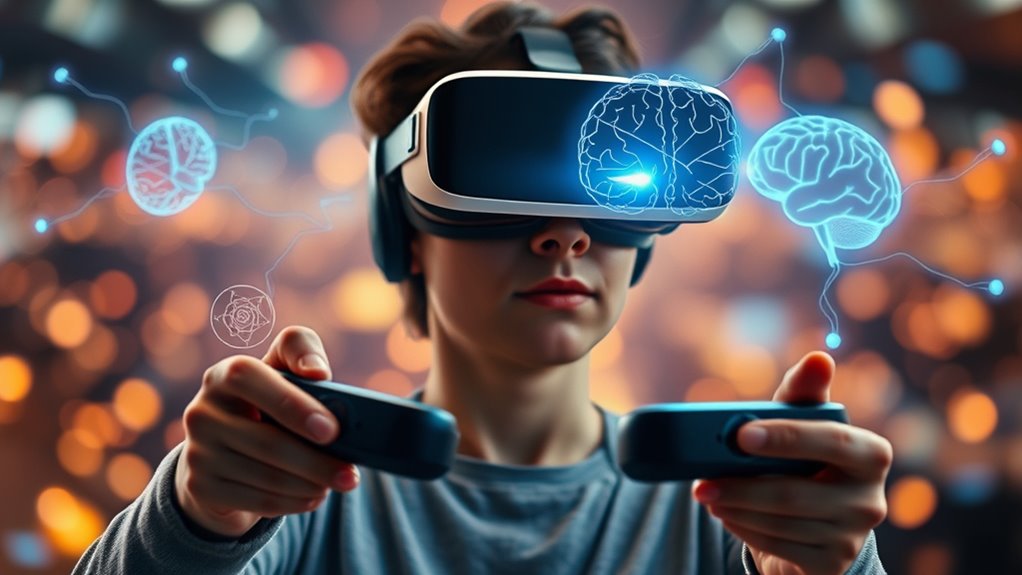

Virtual reality offers exciting opportunities for brain training by creating immersive environments that target specific neural pathways to improve memory, attention, and recovery from brain injuries. It enables personalized, adaptive exercises that can boost cognitive functions with measurable results. However, there are risks, like data privacy concerns and potential over-reliance on virtual experiences. Exploring these opportunities and challenges further can help you understand how VR might shape your brain health and performance.

Get privacy and security gear delivered free with Prime
- Fast, free delivery on millions of items
- Prime Video, Amazon Music and more included
- Member-only deals all year
Key Takeaways
- VR offers immersive, targeted cognitive exercises that can enhance memory, attention, and neural recovery through precise brain stimulation.
- Personalized VR programs powered by AI enable adaptive training tailored to individual neural needs and progress.
- Data privacy and ethical concerns arise from collecting sensitive neural and behavioral information during VR brain training sessions.
- The effectiveness of VR brain training requires rigorous scientific validation to ensure safety and realistic benefits.
- Rapid technological advances demand careful regulation and ongoing research to address potential risks and ensure ethical use.
Have you ever wondered how virtual reality is transforming brain training? It’s an exciting development driven by recent neuroscience advancements that enable us to understand and manipulate brain function more precisely than ever before. Virtual reality creates immersive environments that can simulate real-world scenarios, making cognitive exercises more engaging and effective. As these technologies evolve, they hold the promise of personalized training programs tailored to individual needs, potentially improving memory, attention, and problem-solving skills. However, with these opportunities come important ethical considerations. The use of VR in brain training raises questions about data privacy, consent, and the potential for unintended psychological effects. When you participate in a VR-based program, sensitive data about your neural responses and behavioral patterns are often collected, which could be misused if not properly protected. Guaranteeing informed consent becomes critical, especially as these systems become more sophisticated, capable of influencing your perceptions and emotions. You might find yourself questioning how your data is stored, shared, or used for targeted interventions. Another ethical concern involves the potential for over-reliance on technology, which could diminish natural social interactions or lead to dependency on virtual environments for mental health support. As VR becomes more integrated into brain training, developers and practitioners need to balance technological benefits with safeguarding users’ well-being. Additionally, integrating AI-driven insights can enhance the customization and effectiveness of these programs through AI analytics, leading to more targeted and adaptive training protocols. On the scientific front, neuroscience advancements are revealing new possibilities for understanding the brain’s plasticity — its ability to change and adapt. Virtual reality can now be used to stimulate specific neural pathways, promoting recovery after injury or enhancing cognitive functions in healthy individuals. For example, VR tasks designed to challenge memory circuits can lead to measurable improvements, making brain training more targeted and effective. Yet, these innovations also demand rigorous validation through research to guarantee safety and efficacy. You should be aware that while promising, VR-based brain training is still in its early stages, and not all claims about its benefits are supported by solid evidence. It’s essential to approach these tools with a critical eye, recognizing that not every product guarantees significant results. Moreover, as neuroscience continues to uncover the intricacies of brain function, ethical frameworks must evolve to guide responsible development and deployment of VR training systems. This includes establishing standards for data security, user rights, and the limits of intervention, ensuring that technological progress doesn’t outpace moral considerations.
As an affiliate, we earn on qualifying purchases.
Frequently Asked Questions
How Affordable Is Virtual Reality Brain Training for the Average Consumer?
Virtual reality brain training can be quite affordable for you, especially as costs decrease. The cost comparison shows that VR headsets and apps are becoming more accessible, making technological accessibility better than ever. While some high-end systems still cost a few hundred dollars, many options are budget-friendly, and you might already have compatible devices. Overall, VR brain training is increasingly within reach for the average consumer.
Can VR Brain Training Be Customized for Individual Cognitive Needs?
Ever wondered if VR brain training can be tailored to your needs? Absolutely, it offers high personalization potential, allowing programs to adapt to your unique cognitive strengths and weaknesses. This flexibility leverages cognitive adaptability, ensuring exercises challenge you appropriately. By customizing experiences, VR training can target specific areas like memory or attention, making it more effective. So yes, VR brain training can be personalized to optimize your mental growth and performance.
What Are the Long-Term Effects of Vr-Based Cognitive Enhancement?
You might experience lasting changes from VR-based cognitive enhancement, thanks to its neuroplasticity potential. While some benefits could transfer to real-world tasks, long-term effects vary based on individual use and engagement. Consistent training may boost your brain’s ability to adapt, but overuse risks, like dependency or fatigue, exist. Stay mindful of your limits to maximize positive cognitive transfer effects while minimizing potential downsides.
How Do VR Brain Training Programs Compare to Traditional Methods?
You’ll find VR brain training programs often outperform traditional methods, with studies showing a 50% increase in neuroplasticity benefits due to immersive learning. Unlike conventional techniques, VR engages multiple senses, making cognitive exercises more engaging and effective. This immersive approach helps you adapt faster, retain more, and experience real-time feedback, giving you a significant edge in mental sharpness. VR truly transforms brain training by making it more dynamic and personalized.
Are There Specific Age Groups That Benefit Most From VR Brain Training?
You’ll find that children and older adults benefit most from VR brain training, thanks to age-specific benefits tailored to their developmental considerations. For kids, VR enhances learning and cognitive development, while seniors experience improved memory and mental agility. However, it’s vital to take into account developmental considerations like attention span and physical comfort to maximize benefits across age groups. Properly designed VR programs can support healthy brain function at any age.
As an affiliate, we earn on qualifying purchases.
Conclusion
As you explore virtual reality for brain training, remember it’s a double-edged sword—offering powerful opportunities but also hidden risks. Like a delicate balance on a tightrope, you must weigh the benefits of enhanced cognition against potential overstimulation or dependence. Staying informed and cautious helps you navigate this new frontier wisely. Embrace the promise, but keep your footing firm; otherwise, you might find yourself lost in a world where the line between reality and illusion blurs.
As an affiliate, we earn on qualifying purchases.
AI-powered VR cognitive training
As an affiliate, we earn on qualifying purchases.
As an affiliate, we earn on qualifying purchases.
Columbus Day / Indigenous Peoples' Day Picks
long weekend sales
As an affiliate, we earn on qualifying purchases.