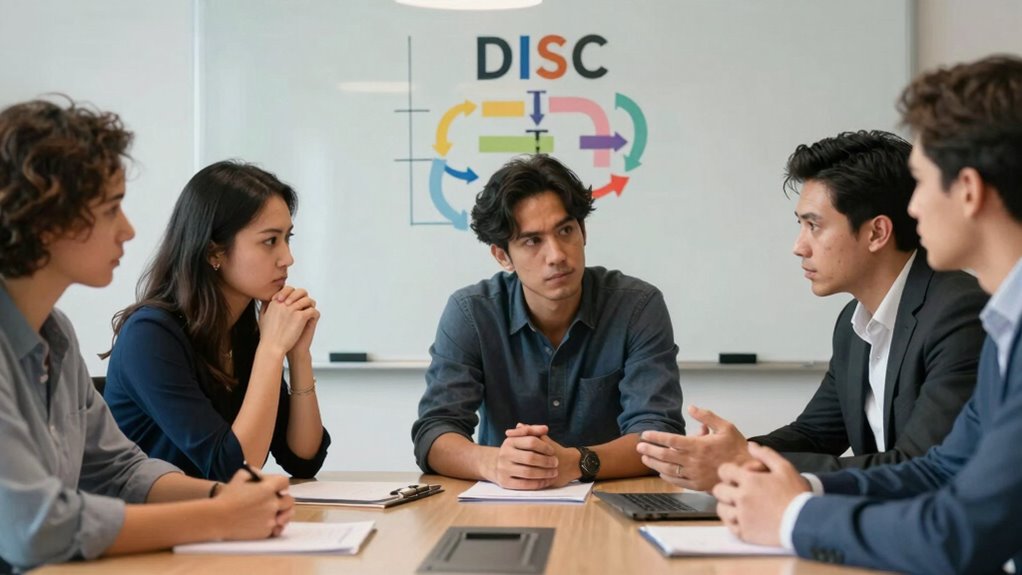

Using DISC assessments, you can spot potential sources of team friction early by understanding each team member’s personality style and behavioral tendencies. It reveals how individuals might interpret messages differently and where misunderstandings or conflicts could arise. By recognizing these patterns, you can tailor your communication and support strategies effectively. This proactive approach helps prevent small disagreements from escalating. Keep exploring to discover how mastering DISC can help you foster a more harmonious team environment.

Get privacy and security gear delivered free — and shop member deals
- Fast, free delivery on millions of items
- Access to Prime Big Deal Days deals on October 6–7
- Prime Video, Amazon Music and more included
Key Takeaways
- DISC assessments identify differing personality styles that may lead to misunderstandings or conflicts within the team.
- They reveal behavioral tendencies, helping to anticipate potential communication breakdowns early.
- DISC profiles highlight areas where team members may clash due to assertiveness or reserved tendencies.
- Recognizing individual strengths and weaknesses allows proactive support to prevent escalation.
- Early insights from DISC foster a respectful environment by promoting mutual understanding of personality differences.

Have you ever wondered how personality styles influence team dynamics and sometimes cause friction? Understanding the different ways people approach work and interact can be the key to preventing conflicts before they escalate. That’s where DISC assessments come into play. They provide a clear picture of each team member’s personality style, helping you identify potential sources of personality clashes early on. When you recognize these differences upfront, you can address misunderstandings before they turn into full-blown disputes. For example, some individuals may be naturally assertive and direct, while others prefer a more reserved and thoughtful approach. These contrasting styles can lead to misunderstandings, especially if team members aren’t aware of their own tendencies or those of others.
Understanding personality styles helps prevent conflicts and fosters collaboration within teams.
Communication barriers are another common issue that DISC can help you spot early. When personalities clash, the way people communicate often becomes a sticking point. An assertive, results-driven person might interpret a more cautious team member’s hesitation as lack of commitment or disinterest, while the cautious person might see the assertiveness as pushy or aggressive. These misinterpretations can cause frustration and slow down progress. By understanding each person’s DISC profile, you can tailor your communication style to better suit others’ preferences, reducing misunderstandings and fostering a more collaborative environment. It’s not about changing who someone is; it’s about adapting your approach to create smoother interactions. Recognizing behavioral tendencies can also help you anticipate how team members might respond in different situations.
Using DISC insights, you can also identify potential sources of conflict rooted in personality differences. When you see that a team member’s style naturally tends toward independence or decisiveness, you can prepare to support or guide them in ways that align with their strengths, rather than setting them up for friction. Conversely, recognizing when someone’s cautious or detailed approach might clash with a more spontaneous teammate allows you to facilitate compromise and mutual understanding. This proactive approach helps prevent small disagreements from snowballing into larger issues, keeping team cohesion intact. Additionally, understanding personality styles and their influence on behavior can enhance team collaboration and overall performance. Knowing how different styles interact and influence each other can further optimize team dynamics and productivity.
Ultimately, DISC can serve as a valuable early warning system for team friction. It offers you the tools to understand the root causes of personality clashes and communication barriers. When you use these insights wisely, you’re better equipped to foster a collaborative, respectful environment where differences are seen as strengths rather than sources of conflict. This proactive mindset not only improves team harmony but also boosts productivity by ensuring everyone feels understood and valued from the start.
As an affiliate, we earn on qualifying purchases.
Frequently Asked Questions
How Accurate Is DISC in Predicting Team Conflicts?
The DISC assessment can be quite accurate in predicting team conflicts by highlighting personality compatibility issues early on. You’ll see how different traits interact, revealing potential friction points. This insight helps you address conflicts proactively and improves conflict resolution strategies. While it’s not foolproof, understanding personality dynamics through DISC empowers you to foster better communication, reduce misunderstandings, and build a more harmonious team environment.
Can DISC Identify Underlying Personality Issues Causing Friction?
Yes, DISC can help identify underlying personality issues causing friction. You’ll notice personality clashes and communication barriers emerge through DISC assessments, revealing how team members’ traits influence their interactions. By understanding these dynamics early, you can address potential conflicts proactively. DISC offers insights into individual motivations and behavior patterns, helping you foster better communication, reduce misunderstandings, and create a more cohesive, collaborative team environment.
How Quickly Can DISC Insights Be Applied to Improve Team Dynamics?
You can start applying DISC insights to improve team dynamics within days. Once you understand each member’s personality style, you can tailor communication strategies to foster better team cohesion. By addressing specific needs and preferences identified through DISC, you’ll reduce misunderstandings and build stronger collaboration. The quicker you implement these insights, the faster your team will experience improved communication, trust, and overall harmony.
Is DISC Suitable for All Types of Team Structures?
Did you know that 70% of organizations report improved communication after implementing DISC? DISC is versatile and suits most team structures, whether highly hierarchical or diverse. It helps identify individual differences, fostering understanding and reducing friction. With its practical insights, you can tailor your approach to enhance collaboration across various organizational hierarchies and team diversity, making it a valuable tool for nearly any team setup.
What Training Is Needed to Interpret DISC Results Effectively?
You need training in interpretation techniques to effectively understand DISC results. This training helps you grasp personality nuances and recognize subtle differences in behavior. By learning how to interpret these nuances, you can better identify team dynamics and potential friction points early. The focus should be on developing your skills to analyze DISC profiles accurately, enabling you to facilitate improved communication, collaboration, and harmony within your team.
As an affiliate, we earn on qualifying purchases.
Conclusion
Understanding DISC is like having a flashlight in the dark—illuminating hidden tensions before they grow. When you recognize team friction early, you can steer interactions smoothly, avoiding rocky waters ahead. Think of DISC as your compass, guiding you through the stormy seas of team dynamics. By tuning in to these signals, you’ll turn potential collisions into coordinated efforts, creating a harmonious crew ready to sail toward success with clear, confident direction.
communication styles training course
As an affiliate, we earn on qualifying purchases.
As an affiliate, we earn on qualifying purchases.
personality type indicator for teams
As an affiliate, we earn on qualifying purchases.
As an affiliate, we earn on qualifying purchases.
Fall Picks
fall essentials
As an affiliate, we earn on qualifying purchases.