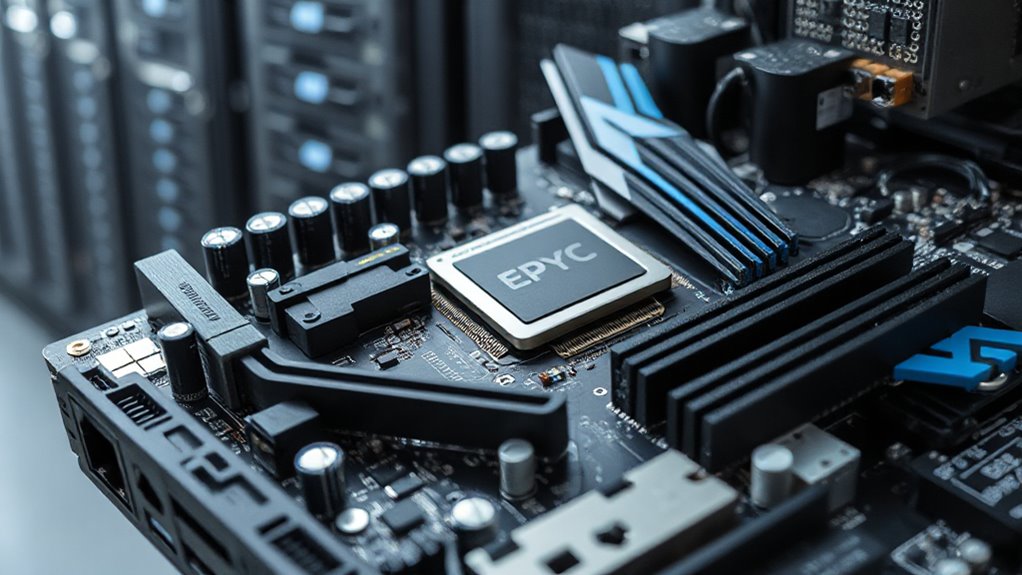
If you’re building a server around an AMD EPYC processor, choosing the right motherboard is essential. The TYAN 1S AMD EPYC Genoa Motherboard stands out for its extensive PCIe 5.0 support and high DIMM capacity, making it ideal for demanding workloads. The Supermicro H13SSL-N offers cutting-edge DDR5 memory and dual 10G LAN for data-center environments, while the ASRock Rack GENOAD8X-2T/BCM provides a robust balance of features for enterprise use. Each of these options presents tradeoffs in cost, expandability, and complexity, which can influence your final decision. Continue reading for a detailed breakdown of these and other top picks to find the best server motherboard for your EPYC build.

Get privacy and security gear delivered free with Prime
- Fast, free delivery on millions of items
- Prime Video, Amazon Music and more included
- Member-only deals all year
Key Takeaways
- High core count and extensive RAM slots are common among top-tier motherboards, supporting large-scale virtualization and data processing.
- PCIe 5.0 support is now standard on premium options, ensuring compatibility with the fastest SSDs and expansion cards.
- Dual 10G LAN ports are prevalent in enterprise-grade models, emphasizing networking performance as a priority.
- Form factor varies significantly, with micro-ATX options offering smaller builds but fewer expansion slots.
- Price ranges are wide; investing more generally means better future-proofing and expanded features, but some mid-range boards deliver excellent value.
| Tyan 1S AMD EPYC Genoa Motherboard, 12 x 14 inches, 24 DIMM Slots, PCIe 5.0, 10G LAN |  | Best Overall for High-End Enterprise Deployments | Form Factor: 12 x 14 inches | CPU Support: AMD EPYC Genoa, Bergamo, Genoa X | Memory Slots: 24 DDR5 DIMM slots | VIEW ON AMAZON | See Our Full Breakdown |
| ASRock Rack GENOAD8X-2T/BCM EEB Server Motherboard for AMD EPYC 9004 Series |  | Best for Cutting-Edge Single-Socket Performance | Form Factor: EEB (12.63″ x 13″) | Socket: SP5 (LGA 6096) | Processor Support: AMD EPYC 9004 series with AMD 3D V-Cache | VIEW ON AMAZON | See Our Full Breakdown |
| H11SSL-i Single Socket Server Motherboard Supports AMD EPYC 7001/7002 Series, ATX, 8 DIMM DDR4 |  | Best for Cost-Effective Upgrades and Small-Scale Deployments | Model Compatibility: H11SSL-i | Processor Support: AMD EPYC 7001/7002 series | Memory Slots: 8 DDR4 DIMM | VIEW ON AMAZON | See Our Full Breakdown |
| Tyan S8050GM4NE-2T Server Motherboard with SP5 Socket for AMD EPYC 9004 |  | Best for Versatile High-Performance Servers | Processor Socket: SP5 | Compatible Devices: Server | Memory Technology: DDR5 | VIEW ON AMAZON | See Our Full Breakdown |
| ASUS ExpertCenter Pro ER100A B6 AMD EPYC Barebone Rack Workstation |  | Best for High-Performance Workstation in Rack Form | Processor Support: AMD EPYC 4004/4005 series | Memory: DDR5 5600MHz ECC/non-ECC UDIMM | Storage Options: 2x hot-swappable 2.5″ SATA, 2x internal SATA/NVMe U.2 | VIEW ON AMAZON | See Our Full Breakdown |
| Supermicro H13SSL-N Retail AMD EPYC 9004/9005 Server Board with DDR5, PCIe 5.0, Dual GbE, SATA3, and M.2 |  | Best for High-Performance Expansion | Processor Support: AMD EPYC 9004/9005 Series | Memory: 12 DDR5 DIMM slots | PCIe Slots: 3 PCIe 5.0 x16, 2 PCIe 5.0 x8 | VIEW ON AMAZON | See Our Full Breakdown |
| Supermicro H13SSL-N AMD EPYC 9004/9005 Server Motherboard |  | Best for Large Memory Capacity | Socket: AMD EPYC 9004/9005 (Socket SP5) | Memory: Up to 3TB 3DS ECC RDIMM | DIMM Slots: 12 DDR5 | VIEW ON AMAZON | See Our Full Breakdown |
| ASRock Rack GENOAD8UD-2T/X550 Deep Micro-ATX Server Motherboard with Dual 10G LAN |  | Best for Compact High-Speed Networking | Socket: LGA 6096 | Supported Processors: AMD EPYC 9004 series with AMD 3D V-Cache | Memory Slots: 8 DDR5 | VIEW ON AMAZON | See Our Full Breakdown |
| H12DSi-N6 Server Motherboard for AMD EPYC 7002/7003 Processors |  | Best for Proven Compatibility | Processor Support: AMD EPYC 7002/7003 | VIEW ON AMAZON | See Our Full Breakdown | ||
| ASRock Rack Server Motherboard EPYC4000D4U Micro-ATX Single Socket AMD EPYC 4005/4004 and Ryzen 9000/8000/7000 Series Processors |  | Best for Versatile Compatibility in Small Form Factor | Form Factor: Micro-ATX (6.7″ x 8.2″) | Processors Supported: AMD EPYC 4005/4004, Ryzen 9000/8000/7000 | Memory: 4 DIMM slots, DDR5 ECC UDIMM | VIEW ON AMAZON | See Our Full Breakdown |
| server motherboard for epyc | Form Factor | PCIe Slots | Processor Support | Memory |
|---|---|---|---|---|
| Tyan 1S AMD EPYC Genoa Motherb | 12 x 14 inches | 2 PCIe 5.0 x16, 9 PCIe 5.0 x8 MCIO | — | — |
| ASRock Rack GENOAD8X-2T/BCM EE | EEB (12.63" x 13") | 7 PCIe 5.0 x16 / x8 slots | AMD EPYC 9004 series with AMD 3D V-Cache | 8 DDR5 RDIMM slots |
| H11SSL-i Single Socket Server | ATX | — | AMD EPYC 7001/7002 series | — |
| Tyan S8050GM4NE-2T Server Moth | — | — | — | — |
| ASUS ExpertCenter Pro ER100A B | 1U rackmount | — | AMD EPYC 4004/4005 series | DDR5 5600MHz ECC/non-ECC UDIMM |
| Supermicro H13SSL-N Retail AMD | — | 3 PCIe 5.0 x16, 2 PCIe 5.0 x8 | AMD EPYC 9004/9005 Series | 12 DDR5 DIMM slots |
| Supermicro H13SSL-N AMD EPYC 9 | — | PCIe 5.0 x16/x8 | — | Up to 3TB 3DS ECC RDIMM |
| ASRock Rack GENOAD8UD-2T/X550 | — | 4 PCIe 5.0 / CXL 1.1 | — | — |
| H12DSi-N6 Server Motherboard f | — | — | AMD EPYC 7002/7003 | — |
| ASRock Rack Server Motherboard | Micro-ATX (6.7" x 8.2") | — | — | 4 DIMM slots, DDR5 ECC UDIMM |
More Details on Our Top Picks
Tyan 1S AMD EPYC Genoa Motherboard, 12 x 14 inches, 24 DIMM Slots, PCIe 5.0, 10G LAN
This Tyan 1S motherboard stands out for supporting AMD EPYC Genoa, Bergamo, and Genoa X CPUs, making it a versatile choice for demanding server environments. Its 24 DDR5 slots enable massive memory capacity, ideal for data-intensive tasks, while multiple PCIe 5.0 slots provide extensive expansion options. Compared with the ASRock Rack GENOAD8X-2T/BCM, it offers greater memory capacity but at the cost of larger size and complexity. The 10G LAN support ensures high-speed networking, essential for enterprise data centers. However, its size and focus on server deployment mean it might be less suitable for smaller setups or users seeking consumer-grade features.
Pros:- Supports latest AMD EPYC Genoa processors for cutting-edge performance
- Massive 24 DDR5 DIMM slots for extensive RAM capacity
- Multiple PCIe 5.0 slots for high-speed expansion
- High-speed 10G LAN connectivity for enterprise networks
Cons:- Large form factor may require specific chassis and installation space
- Designed primarily for professional server environments, not for casual or home use
Best for: Large enterprises or data centers needing maximum memory and expansion capabilities
Not ideal for: Small business owners or hobbyists looking for compact, user-friendly setups
- Form Factor:12 x 14 inches
- CPU Support:AMD EPYC Genoa, Bergamo, Genoa X
- Memory Slots:24 DDR5 DIMM slots
- Memory Support:DDR5 4800, 1DPC
- PCIe Slots:2 PCIe 5.0 x16, 9 PCIe 5.0 x8 MCIO
- LAN:2x 10GBase T LAN
Our verdict“This motherboard is perfect for large-scale data centers or enterprise environments needing maximum memory and expansion, but less suited for smaller or less complex setups.”
ASRock Rack GENOAD8X-2T/BCM EEB Server Motherboard for AMD EPYC 9004 Series
The ASRock Rack GENOAD8X-2T/BCM is tailored for users aiming to leverage the latest AMD EPYC 9004 series with 3D V-Cache technology. Its 8 DDR5 RDIMM slots strike a balance between performance and cost, making it ideal for high-performance computing without overwhelming complexity. The dual PCIe 5.0 x16 slots and dual 10G LAN ports make it a strong contender for network-intensive workloads, surpassing the H11SSL-i’s DDR4 support and single socket limitations. Nonetheless, its single socket design and server-specific architecture mean it’s not suited for scaling across multiple CPUs or casual use.
Pros:- Supports the latest AMD EPYC 9004 processors with 3D V-Cache
- Dual PCIe 5.0 x16 slots provide ample expansion options
- Dual 10G LAN ports for fast, reliable networking
- Supports DDR5 RDIMM for improved memory performance
Cons:- Limited to single socket configurations, restricting scalability
- Designed strictly for server environments, not for general consumer use
Best for: Organizations deploying single-socket high-performance servers with AMD EPYC 9004 CPUs
Not ideal for: Small offices or users needing multi-processor configurations or consumer features
- Form Factor:EEB (12.63″ x 13″)
- Socket:SP5 (LGA 6096)
- Processor Support:AMD EPYC 9004 series with AMD 3D V-Cache
- Memory:8 DDR5 RDIMM slots
- PCIe Slots:7 PCIe 5.0 x16 / x8 slots
- Network:Dual 10G LAN
Our verdict“This motherboard makes sense for single-CPU high-performance servers, especially those leveraging AMD’s latest processors, but it’s less flexible for multi-CPU setups.”
H11SSL-i Single Socket Server Motherboard Supports AMD EPYC 7001/7002 Series, ATX, 8 DIMM DDR4
The H11SSL-i offers a practical foundation for users working with AMD EPYC 7001 or 7002 processors, providing 8 DDR4 slots in a standard ATX form factor. Compared to the more advanced Genoa-based motherboards, it trades cutting-edge features for familiarity and affordability, making it suitable for smaller data centers or edge deployments. Its single socket setup limits scalability but keeps costs lower, and the absence of integrated graphics or extensive expansion simplifies configuration. However, it’s less suited for users seeking the latest in DDR5 technology or multi-processor setups.
Pros:- Supports high-performance AMD EPYC 7001/7002 processors
- Eight DDR4 DIMM slots for flexible memory expansion
- Standard ATX form factor ensures broad compatibility
- Cost-effective option for smaller deployments
Cons:- Limited to older DDR4 memory technology
- Single socket architecture restricts scalability
- No mention of advanced features like PCIe 4.0 or higher bandwidth
Best for: Small-scale data centers or enterprises upgrading existing AMD EPYC 7002 systems
Not ideal for: Large-scale or future-proofed deployments requiring more memory slots or PCIe lanes
- Model Compatibility:H11SSL-i
- Processor Support:AMD EPYC 7001/7002 series
- Memory Slots:8 DDR4 DIMM
- Form Factor:ATX
- Socket:Single
- No graphics or additional features mentioned:
Our verdict“This motherboard is a sensible choice for budget-conscious users upgrading AMD EPYC 7002 systems, but it’s not suitable for cutting-edge or large-scale applications.”
Tyan S8050GM4NE-2T Server Motherboard with SP5 Socket for AMD EPYC 9004
The Tyan S8050GM4NE-2T is designed for robust server deployments with AMD EPYC Genoa processors, featuring 8 DDR5-4800 DIMMs that support high-speed memory. Its broad connectivity options include multiple SATA, PCIe 5.0, and extensive Ethernet ports, making it a flexible platform for storage-heavy or network-intensive applications. Compared to the ASUS ExpertCenter Pro ER100A B6, it offers more expansion and storage options, catering to enterprise environments. Nonetheless, its complexity and focus on server-grade features make it less suitable for casual or small-scale use, and it does not include integrated GPU support.
Pros:- Supports AMD EPYC Genoa processors for high-end performance
- Multiple DDR5-4800 DIMM slots for large memory capacity
- Numerous SATA and PCIe 5.0 slots for expansion
- Multiple Ethernet ports for versatile networking
Cons:- Designed for enterprise servers, not for casual or home use
- Lacks integrated graphics, requiring dedicated GPU
Best for: Enterprises requiring flexible, high-performance server hardware with extensive connectivity
Not ideal for: Small offices or users seeking simple, all-in-one workstations
- Processor Socket:SP5
- Compatible Devices:Server
- Memory Technology:DDR5
- Memory Slots:8
- Memory Speed:DDR5 4800 MHz
- Total SATA Ports:12
Our verdict“This motherboard suits large enterprises seeking flexible server hardware with extensive expansion options, but it may be overly complex for smaller setups.”
ASUS ExpertCenter Pro ER100A B6 AMD EPYC Barebone Rack Workstation
The ASUS ExpertCenter Pro ER100A B6 is a barebones platform designed for demanding workloads like rendering, AI, or scientific computing, supporting AMD EPYC 4004/4005 series processors. Its DDR5 5600MHz ECC/non-ECC UDIMM memory offers excellent speed and reliability, while dual 2.5Gb LAN ports ensure fast network connectivity. Unlike the other server motherboards, its barebones design requires users to purchase and install their own CPU, memory, storage, and GPU, offering greater customization but demanding technical expertise. Its focus on high-speed networking and remote management makes it suitable for enterprise or advanced professional environments, but it’s not a plug-and-play solution.
Pros:- Supports high-performance AMD EPYC 4004/4005 processors
- Fast DDR5 5600MHz ECC/non-ECC UDIMM memory
- Dual 2.5Gb LAN ports for reliable network connectivity
- Remote management with onboard BMC and IPMI
Cons:- Requires assembling and installing CPU, memory, storage, and GPU separately
- Limited to specific hardware compatibility, demanding technical knowledge
- Barebones design may increase setup time and complexity
Best for: Professional workloads requiring custom configurations, such as rendering farms or AI research labs
Not ideal for: Users seeking an all-in-one server solution or those without technical skills to assemble components
- Processor Support:AMD EPYC 4004/4005 series
- Memory:DDR5 5600MHz ECC/non-ECC UDIMM
- Storage Options:2x hot-swappable 2.5″ SATA, 2x internal SATA/NVMe U.2
- Network Connectivity:Dual 2.5Gb LAN
- Form Factor:1U rackmount
- Management:Onboard BMC with IPMI
Our verdict“This barebones rack workstation is ideal for experienced professionals needing customizable high-performance hardware, but not for those seeking a ready-to-use system.”
Supermicro H13SSL-N Retail AMD EPYC 9004/9005 Server Board with DDR5, PCIe 5.0, Dual GbE, SATA3, and M.2
This motherboard stands out for supporting the latest AMD EPYC 9004/9005 processors with DDR5 memory, making it ideal for demanding workloads. Its multiple PCIe 5.0 slots enable extensive expansion, surpassing many older boards like the H12DSi-N6 that lack PCIe 5.0 support. The inclusion of dual Gigabit Ethernet ensures reliable network connectivity, but the setup can be complex, especially because a specific revision is required for EPYC 9005 compatibility. Compared to the ASRock Rack GENOAD8UD-2T/X550, it offers more PCIe slots but at the expense of a more complicated installation process. This board is best suited for enterprises needing future-proof expansion capabilities.
Pros:- Supports the latest AMD EPYC 9004/9005 processors with DDR5 memory
- Multiple PCIe 5.0 slots for high-speed expansion
- Robust storage options with SATA3 and M.2 interfaces
- Dual Gigabit Ethernet for reliable network connectivity
Cons:- Requires specific board revision for EPYC 9005 support
- Complex setup may require advanced technical knowledge
Best for: System integrators building high-performance servers with extensive PCIe expansion needs
Not ideal for: Beginners or small-scale users who prefer plug-and-play solutions, due to setup complexity
- Processor Support:AMD EPYC 9004/9005 Series
- Memory:12 DDR5 DIMM slots
- PCIe Slots:3 PCIe 5.0 x16, 2 PCIe 5.0 x8
- USB Ports:Up to 6 USB 3.0
- SATA Ports:8 SATA3
- M.2 Interfaces:2 PCIe 4.0 x4
- Network:Dual GbE
- Fans:6 PWM 4-pin fans with tachometer
Our verdict“This motherboard is ideal for high-end servers demanding maximum PCIe and storage expansion, but it’s best for experienced builders.”
Supermicro H13SSL-N AMD EPYC 9004/9005 Server Motherboard
This motherboard supports AMD EPYC 9004/9005 processors with up to 3TB of 3DS ECC RDIMM memory, making it well-suited for memory-intensive tasks. Its 12 DDR5 DIMM slots outclass many comparable boards such as the ASRock Rack GENOAD8UD-2T/X550, which offers fewer memory slots. The multiple PCIe 5.0/x8 slots facilitate significant expansion, but this model lacks detailed information on additional features and accessories, which could be a drawback for users seeking a turnkey solution. Compared to the Supermicro H13SSL-N Retail, it emphasizes large memory capacity over dual Ethernet ports. This board is best for data centers or analytics workloads requiring maximum RAM.
Pros:- Supports AMD EPYC 9004/9005 processors
- Up to 3TB of DDR5 ECC RDIMM memory
- Multiple PCIe 5.0/x8 slots for expansion
- High memory capacity suited for intensive applications
Cons:- Limited information on additional features or accessories
- Requires compatible AMD EPYC processors for full functionality
Best for: High-performance computing environments needing large memory pools
Not ideal for: Small businesses or users who prioritize network connectivity over memory capacity
- Socket:AMD EPYC 9004/9005 (Socket SP5)
- Memory:Up to 3TB 3DS ECC RDIMM
- DIMM Slots:12 DDR5
- PCIe Slots:PCIe 5.0 x16/x8
- Ethernet:Dual GbE
- SATA Ports:8 SATA3
- M.2 Slots:2
Our verdict“Best for users prioritizing maximum memory capacity in a server motherboard but with less emphasis on network features.”
ASRock Rack GENOAD8UD-2T/X550 Deep Micro-ATX Server Motherboard with Dual 10G LAN
This Micro-ATX motherboard supports AMD EPYC 9004 series with AMD 3D V-Cache technology, combining compact size with high-speed networking. Its 8 DDR5 DIMM slots balance size and performance, but compared to larger boards like the Supermicro H13SSL-N, it offers fewer PCIe slots and expansion options. The dual 10GbE LAN makes it an excellent choice for network-intensive tasks, yet its smaller form factor limits overall expansion flexibility. For users who need a smaller footprint but still require robust networking and PCIe 5.0 support, this board offers a compelling mix. It’s best for edge servers or small data centers where space and network speed are priorities.
Pros:- Supports AMD EPYC 9004 series with AMD 3D V-Cache
- Dual 10GbE LAN for fast network throughput
- Supports DDR5 ECC UDIMM for reliable memory
- Small Micro-ATX form factor for space-efficient deployments
Cons:- Fewer PCIe and expansion slots compared to larger boards
- Requires technical expertise for optimal setup
Best for: Edge computing or small-scale enterprise servers needing high-speed networking in a compact form factor
Not ideal for: Users requiring extensive PCIe expansion or large storage arrays, due to limited slots
- Socket:LGA 6096
- Supported Processors:AMD EPYC 9004 series with AMD 3D V-Cache
- Memory Slots:8 DDR5
- PCIe Slots:4 PCIe 5.0 / CXL 1.1
- MCIO Slots:2 PCIe 5.0 x8 or SATA 6Gb/s, 2 PCIe 5.0 x8, 1 PCIe 5.0 x4
- M.2 Slots:2 PCIe 5.0 x4
- SATA Ports:up to 16
- Ethernet Ports:2 10GbE
Our verdict“Ideal for compact, high-speed network servers but less suited for extensive expansion needs.”
H12DSi-N6 Server Motherboard for AMD EPYC 7002/7003 Processors
This motherboard is designed for AMD EPYC 7002 and 7003 series processors, offering a reliable platform for those upgrading from older systems. While it doesn’t support the latest PCIe 5.0 or DDR5 memory, it provides solid performance for legacy setups. Compared with newer boards like the ASRock Rack EPYC4000D4U, it’s less future-proof but remains a dependable choice for existing EPYC 7002/7003 deployments. Its limited details mean it’s best suited for environments where compatibility and stability are more critical than cutting-edge features. This board is perfect for organizations maintaining legacy systems or those with tight budgets.
Pros:- Compatible with AMD EPYC 7002/7003 processors
- High-quality, stable performance
- Suitable for legacy system upgrades
Cons:- Limited support for newer technology standards
- Lacks detailed specifications and advanced features
Best for: Businesses running AMD EPYC 7002/7003 processors needing a stable, proven platform
Not ideal for: Users seeking future-proof features like PCIe 5.0 or DDR5 support
- Processor Support:AMD EPYC 7002/7003
Our verdict“Best for users with AMD EPYC 7002/7003 processors seeking a dependable, proven motherboard for legacy systems.”
ASRock Rack Server Motherboard EPYC4000D4U Micro-ATX Single Socket AMD EPYC 4005/4004 and Ryzen 9000/8000/7000 Series Processors
This micro-ATX motherboard supports AMD EPYC 4005/4004 and Ryzen 9000/8000/7000 series processors, offering a flexible platform for various high-performance server applications. Its four DDR5 ECC UDIMM slots enable reliable memory configurations, and the multiple PCIe and OCuLink ports provide ample connectivity options. Compared with larger boards like the Supermicro H13SSL-N, it sacrifices expansion slots for a compact size, but this makes it ideal for space-constrained deployments. This board’s versatility makes it suitable for small data centers, edge servers, or specialized workloads. It’s best for users needing a compact, multi-processor compatible platform with decent expandability.
Pros:- Supports a broad range of AMD EPYC and Ryzen processors
- Multiple PCIe and OCuLink ports for versatile connectivity
- DDR5 ECC UDIMM support for reliable memory
- Small Micro-ATX form factor for space efficiency
Cons:- Limited to micro-ATX, fewer expansion options than larger boards
- Designed mainly for specific server and high-performance applications
Best for: Small enterprise servers or edge deployments needing flexibility with space and processor options
Not ideal for: High-density data centers requiring many PCIe slots and extensive storage, due to size limitations
- Form Factor:Micro-ATX (6.7″ x 8.2″)
- Processors Supported:AMD EPYC 4005/4004, Ryzen 9000/8000/7000
- Memory:4 DIMM slots, DDR5 ECC UDIMM
- Expansion Slots:1 PCIe 5.0 x16, 3 OCuLink
Our verdict“Great for compact servers needing processor flexibility and multiple high-speed connectivity options, but not for large-scale expansion.”
How We Picked
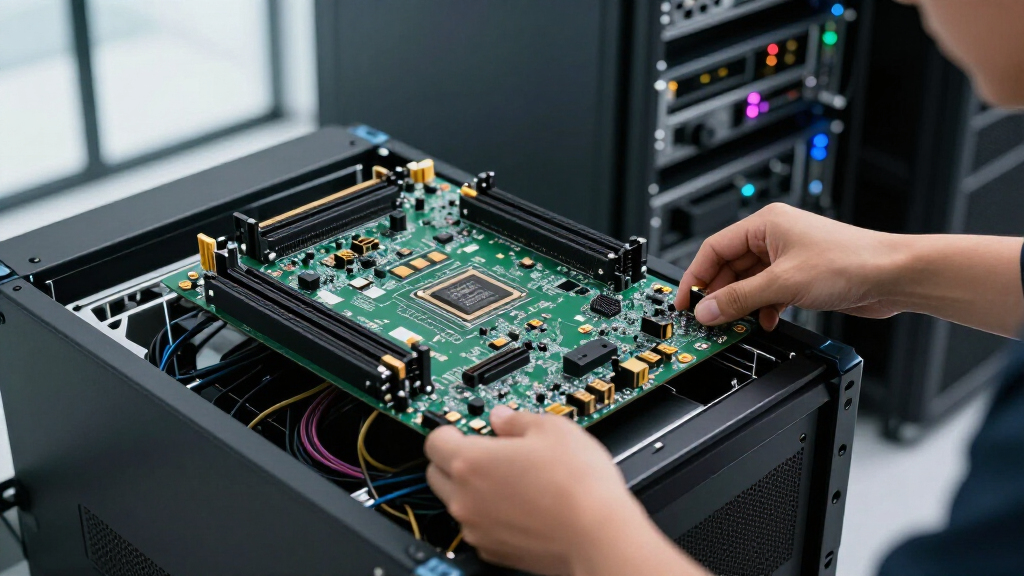
In selecting these server motherboards for EPYC, I prioritized products that balance performance, expandability, and build quality. Compatibility with the latest AMD EPYC 9004 and 7002 series was a must, along with features like PCIe 5.0, multiple DDR4/DDR5 DIMM slots, and robust networking options. I also considered user reviews and reliability, choosing models that are widely adopted in enterprise environments. The ranking reflects a combination of technical specs, value for money, and versatility for different server applications, from small business to data centers.| server motherboard for epyc | Processor Support |
|---|---|
| Tyan 1S AMD EPYC Genoa Motherb | — |
| ASRock Rack GENOAD8X-2T/BCM EE | AMD EPYC 9004 series with AMD 3D V-Cache |
| H11SSL-i Single Socket Server | AMD EPYC 7001/7002 series |
| Tyan S8050GM4NE-2T Server Moth | — |
| ASUS ExpertCenter Pro ER100A B | AMD EPYC 4004/4005 series |
| Supermicro H13SSL-N Retail AMD | AMD EPYC 9004/9005 Series |
| Supermicro H13SSL-N AMD EPYC 9 | — |
| ASRock Rack GENOAD8UD-2T/X550 | — |
| H12DSi-N6 Server Motherboard f | AMD EPYC 7002/7003 |
| ASRock Rack Server Motherboard | — |
Factors to Consider When Choosing Server Motherboard For Epyc
Choosing the right server motherboard for EPYC processors involves several key considerations. Beyond raw specs, understanding how each factor impacts your setup can save you from costly mistakes and future upgrades. Here are some critical aspects to keep in mind:Processor Compatibility
Since EPYC processors come in different generations and socket types, confirming compatibility is non-negotiable. Motherboards must support the specific EPYC series you plan to use, whether 7001, 7002, or 9004. Using an incompatible board can lead to wasted investment and hardware issues, so always double-check socket types and supported chipsets before purchasing.
Memory Support and Expansion
High-performance servers demand ample and fast memory. Look for motherboards with multiple DIMM slots and support for DDR4 or DDR5 RAM, depending on your needs. Consider your future expansion plans—more slots mean easier upgrades, but they also often come with higher cost. Be aware that some micro-ATX models sacrifice slots for a smaller size, which may limit scalability.
Networking Capabilities
Networking features such as dual 10G Ethernet ports are increasingly standard, especially for enterprise workloads. If your server handles heavy data transfer or cloud services, prioritize boards with advanced networking options. Cheaper models might only include gigabit Ethernet, which can bottleneck your network performance, so align networking features with your performance requirements.
Form Factor and Expandability
The choice between ATX, micro-ATX, or EEB sizes impacts expansion options and compatibility with server chassis. Larger boards typically support more PCIe slots, SATA ports, and RAM modules, but they also demand bigger cases and power supplies. Smaller boards are easier to fit into compact setups but may limit future upgrades, so consider your long-term plans.
Price and Future-Proofing
Higher-end motherboards often include features like PCIe 5.0, DDR5 support, and multiple LAN ports, which can be worth the investment if you want your server to remain relevant for several years. However, mid-range options can provide excellent value if your workload is less demanding. Balance your current needs with potential future upgrades to avoid overspending or bottlenecking your system.
Frequently Asked Questions
Can I upgrade my EPYC motherboard later?
Upgrading a motherboard is often limited by socket compatibility and chipset support. If you plan to upgrade your EPYC CPU in the future, choosing a motherboard with a newer socket and chipset can extend your system’s lifespan. However, significant upgrades might require a new motherboard, so consider long-term compatibility when selecting your initial board.
Is DDR5 support necessary for my server?
DDR5 offers higher speeds and better future-proofing but may come at a higher cost and with limited availability. For most enterprise workloads, DDR4 remains sufficient and more economical. If you’re building a high-end data center or require maximum performance, investing in DDR5-compatible motherboards makes sense, but for standard server needs, DDR4 provides great value.
How important is PCIe 5.0 in a server motherboard?
PCIe 5.0 doubles the bandwidth of PCIe 4.0, enabling faster SSDs and expansion cards. This feature is increasingly common in premium motherboards and future-proofing builds. If your workload involves intensive data transfer or rapid storage solutions, PCIe 5.0 can make a difference. For basic server tasks, PCIe 4.0 often suffices and can save costs.
Should I prioritize networking features over expandability?
Networking capabilities are critical if your server handles large data flows or cloud applications. Dual 10G LAN ports or higher are common in high-end models. However, these often come at a premium. If you don’t need high-speed networking, focusing on expandability and memory support might offer better value. Balance your networking needs with other features for an optimal build.
What’s the best form factor for a home or small business server?
Micro-ATX motherboards are ideal for compact, budget-friendly setups, offering decent expansion options in a smaller size. For larger, more flexible builds, ATX or EEB form factors provide more PCIe slots and RAM capacity. Your choice should depend on your space constraints and future expansion plans, with micro-ATX being simpler but less expandable.
Conclusion
The best overall choice for most users is the TYAN 1S AMD EPYC Genoa Motherboard, thanks to its balance of high-performance features and expandability. If you seek the best value, the ASRock Rack GENOAD8X-2T/BCM offers robust features at a more accessible price point. For enterprise or data-center users demanding top-tier networking and future-proofing, the Supermicro H13SSL-N is ideal. Beginners or those with smaller setups might prefer micro-ATX options like the H12DSi-N6, which simplifies installation while still supporting EPYC processors. Ultimately, your choice depends on your workload, budget, and future plans—consider these factors carefully to select the best server motherboard for your EPYC build in 2026.
Fall Picks
fall essentials
As an affiliate, we earn on qualifying purchases.