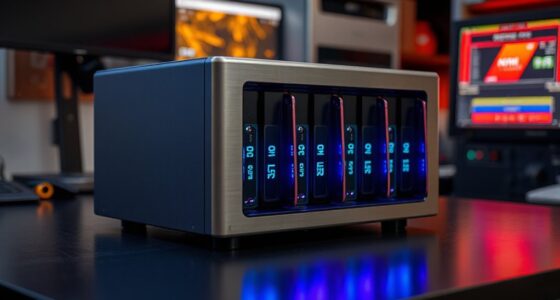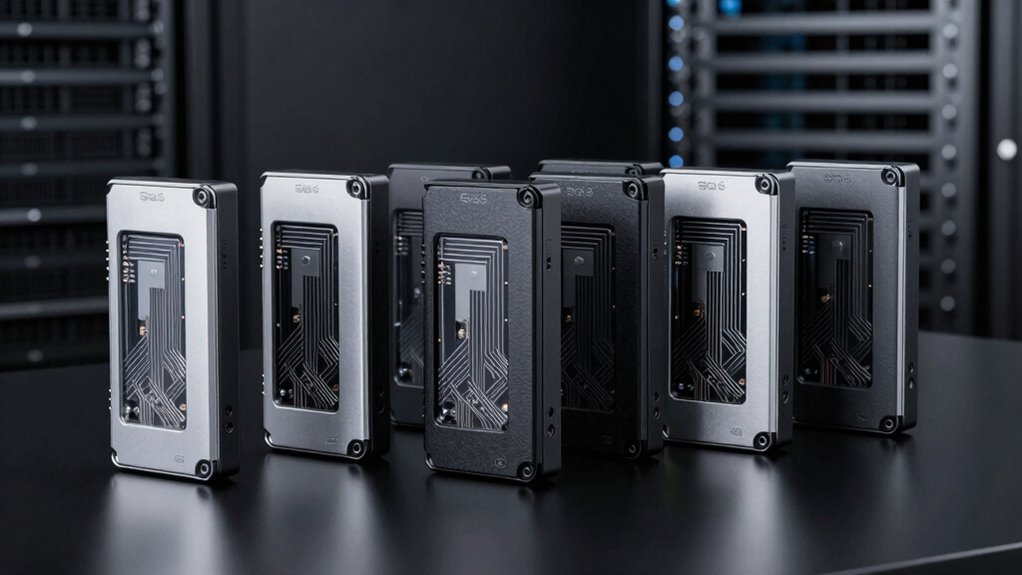

A SAS SSD is the storage backbone of most enterprise servers, and the real decision comes down to capacity, drive condition (new vs. renewed), and whether a compatible tray is included. The Dell 3.84TB 12Gb/s SAS SSD Bundle with Tray stands out as the best overall pick because it pairs the most useful capacity tier with guaranteed PowerEdge compatibility and a proper 14G tray, which spares you the most common install headache. If budget leads the decision, the HP/Samsung PM1643a 3.84TB (Renewed) delivers genuine enterprise-grade endurance at a lower cost, while the Dell 1.92TB with Tray makes sense for smaller virtualization hosts that don’t need 3.84TB per drive. The main tradeoff in this category is renewed drives versus new ones — renewed units cut cost but carry shorter warranty coverage. Read on for the full breakdown of all six drives.

Get privacy and security gear delivered free with Prime
- Fast, free delivery on millions of items
- Prime Video, Amazon Music and more included
- Member-only deals all year
Key Takeaways
- 3.84TB was the sweet spot in this lineup: four of the six drives hit that capacity, and it offers the best cost-per-terabyte for RAID arrays in PowerEdge-class servers.
- Included trays mattered more than expected — the Dell bundle with a verified 14G tray eliminated the single most common compatibility complaint, which is why it ranked first.
- Renewed enterprise drives (the Samsung PM1643a and the Water Panther 3.84TB) offered real savings but require checking power-on hours and warranty terms before committing.
- The 1.92TB options from Water Panther and Dell are better suited to smaller hosts or cache-tier duty; buying them to save money often means refilling bays sooner.
- Every drive here is 12Gb/s SAS in the 2.5-inch form factor, so the differentiators were firmware provenance, tray compatibility, listed server support, and condition — not raw interface speed.


| sas ssd | Capacity | Interface | Form Factor | Brand |
|---|---|---|---|---|
| HP/Samsung PM1643a MZILT3T8HBL | 3.84TB | SAS 12Gb/s dual-port | 2.5-inch | HP/Samsung |
| Water Panther 1.92TB MLC SAS 1 | 1.92TB | SAS 12Gb/s | 2.5-inch | Water Panther |
| Dell 1.92TB 12Gb/s 2.5" SAS So | 1.92TB | SAS 12Gb/s | 2.5-inch | Dell |
| Dell 3.84TB 12Gb/s 2.5" SAS SS | 3.84TB (3840 GB) | SAS 12Gb/s | 2.5-inch | Dell |
| Water Panther 3.84TB SAS 12Gbp | 3.84TB | SAS 12Gbps | 2.5-inch, 15mm | Water Panther |
| Dell 3.84TB 12Gb/s 2.5" SAS So | 3.84 TB | SAS 12Gb/s | 2.5-inch SFF | — |
More Details on Our Top Picks
HP/Samsung PM1643a MZILT3T8HBLS 3.84TB SAS 12Gb/s 2.5-inch Read Intensive Enterprise SSD (Renewed)
Samsung’s PM1643a stands out as the most technically capable drive in this lineup, and it is the only one here with a dual-port SAS interface, which matters if fault tolerance is part of your build. Dual-porting lets a single drive connect to two controllers, so a host failure does not take your storage offline. Compared with the Dell 3.84TB bundle (B081THFZ1V), this model offers the same 3.84TB capacity but adds roughly 2,100 MB/s sequential reads and TCG Enterprise hardware encryption — a real advantage for compliance-heavy environments. The tradeoff is honest: this is a renewed unit, so condition and remaining endurance vary more than a new drive, and its read-intensive 1 DWPD rating makes it a poor fit for write-heavy databases. For read-dominated workloads like virtualization hosts or media serving, this pick makes the most sense.
Pros:- Dual-port SAS 12Gb/s interface for failover and redundancy
- Strong sequential performance up to 2,100 MB/s read
- TCG Enterprise hardware-level encryption support
- 3.84TB capacity with 1 DWPD endurance for sustained read workloads
Cons:- Renewed condition means more unit-to-unit variability than new stock
- Read-intensive rating limits suitability for heavy write workloads
- Requires a SAS 12Gb/s-capable controller or backplane
Best for: Server admins running read-heavy virtualization or file-serving workloads who want dual-port redundancy at 3.84TB
Not ideal for: Write-intensive database clusters — the 1 DWPD endurance rating and read-intensive design will wear the drive faster than a mixed-use model
- Brand:HP/Samsung
- Model:PM1643a (MZILT3T8HBLS)
- Capacity:3.84TB
- Interface:SAS 12Gb/s dual-port
- Form Factor:2.5-inch
- NAND Type:3D TLC
- Endurance:1 DWPD
- Sequential Read / Write:Up to 2,100 / 2,000 MB/s
- Condition:Renewed
Our verdict“The most complete package here for read-dominated enterprise workloads that need dual-port reliability and encryption, provided you accept renewed-unit variability.”
Water Panther 1.92TB MLC SAS 12Gb/s 2.5″ SSD for Dell PowerEdge Servers with 14G Tray
Where the Samsung PM1643a leads on raw performance, this Water Panther 1.92TB takes a different path: it pairs MLC NAND — generally more endurance-tolerant than the TLC in most rivals here — with a pre-installed Dell 14G caddy and a 2-year replacement warranty. That warranty is the standout differentiator against the Dell-branded 1.92TB bundle (B081TJ84M5), which covers a similar niche but does not advertise the same explicit replacement terms. Half the capacity means you give up density per drive bay, which adds up fast in chassis-limited deployments. It is also locked to Dell ecosystems, so anyone running HPE, Lenovo, or generic white-box servers gets nothing from the included tray. For smaller PowerEdge arrays or boot-plus-cache tiers, this option makes the most sense.
Pros:- MLC NAND for better write endurance than typical TLC drives
- Includes Dell 14G hot-plug caddy for tool-free installation
- 2-year replacement warranty
- Rated for continuous 24/7 data center operation
Cons:- Limited to Dell server ecosystems
- 1.92TB capacity is inefficient for bay-constrained chassis
Best for: Dell PowerEdge operators building cost-conscious capacity tiers who want MLC endurance and warranty coverage
Not ideal for: Non-Dell server environments — the included 14G caddy and compatibility are Dell-specific, and SAS will not work in SATA-only consumer machines
- Brand:Water Panther
- Capacity:1.92TB
- NAND Type:MLC
- Interface:SAS 12Gb/s
- Form Factor:2.5-inch
- Included Tray:Dell 14G hot-plug caddy
- Use Case:Enterprise / data center 24/7
- Warranty:2-year replacement
Our verdict“A sensible mid-tier pick for Dell shops that value MLC endurance and warranty support over maximum density.”
Dell 1.92TB 12Gb/s 2.5″ SAS Solid State Drive with Tray
This Dell-branded 1.92TB drive is the most straightforward entry point in the roundup. It ships with its tray, slides into a long list of 14G PowerEdge models — R640, R740, R740XD, R440, R540, R840, R940, T440, T640 — and carries genuine Dell firmware, which spares you the firmware-mismatch warnings third-party drives can trigger in iDRAC. Compared with the Water Panther 1.92TB, the appeal here is OEM authenticity and guaranteed compatibility rather than warranty terms or NAND type. The drawback set is real, though: it is confined to that specific Dell model list, and like every SAS drive here, it simply will not function in a SATA-only desktop or NAS. If you are refreshing an aging PowerEdge fleet one bay at a time, this option makes the most sense.
Pros:- Genuine Dell part with matching firmware for listed PowerEdge servers
- Tray included for direct hot-swap installation
- Broad compatibility across ten PowerEdge and tower models
- MLC NAND in an enterprise-class design
Cons:- Only works with the specific listed Dell server models
- No use in consumer SATA-only systems
Best for: IT teams upgrading existing 14G Dell PowerEdge servers who want OEM-matched drives with predictable firmware behavior
Not ideal for: Homelab builders or anyone outside the listed PowerEdge models — the SAS interface and Dell tray lock it to a narrow hardware set
- Brand:Dell
- Capacity:1.92TB
- Interface:SAS 12Gb/s
- Form Factor:2.5-inch
- NAND Type:MLC
- Compatible Devices:Dell PowerEdge R640, R740, R740XD, R440, R540, R840, R940, T440, T640
- Includes:Drive tray
Our verdict“The safest low-friction choice for dropping capacity into a supported Dell PowerEdge without firmware surprises.”
Dell 3.84TB 12Gb/s 2.5″ SAS SSD Bundle with Tray for PowerEdge R640, R740, R740XD, R440, R540, R840, R940, T440, T640
Think of this as the Dell 1.92TB bundle (B081TJ84M5) scaled up: double the capacity in the same 2.5-inch bay, same OEM tray, same ten-model PowerEdge compatibility list. That doubling is the entire argument — in a 24-bay R740XD, stepping from 1.92TB to 3.84TB per drive nearly doubles raw array capacity without touching chassis, power, or licensing. Against the renewed Water Panther 3.84TB, this one trades a lower shelf price for a cleaner condition story: it is not a refurbishment, which matters for buyers writing drives into production under audit. The compromises mirror its smaller sibling — it lives or dies by that Dell compatibility list, and SAS-only means no repurposing into desktops or SATA enclosures later. For capacity-maximizing PowerEdge fleets, this pick makes the most sense.
Pros:- 3.84TB enterprise-class MLC capacity doubles per-bay storage
- OEM Dell compatibility across ten PowerEdge models
- Drive tray included for immediate hot-swap installation
- 12Gb/s SAS throughput for server-grade workloads
Cons:- Strictly limited to listed Dell PowerEdge systems
- Requires SAS-capable backplane and controller hardware
Best for: Dell PowerEdge operators maximizing storage density per bay in R640/R740-class servers
Not ideal for: Mixed-vendor server rooms or non-server buyers — the Dell lock-in and SAS interface give it no fallback use elsewhere
- Brand:Dell
- Capacity:3.84TB (3840 GB)
- Interface:SAS 12Gb/s
- Form Factor:2.5-inch
- Drive Type:Enterprise Class MLC SSD
- Compatible Devices:Dell PowerEdge R640, R740, R740XD, R440, R540, R840, R940, T440, T640
- Included Accessories:Drive tray
Our verdict“The cleanest way to double per-bay capacity in a supported PowerEdge without gambling on renewed stock.”
Water Panther 3.84TB SAS 12Gbps 2.5-inch Enterprise SSD with Dell 14G Tray (Renewed)
This renewed Water Panther 3.84TB targets the same buyer as the Dell 3.84TB OEM bundle — someone filling PowerEdge bays at maximum density — but from the value angle. The trade is straightforward: renewed hardware in exchange for 3.84TB of SAS capacity and a 2-year warranty that softens the refurbishment risk the Samsung PM1643a renewed carries with less explicit coverage language. It also reaches newer platforms than most rivals here, listing compatibility through the R650, R660, and R760 generations, where the Dell OEM bundles stop at 14G models. The 15mm z-height is worth checking — some 2.5-inch chassis expect 7mm drives and will not close properly. For homelabs and secondary production tiers on a tight budget, this option makes the most sense.
Pros:- 3.84TB capacity at renewed pricing
- Compatibility extends to newer R650, R660, and R760 platforms
- Includes Dell 14G hot-swap caddy (DXD9H)
- 2-year warranty included
Cons:- Renewed condition rather than new
- 15mm z-height may not fit chassis designed for slimmer 2.5-inch drives
- Dell-model-specific compatibility
Best for: Budget-conscious homelab and secondary-tier server builders filling newer PowerEdge R650/R760-class bays
Not ideal for: Buyers who need new-condition drives for audited production — renewed stock and third-party branding carry documentation and variability risks
- Brand:Water Panther
- Capacity:3.84TB
- Interface:SAS 12Gbps
- Form Factor:2.5-inch, 15mm
- Tray:Dell 14G hot-swap caddy (DXD9H)
- Compatible Devices:Dell PowerEdge R340, R440, R450, R640, R650, R660, R760, R860, C6600, NX440, T440
- Condition:Renewed
- Warranty:2 years
Our verdict“The value play for dense 3.84TB SAS capacity in modern Dell servers, as long as renewed hardware fits your risk tolerance.”
Dell 3.84TB 12Gb/s 2.5″ SAS Solid State Drive Bundle with Tray for PowerEdge Servers
Dell-focused server admins get the simplest path to big capacity with this 3.84TB bundle, because the included matching drive tray means no separate caddy purchase and no compatibility guesswork at install time. Compared with the Water Panther 3.84TB, which offers similar capacity with a 14G tray, this drive’s advantage is broader stated coverage across the 14th-gen PowerEdge line — from the compact R440 up through the quad-socket R940 — making it the safer pick for shops running mixed server generations. The MLC NAND also positions it above read-intensive drives like the HP/Samsung PM1643a for mixed workloads, since MLC endures more write cycles. The honest tradeoff: this is a third-party bundle, not an official Dell retail kit, so buyers with strict procurement or warranty requirements should verify seller terms before committing.
Pros:- Large 3.84TB enterprise-class capacity in a single 2.5-inch bay
- Included drive tray eliminates a separate caddy purchase and fit issues
- MLC NAND offers better write endurance than read-intensive alternatives
- Broad compatibility across the 14th-gen Dell PowerEdge lineup
Cons:- SAS interface requires a compatible server controller — useless in consumer desktops
- Third-party bundle rather than an official Dell retail kit, which may matter for warranty-sensitive deployments
Best for: Dell PowerEdge administrators running R640/R740-class servers who want a high-capacity SAS SSD that installs cleanly without sourcing a separate tray
Not ideal for: Consumer PC builders or non-Dell server owners — the SAS interface demands a compatible RAID/HBA controller and won’t work in standard desktops
- Capacity:3.84 TB
- Interface:SAS 12Gb/s
- Form Factor:2.5-inch SFF
- NAND Type:MLC
- Transfer Rate:12 Gbps
- Installation Type:Internal
- Includes:Drive tray
- Compatible Devices:Dell PowerEdge R640, R740, R740XD, R440, R540, R840, R940, T440, T640
Our verdict“If you run a 14th-gen Dell PowerEdge fleet and want 3.84TB of SAS storage that drops straight into the bay, this is the most hassle-free option in the lineup.”

How We Picked
Because every drive in this roundup shares the 12Gb/s SAS interface and 2.5-inch form factor, I focused on the factors that actually separate one purchase from another: capacity per dollar of utility, tray inclusion, listed server compatibility, NAND tier and endurance class, and drive condition. Drives bundled with a verified Dell 14G tray ranked higher because mismatched trays are the number-one cause of installation friction in PowerEdge servers. Capacity weighed heavily too — 3.84TB is the standard building block for RAID 6 and vSAN arrays, so those drives earned priority over 1.92TB units unless a specific use case favored them.
Condition was the tiebreaker. New and manufacturer-labeled drives ranked above renewed units at equal capacity, but a renewed drive with a strong enterprise pedigree — like the Samsung PM1643a — could still outrank a generic new drive when its endurance and firmware support were clearly superior. Read-intensive classification was also factored in, since these drives suit boot, archival, and read-heavy workloads but not sustained write-heavy databases.
| sas ssd | Brand | Interface | Compatible Devices |
|---|---|---|---|
| HP/Samsung PM1643a MZILT3T8HBL | HP/Samsung | SAS 12Gb/s dual-port | — |
| Water Panther 1.92TB MLC SAS 1 | Water Panther | SAS 12Gb/s | — |
| Dell 1.92TB 12Gb/s 2.5" SAS So | Dell | SAS 12Gb/s | Dell PowerEdge R640, R740, R740XD, R440, R540, R840, R940, T440, T640 |
| Dell 3.84TB 12Gb/s 2.5" SAS SS | Dell | SAS 12Gb/s | Dell PowerEdge R640, R740, R740XD, R440, R540, R840, R940, T440, T640 |
| Water Panther 3.84TB SAS 12Gbp | Water Panther | SAS 12Gbps | Dell PowerEdge R340, R440, R450, R640, R650, R660, R760, R860, C6600, NX440, T440 |
| Dell 3.84TB 12Gb/s 2.5" SAS So | — | SAS 12Gb/s | Dell PowerEdge R640, R740, R740XD, R440, R540, R840, R940, T440, T640 |
Factors to Consider When Choosing Sas Ssd
Before clicking buy on any SAS SSD, a few structural decisions will shape whether the drive works in your server at all — and whether you’ll regret the purchase in eighteen months. These are the factors I weighed and the ones most often gotten wrong.Tray Compatibility Is Not Optional
The single most common mistake when buying a SAS SSD for a Dell PowerEdge server is assuming the bare drive will drop in. Dell servers expect drives mounted in a matching generation tray — a 14G tray for R640/R740-class servers — and a drive without one either won’t seat correctly or won’t be recognized by the backplane. Third-party trays exist, but they vary in quality and sometimes trigger firmware warnings. That’s why bundles with an included, verified tray consistently made more sense than bare drives at similar cost. If you already own empty trays from failed drives, a bare drive becomes viable again — just confirm the tray generation matches your chassis before ordering.
New vs. Renewed: The Real Tradeoff
Enterprise SAS SSDs are built for five years of continuous duty, which means a renewed drive often has years of usable life left — but you’re inheriting someone else’s workload history. A renewed Samsung PM1643a from a decommissioned data center is a very different proposition from a no-name refurbish with erased SMART data. Ask for power-on hours and total bytes written whenever a seller provides them, and read the warranty terms closely: many renewed drives carry 90-day or one-year coverage versus three to five years for new stock. My rule of thumb: renewed is fine for secondary arrays and lab gear, new is safer for production RAID sets where a single early failure means a rebuild cycle on your remaining drives.
Read-Intensive vs. Mixed-Use NAND
Most drives in this class are labeled read-intensive, which translates to lower endurance ratings — roughly one drive write per day or less. That’s perfectly fine for boot drives, file serving, archival storage, and read-heavy application data. It becomes a problem when you put a write-heavy database or a heavily churned virtualization datastore on the same media, because the drive will burn through its rated endurance years ahead of schedule and start throttling or failing. If your workload writes heavily, you either step up to a mixed-use drive class (at a meaningful price premium) or accept shorter drive life. Don’t let a lower price on a read-intensive model tempt you into the wrong endurance tier for your actual workload.
Sizing: Why 1.92TB vs. 3.84TB Actually Matters
Capacity isn’t just about total storage — it changes your RAID geometry and rebuild behavior. With 3.84TB drives, an 8-bay RAID 6 array yields roughly 23TB usable, while 1.92TB drives in the same chassis give you about 11.5TB and push you toward buying more drives sooner. Larger drives also mean longer rebuild times and more data at risk per failed drive, so hot spares matter more at 3.84TB. The 1.92TB tier still earns its place for cache tiers, boot volumes, and smaller hosts where four bays are plenty. Match the capacity to your growth horizon: refilling bays eighteen months from now costs more than buying the right size once.
Seller, Firmware, and Warranty Realities
Who you buy from matters as much as which drive you buy. Manufacturer-labeled drives (Dell-branded, HP-branded) typically carry firmware revisions already validated for those vendors’ servers, which avoids the odd controller incompatibility that can appear with third-party firmware. Generic and house-brand drives like the Water Panther units trade that validation for savings, and for most standard PowerEdge configurations that trade works out fine — but verify your RAID controller (PERC H730P/H740P class) accepts third-party drives. Warranty length and who services it differ dramatically between marketplace sellers, so check whether coverage comes from the manufacturer, the refurbisher, or the seller directly. A great drive with no warranty is a worse deal than a good drive with three years of coverage.
Don’t Overpay for Interface Speed You Already Have
Every drive here is 12Gb/s SAS, which is the current enterprise standard and fully saturated by dual-port enterprise controllers. What buyers sometimes miss is that real-world throughput depends more on the RAID controller, queue depth, and how many drives share the backplane than on marginal drive differences. A single SSD’s sequential speed matters little in an eight-drive RAID set; random IOPS and latency consistency matter more. So ignore minor spec-sheet speed differences between these models and spend your attention on capacity, endurance class, and compatibility instead. That’s exactly why this ranking prioritizes fit and condition over raw transfer numbers.
Frequently Asked Questions
Will a Dell-labeled SAS SSD work in an HP server, or do I need to match the brand?
Physically and electrically, any standard 2.5-inch 12Gb/s SAS drive will connect to any SAS backplane regardless of brand — the connector standard is universal. The practical problems are the tray/carrier, which is brand-specific, and firmware validation. Dell drives sit in Dell trays that won’t fit HP caddies, so you’d need to swap the drive into an HP carrier. Some vendor-labeled firmware can also report minor warnings on other vendors’ controllers, though it usually works. If you run HP ProLiant hardware, a drive like the HP-labeled Samsung PM1643a is the safer path; for Dell PowerEdge, stick with Dell-ready bundles or drives that include a 14G tray.
Is buying a renewed enterprise SSD risky compared to new?
It carries real but manageable risk. Enterprise SAS SSDs are engineered for far more writes than most servers ever generate, so a renewed unit with two years of data center life can still have years of headroom left. The risk concentrates in two places: unknown wear history and shorter warranty coverage, often 90 days to a year instead of three to five. Mitigate both by choosing sellers who disclose power-on hours and total bytes written, and by buying at least one hot spare for any renewed array. For production systems you can’t afford to babysit, new stock remains the more defensible choice.
Do I really need the tray, or can I mount the drive without one?
In almost every PowerEdge and ProLiant server, yes, you need the tray — the drive mounts to the caddy and the caddy latches into the backplane rails. A bare drive has no screw holes aligned for direct backplane insertion in these chassis, and improvised mounting usually results in poor connector seating or intermittent link errors. Buying the tray separately costs money and risks getting the wrong generation: 13G, 14G, and 16G trays look similar but aren’t interchangeable. Bundles like the Dell 3.84TB with included 14G tray exist precisely because this friction is so common, and they generally beat the bare-drive-plus-separate-tray route on convenience and fit certainty.
Is 1.92TB enough, or should I spend more for 3.84TB?
It depends entirely on role. For boot drives, cache tiers, and small virtualization hosts, 1.92TB is plenty and lets you spread data across more spindles for better parallel IOPS. For primary storage arrays, 3.84TB almost always wins on cost per usable terabyte once you account for RAID overhead — a RAID 6 set of 3.84TB drives delivers roughly double the capacity of the same drive count at 1.92TB. The counterargument is rebuild time: larger drives take longer to rebuild, raising exposure if a second drive fails during the process. If you’re starting a fresh array you expect to grow into, go 3.84TB; if you’re adding cache or boot volumes, 1.92TB is the smarter spend.
What does ‘read intensive’ mean, and will it hurt my workload?
Read-intensive is an endurance classification, roughly meaning the drive is rated for one drive-write-per-day or less over its warranty life. Workloads like file shares, web serving, media libraries, and archival data sit comfortably inside that envelope and will never notice. Workloads with heavy sustained writes — transactional databases, logging servers, frequently rebalanced object storage — will consume the rated endurance faster, leading to earlier performance throttling or failure. The honest test is your write ratio: if writes are a small fraction of total I/O, read-intensive is the right value choice. If writes approach 50% of your traffic, budget for a mixed-use drive class instead, even though it costs noticeably more per terabyte.
Conclusion
For most buyers, the Dell 3.84TB 12Gb/s SAS SSD Bundle with Tray is the best overall pick: right capacity, verified 14G tray compatibility, and the fewest ways for the install to go wrong. The HP/Samsung PM1643a 3.84TB (Renewed) takes the value crown for budget-conscious builders who accept renewed-condition tradeoffs in exchange for genuine enterprise pedigree. On the premium side, the Dell 3.84TB bundle for R640 through R940 servers is the choice when you want explicit, documented support for a specific server generation. First-time server builders and anyone setting up a homelab should start with the Dell 1.92TB with Tray — lower commitment, same compatibility, and easier to learn on. For cache tiers and smaller hosts, the Water Panther 1.92TB fills the compact-role slot affordably, while the Water Panther 3.84TB (Renewed) suits secondary arrays where cost per terabyte beats warranty length. Match the pick to your server, your workload’s write profile, and how much warranty coverage you need — that trio decides this category more than any spec sheet.
Fall Picks
fall essentials
As an affiliate, we earn on qualifying purchases.