Get privacy and security gear delivered free with Prime
- Fast, free delivery on millions of items
- Prime Video, Amazon Music and more included
- Member-only deals all year
Key Takeaways
- The MINISFORUM MS-01 Core i9-13900H leads for compute-heavy labs, while its workstation-class hardware may be more than a small, low-power setup needs.
- The Qotom Q10932H6 and R1 prioritize high-speed networking; their multiple Ethernet and SFP+ ports can matter more than extra CPU cores for router, firewall, and network appliance guests.
- The GMKtec NucBox M8 pairs a Ryzen 5 PRO 6650H with LPDDR5 memory, but buyers should check memory capacity and upgrade limits before planning many simultaneous VMs.
- Several listings are barebone systems, including the MS-02 Ultra and MS-01 Core i5; their actual cost and readiness depend on separately supplied memory and storage.
- The G10 appears twice with different SSD capacities, so compare the exact configuration: the 1TB version offers more included space, while both use the older Ryzen 5 3500U platform.
| Qotom Q10932H6 1U Rackmount Mini PC with Intel Core i3-N305 and 2× 10GbE, 4× 2.5GbE |  | Best for Dense 10GbE Lab Networking | Processor: Intel Core i3-N305, 8 cores/8 threads, up to 3.80 GHz | Chassis: 1U aluminum alloy rackmount | Dimensions: 440 × 113 × 44 mm | VIEW ON AMAZON | See Our Full Breakdown |
| GMKtec NucBox G10 Mini PC, AMD Ryzen 5 3500U, 16GB DDR4, 1TB SSD, Triple 4K Display Support |  | Best Ready-to-Run Value Host | Processor: AMD Ryzen 5 3500U, 4 cores, 2.1 GHz base / 3.7 GHz boost | Graphics: AMD Radeon Vega 8 integrated graphics | RAM: 16GB DDR4 SO-DIMM, expandable to 64GB | VIEW ON AMAZON | See Our Full Breakdown |
| MINISFORUM MS-01 Mini Workstation, Intel Core i9-13900H, 32GB DDR5 RAM, 1TB SSD |  | Best Premium Compute Host | Processor: Intel Core i9-13900H, 14 cores/20 threads, up to 5.4 GHz | Memory: 32GB DDR5 | Storage: 1TB M.2 2280 PCIe 4.0 SSD | VIEW ON AMAZON | See Our Full Breakdown |
| R1 Mini PC with Dual 10G SFP+ and Dual 2.5G Ethernet Ports |  | Best Firewall and Network Appliance | Processor options: Intel N100, 4 cores/4 threads, up to 3.4 GHz; or Core i3-N305, 8 cores/8 threads, up to 3.8 GHz | Memory: Single SO-DIMM slot; DDR5-4800, compatible with DDR5-5600 | Storage: M.2 2280 NVMe, PCIe 3.0 x4; reserved 4-pin SATA socket for 2.5-inch SSD | VIEW ON AMAZON | See Our Full Breakdown |
| GEEKOM A5 Mini PC, AMD Ryzen 5 7430U, 16GB RAM (Upgradable), 1TB SSD |  | Best for Expandable Home Services | Processor: AMD Ryzen 5 7430U, 15W TDP | Graphics: AMD Radeon Vega 7 | RAM: 16GB DDR4 dual-slot, upgradable to 64GB | VIEW ON AMAZON | See Our Full Breakdown |
| Beelink ME Mini PC with Intel N95, 12GB LPDDR5, 64GB eMMC, Wi-Fi 6, and Dual 2.5GbE |  | Best for Storage-Heavy NAS Labs | Processor: Intel Alder Lake N95, 4 cores / 4 threads, up to 3.4GHz | Memory: 12GB LPDDR5 | Boot storage: 64GB eMMC | VIEW ON AMAZON | See Our Full Breakdown |
| GMKtec NucBox M8 Mini PC with AMD Ryzen 5 PRO 6650H, 16GB LPDDR5 RAM, and 512GB SSD |  | Best Compact General-Purpose Host | Processor: AMD Ryzen 5 PRO 6650H, 6 cores / 12 threads, up to 4.5GHz | Graphics: Integrated AMD Radeon 660M | Memory: 16GB LPDDR5, 6400 MT/s | VIEW ON AMAZON | See Our Full Breakdown |
| MINISFORUM MS-02 Ultra Workstation Mini PC, Intel Core Ultra 5 235HX, Barebone |  | Best for High-Memory Expansion | Processor: Intel Core Ultra 5 235HX, 14 cores / 14 threads, up to 5.1GHz | Memory: 4 DDR5 SO-DIMM slots, up to 256GB | Expansion slot: PCIe 5.0 x16 | VIEW ON AMAZON | See Our Full Breakdown |
| GMKtec NucBox G10 Mini PC, Ryzen 5 3500U, 16GB RAM, 512GB SSD |  | Best for a Budget Starter Lab | Processor: AMD Ryzen 5 3500U, 4 cores / 8 threads, up to 3.7GHz | Memory: 16GB dual-channel DDR4, upgradeable to 32GB | Storage: 512GB M.2 PCIe 3.0 SSD | VIEW ON AMAZON | See Our Full Breakdown |
| MINISFORUM MS-01 Mini PC Barebone with Intel Core i5-12600H |  | Best for Fast Multi-Network Labs | Processor: Intel Core i5-12600H, 12 cores / 16 threads, up to 4.5GHz | Memory support: Dual-channel DDR5, up to 96GB | Expansion: PCIe 4.0 x16 slot | VIEW ON AMAZON | See Our Full Breakdown |
| GEEKOM Mini PC IT12 MAX, Intel Core Ultra 5 125U, 16GB RAM, 500GB SSD (Upgradeable) |  | Best for Business Virtualization | Processor: Intel Core Ultra 5 125U | Memory: 16GB LPDDR5 5600MT/s, soldered | Storage: 500GB PCIe 4.0 NVMe SSD, upgradeable to 2TB | VIEW ON AMAZON | See Our Full Breakdown |
| BOSGAME E5 Mini PC, AMD Ryzen 3 5300U, 16GB DDR4, 512GB NVMe SSD |  | Best for an Expandable Home Lab | Processor: AMD Ryzen 3 5300U, 4 cores/8 threads, up to 3.8GHz | Memory: 16GB DDR4, expandable to 64GB with dual SODIMM slots | Storage: 512GB M.2 2280 NVMe PCIe 3.0 SSD | VIEW ON AMAZON | See Our Full Breakdown |
| mini pc server for virtualization | Processor | Storage | Memory | Networking |
|---|---|---|---|---|
| Qotom Q10932H6 1U Rackmount Mi | Intel Core i3-N305, 8 cores/8 threads, up to 3.80 GHz | M.2 NVMe PCIe SSD support | — | — |
| GMKtec NucBox G10 Mini PC | AMD Ryzen 5 3500U, 4 cores, 2.1 GHz base / 3.7 GHz boost | 1TB SSD; dual M.2 2280 PCIe 3.0 slots, up to 16TB | — | — |
| MINISFORUM MS-01 Mini Workstat | Intel Core i9-13900H, 14 cores/20 threads, up to 5.4 GHz | 1TB M.2 2280 PCIe 4.0 SSD | 32GB DDR5 | 2 × 10G SFP+; 2 × 2.5G RJ45 |
| R1 Mini PC with Dual 10G SFP+ | — | M.2 2280 NVMe, PCIe 3.0 x4; reserved 4-pin SATA socket for 2.5-inch SSD | Single SO-DIMM slot; DDR5-4800, compatible with DDR5-5600 | — |
| GEEKOM A5 Mini PC | AMD Ryzen 5 7430U, 15W TDP | 1TB PCIe NVMe SSD, upgradable to 4TB | — | — |
| Beelink ME Mini PC with Intel | Intel Alder Lake N95, 4 cores / 4 threads, up to 3.4GHz | — | 12GB LPDDR5 | Dual Intel i226-V 2.5GbE; Wi-Fi 6 |
| GMKtec NucBox M8 Mini PC with | AMD Ryzen 5 PRO 6650H, 6 cores / 12 threads, up to 4.5GHz | 512GB PCIe 3.0 M.2 2280 SSD | 16GB LPDDR5, 6400 MT/s | Dual 2.5GbE LAN, Wi-Fi 6E, Bluetooth 5.2 |
| MINISFORUM MS-02 Ultra Worksta | Intel Core Ultra 5 235HX, 14 cores / 14 threads, up to 5.1GHz | 2 × M.2 PCIe 4.0 slots, up to 16TB total | 4 DDR5 SO-DIMM slots, up to 256GB | 10GbE and 2.5GbE LAN |
| GMKtec NucBox G10 Mini PC | AMD Ryzen 5 3500U, 4 cores / 8 threads, up to 3.7GHz | 512GB M.2 PCIe 3.0 SSD | 16GB dual-channel DDR4, upgradeable to 32GB | 2.5GbE RJ45, Wi-Fi 5, Bluetooth 5.2 |
| MINISFORUM MS-01 Mini PC Bareb | Intel Core i5-12600H, 12 cores / 16 threads, up to 4.5GHz | — | — | 2 × 10Gbps SFP+ and 2 × 2.5Gbps RJ45 |
| GEEKOM Mini PC IT12 MAX | Intel Core Ultra 5 125U | 500GB PCIe 4.0 NVMe SSD, upgradeable to 2TB | 16GB LPDDR5 5600MT/s, soldered | Dual 2.5G LAN |
| BOSGAME E5 Mini PC | AMD Ryzen 3 5300U, 4 cores/8 threads, up to 3.8GHz | 512GB M.2 2280 NVMe PCIe 3.0 SSD | 16GB DDR4, expandable to 64GB with dual SODIMM slots | Dual 2.5GbE Realtek RTL8125, Wi-Fi 5 |
More Details on Our Top Picks
Qotom Q10932H6 1U Rackmount Mini PC with Intel Core i3-N305 and 2× 10GbE, 4× 2.5GbE
The Qotom Q10932H6 is the clearest fit here for a virtualization host that also needs many wired connections: its eight-core i3-N305 pairs with two 10GbE ports and four 2.5GbE ports in a standard 1U chassis. That port mix gives a homelab room to separate storage, virtual machines, and management traffic without adding a network card. Compared with the R1 Mini PC, it offers more Ethernet ports and a rack-ready form, but its Marvell 10GbE adapters narrow OS choices. The barebone setup also means budgeting for DDR5 memory and NVMe storage separately. It supports Proxmox VE and Linux, but is a poor match for pfSense, OPNsense, or FreeBSD because those systems are listed as incompatible.
Pros:- Eight-core i3-N305 supports multiple virtual machines and network services.
- Two 10GbE plus four 2.5GbE ports allow substantial network segmentation.
- 1U aluminum chassis fits a rack setup.
- Supports up to 48GB DDR5 and M.2 NVMe storage.
Cons:- Ships without RAM or storage.
- Marvell 10GbE ports require modern drivers.
- Not compatible with pfSense, OPNsense, or FreeBSD.
Best for: Homelab builders running Proxmox or Linux who need several wired networks and a 1U rackmount system.
Not ideal for: Firewall builders committed to pfSense, OPNsense, or FreeBSD, or buyers who want memory and storage included.
- Processor:Intel Core i3-N305, 8 cores/8 threads, up to 3.80 GHz
- Chassis:1U aluminum alloy rackmount
- Dimensions:440 × 113 × 44 mm
- Ethernet:2 × Marvell AQC113 10GbE RJ45; 4 × Intel i226-V 2.5GbE
- Memory support:Up to 48GB DDR5 SO-DIMM
- Storage:M.2 NVMe PCIe SSD support
- Included components:Barebone; RAM and storage not included
- Recommended operating systems:OpenWrt, Linux (Ubuntu/Debian), Proxmox VE, Windows 10/11
- Incompatible operating systems:pfSense, OPNsense, FreeBSD
Our verdict“Choose the Qotom for a Proxmox or Linux rack lab that needs six Ethernet ports, and skip it for a pfSense or OPNsense build.”
GMKtec NucBox G10 Mini PC, AMD Ryzen 5 3500U, 16GB DDR4, 1TB SSD, Triple 4K Display Support
The GMKtec NucBox G10 arrives with 16GB RAM and a 1TB SSD, so a first-time virtualization user can get a basic host running without sourcing core components first. Its Ryzen 5 3500U has four cores, making it better suited to a handful of light VMs and home services than to dense, compute-heavy consolidation. The dual M.2 slots leave room to add storage as a lab grows, and 2.5GbE is useful for faster wired transfers. Compared with the newer eight-core Qotom Q10932H6, this G10 has fewer CPU cores and only one listed Ethernet port, but it is a more complete desktop-style package. Wi-Fi 5 and the older Zen+ processor are limitations for buyers seeking newer connectivity or heavier workloads.
Pros:- Includes 16GB DDR4 RAM and a 1TB SSD.
- Dual M.2 slots allow storage expansion.
- 2.5GbE Ethernet offers faster wired networking than standard gigabit.
- RAM can be expanded to 64GB.
Cons:- Four-core Ryzen 5 3500U has less headroom for dense virtualization than the eight-core i3-N305 in the Qotom.
- Only one Ethernet connection is listed.
- Wi-Fi 5 and Bluetooth 5.0 are older wireless standards.
Best for: New homelab users who want an assembled mini PC for a few light VMs, containers, and home services.
Not ideal for: Users planning many concurrent or compute-heavy VMs, or those who need multiple 10GbE network interfaces.
- Processor:AMD Ryzen 5 3500U, 4 cores, 2.1 GHz base / 3.7 GHz boost
- Graphics:AMD Radeon Vega 8 integrated graphics
- RAM:16GB DDR4 SO-DIMM, expandable to 64GB
- Storage:1TB SSD; dual M.2 2280 PCIe 3.0 slots, up to 16TB
- Ethernet:2.5GbE
- Wireless:Wi-Fi 5 and Bluetooth 5.0
- Cooling:Dual cooling fans
- Power consumption:12–35W configurable TDP
Our verdict“Pick this G10 for an affordable, already-equipped starter host running a few light workloads, but choose a higher-core system for a growing VM fleet.”
MINISFORUM MS-01 Mini Workstation, Intel Core i9-13900H, 32GB DDR5 RAM, 1TB SSD
For a homelab where CPU capacity matters more than a low-power footprint, the MINISFORUM MS-01 brings a 14-core, 20-thread i9-13900H, 32GB DDR5, and a 1TB PCIe 4.0 SSD in one system. That combination provides a stronger starting point for parallel workloads than the four-core GMKtec NucBox G10, while the two additional M.2 slots give a path to expand VM storage. Its dual 10G SFP+ and dual 2.5G Ethernet ports also suit fast storage and network links. The tradeoff is a more workstation-oriented setup: the 10GbE ports use SFP+, and the PCIe slot is electrically x8 despite its x16 form. Integrated Iris Xe is the listed graphics, so GPU workloads need an add-in card.
Pros:- 14-core, 20-thread processor offers substantial capacity for parallel virtual machines.
- Includes 32GB DDR5 memory and a 1TB PCIe 4.0 SSD.
- Dual 10G SFP+ and dual 2.5G Ethernet support fast wired links.
- Two additional M.2 slots and a PCIe expansion slot provide upgrade options.
Cons:- SFP+ networking may require compatible switches, cables, or transceivers.
- PCIe x16 slot is electrically x8.
- Integrated graphics are the only listed graphics unless an expansion card is added.
Best for: Experienced homelab users consolidating many CPU-heavy VMs who can use SFP+ networking and want room for storage or PCIe expansion.
Not ideal for: Buyers seeking a quiet, low-power appliance, RJ45 10GbE ports, or strong GPU compute without adding a card.
- Processor:Intel Core i9-13900H, 14 cores/20 threads, up to 5.4 GHz
- Memory:32GB DDR5
- Storage:1TB M.2 2280 PCIe 4.0 SSD
- Graphics:Integrated Intel Iris Xe Graphics
- Networking:2 × 10G SFP+; 2 × 2.5G RJ45
- Storage expansion:Two additional M.2 NVMe slots; supports M.2 2280/22110 and U.2 SSDs
- Expansion slot:PCIe 4.0 x16 slot, electrically x8; RTX 3050 tested
- Power consumption:45 watts
Our verdict“Choose the MS-01 when VM density and expansion matter more than power draw or RJ45 10GbE simplicity.”
R1 Mini PC with Dual 10G SFP+ and Dual 2.5G Ethernet Ports
The R1 Mini PC is the most network-focused option for buyers building a firewall or compact virtualized router: it combines dual 10G SFP+ with dual 2.5G RJ45, and its listed OS compatibility includes pfSense, OPNsense, Proxmox VE, and ESXi. Compared with the Qotom Q10932H6, it has fewer ports and less specified CPU detail, but it supports the firewall platforms that Qotom excludes. Buyers can choose an N100 or an eight-core i3-N305 configuration; that choice matters because VM headroom will differ. Its small aluminum chassis has active cooling, while M.2 installation requires motherboard disassembly. This makes it a stronger fit as a purpose-built network node than as a general-purpose compute host like the MINISFORUM MS-01.
Pros:- Dual 10G SFP+ and dual 2.5G RJ45 provide a useful mix of high-speed and copper networking.
- Listed compatibility includes pfSense, OPNsense, Proxmox VE, and ESXi.
- Available with either a four-core N100 or eight-core i3-N305 processor.
- Compact aluminum chassis uses active cooling.
Cons:- Processor depends on the selected configuration, so compute capacity is not fixed by the product listing.
- Installing an M.2 SSD requires motherboard disassembly.
- Only four network ports, compared with six on the Qotom Q10932H6.
Best for: Network-focused homelab builders who want a compact Proxmox or firewall appliance with SFP+ and RJ45 ports.
Not ideal for: Buyers who need a clearly specified, included CPU and memory configuration, or who prioritize VM compute over network interfaces.
- Processor options:Intel N100, 4 cores/4 threads, up to 3.4 GHz; or Core i3-N305, 8 cores/8 threads, up to 3.8 GHz
- Memory:Single SO-DIMM slot; DDR5-4800, compatible with DDR5-5600
- Storage:M.2 2280 NVMe, PCIe 3.0 x4; reserved 4-pin SATA socket for 2.5-inch SSD
- Network ports:2 × 10G SFP+ and 2 × 2.5G RJ45
- Video output:2 × HDMI 2.0, up to dual 4K at 60Hz
- Cooling:Aluminum chassis, two copper heat sinks, built-in PWM fan
- Operating system compatibility:Windows 10/11, Windows Server, Debian, Ubuntu, ESXi, Proxmox VE, OpenWRT, MikroTik, pfSense, OPNsense, Unraid, OMV
- Dimensions:5.83 × 5 × 2.36 inches
Our verdict“Choose the R1 for a compact firewall or network node with SFP+ links, and select the i3-N305 version if you plan to run several VMs.”
GEEKOM A5 Mini PC, AMD Ryzen 5 7430U, 16GB RAM (Upgradable), 1TB SSD
The GEEKOM A5 suits a home server that mixes modest virtualization with storage-heavy services. It comes with 16GB RAM and a 1TB NVMe SSD, and its spare M.2 slot plus 2.5-inch drive bay create more storage paths than the GMKtec NucBox G10’s dual M.2 arrangement. Its Ryzen 5 7430U is rated at 15W TDP, a useful fit for an always-on system, while memory can grow to 64GB. For virtualization, though, the available data does not specify core and thread counts, and the listing provides no Ethernet port details; buyers should confirm those needs before choosing it as a host. It also uses DDR4 and integrated Vega 7 graphics, so the appeal is expandability and efficient home services rather than high-end compute.
Pros:- Includes 16GB DDR4 RAM and a 1TB PCIe NVMe SSD.
- Memory is upgradable to 64GB.
- Extra M.2 2242 slot and 2.5-inch bay support up to 10TB total storage.
- 15W TDP processor is suited to an always-on home system.
Cons:- Processor core and thread counts are not provided in the product data.
- Ethernet specifications are not provided, limiting network planning.
- DDR4 memory and integrated Vega 7 graphics are less suited to memory-heavy or GPU workloads.
Best for: Home server owners who want an efficient mini PC with included memory and storage plus room for additional drives.
Not ideal for: Buyers who need confirmed 10GbE or multiple network ports, or who want documented high core counts for dense VM hosting.
- Processor:AMD Ryzen 5 7430U, 15W TDP
- Graphics:AMD Radeon Vega 7
- RAM:16GB DDR4 dual-slot, upgradable to 64GB
- Storage:1TB PCIe NVMe SSD, upgradable to 4TB
- Additional storage:Extra M.2 2242 slot and 2.5-inch HDD bay; up to 10TB total
- Display support:Up to four 4K displays; 8K via Type-C
- Chassis:Compact metal chassis with metal mid-frame and base
- Warranty:3-year limited warranty
Our verdict“Pick the A5 for an efficient home services host with flexible drive expansion, after confirming its network and CPU details meet your virtualization plan.”
Beelink ME Mini PC with Intel N95, 12GB LPDDR5, 64GB eMMC, Wi-Fi 6, and Dual 2.5GbE
The Beelink ME is built around a useful virtualization split: modest compute paired with room for a large pool of local storage. Its six M.2 slots can suit a home lab running lightweight services alongside a NAS, while dual 2.5GbE gives options for separating storage and management traffic. Compared with the GMKtec NucBox M8, it has fewer CPU cores and less memory, so it is a weaker choice for running several busy virtual machines at once. The fixed 12GB LPDDR5 also limits how far the host can grow. The 64GB eMMC is best treated as a boot device; plan on adding SSDs for virtual machine images. This makes the Beelink a storage-focused pick, not a general-purpose virtualization workhorse.
Pros:- Up to six M.2 slots provide unusually broad internal storage expansion
- Dual 2.5GbE ports support network separation or link aggregation
- Compact enclosure has a built-in 45W power supply
- Linux and Windows support offers flexibility for a lab host
Cons:- Four-core N95 and 12GB fixed memory constrain concurrent VM workloads
- 64GB eMMC is limited for VM storage without added SSDs
- Listing gives limited detail about USB port speeds and configurations
Best for: Home-lab builders who want many internal SSDs for NAS services and a small number of lightweight virtual machines
Not ideal for: Users who need substantial memory for multiple VMs or want to upgrade RAM later
- Processor:Intel Alder Lake N95, 4 cores / 4 threads, up to 3.4GHz
- Memory:12GB LPDDR5
- Boot storage:64GB eMMC
- Drive expansion:Up to 6 M.2 2280 PCIe 3.0 slots
- Networking:Dual Intel i226-V 2.5GbE; Wi-Fi 6
- Video output:HDMI, up to 4K at 60Hz
- Power supply:Built-in 45W, 12V 3.75A
- Operating system support:Windows and Linux
Our verdict“Choose the Beelink ME for a compact, storage-centered lab with light virtualization, and look to a higher-core, higher-memory system for a dense VM host.”
GMKtec NucBox M8 Mini PC with AMD Ryzen 5 PRO 6650H, 16GB LPDDR5 RAM, and 512GB SSD
The NucBox M8 offers a more balanced starting point for virtualization than the Beelink ME: its six-core, 12-thread Ryzen 5 PRO 6650H and 16GB of memory give a small lab more room for a few services and moderate VM activity. The included 512GB NVMe SSD also means there is usable fast storage from the start, though two M.2 slots provide less drive capacity than the Beelink’s six-slot layout. Dual 2.5GbE helps with multi-network setups, and USB4 plus Oculink leave room for external expansion. The tradeoff is that the LPDDR5 memory is not described as upgradeable, limiting future VM capacity, and its one-year warranty is shorter than the Beelink’s three years. It suits buyers who value capable compute in a compact system over a large internal drive pool.
Pros:- Six cores and 12 threads offer more VM capacity than entry-level quad-core mini PCs
- 512GB NVMe SSD supplies fast storage out of the box
- Dual 2.5GbE supports multiple wired network paths
- USB4 and Oculink provide external expansion options
Cons:- 16GB LPDDR5 may limit the number or memory size of concurrent VMs
- Two M.2 slots offer less internal drive expansion than the Beelink ME
- One-year limited warranty is shorter than the Beelink ME’s listed coverage
Best for: Home-lab users who want a compact, ready-to-configure host for several moderate workloads and value CPU capacity over maximum internal drive count
Not ideal for: Users planning memory-heavy virtualization or a long-lived host that needs substantial RAM upgrades
- Processor:AMD Ryzen 5 PRO 6650H, 6 cores / 12 threads, up to 4.5GHz
- Graphics:Integrated AMD Radeon 660M
- Memory:16GB LPDDR5, 6400 MT/s
- Storage:512GB PCIe 3.0 M.2 2280 SSD
- Storage expansion:Dual M.2 2280 slots, up to 8TB total
- Networking:Dual 2.5GbE LAN, Wi-Fi 6E, Bluetooth 5.2
- Expansion ports:USB4 and Oculink
- Warranty:1-year limited warranty
Our verdict“Pick the NucBox M8 for a compact, broadly capable virtualization host when its 16GB memory ceiling fits your workload.”
MINISFORUM MS-02 Ultra Workstation Mini PC, Intel Core Ultra 5 235HX, Barebone
For virtualization workloads that need many guests or large memory allocations, the MS-02 Ultra has the strongest expansion ceiling in this group. Its four DDR5 SO-DIMM slots support up to 256GB, far beyond the fixed 16GB in the GMKtec NucBox M8. The 14-core processor, 10GbE, and PCIe 5.0 x16 slot also suit demanding services and faster network or card expansion. That headroom comes with a substantial setup commitment: this is barebone, so RAM, SSDs, and an operating system must be sourced separately. It also draws more power at its listed 80W/100W TDP than smaller, lower-power choices such as the Beelink ME. Its two M.2 slots provide less direct drive expansion than the Beelink, so this pick is about compute and memory growth more than packing in SSDs.
Pros:- Four SO-DIMM slots support up to 256GB of DDR5 memory
- 14-core processor provides substantial capacity for concurrent workloads
- 10GbE and 2.5GbE offer fast wired networking
- PCIe 5.0 x16 slot enables broad expansion
Cons:- Barebone system requires separate RAM, SSD, and operating system purchases
- Two M.2 slots provide less internal drive capacity than the Beelink ME
- Listed 80W/100W TDP is a less power-conscious fit for an always-on small lab
Best for: Lab operators who plan to run many memory-hungry VMs and are comfortable sourcing and installing their own components
Not ideal for: First-time builders seeking a ready-to-run, low-power mini server with included memory and storage
- Processor:Intel Core Ultra 5 235HX, 14 cores / 14 threads, up to 5.1GHz
- Memory:4 DDR5 SO-DIMM slots, up to 256GB
- Expansion slot:PCIe 5.0 x16
- Networking:10GbE and 2.5GbE LAN
- Wireless:Wi-Fi 7, Bluetooth 5.4
- USB4:2 × USB4 V2 at 80Gbps; 1 × USB4 at 40Gbps
- Storage:2 × M.2 PCIe 4.0 slots, up to 16TB total
- Configuration:Barebone; RAM, SSD, and operating system not included
Our verdict“Choose the MS-02 Ultra when memory capacity and expansion matter more than a simple out-of-box setup or minimal power draw.”
GMKtec NucBox G10 Mini PC, Ryzen 5 3500U, 16GB RAM, 512GB SSD
The NucBox G10 is a straightforward entry point for a few light virtual machines, containers, and everyday services. Its 16GB upgradeable DDR4 memory and two M.2 slots offer more room to adapt than the Beelink ME’s fixed memory, while the included 512GB SSD is a more practical starting point than 64GB eMMC. The older four-core Ryzen 5 3500U is the constraint: compared with the NucBox M8’s six-core processor, it has less headroom when several guests compete for CPU time. The 2.5GbE port is useful for wired lab traffic, though Wi-Fi 5 is a dated option and virtualization buyers will generally want a wired connection anyway. This is best for modest experiments and services, with upgrades available as needs grow.
Pros:- Upgradeable dual-channel memory can grow from 16GB to 32GB
- Two M.2 slots allow substantial storage expansion
- 512GB PCIe SSD provides a usable starting point for VM images
- 2.5GbE wired networking supports faster local transfers than standard gigabit
Cons:- Four-core Ryzen 5 3500U offers less concurrent VM capacity than the NucBox M8
- Maximum memory of 32GB is modest for a growing virtualization host
- Wi-Fi 5 is an older wireless standard
Best for: New home-lab builders running a handful of lightweight VMs who want upgradeable memory and storage
Not ideal for: Users expecting sustained multi-VM workloads or needing several high-speed wired network interfaces
- Processor:AMD Ryzen 5 3500U, 4 cores / 8 threads, up to 3.7GHz
- Memory:16GB dual-channel DDR4, upgradeable to 32GB
- Storage:512GB M.2 PCIe 3.0 SSD
- Storage expansion:Two M.2 2280 PCIe 3.0 slots
- Networking:2.5GbE RJ45, Wi-Fi 5, Bluetooth 5.2
- Display outputs:HDMI 2.1 TMDS, DisplayPort 1.4, USB-C
- Maximum display support:Triple 4K at 60Hz
- Warranty:1 year
Our verdict“The G10 makes sense for a modest starter lab that benefits from upgradeable parts, but heavier concurrent workloads call for a newer CPU.”
MINISFORUM MS-01 Mini PC Barebone with Intel Core i5-12600H
The MS-01 is aimed at labs where network throughput and expansion are central to the build. Its two 10Gbps SFP+ ports plus dual 2.5GbE provide more wired connectivity than the NucBox M8, making it a stronger fit for separating storage, management, and guest traffic. The 12-core, 16-thread i5-12600H and support for up to 96GB of DDR5 also give it room for more demanding workloads than the NucBox G10. Buyers need to account for the barebone format: memory, storage, and an operating system are absent, so the final configuration depends on what they install. Its listed support for up to three NVMe drives and U.2 adds storage choices, while integrated Iris Xe graphics keep this focused on server tasks rather than GPU-heavy work.
Pros:- Two 10Gbps SFP+ and two 2.5GbE ports support varied network layouts
- Up to 96GB DDR5 gives room for a multi-VM configuration
- Supports up to three M.2 NVMe SSDs and U.2 NVMe storage
- PCIe 4.0 x16 slot adds expansion flexibility
Cons:- Barebone configuration omits RAM, storage, and operating system
- Integrated graphics are not suited to workloads needing a dedicated GPU
- SFP+ networking may require compatible cabling and network hardware
Best for: Network-focused lab builders who need multiple fast wired links and want to choose their own memory and NVMe configuration
Not ideal for: Buyers seeking a ready-to-run host, minimal setup, or graphics acceleration for GPU-heavy virtual workloads
- Processor:Intel Core i5-12600H, 12 cores / 16 threads, up to 4.5GHz
- Memory support:Dual-channel DDR5, up to 96GB
- Expansion:PCIe 4.0 x16 slot
- Storage support:Up to 3 M.2 NVMe SSDs; U.2 NVMe supported
- Maximum storage capacity:Up to 24TB with specified drive configuration
- Networking:2 × 10Gbps SFP+ and 2 × 2.5Gbps RJ45
- Ports:2 × USB4, 1 × HDMI
- Configuration:Barebone; operating system, memory, and storage not included
Our verdict“Pick the MS-01 for a self-configured virtualization host where fast, flexible wired networking is a priority.”
GEEKOM Mini PC IT12 MAX, Intel Core Ultra 5 125U, 16GB RAM, 500GB SSD (Upgradeable)
The GEEKOM IT12 MAX suits a small business host that needs fast networking and a compact Windows Pro system for a modest set of virtual machines. Its dual 2.5GbE ports can separate management and virtual network traffic, while the Core Ultra 5 125U offers more headroom than the entry-level Ryzen 3 in the BOSGAME E5. The included 16GB of memory is the constraint: it is soldered and not upgradeable, so workloads that grow beyond a few light guests will run out of room before the processor does. Its 500GB SSD can be replaced or expanded to the stated 2TB capacity, and the three-year warranty may appeal to business deployments. For virtualization, the BOSGAME’s expandable RAM is a better fit for memory-heavy labs.
Pros:- Dual 2.5GbE ports support separate network connections for host and virtual machines.
- Core Ultra 5 125U offers more processor headroom than the BOSGAME E5’s Ryzen 3 5300U.
- 500GB PCIe 4.0 NVMe storage is upgradeable to 2TB.
- Three-year warranty and metal-reinforced chassis suit business deployments.
Cons:- Soldered 16GB RAM limits the number and memory allocation of virtual machines.
- Only one listed SSD is included, so adding storage may require replacing it.
- Integrated graphics are not suited to graphics-heavy guest workloads.
Best for: Small offices running a few light Windows or Linux VMs that value dual 2.5GbE, Windows 11 Pro, and a longer warranty.
Not ideal for: Homelab builders expecting to add memory or run several memory-hungry guests; its 16GB RAM is soldered.
- Processor:Intel Core Ultra 5 125U
- Memory:16GB LPDDR5 5600MT/s, soldered
- Storage:500GB PCIe 4.0 NVMe SSD, upgradeable to 2TB
- Networking:Dual 2.5G LAN
- Operating system:Windows 11 Pro
- Ports:Dual USB4, dual HDMI 2.0, SD 4.0 reader, audio jack, Kensington lock slot
- Cooling:Air cooling with three copper tubes and fan
- Dimensions:4.6 × 4.4 × 1.9 inches
- Warranty:3 years
Our verdict“Choose the IT12 MAX for a compact business host with dual 2.5GbE and a few light VMs, provided 16GB of fixed memory is enough.”
BOSGAME E5 Mini PC, AMD Ryzen 3 5300U, 16GB DDR4, 512GB NVMe SSD
The BOSGAME E5 is the more adaptable starting point for a home virtualization lab: its dual SODIMM slots support up to 64GB RAM, and the second M.2 slot leaves room to add storage without replacing the supplied 512GB drive. Those upgrade paths make it a stronger fit than the GEEKOM IT12 MAX when a lab will grow in memory or disk capacity. The tradeoff is its Ryzen 3 5300U, a four-core processor that is better suited to lightweight services and a handful of modest guests than dense or CPU-heavy virtualization. Dual 2.5GbE is useful for firewall and network experiments, though the listed Realtek interfaces may require checking for compatibility with a chosen hypervisor. This is a practical build-as-you-go option, not a high-density host.
Pros:- Memory can be expanded from 16GB to 64GB using dual SODIMM slots.
- Second M.2 slot allows extra NVMe storage without replacing the included drive.
- Dual 2.5GbE ports suit firewall labs and separated network connections.
- Triple 4K display outputs support multi-monitor use alongside server duties.
Cons:- Four-core Ryzen 3 5300U has less processing headroom than the GEEKOM IT12 MAX’s Core Ultra 5.
- Realtek RTL8125 network interfaces may need compatibility checks with the selected hypervisor.
- Wi-Fi 5 is an older wireless standard, though wired Ethernet is the more relevant link for server use.
Best for: Home lab builders who want to expand memory and storage over time while running lightweight VMs, network services, or firewall software.
Not ideal for: Users planning CPU-intensive guests or a dense VM host; the Ryzen 3’s four cores offer limited processing headroom.
- Processor:AMD Ryzen 3 5300U, 4 cores/8 threads, up to 3.8GHz
- Memory:16GB DDR4, expandable to 64GB with dual SODIMM slots
- Storage:512GB M.2 2280 NVMe PCIe 3.0 SSD
- Expansion:One empty M.2 slot
- Networking:Dual 2.5GbE Realtek RTL8125, Wi-Fi 5
- Display outputs:HDMI 2.0, DisplayPort, full-function USB-C; triple 4K at 60Hz
- Graphics:Integrated AMD Radeon Graphics
- Cooling:Fan with copper heat pipes
Our verdict“Pick the BOSGAME E5 for an affordable-to-expand home lab focused on light VMs and network services, rather than processor-heavy workloads.”
How We Picked
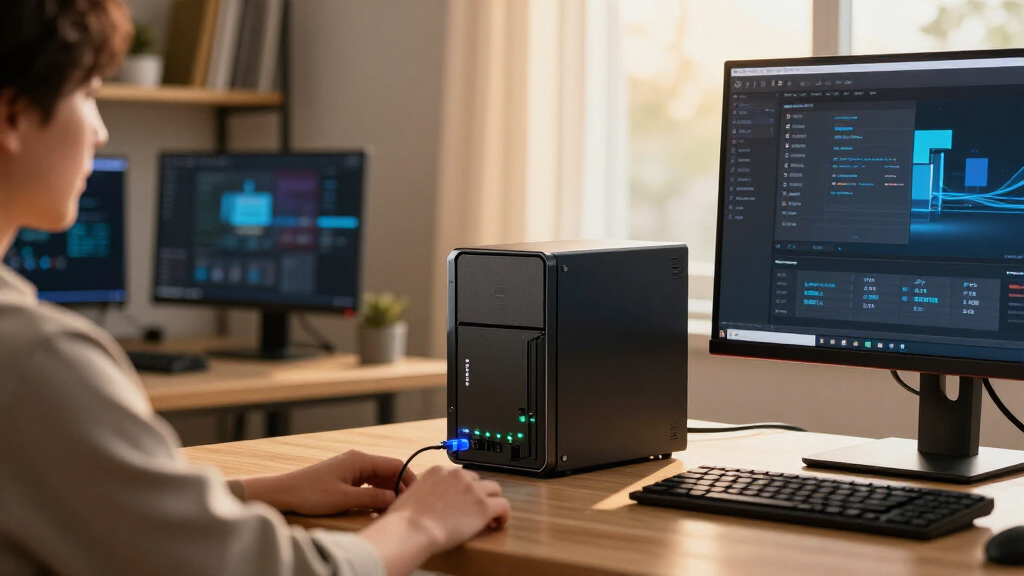
I ranked these mini PCs for virtualization by how well their listed hardware supports real lab workloads: CPU capacity for concurrent guests, memory configuration and upgrade options, storage capacity, and network connectivity. I also weighed form factor and likely setup effort, since a barebone workstation asks more of the buyer than a configured mini PC. A large port count only improves a ranking when it serves a clear use, such as virtualized routing or storage traffic.
The order favors balanced systems that can run a useful mix of guests, then gives specialized models credit for their strongest role. The MS-01 Core i9 ranks highest for compute; the Qotom and R1 stand out for network-heavy builds; and value-oriented choices are judged by the capability included, not by price or ratings. Listed specs do not establish exact power draw, sustained thermals, memory limits, or hypervisor compatibility, so buyers should confirm those details for their intended configuration.
Factors to Consider When Choosing Mini Pc Server For Virtualization
Choosing a virtualization host is less about the largest headline CPU and more about matching the system to the guests you plan to run. These factors help narrow the field before you commit to a platform or configuration.Estimate memory per guest before choosing a CPU
Memory often limits a small virtualization host before its processor does. Add the memory needs of the guests you expect to keep running at once, then reserve capacity for the host and unexpected demand. A handful of lightweight services can fit comfortably on a modest system, while several desktop guests or memory-heavy databases need much more room. Check whether memory is replaceable, soldered, or absent from a barebone listing; capacity on the spec sheet does not tell you what you can add later. Avoid allocating nearly all installed RAM to guests, since a crowded host can become unreliable even when CPU use stays low.
Match network ports to the traffic pattern
Multiple fast ports are useful when guests need separate networks, a dedicated storage link, or high-throughput routing between segments. For a general-purpose lab connected to ordinary home networking, extra 10GbE or SFP+ ports may sit unused and add setup complexity. Think through VLANs, switch compatibility, transceivers, and cabling before paying for interfaces. A host with dual 2.5GbE can be a more practical fit for a modest lab than a system whose main advantage is several higher-speed ports. Also check whether the hypervisor supports the network adapters and driver features your design needs.
Plan storage for VM images and backups
Virtual disks, snapshots, and local backups can consume space faster than the operating system suggests. Separate the capacity needed for active guests from the space you want for snapshots, templates, and recovery copies. A larger included SSD is convenient, but a barebone system can make more sense if you already have compatible drives or want to choose storage yourself. Look up the number and type of drive slots before assuming you can expand later. Keep a backup outside the host as well; snapshots on the same machine do not protect against drive failure or accidental deletion.
Balance sustained performance, heat, and noise
A processor that handles short bursts well may behave differently during hours of concurrent guest activity. Small chassis have limited room for cooling, so sustained workloads make cooling design and placement relevant. A compact server hidden in a cabinet may run warmer than one placed in open air, and fan noise can matter in a shared room. Decide whether your guests need continuous high CPU capacity or mostly wait for occasional tasks. For always-on services, a lower-demand platform may suit the workload better than buying the most powerful chip available.
Check the exact configuration and upgrade path
Product names can cover materially different packages, including systems with different SSD capacities and barebone versions that arrive without memory or storage. Verify the precise processor, RAM amount and type, included drive, power supply, and operating system before comparing listings. Confirm maximum memory and supported drive formats from the manufacturer when those details affect your plan. If you are new to hypervisors, a ready-to-run configuration can reduce initial setup work, while experienced builders may prefer choosing each component. Leave room in your plan for compatible memory and storage rather than treating a barebone unit as a complete server.
Frequently Asked Questions
How much RAM do I need to run several virtual machines on a mini PC?
Start with the memory assigned to each guest you expect to run at the same time, then add space for the host and a safety margin. Lightweight Linux services may need little individually, while desktop operating systems and databases can use several gigabytes each. The systems in this roundup range from fixed or LPDDR configurations to models with listed upgrade potential, so the amount you can add varies. Check the exact model’s memory limit and whether its RAM is replaceable before buying. If your planned guest total leaves the host almost no free memory, choose a different configuration or run fewer guests concurrently.
Do I need 10GbE for a home virtualization server?
Most small labs can start with gigabit or 2.5GbE if guests mainly serve local apps and internet traffic. Faster links become useful when you move large VM images, use network storage heavily, or separate several high-throughput networks. The Qotom Q10932H6 and R1 are the network-focused options here, but their ports only help if your switch, cabling, and storage can use them. Consider whether you need SFP+ specifically, since optics or direct-attach cables may be part of the setup. Buying more bandwidth than the rest of your network can deliver will not make guest workloads faster by itself.
Is a barebone mini PC a good choice for a first virtualization host?
It can be a good choice if you are comfortable selecting compatible memory and storage and checking the finished system before installing a hypervisor. A configured model reduces component decisions and makes it easier to get started, which can matter more than custom part selection for a first lab. Barebone listings such as the MS-02 Ultra and MS-01 Core i5 leave the final configuration to you, so factor in the parts and setup effort. Confirm the supported memory type, drive interface, and included accessories before ordering. Either route still calls for checking hypervisor and network adapter support against your intended software.
Should I choose the fastest processor or a mini PC with more network ports?
Choose based on the main bottleneck in your planned lab. More CPU headroom suits several compute-heavy guests, software builds, or services that work in parallel; more network interfaces suit virtual routers, firewalls, and segmented networks. The MS-01 Core i9 is the compute-led pick in this group, while the Qotom and R1 emphasize connectivity. Neither advantage compensates for too little memory or storage, so size those resources first. If your lab mixes both workloads, compare the complete configuration and consider whether a switch can provide the network separation you need.
How should I compare the two GMKtec NucBox G10 listings?
Both listed G10 configurations use a Ryzen 5 3500U and 16GB of RAM, while the included SSD capacity differs: one listing specifies 1TB and the other 512GB. That changes how many VM images and local files fit without adding storage, but it does not change the processor platform. Check the exact listing for RAM and drive upgrade details, ports, and included accessories rather than relying on the shared product name. If you keep VM storage on a separate NAS, the smaller drive may be enough for the host and a few local guests. For a self-contained lab, the larger included drive gives more room before you need to expand.
Conclusion
For the strongest compute-led general recommendation, I’d choose the MINISFORUM MS-01 Core i9-13900H, especially for a lab running several demanding guests. The best network-focused picks are the Qotom Q10932H6 for its mix of 10GbE and 2.5GbE ports, or the R1 when dual SFP+ suits your network design. For a more balanced compact system, the GMKtec NucBox M8 is worth a close look, while the two G10 configurations offer a straightforward starting point for lighter workloads. Beginners should favor a complete, clearly specified configuration and confirm hypervisor support before setup; experienced builders can consider the barebone MS-01 Core i5 or MS-02 Ultra. Match RAM and storage to the guests you will actually run, then choose the CPU or networking advantage that serves your lab.
Fall Picks
fall essentials
As an affiliate, we earn on qualifying purchases.