When a hard drive leaves your organization — whether it’s being retired, resold, or recycled — software wiping isn’t always enough. Degaussers solve this by blasting the drive with a magnetic field that permanently scrambles the platters, making data recovery physically impossible rather than just unlikely. But choosing the right one comes down to a few honest tradeoffs: raw gauss strength versus cost, manual operation versus automated throughput, and whether you need audit-ready compliance documentation or just guaranteed erasure. In this roundup, I compare five degaussers that cover very different needs. The DataGauss MAX-LG stands out as the most complete package with 10,000 gauss power and built-in reporting tools, the DataGauss LG is the strongest option if you need compliance documentation without paying for the flagship, and the budget-friendly Verity Systems V91 HDD Max makes the most sense for low-volume office use where manual operation isn’t a bottleneck.

Get privacy and security gear delivered free with Prime
- Fast, free delivery on millions of items
- Prime Video, Amazon Music and more included
- Member-only deals all year
Key Takeaways
- The DataGauss MAX-LG leads with 10,000 gauss force plus a barcode scanner and built-in auditor, making it the strongest all-around choice for compliance-driven organizations.
- The V91 HDD Max costs the least to operate for small volumes but caps out at 2TB drives and requires a 208-220VAC power supply.
- Both DataGauss units process roughly 70 drives per hour, more than triple the V91’s manual throughput of 20 drives per hour.
- Degaussing destroys the drive permanently — plan to buy replacement drives if you intended to reuse or resell hardware.
- Older listings like the V660 HDD EVO and VS-V91HD lack published specs, which makes them risky buys compared with fully documented current models.
| DataGauss MAX-LG Hard Drive and Backup Tape Degausser |  | Best Overall | Magnetic Force: 10,000 gauss | Erasure Time: Approximately 45 seconds per cycle | Throughput: Up to 70 hard drives or backup tapes per hour | VIEW ON AMAZON | See Our Full Breakdown |
| DataGauss LG Hard Drive Degausser |  | Best for Compliance Reporting | Degaussing Force: 9,000 gauss | Erase Time: 45 seconds | Throughput: 70 hard drives/cartridges per hour | VIEW ON AMAZON | See Our Full Breakdown |
| Verity Systems V91 HDD Max Manual Hard Drive Degausser |  | Best Value for Low Volume | Degaussing Force: 7,000 gauss | Erasure Time: As little as 12 seconds per drive or tape | Throughput: 20 hard drives or 40 tapes per hour | VIEW ON AMAZON | See Our Full Breakdown |
| V660 HDD EVO Hard Drive Degausser with Infrared Remote Control |  | Best Compact Desktop Option (With Caveats) | Manufacturer: Verity | Type: Desktop hard drive degausser | Control: Infrared remote control | VIEW ON AMAZON | See Our Full Breakdown |
| Verity Systems VS-V91HD Degausser | 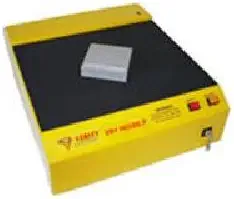 | Listing to Approach With Caution | Manufacturer: Verity Systems | Product Family: V91 series (inferred from model name) | Degaussing Force: Not published | VIEW ON AMAZON | See Our Full Breakdown |
| data destruction degausser | Erasure Time | Degaussing Force | Throughput |
|---|---|---|---|
| DataGauss MAX-LG Hard Drive an | Approximately 45 seconds per cycle | — | Up to 70 hard drives or backup tapes per hour |
| DataGauss LG Hard Drive Degaus | — | 9,000 gauss | 70 hard drives/cartridges per hour |
| Verity Systems V91 HDD Max Man | As little as 12 seconds per drive or tape | 7,000 gauss | 20 hard drives or 40 tapes per hour |
| V660 HDD EVO Hard Drive Degaus | Not published by seller | Not published by seller | — |
| Verity Systems VS-V91HD Degaus | Not published | Not published | — |
More Details on Our Top Picks
DataGauss MAX-LG Hard Drive and Backup Tape Degausser
The DataGauss MAX-LG earns the top spot because it combines the strongest magnetic field in this lineup with the most complete documentation workflow. Its 10,000-gauss field exceeds the DataGauss LG by a full 1,000 gauss, and it extends media support beyond that model to include SCSI drives alongside SATA, IDE, and Fibre Channel. Like the LG, it processes up to 70 drives or tapes per hour at roughly 45 seconds per cycle — more than three times the throughput of the manual V91 HDD Max.
What separates it from every other pick here is the included barcode scanner and built-in Data Destruction Auditor, which together let you log each drive’s serial number, tie it to an erasure record, and produce audit-ready reports. For an IT department answering to auditors, that paper trail is often worth more than the extra gauss. Compared with the LG’s separate software install on a Windows PC, the MAX-LG’s integrated approach reduces the friction of chain-of-custody documentation.
The tradeoffs are real, though: erased drives cannot be reused, and you’ll need to supply your own printer and laptop for reporting, which adds to the true cost of deployment. If your volumes are modest and compliance documentation isn’t required, the V91 HDD Max handles the same core erasure job for less.
Pros:- Strongest field in this comparison at 10,000 gauss
- Barcode scanner and built-in auditor produce audit-ready erasure reports
- Handles SATA, IDE, SCSI, and Fibre Channel drives plus backup tapes
- Self-calibrating with cycle monitoring and interruption alerts
Cons:- Erased drives are permanently destroyed and cannot be reused
- Printer and laptop for reporting are not included
- Heavier investment than manual desktop alternatives
Best for: IT departments and data centers that need high-volume, documented, audit-ready drive destruction
Not ideal for: Small offices with occasional drives to wipe, or anyone expecting to reuse or resell erased hardware
- Magnetic Force:10,000 gauss
- Erasure Time:Approximately 45 seconds per cycle
- Throughput:Up to 70 hard drives or backup tapes per hour
- Drive Interfaces:SATA, IDE, SCSI, Fibre Channel
- Media Supported:Standard hard drives and backup tapes
- Included Accessories:Barcode scanner and Data Destruction Auditor
- Additional Requirements:Printer and laptop not included
- Drive Reuse:Not possible after erasure
Our verdict“The most complete degausser here — maximum erasure power paired with the compliance tooling most organizations actually need.”
DataGauss LG Hard Drive Degausser
The DataGauss LG sits in a smart middle position: it delivers the automation and software tooling of the MAX-LG at a lower tier of raw power. Its 9,000-gauss field still erases high-coercivity media in about 45 seconds, and its 70-drive-per-hour throughput matches the flagship. Where it trails is media breadth — SCSI support is absent — and the reporting workflow runs through Data Destruction Auditor software installed on a separate Windows PC via USB 2.0, rather than the MAX-LG’s more integrated barcode-driven approach.
For buyers whose priority is verifiable, exportable compliance records, this model stands out. The bundled software documents each erasure and generates reports suitable for GDPR, HIPAA, and similar frameworks, something neither Verity manual unit offers at all. The self-calibrating design also means erasure consistency doesn’t depend on operator technique the way the V91’s manual drawer does.
The main drawback is practical: at 49 pounds, this is not a unit you move between sites, so mobile IT contractors should look elsewhere. And the Windows-only software requirement limits shops running mixed or Mac environments. If you need the barcode scanner workflow and SCSI support, step up to the MAX-LG; if you just need dead drives and no paperwork, the V91 costs less to own.
Pros:- 9,000-gauss automatic erasure in about 45 seconds per cycle
- Bundled Data Destruction Auditor software verifies, documents, and exports reports
- Self-calibrating for consistent, guaranteed erasure
- Broad compatibility across drive sizes and LTO 1-8, DLT, SDLT, and AIT tapes
Cons:- Heavy at 49 pounds, limiting portability
- Windows-only software compatibility
- No SCSI drive support unlike the MAX-LG
Best for: Organizations needing automated, high-throughput erasure with documented compliance reporting on Windows systems
Not ideal for: Mac or Linux-only environments, or teams that need to move the unit between locations
- Degaussing Force:9,000 gauss
- Erase Time:45 seconds
- Throughput:70 hard drives/cartridges per hour
- Compatible Drive Sizes:3.5″, 2.5″, 1.8″
- Supported Interfaces:IDE, SATA, Fibre Channel
- Software Platform:Windows 10/8/7/Vista, XP SP3 via USB 2.0
- Tape Formats:LTO 1-8, DLT, SDLT, AIT, and more
- Weight:49 lbs
Our verdict“The strongest choice when documented, auditable erasure matters more than maximum magnetic force or portability.”
Verity Systems V91 HDD Max Manual Hard Drive Degausser
Not every buyer needs 70 drives an hour. The V91 HDD Max is built for the office that degausses a handful of retired drives each month, and it delivers guaranteed complete erasure in as little as 12 seconds — the fastest cycle time in this comparison — using a 7,000-gauss field. It handles 3.5″, 2.5″, and 1.8″ drives across IDE, SATA, and Fibre Channel, plus an impressively long list of tape formats from LTO 1-8 through DDS and 8mm.
Compared with the DataGauss units, the differences come down to workflow rather than erasure quality. This is a manual drawer-style operation: you insert the media, run the cycle, and swap it out yourself, capping throughput around 20 drives or 40 tapes per hour. There’s also no software, no reports, no barcode scanning — if an auditor asks for evidence of destruction, you’ll be building that record by hand. In exchange, you get a quieter, desk-friendly machine that costs far less than the automated alternatives.
Two constraints deserve attention before buying. The 2TB maximum drive capacity rules out most modern high-capacity drives, and the 208-220VAC power requirement means standard 120V North American outlets won’t work without electrical work. For small media volumes on a proper power circuit, though, this is the most sensible entry point in the lineup.
Pros:- Erases drives and tapes in as little as 12 seconds
- Handles a wide range of hard drive and tape formats including LTO 1-8
- Quiet, desk-friendly operation suitable for office environments
- Most cost-effective route to guaranteed magnetic media destruction
Cons:- Manual operation caps throughput at 20 drives per hour
- Requires a 208-220VAC/60Hz power supply
- Maximum drive capacity of 2TB excludes most modern high-capacity drives
Best for: Small offices and low-volume operators needing budget-friendly, secure destruction of older drives and tapes
Not ideal for: Organizations with modern drives over 2TB, high-volume workflows, or compliance reporting requirements
- Degaussing Force:7,000 gauss
- Erasure Time:As little as 12 seconds per drive or tape
- Throughput:20 hard drives or 40 tapes per hour
- Compatible Drive Sizes:3.5″, 2.5″, 1.8″
- Drive Interfaces:IDE, SATA, Fibre Channel
- Max Drive Capacity:2 TB
- Power Requirement:208-220VAC/60Hz
- Erasure Depth:-75dB on 1500 Oe tape, -90dB on 750 Oe tape
- Tape Formats:DLT, SDLT, LTO1-8, 3480/3490/3590, 9840, AIT1/2, DDS 1-5, 8mm, and more
Our verdict“The smart budget pick when volumes are low and you can live without automation, compliance software, and support for drives above 2TB.”
V660 HDD EVO Hard Drive Degausser with Infrared Remote Control
The V660 HDD EVO is the wildcard of this group. On paper it offers an appealing combination: high-powered degaussing in a compact desktop chassis, operated via an infrared remote control that lets you trigger cycles without touching the unit — a small but genuine convenience when you’re feeding media continuously. From the same manufacturer as the better-documented V91, it targets the same general buyer: an office needing occasional, secure drive erasure without an industrial machine.
My hesitation is transparency. This product was first listed in 2007, and the available information is thin — no published gauss rating, no erasure depth figures, no throughput claims, and no statement of which drive capacities it supports. Compare that with the V91 HDD Max, which documents a 7,000-gauss field, a 2TB capacity ceiling, and precise erasure depths, and the information gap becomes a purchasing risk. When your entire purpose is provable data destruction, buying a machine whose erasure performance you can’t verify against specifications is a gamble I’d only take at a steep discount from a trusted seller.
Compared with the DataGauss models, it also clearly lacks any compliance reporting capability. If you can confirm its specs with the seller, the remote operation and small footprint could suit a cramped workspace — but for most buyers, the V91 is the safer manual choice at a similar position in the market.
Pros:- Compact desktop design fits tight workspaces
- Infrared remote control allows convenient hands-off cycle operation
- High-powered degaussing from an established manufacturer (Verity)
Cons:- Product dating back to 2007 with minimal published specifications
- No stated gauss rating, throughput, or maximum drive capacity
- No compliance documentation or reporting capability
Best for: Buyers who find it at a low price, can verify specifications with the seller, and want a compact remote-operated desktop unit
Not ideal for: Anyone who needs documented performance specs, modern high-capacity drive support, or compliance reporting
- Manufacturer:Verity
- Type:Desktop hard drive degausser
- Control:Infrared remote control
- Date First Available:September 11, 2007
- Degaussing Force:Not published by seller
- Erasure Time:Not published by seller
Our verdict“A potentially serviceable compact unit undermined by a near-total absence of verifiable specs — buy only if you can confirm performance first.”
Verity Systems VS-V91HD Degausser
I include the VS-V91HD in this comparison because it appears in searches for Verity degaussers and buyers deserve a straight answer about it: the current listing publishes no specifications whatsoever — no gauss rating, no cycle time, no media compatibility, no power requirements. That makes it impossible to responsibly compare against any other model here, and I won’t invent performance claims the seller hasn’t made.
What can be said is contextual. The naming suggests it belongs to Verity’s V91 family, so it plausibly shares lineage with the V91 HDD Max — meaning it may be an earlier or regional variant of that 7,000-gauss manual platform. If that’s the case, it would inherit the same strengths (fast cycles, broad tape support, desk-friendly operation) and the same limits (manual throughput, no software). But plausible isn’t purchasable confidence, and against the fully documented V91 HDD Max sitting elsewhere in this roundup, there’s no scenario where I’d recommend the undocumented variant at a similar price.
My practical advice: if you’re considering this unit, contact the seller for a full spec sheet — gauss strength, supported drive capacities, and erasure depth — before committing. If those answers don’t materialize, the V91 HDD Max or the DataGauss LG give you verifiable performance for the same job. This listing serves mainly as a reminder that in data destruction, undocumented equipment is a compliance risk in itself.
Pros:- Comes from Verity, a manufacturer with a track record in degaussing equipment
- Likely shares design lineage with the well-regarded V91 platform
- May offer value if specs are confirmed and the price is right
Cons:- No published specifications of any kind in the listing
- Cannot be verified against compliance or erasure standards
- Fully documented alternatives exist at comparable positions in the market
Best for: Buyers who verify complete specifications directly with the seller before purchase and confirm a meaningful price advantage
Not ideal for: Practically everyone else — no published specs means no verifiable erasure guarantee
- Manufacturer:Verity Systems
- Product Family:V91 series (inferred from model name)
- Degaussing Force:Not published
- Erasure Time:Not published
- Media Compatibility:Not published
- Power Requirement:Not published
Our verdict“Skip unless the seller provides a complete spec sheet — undocumented destruction equipment defeats the purpose of buying it.”

How We Picked
Because degaussers are specialized, high-stakes equipment, I judged each model against the criteria that actually determine whether a purchase succeeds or fails. The first filter was magnetic field strength — a degausser needs enough gauss to fully saturate modern high-coercivity drives, and anything under-documented here is a red flag for guaranteed erasure. The second was throughput and workflow: manual drawer-style units cost less but cap your daily volume, while automated conveyor-style machines triple your output. Third, I weighed compliance tooling, since organizations subject to GDPR, HIPAA, or NIST guidelines need documented, verifiable erasure records — not just a dead drive. Finally, I considered documentation quality itself. Two of the five products I examined publish almost no technical specifications, and I’ve treated that transparency gap as a genuine buying consideration rather than ignoring it. Where specs were available, I compared erasure depth, media compatibility, and power requirements side by side to surface which model fits which operator.
| data destruction degausser | Erasure Time |
|---|---|
| DataGauss MAX-LG Hard Drive an | Approximately 45 seconds per cycle |
| DataGauss LG Hard Drive Degaus | — |
| Verity Systems V91 HDD Max Man | As little as 12 seconds per drive or tape |
| V660 HDD EVO Hard Drive Degaus | Not published by seller |
| Verity Systems VS-V91HD Degaus | Not published |
Factors to Consider When Choosing Data Destruction Degausser
Choosing a degausser comes down to four questions: how much media you process, how strong the field needs to be, whether you must document erasure, and what your facility can support electrically. Here’s how I’d work through each one.Gauss Strength and Erasure Depth
Gauss rating determines whether a unit can fully saturate high-coercivity media. Older or lower-coercivity tapes erase easily, but modern hard drives need serious field strength — the 7,000-gauss V91 handles drives up to 2TB, while the 9,000- and 10,000-gauss DataGauss units provide margin for tougher media. Also look at erasure depth in decibels: deeper negative dB values mean less residual signal, which is what data recovery labs would attack. A seller who publishes these figures is telling you the erasure is verified; one who doesn’t is asking you to trust marketing.
Throughput and Automation
Manual drawer-style degaussers like the V91 HDD Max process around 20 drives per hour because an operator handles every cycle. Automated units like the DataGauss LG and MAX-LG push that to roughly 70 per hour with less labor. My rule of thumb: if you’re destroying fewer than a few drives a week, manual is fine and cheaper. If retired media accumulates faster than you can feed a drawer, automation pays for itself in labor alone.
Compliance Documentation
GDPR, HIPAA, NIST 800-88, and similar frameworks typically require evidence of destruction, not just destruction. That’s the gap between Verity’s manual units and the DataGauss models: the LG and MAX-LG generate audit-ready erasure reports tied to individual drives via software and barcode scanning. If your organization faces audits, factor this in early — retrofitting a paper trail onto a manual workflow is miserable.
Power, Capacity, and Physical Constraints
Check your electrical situation before ordering. The V91 requires a 208-220VAC circuit, which many standard North American offices don’t have wired at the desk. Also verify maximum supported drive capacity against your hardware fleet — a 2TB ceiling excludes most current drives. Finally, weigh the machine: a 49-pound DataGauss LG stays put, so plan a permanent destruction station rather than a mobile kit.
Frequently Asked Questions
Does degaussing completely destroy data on a hard drive?
Yes — for magnetic media, degaussing is one of the most definitive destruction methods available. A sufficiently strong magnetic field scrambles the magnetic domains on the platters so thoroughly that the data cannot be reconstructed, even by specialized recovery labs. This is why degaussing appears in standards like NIST 800-88 as an accepted sanitization method. The key qualifier is sufficiently strong: the field must exceed the coercivity of the media, which is why published gauss ratings and erasure depths matter so much when comparing units. Note that this applies only to magnetic storage — SSDs and flash media store data electrically and cannot be degaussed at all, so they require shredding or cryptographic erasure instead.
Can a degaussed hard drive be reused?
No. Degaussing destroys not only your data but the drive’s servo tracks and factory calibration data, rendering the drive permanently inoperable. Even a blank drive can’t be reformatted and redeployed afterward. This is the central tradeoff of the method: you get maximum data security in exchange for losing any residual hardware value. If your goal is to wipe drives for reuse or resale, software-based sanitization is the appropriate tool instead. If your goal is guaranteed destruction of retired media, degaussing followed by physical shredding is the gold-standard chain.
How important is compliance reporting software when buying a degausser?
It depends entirely on your regulatory environment, but for many buyers it’s the deciding feature. If your organization is subject to GDPR, HIPAA, PCI-DSS, or similar frameworks, auditors generally want documented proof that specific media was destroyed, with serial numbers, dates, and method. The DataGauss LG and MAX-LG handle this automatically through Data Destruction Auditor software and barcode scanning. Without that capability — as with the V91 or V660 — you’ll need to build and maintain destruction logs manually, which is workable for small volumes but becomes a liability at scale.
What’s the difference between a manual and an automatic degausser?
A manual degausser like the V91 HDD Max uses a drawer you load by hand for each cycle, which caps throughput around 20 drives per hour and ties up an operator throughout. An automatic unit like the DataGauss LG or MAX-LG handles media feeding internally, reaching roughly 70 drives per hour with less labor per drive. The practical difference isn’t erasure quality — both can deliver complete, verified erasure — it’s throughput, operator fatigue, and consistency. Automated units also tend to be self-calibrating, so erasure doesn’t depend on operator technique. Low-volume offices save money going manual; anything above a few drives weekly justifies automation.
Why do some degaussers list a maximum drive capacity like 2TB?
Maximum capacity ratings reflect how drive construction has changed over time. Higher-capacity drives often use denser platters and higher-coercivity magnetic materials, which require a stronger degaussing field to fully saturate. A unit rated for 2TB drives — like the V91 HDD Max — was engineered for the media common when it was designed, and modern 8TB-plus drives may not be fully erased by its 7,000-gauss field. The DataGauss units, with 9,000 and 10,000 gauss, provide more headroom for current-generation media. My advice: buy for the drives you’ll actually destroy over the machine’s lifetime, not just the ones sitting in your retirement bin today.
Conclusion
After comparing all five, my recommendations split cleanly by buyer type. If you run an IT department or data center with regular drive retirements and audit obligations, the DataGauss MAX-LG is the clear choice — top-tier erasure power, 70 drives per hour, and barcode-driven compliance reporting in one package. Compliance-focused teams on a tighter budget should choose the DataGauss LG, which keeps the automation and auditing software while trimming a thousand gauss and SCSI support. For the small office destroying a few older drives or tapes per month, the V91 HDD Max delivers guaranteed 12-second erasure at the lowest cost — provided you have 220V power and drives under 2TB. The V660 HDD EVO only makes sense if you verify its specs with a seller and get it cheap, and I’d tell everyone to skip the VS-V91HD unless documentation appears. Whatever you choose, remember the method’s one iron rule: degaussed drives are dead drives — plan your hardware lifecycle accordingly.
Halloween Picks
halloween
As an affiliate, we earn on qualifying purchases.