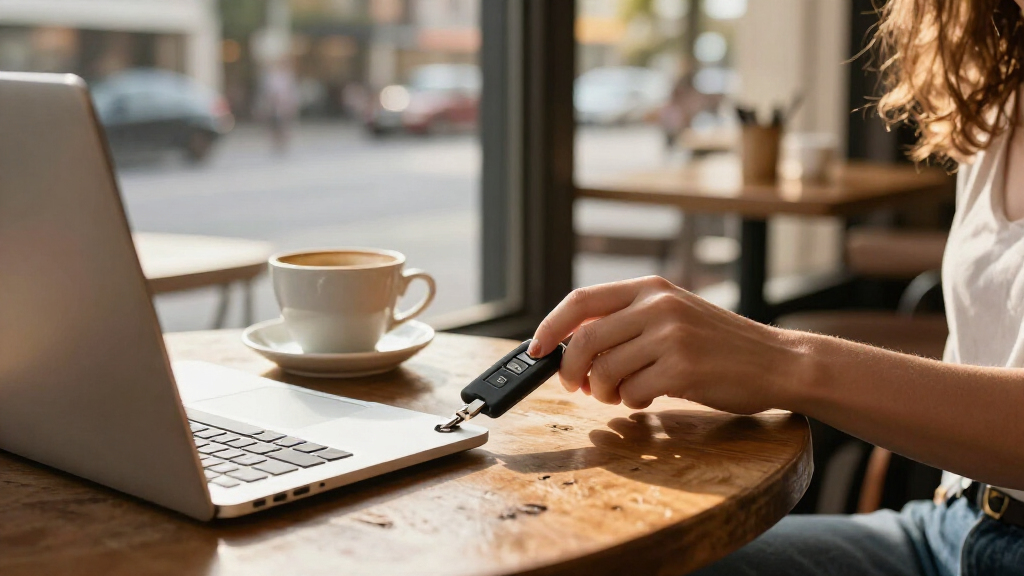
Choosing the right portable password manager hardware keys means balancing robust cryptographic security with the practicality of offline access. My top recommendation for most users is the Yubico Security Key NFC, praised for its universal compatibility and seamless integration with major platforms. For those requiring physical storage without cloud dependency, the Password Pocket offers a durable, analog solution that eliminates digital attack vectors entirely. The primary tradeoff in this category lies between active electronic keys that require power and connectivity versus passive devices that rely on manual entry or mechanical decryption. Continue reading to explore how these distinct technologies serve different security profiles and usage scenarios.

Get privacy and security gear delivered free with Prime
- Fast, free delivery on millions of items
- Prime Video, Amazon Music and more included
- Member-only deals all year
Key Takeaways
- Electronic FIDO2 keys offer superior speed and phishing resistance but require compatible devices and drivers.
- Analog password storage devices provide immunity to malware and hacking but lack automated autofill convenience.
- USB-C connectivity is becoming the standard, making older USB-A only keys less versatile for modern laptops and phones.
- Physical durability ratings matter significantly for keys carried in pockets, with metal-cased models outlasting plastic competitors.
- Hybrid solutions that combine NFC and USB interfaces offer the best balance for users switching between desktops and mobile devices.
| Thetis Nano-A FIDO2 USB-A Security Key |  | Best for Built-In Passkey and TOTP Options | Interface: USB 2.0 Type-A | Supported standards: FIDO2, WebAuthn, CTAP2, OATH-TOTP | FIDO2 passkey slots: 200 | VIEW LATEST PRICE | See Our Full Breakdown |
| Yubico Security Key NFC, USB-A and NFC |  | Best for Straightforward USB-A and NFC Login | Authentication protocols: FIDO2/WebAuthn, FIDO U2F | Connectivity: USB-A, NFC | Passkey slots: Up to 100 | VIEW LATEST PRICE | See Our Full Breakdown |
| Password Keeper Stick with Type-C Port, Password Storage Device, Offline Password Manager, Portable Password Organizer for Accounts, Banking & Login Information |  | Best for Offline Password Storage | Hardware interface: USB Type-C | Ports: 1 | Operating system: Windows | VIEW LATEST PRICE | See Our Full Breakdown |
| SecuX PUFido USB-C Security Key with PUF Technology |  | Best for Hardware-Rooted USB-C Security | Interface: USB Type-C | Certifications: FIDO2, U2F | Technology: PUF | VIEW LATEST PRICE | See Our Full Breakdown |
| Kensington VeriMark NFC+ USB-C Security Key |  | Best for USB-C and NFC Flexibility | Connectivity: USB-C, NFC | Authentication standards: FIDO2 CTAP 2.1, backward compatible with CTAP 2 | Compatibility: Windows, macOS, iOS, Android, ChromeOS | VIEW LATEST PRICE | See Our Full Breakdown |
| Thetis Pro for Business FIDO2 Security Key L1 MFA & NFC Passkey – Dual USB‑A & USB‑C |  | Best for Mixed-Port Devices | Connectivity: USB-A, USB-C, NFC | Authentication standards: FIDO2 Level 1, U2F | Additional authentication: TOTP/HOTP | VIEW LATEST PRICE | See Our Full Breakdown |
| PasswordPocket and ATLKey Offline Identity Security Bundle |  | Best Offline Storage Bundle | Included items: ATLKey security key and PasswordPocket offline password manager | Authentication: FIDO2 | Connectivity: USB Type-C | VIEW LATEST PRICE | See Our Full Breakdown |
| Thetis Nano-C FIDO2 Security Key (USB-C) |  | Best Compact Passkey Key | Interface: USB Type-C | Standards: FIDO, FIDO2, WebAuthn, CTAP2 | Passkey capacity: 200 FIDO2 passkey slots | VIEW LATEST PRICE | See Our Full Breakdown |
| RecZone Password Safe Electronic Storage Organizer with Stylus |  | Best Screen-Based Offline Vault | Capacity: 400 accounts | Display: Backlit LCD | Power source: 3 AAA batteries | VIEW LATEST PRICE | See Our Full Breakdown |
| Magnetic Password Keeper – Credit Card Size Pocket Journal |  | Best Paper Backup for Wallet Carry | Format: Credit-card-size pocket journal | Pages: 21 | Entries per page: 3 | VIEW LATEST PRICE | See Our Full Breakdown |
| Atlancube PasswordPocket Offline Hardware Password Keeper with Bluetooth Auto-Fill |  | Best for Offline Mobile Auto-Fill | Brand: Atlancube | Model: CP001 | Storage capacity: 1,000 logins | VIEW LATEST PRICE | See Our Full Breakdown |
| portable password manager hardware key | Dimensions |
|---|---|
| Thetis Nano-A FIDO2 USB-A Secu | 0.25 × 0.74 × 0.25 in |
| Yubico Security Key NFC | — |
| Password Keeper Stick with Typ | — |
| SecuX PUFido USB-C Security Ke | — |
| Kensington VeriMark NFC+ USB-C | 2.01 × 0.63 × 0.2 in |
| Thetis Pro for Business FIDO2 | 2.9 × 0.72 × 0.5 inches |
| PasswordPocket and ATLKey Offl | — |
| Thetis Nano-C FIDO2 Security K | 0.3 × 0.6 × 0.3 inches |
| RecZone Password Safe Electron | 3.5 × 4.88 × 1 inch |
| Magnetic Password Keeper | 3.9 × 2.9 × 0.12 inches |
| Atlancube PasswordPocket Offli | — |
More Details on Our Top Picks
Thetis Nano-A FIDO2 USB-A Security Key
The Thetis Nano-A stands out for pairing FIDO2 passkeys with 50 OATH-TOTP slots, giving it more authentication flexibility than the Yubico Security Key NFC, which does not support one-time passwords. Its 200 passkey slots also leave room for many compatible accounts, while the small body is easy to carry on a keychain or leave in a USB-A port. This is a hardware authentication key, not an offline vault for storing arbitrary passwords: passkey and TOTP use depends on service compatibility and setup. The tradeoff is its USB-A-only connection, which can be awkward with newer phones and laptops unless you have an adapter. I’d choose it over the SecuX PUFido when TOTP capacity matters more than a USB-C connector.
Pros:- Combines FIDO2 passkeys with 50 OATH-TOTP slots
- Stores up to 200 FIDO2 passkeys
- Compact, lightweight design suited to a keychain or plugged-in use
- Listed compatibility spans Windows, macOS, iOS, Android, Linux, and Chrome OS
Cons:- USB-A connection may require an adapter for newer devices
- Passkey and TOTP support depends on compatible services and setup
Best for: People with USB-A devices who want one compact key for compatible passkey logins and OATH-TOTP accounts.
Not ideal for: USB-C-only laptop and phone owners, or anyone who needs a device that stores and displays ordinary passwords offline.
- Interface:USB 2.0 Type-A
- Supported standards:FIDO2, WebAuthn, CTAP2, OATH-TOTP
- FIDO2 passkey slots:200
- OATH-TOTP slots:50
- Dimensions:0.25 × 0.74 × 0.25 in
- Weight:14.2 g
- Compatible operating systems:Windows, macOS, iOS, Android, Linux, Chrome OS
Our verdict“Choose the Nano-A if you want a compact USB-A key with both passkey and TOTP support, and skip it if your devices rely on USB-C.”
Yubico Security Key NFC, USB-A and NFC
The Yubico Security Key NFC is a focused pick for people who want phishing-resistant sign-in through either USB-A or NFC. NFC lets a compatible phone authenticate without a port connection, a practical advantage over the USB-A-only Thetis Nano-A. It supports FIDO2/WebAuthn and FIDO U2F, works without batteries or an internet connection, and has water- and crush-resistant construction for everyday carry. Its simpler feature set is also its limitation: unlike the Nano-A, it has no OATH-TOTP support, and it does not work with the Yubico Authenticator app. That makes it less suited to buyers seeking several authentication methods on one device. I’d favor it when dependable, simple hardware-key sign-in matters more than extra credential functions.
Pros:- Provides both USB-A and NFC authentication
- Supports FIDO2/WebAuthn and FIDO U2F
- Requires no batteries or internet connection
- Water-resistant and crush-resistant construction
Cons:- Does not support one-time passwords or OATH-TOTP
- Not compatible with the Yubico Authenticator app
- USB-C devices may need an adapter
Best for: People who use compatible USB-A computers and NFC-capable phones and want a simple, battery-free FIDO security key.
Not ideal for: Buyers who need OATH-TOTP codes, Yubico Authenticator support, or a USB-C connector without an adapter.
- Authentication protocols:FIDO2/WebAuthn, FIDO U2F
- Connectivity:USB-A, NFC
- Passkey slots:Up to 100
- Compatibility:Desktop, laptop, mobile, and tablet
- Water resistance:Water resistant
- Crush resistance:Crush resistant
- Power:No batteries required
Our verdict“Pick the Yubico Security Key NFC for uncomplicated USB-A and phone-based NFC sign-in, but choose the Thetis Nano-A if TOTP support is a priority.”
Password Keeper Stick with Type-C Port, Password Storage Device, Offline Password Manager, Portable Password Organizer for Accounts, Banking & Login Information
The Password Keeper Stick differs from the FIDO keys in this roundup: it is designed to hold usernames, passwords, and notes locally, rather than authenticate through FIDO2 passkeys. That may suit someone who wants an offline password store and prefers not to put credentials in a cloud-based manager. Its USB-C connection and built-in screen provide a way to view entries when connected through the included cable, while an optional device password adds a layer of access control. Compared with the Kensington VeriMark NFC+, however, it does not offer the listed FIDO2 and NFC sign-in functions, and its software compatibility is limited to Windows 11. The small display may also make a large collection cumbersome to manage. I’d treat it as a distinct offline-storage tool, not a substitute for a standards-based hardware security key.
Pros:- Stores usernames, passwords, and notes locally without cloud access
- USB-C connection supports portable access through the included cable
- Optional device password can restrict access
- Built-in screen lets users view stored entries
Cons:- Companion software is listed for Windows 11 rather than broad cross-platform use
- Small screen can make many entries cumbersome to manage
- Does not provide the listed FIDO2 security-key authentication offered by the SecuX PUFido
Best for: Windows 11 users who want a portable, local-only place to store ordinary passwords and notes rather than use passkey authentication.
Not ideal for: People seeking cross-platform FIDO2 sign-in, NFC authentication, or easy management of many credentials on a larger display.
- Hardware interface:USB Type-C
- Ports:1
- Operating system:Windows
- Minimum required operating system version:Windows 11
- Enclosure material:Plastic
- Color:Green
- Warranty:30 days
Our verdict“Choose this stick for local password storage on a Windows 11 setup, not for FIDO2 passkey authentication across devices.”
SecuX PUFido USB-C Security Key with PUF Technology
The SecuX PUFido is a compact USB-C choice for buyers who want FIDO2/U2F authentication with PUF technology as a hardware-rooted trust anchor. Its broad listed compatibility covers Windows, macOS, Linux, iOS, and Android, making it a more natural fit for mixed USB-C setups than the USB-A-only Thetis Nano-A. Unlike the Password Keeper Stick, it is a security key for compatible services, not a screen-based vault for ordinary stored passwords. There are fewer supplied details about credential capacity or extra authentication methods than there are for the Nano-A, so buyers who need documented TOTP slots may prefer Thetis. The main practical drawback is the need for a USB-C connection, and the maker recommends registering a backup key in case this one is lost.
Pros:- PUF technology provides a hardware-rooted trust anchor
- FIDO2 certification supports phishing-resistant authentication
- Compact USB-C form suits portable use
- Listed compatibility includes Windows, macOS, Linux, iOS, and Android
Cons:- Requires a USB-C connection
- A backup key is recommended in case the primary key is lost
- The supplied product details do not specify passkey or TOTP slot capacity
Best for: Cross-platform users with USB-C devices who want FIDO2/U2F sign-in and value PUF-based hardware security.
Not ideal for: People with USB-A-only devices, buyers who need specified TOTP capacity, or anyone unwilling to register and keep a backup key.
- Interface:USB Type-C
- Certifications:FIDO2, U2F
- Technology:PUF
- Compatible devices:Windows, macOS, Linux, iOS, Android
- Color:Black
- Unit count:1
- Warranty:1 year
Our verdict“Choose the PUFido for compact USB-C FIDO2/U2F authentication with PUF technology, and plan to register a backup key.”
Kensington VeriMark NFC+ USB-C Security Key
The Kensington VeriMark NFC+ combines USB-C with NFC, so a compatible phone can authenticate by tap while a laptop can use a direct connection. That flexibility gives it an advantage over the USB-C-only SecuX PUFido for people moving between phones and computers, and its listed support for Apple ID and passkeys broadens its everyday use. The slim, light, keychain-ready design is also easy to carry, while FIDO2 Level 2 certification and an IP68 rating speak to security and durability. The tradeoff is that advanced management may require optional Kensington software; the product details also do not list TOTP support or a passkey-slot count. Compared with the Yubico Security Key NFC, it swaps USB-A for USB-C while retaining NFC, making device-port compatibility the deciding factor.
Pros:- Supports both USB-C and NFC authentication
- Listed support includes passkeys and Apple ID
- FIDO2 Level 2 certified
- IP68-rated, slim design suited to keychain carry
Cons:- Advanced management features may require optional Kensington software
- USB-A devices may need an adapter
- The supplied details do not specify TOTP support or passkey-slot capacity
Best for: People with USB-C laptops and NFC-capable phones who want one portable FIDO2 key for compatible passkey and Apple ID sign-ins.
Not ideal for: USB-A-only device owners, buyers who need documented TOTP support, or users who want advanced management without optional software.
- Connectivity:USB-C, NFC
- Authentication standards:FIDO2 CTAP 2.1, backward compatible with CTAP 2
- Compatibility:Windows, macOS, iOS, Android, ChromeOS
- Certifications:FIDO2 Level 2, IP68
- Dimensions:2.01 × 0.63 × 0.2 in
- Weight:0.176 ounces
- Model:K64739WW
Our verdict“Choose the VeriMark NFC+ if you need both USB-C and NFC across phones and computers; pick the Yubico Security Key NFC if your setup centers on USB-A.”
Thetis Pro for Business FIDO2 Security Key L1 MFA & NFC Passkey – Dual USB‑A & USB‑C
The Thetis Pro makes the most sense for buyers who move between older USB-A computers, newer USB-C devices, and NFC-capable phones. That three-way access is more flexible than the USB-C-only Thetis Nano-C, especially in a workplace with a varied device fleet. FIDO2 Level 1 support covers modern phishing-resistant sign-ins, while the manager app’s TOTP/HOTP support gives it a fallback for services that have not adopted FIDO2. Its metal-covered, battery-free build suits a key that may travel daily. The tradeoff is that NFC authentication is unavailable on macOS and Windows, and Windows Hello support is limited to Enterprise editions with Entra ID. Buyers needing ID Austria support should also skip it. This is a versatile work key, but not a universal pass for every platform or service.
Pros:- USB-A, USB-C, and NFC connectivity cover a wider range of devices than USB-C-only keys.
- FIDO2 Level 1 support enables phishing-resistant sign-in on compatible services.
- Manager app adds PIN setup and TOTP/HOTP for accounts without FIDO2 support.
- Battery-free metal-covered construction is described as water-, crush-, and tamper-resistant.
Cons:- NFC authentication is unavailable on macOS and Windows.
- Windows Hello works only with Enterprise editions and Entra ID.
- ID Austria is not supported.
Best for: People using a mix of USB-A and USB-C computers who also want NFC access on supported mobile devices and TOTP/HOTP for older services.
Not ideal for: Mac or Windows users who expect to authenticate over NFC, Windows users outside Enterprise with Entra ID, or anyone who needs ID Austria support.
- Connectivity:USB-A, USB-C, NFC
- Authentication standards:FIDO2 Level 1, U2F
- Additional authentication:TOTP/HOTP
- Compatible devices:Computers with USB-A or USB-C; mobile devices with NFC
- Power:No batteries required
- Dimensions:2.9 × 0.72 × 0.5 inches
- Color:Black
Our verdict“Choose the Thetis Pro if your devices span USB-A, USB-C, and supported NFC phones; skip it if your workflow depends on NFC for Mac or Windows.”
PasswordPocket and ATLKey Offline Identity Security Bundle
This bundle pairs a FIDO2 security key with a separate offline place to keep passwords, recovery codes, and other sensitive details. That combination addresses two different jobs: the ATLKey handles phishing-resistant account authentication, while PasswordPocket stores information without an internet connection or subscription. Compared with the RecZone Password Safe, this option emphasizes FIDO2 sign-in rather than a standalone device with a screen and keypad for viewing a large list of accounts. The offline approach limits exposure to cloud access, but it also means stored information is not available through a synced service when the bundle is elsewhere. Its listed USB Type-C connection may also rule out laptops without that port. I’d choose it for someone who wants a portable, disconnected companion to a hardware key, not for a household seeking easy shared access across devices.
Pros:- Combines FIDO2 account authentication with offline storage for sensitive information.
- Does not require an internet connection, subscription, or batteries.
- Includes both an ATLKey security key and PasswordPocket manager.
Cons:- USB Type-C may not fit laptops that only have USB-A ports.
- Offline storage is not cloud accessible or automatically synced.
- Listed compatibility is limited to laptops.
Best for: Laptop users who want a FIDO2 key alongside offline storage for passwords and recovery codes, without subscriptions or internet access.
Not ideal for: People who need cloud-synced access, use computers without USB-C, or want a password manager that works across several device types.
- Included items:ATLKey security key and PasswordPocket offline password manager
- Authentication:FIDO2
- Connectivity:USB Type-C
- Compatible devices:Laptop
- Internet required:No
- Number of items:2
- Brand:Atlancube
Our verdict“Pick this bundle if you want offline password and recovery-code storage paired with FIDO2 authentication, and do not need cloud access.”
Thetis Nano-C FIDO2 Security Key (USB-C)
The Thetis Nano-C is the most space-conscious choice here for a buyer who wants a dedicated USB-C passkey key rather than an offline notebook or electronic password vault. Its tiny listed dimensions make it easier to keep on a keychain, and support for 200 passkey slots and 50 OATH-TOTP slots offers room for more than a handful of accounts. It also works across Windows, macOS, iOS, Android, Linux, and Chrome OS, giving it broader stated platform coverage than the laptop-only PasswordPocket bundle. That compactness comes with a port constraint: there is no listed USB-A connector or NFC option, so older computers and tap-to-authenticate workflows may need another solution. Some sites still do not support passkeys, and Windows Hello requires Enterprise with Entra ID.
Pros:- Very small listed dimensions suit keychain carry.
- Stores up to 200 FIDO2 passkeys and 50 OATH-TOTP entries.
- Listed compatibility spans Windows, macOS, iOS, Android, Linux, and Chrome OS.
- Supports FIDO, FIDO2, WebAuthn, and CTAP2.
Cons:- USB-C-only connectivity excludes USB-A computers unless an adapter is used.
- No NFC connectivity is listed.
- Windows Hello requires Enterprise with Entra ID, and ID Austria is unsupported.
Best for: USB-C device owners who want a very small keychain security key with room for many passkeys and OATH-TOTP entries.
Not ideal for: People who regularly use USB-A-only computers, need NFC authentication, require ID Austria support, or expect every website to accept passkeys.
- Interface:USB Type-C
- Standards:FIDO, FIDO2, WebAuthn, CTAP2
- Passkey capacity:200 FIDO2 passkey slots
- OATH-TOTP capacity:50 slots
- Compatibility:Windows, macOS, iOS, Android, Linux, Chrome OS
- Dimensions:0.3 × 0.6 × 0.3 inches
- Color:Black
Our verdict“Choose the Nano-C for compact USB-C passkey storage across multiple platforms, but not if you need USB-A or NFC access.”
RecZone Password Safe Electronic Storage Organizer with Stylus
The RecZone takes a different route from the Thetis Pro and Nano-C: it is an offline electronic password organizer, not a FIDO2 authentication key. Its 400-account capacity, backlit LCD, and QWERTY keyboard let owners look up and enter stored credentials on the device, while an auto-lock after five incorrect PIN attempts adds a basic barrier to guessing. This can suit someone who prefers a self-contained vault over carrying login details on paper. But it does not provide the phishing-resistant account authentication offered by the ATLKey in the PasswordPocket bundle, and its three AAA batteries create an upkeep task that the battery-free Thetis keys avoid. The small screen can also make long entries awkward to read. I’d treat this as a portable credential reference, not a substitute for a hardware key used to secure online sign-ins.
Pros:- Stores up to 400 usernames and passwords offline.
- Backlit LCD and full QWERTY keyboard support on-device lookup and entry.
- Auto-locks after five incorrect PIN attempts.
- Includes a mini stylus for keypad use.
Cons:- Requires three AAA batteries, unlike the battery-free Thetis security keys.
- Small screen can make long entries difficult to read.
- Does not provide the FIDO2 phishing-resistant authentication offered by the PasswordPocket and ATLKey bundle.
Best for: People who want an offline electronic lookup device for a large set of stored credentials and prefer a physical keypad to a paper booklet.
Not ideal for: Buyers seeking FIDO2 or passkey authentication, a battery-free device, or a screen suited to comfortably reading long entries.
- Capacity:400 accounts
- Display:Backlit LCD
- Power source:3 AAA batteries
- Lock type:Electronic lock
- Control type:Push button
- Dimensions:3.5 × 4.88 × 1 inch
- Weight:0.23 kg
Our verdict“Choose the RecZone if you want a standalone offline credential reference with a keypad, not a FIDO2 key for account sign-in.”
Magnetic Password Keeper – Credit Card Size Pocket Journal
This pocket journal is the simplest and least technical option in the group: it stores written login details, not passkeys or hardware-backed authentication. Its credit-card-size format is designed to slip into a wallet, and the magnetic cover keeps the booklet closed between uses. With three entries per page across 21 pages, it can hold a modest set of URLs, usernames, passwords, and hints. Compared with the RecZone Password Safe, it needs no batteries and has no device to operate, but it also lacks a screen, PIN lock, and electronic access controls. The printed format is easy to keep offline, yet anyone who finds the journal may be able to read its contents. I’d use it only as a carefully stored paper backup, not as the primary answer for securing online accounts.
Pros:- Compact format fits a wallet or card slot.
- Requires no batteries, internet connection, or electronic setup.
- Provides 21 pages with space for three entries per page.
- Magnetic cover helps keep the booklet closed.
Cons:- Written credentials may be exposed if the journal is lost or accessed.
- Capacity is limited compared with the RecZone’s 400-account storage.
- Small print may be difficult for some readers.
Best for: People who want a small, battery-free paper record of a limited number of credentials to carry in a wallet.
Not ideal for: Buyers who need FIDO2 or passkey authentication, electronic access protection, large capacity, or cloud availability.
- Format:Credit-card-size pocket journal
- Pages:21
- Entries per page:3
- Cover:Magnetic
- Dimensions:3.9 × 2.9 × 0.12 inches
- Weight:3 ounces
- Color:Black
Our verdict“Use this as a discreet paper backup for a small set of credentials, not as a hardware security key or protected password vault.”
Atlancube PasswordPocket Offline Hardware Password Keeper with Bluetooth Auto-Fill
The Atlancube PasswordPocket is a better fit for people who want a dedicated stash of credentials on a phone than for buyers seeking a conventional login security key. It stores up to 1,000 logins and uses Bluetooth to send them to iOS or Android devices, so credential access does not depend on an internet connection. One-click auto-fill can make routine sign-ins quicker, while AES-256 encryption protects stored data.
Compared with the Yubico Security Key NFC, which is designed to authenticate supported accounts, PasswordPocket focuses on storing and filling credentials. That difference is useful for buyers who need a portable password store, but it also means Bluetooth and a compatible mobile device are part of the workflow. Its plastic enclosure and CR2032 battery are practical details, though the battery adds a replacement dependency absent from a USB-powered workflow. I would skip it if I want a key that works directly with a computer or does not rely on Bluetooth.
Pros:- Stores up to 1,000 login credentials
- Works with iOS and Android smartphones and tablets
- Bluetooth operation does not require an internet connection
- Combines one-click auto-fill with AES-256 encryption
Cons:- Requires Bluetooth communication with a mobile device
- Uses a replaceable CR2032 battery
- Plastic enclosure may be less appealing to buyers seeking a more rugged key
Best for: iOS and Android users who want offline access to a large stored credential collection and Bluetooth auto-fill on mobile devices.
Not ideal for: People seeking a FIDO2 or NFC authentication key, or anyone who wants to access credentials without pairing a Bluetooth-capable mobile device.
- Brand:Atlancube
- Model:CP001
- Storage capacity:1,000 logins
- Connectivity:Bluetooth
- Compatibility:iOS and Android smartphones and tablets
- Encryption:AES-256
- Weight:8.53 g
- Power:CR2032 battery
- Enclosure material:Plastic
Our verdict“Choose PasswordPocket if offline mobile credential storage and auto-fill matter more to you than direct USB, NFC, or FIDO2 authentication.”

How We Picked
I evaluated these products based on three core pillars: security architecture, device compatibility, and physical durability. For electronic keys, I prioritized FIDO2 and WebAuthn certification, ensuring they meet current industry standards for phishing resistance. For analog storage devices, I assessed the robustness of the encryption mechanism or the physical security of the storage compartment. I also examined port variety, favoring options that include USB-C and NFC to accommodate modern smartphones and tablets.
Ranking was determined by a weighted score where ease of use and broad ecosystem support carried more weight than niche enterprise features. Products that required proprietary software or had limited cross-platform support were ranked lower than those offering seamless plug-and-play functionality. I also considered the long-term maintenance burden, noting that electronic keys may require firmware updates while analog devices do not.
Factors to Consider When Choosing Portable Password Manager Hardware Keys
Selecting a hardware security key involves understanding the fundamental difference between authentication devices and storage vaults. This guide breaks down the critical factors to help you avoid common compatibility issues.Authentication vs. Storage: Know Your Goal
The most common mistake buyers make is confusing a security key with a password vault. Security keys like the Yubico or Thetis models authenticate your identity; they do not store your passwords. They prove you are you, allowing a password manager or website to grant access. In contrast, storage devices like Password Pocket physically hold your credentials, often encrypted or hidden. If you need to access accounts on a computer without your phone or main laptop, a storage key is necessary. If you already use a cloud-based password manager, an authentication key is the correct choice to add a second layer of defense.
Port Compatibility and Connection Types
Check the ports on your primary devices before purchasing. Modern laptops and Android phones increasingly rely on USB-C, while older desktops and many tablets still use USB-A. Many top-tier keys now include both ports, or a USB-A connector with a USB-C adapter. NFC capability is critical for mobile users, allowing you to tap the key against a phone instead of plugging it in. A key that lacks NFC may be useless for mobile two-factor authentication, forcing you to rely on cumbersome Bluetooth connections or separate mobile apps.
Physical Durability and Form Factor
Since these devices are portable, they face constant wear and tear from pockets, bags, and keys. Look for models with metal casings or ruggedized plastics rather than cheap, brittle materials. The Thetis Nano series, for example, is designed to be small and durable, reducing the risk of snapping off in a port. Consider the size relative to your device; a bulky key might block adjacent USB ports on a laptop. For users who carry keys loosely, a form factor that resists moisture and dust is a practical necessity, not just a luxury.
Ecosystem Integration and Standards Support
Not all keys work everywhere. Ensure the device supports FIDO2/WebAuthn if you use modern services like Google, Microsoft, or Apple. Older standards like U2F are becoming obsolete and may not work with newer passkey implementations. For enterprise users, verify that the key supports specific protocols required by your organization, such as PIV or OpenPGP. Proprietary software can also be a dealbreaker; some storage keys require specific apps that may not be available on all operating systems, limiting your access when you need it most.
Recovery and Loss Protocols
Losing a hardware key can lock you out of your accounts if not configured correctly. Review the recovery options for each product type. Electronic keys usually allow you to register multiple keys or use backup methods like phone numbers or email, but this weakens security. Physical storage devices, like the Password Pocket, rely on the user remembering a combination or master key. If you lose an analog device with no backup, your credentials are gone forever. Plan for redundancy by keeping a backup key in a secure location, separate from your primary device.
Frequently Asked Questions
Do portable password manager hardware keys replace my need for a password manager app?
No, they serve different functions. A hardware key like the Yubico Security Key acts as a second factor of authentication, verifying your identity when logging in. It does not generate, store, or autofill complex passwords. You still need a password manager app to create and remember unique passwords for each site. The hardware key simply adds a physical layer of security, ensuring that even if a hacker steals your password, they cannot access your account without the physical key.
Can I use a USB-C security key with my iPhone?
It depends on your iPhone model. Newer iPhones with USB-C ports can physically connect to USB-C keys, but iOS support for USB security keys is limited compared to NFC. Most iPhone users prefer keys with NFC capability, such as the Yubico Security Key NFC, because they can tap the key against the back of the phone to authenticate. Always check the specific compatibility list for your operating system version, as support for USB-C keys on iOS is still evolving and may require specific apps or browser configurations.
Are analog password storage devices safer than electronic keys?
They are safer from digital threats but more vulnerable to physical theft. An analog device like the Password Pocket cannot be hacked remotely because it has no digital interface. However, if someone steals the device, they may be able to brute-force the combination or access the contents if the encryption is weak. Electronic keys are protected by cryptographic protocols that make cloning nearly impossible, but they are susceptible to malware or social engineering if not used correctly. The ‘safer’ option depends on whether you fear remote hackers or physical theft more.
What happens if I lose my hardware security key?
If you lose your primary key, you will be locked out of any accounts that strictly require it unless you set up backup methods beforehand. Most services allow you to register a secondary security key or use alternative verification methods like a phone number or authenticator app. It is best practice to buy two keys of the same type and keep one in a secure location, such as a safe or with a trusted family member. Without a backup, recovering access can involve lengthy and rigorous identity verification processes.
Do I need a key with Bluetooth for my smartphone?
Bluetooth keys are becoming less common in favor of NFC and USB-C. NFC is faster and more battery-efficient for mobile authentication, making it the preferred standard for smartphones. Bluetooth keys may require pairing and can suffer from connection lag or battery depletion. Unless you have a specific legacy device that lacks NFC and USB-C, I generally recommend avoiding Bluetooth keys. They introduce additional complexity and potential security vulnerabilities through wireless transmission that NFC avoids by requiring close-proximity contact.
Conclusion
The ideal choice among these portable password manager hardware keys depends on your existing digital infrastructure. For most users, the Yubico Security Key NFC offers the best blend of compatibility, security, and ease of use, making it the Best Overall pick. If you prefer complete control over your credentials without relying on cloud services, the Password Pocket stands out as the Best Analog Option, providing peace of mind against digital breaches. For those needing a compact, low-profile solution for modern laptops, the Thetis Nano-C is the Best Compact Choice. Beginners should start with dual-interface keys to ensure they can use the device across both desktop and mobile platforms without friction. Ultimately, the right key is the one you will consistently carry and use, so prioritize convenience alongside security.