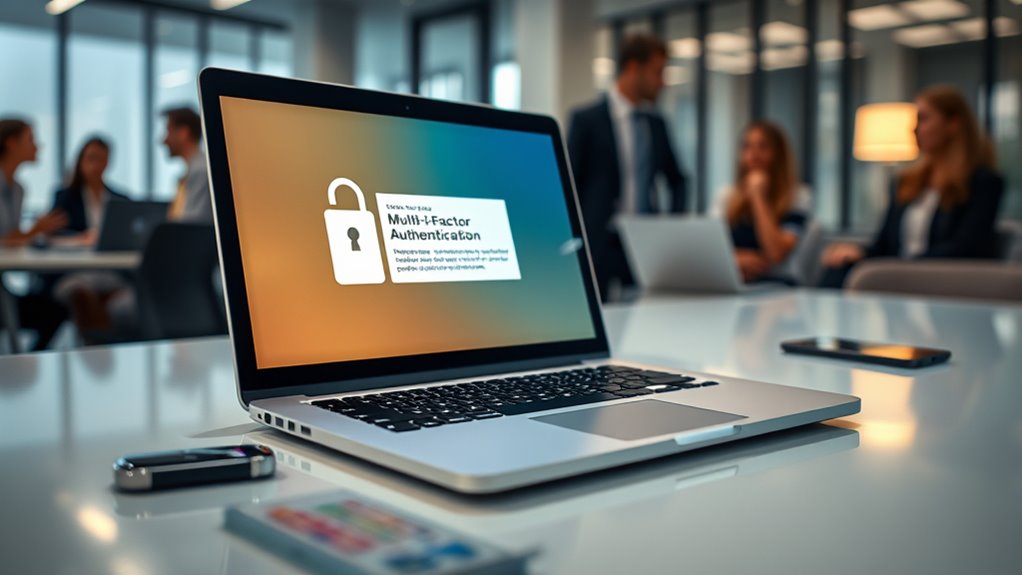

Social engineering tricks you into trusting and revealing sensitive information, often through convincing messages or emails. Multi-factor authentication (MFA) adds a essential security layer by requiring an additional verification step, such as a one-time code or authentication app, even if your password is stolen. This means attackers can’t access your accounts with just your login details. To learn how combining awareness training and MFA can create a stronger defense, keep exploring this significant topic.

Get privacy and security gear delivered free with Prime
- Fast, free delivery on millions of items
- Prime Video, Amazon Music and more included
- Member-only deals all year
Key Takeaways
- Social engineering exploits human trust through convincing messages to gain sensitive information or access.
- MFA adds an extra verification step, making unauthorized access harder even if credentials are stolen.
- Employee training helps users recognize and avoid social engineering scams, reducing successful attacks.
- Combining MFA with awareness training creates a layered defense against social engineering tactics.
- MFA mitigates risks by requiring additional proof beyond passwords, preventing attackers from accessing systems with stolen credentials.
Have you ever wondered how cybercriminals bypass even the strongest security measures? The reality is, they often rely on social engineering tactics that exploit human nature rather than technical vulnerabilities. Phishing tactics are among the most common methods used, where attackers craft convincing emails or messages to trick you into revealing sensitive information or clicking malicious links. These schemes can be so sophisticated that even cautious users might fall prey if they’re not adequately prepared. That’s why employee training plays a vital role in defending against these attacks. Effective training teaches you how to recognize suspicious messages, verify sources, and avoid risky behaviors. It’s not just about knowing what to look for; it’s about developing a security-aware mindset that minimizes the chances of falling for social engineering tricks.
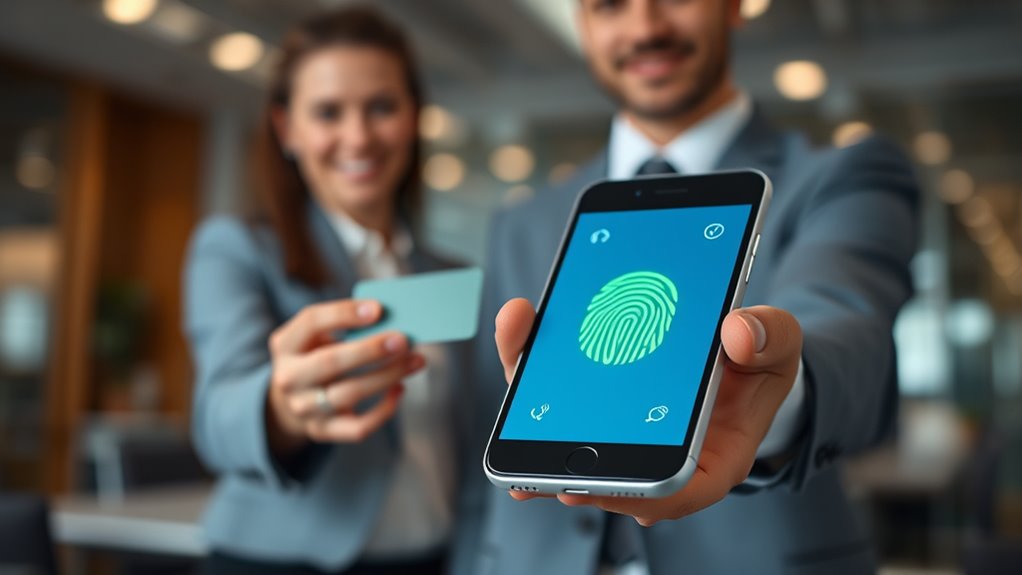
But training alone isn’t enough. Many organizations implement multi-factor authentication (MFA) as an additional layer of security. MFA requires you to provide two or more verification factors before gaining access to sensitive systems or data. Typically, this means entering a password plus a one-time code sent to your phone or generated by an authentication app. Even if a cybercriminal manages to trick you into revealing your password through phishing tactics, MFA acts as a barrier, preventing unauthorized access without the second factor. This layered approach greatly reduces the risk of breaches caused by social engineering attacks, because it shifts the advantage away from attackers who solely rely on stolen credentials.
Understanding how social engineering works helps you appreciate the importance of MFA. Cybercriminals often target the weakest link—people—by exploiting trust and curiosity. They might pose as colleagues, IT staff, or trusted organizations to persuade you to share login details or click malicious links. In such scenarios, MFA provides a vital safety net. It doesn’t rely solely on your ability to identify malicious intent; it assumes that human error can happen. By requiring an additional verification step, MFA ensures that even if your credentials are compromised, the attacker won’t be able to access your accounts without the second form of authentication.
Ultimately, combining employee training that emphasizes awareness of phishing tactics with MFA creates a robust defense against social engineering attacks. Training helps you recognize and respond to suspicious activities, while MFA makes it harder for attackers to succeed even if they’ve obtained your login details. Together, they form a thorough strategy that protects your organization’s data and minimizes the risks posed by social engineering. Staying vigilant, educated, and utilizing multiple layers of security are your best defenses against cybercriminals who constantly evolve their tactics.
As an affiliate, we earn on qualifying purchases.
Frequently Asked Questions
Can Social Engineering Attacks Occur Outside of Digital Environments?
Yes, social engineering attacks can happen offline through scams and social manipulation. You might encounter someone in person or over the phone who uses emotional tricks or false information to gain access to your personal details or convince you to share sensitive data. These offline scams rely on manipulating your trust and emotions, making it essential to stay cautious even outside digital environments. Always verify identities and avoid sharing confidential information on the spot.
What Are the Common Signs of Social Engineering Attempts?
Spotting social engineering attempts is like finding a needle in a haystack, but certain signs stand out. Watch for phishing tactics, such as unexpected emails or messages asking for sensitive info. Be alert to psychological manipulation, like urgent requests or threats that pressure you to act quickly. If someone’s trying to deceive you with pushy language or inconsistencies, trust your instincts and verify before responding.
How Effective Is MFA Against Targeted Phishing Attacks?
Multi-factor authentication substantially boosts your defenses against targeted phishing attacks by adding an extra layer of security. Even if attackers steal your login credentials, they can’t access your account without the second factor, making your phishing resilience much higher. While MFA isn’t foolproof, it greatly reduces the chances of unauthorized access, helping you stay protected even when targeted by sophisticated social engineering schemes.
Are There Specific Industries More Vulnerable to Social Engineering?
Think of industries as open books, more vulnerable to social engineering because they often handle sensitive data. You’ll find finance, healthcare, and government sectors targeted more frequently, making industry targeting a significant concern. However, employee awareness acts as your shield; well-trained staff can recognize scams and prevent breaches. Strengthen awareness across your team to reduce risks, because the more they know, the less likely attackers succeed.
What Additional Measures Complement MFA in Preventing Attacks?
You should combine MFA with behavioral training to help employees recognize and resist social engineering tactics. Conduct regular security audits to identify vulnerabilities and guarantee policies are followed. Encouraging a security-aware culture, where staff are cautious of suspicious emails or calls, considerably reduces risks. These measures, alongside MFA, create a layered defense, making it harder for attackers to succeed and safeguarding your organization’s sensitive information effectively.
As an affiliate, we earn on qualifying purchases.
Conclusion
By understanding social engineering’s subtle tactics, you can better protect yourself. Multi-factor authentication acts like a friendly gatekeeper, adding an extra layer of security that’s hard to bypass. While no method is foolproof, embracing MFA gently shifts the odds in your favor, making unwelcome surprises less likely. Stay vigilant and remember, a little extra precaution today keeps potential trouble at bay tomorrow. Your proactive steps create a safer digital world for everyone.
As an affiliate, we earn on qualifying purchases.
phishing awareness training course
As an affiliate, we earn on qualifying purchases.
As an affiliate, we earn on qualifying purchases.
Halloween Picks
halloween
As an affiliate, we earn on qualifying purchases.