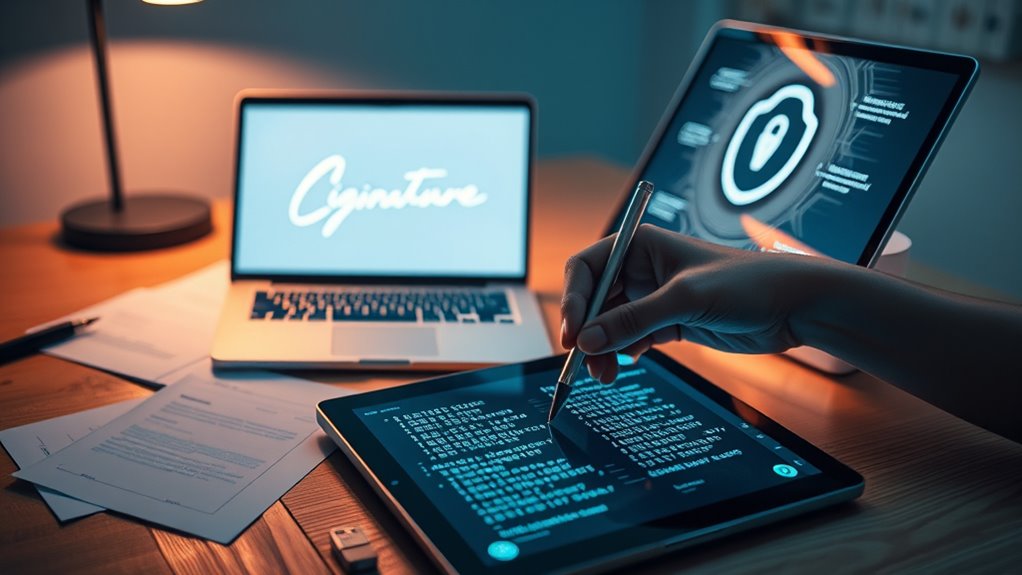

Digital signatures are cryptographic tools that verify the authenticity, integrity, and origin of digital messages and documents. They use encryption algorithms like RSA or ECC, which link the signature directly to the sender and message content. This guarantees only authorized people can create valid signatures and others can confirm their legitimacy. Digital signatures are legally recognized in many countries, making them essential for secure online transactions. Keep exploring to discover how these signatures impact digital security and legal standards.
Key Takeaways
- Digital signatures verify the authenticity and integrity of electronic messages and documents.
- They use cryptographic algorithms like RSA or ECC to create unique, secure signatures.
- Digital signatures link the sender’s identity to the message, ensuring non-repudiation.
- They are legally recognized in many countries, equating to handwritten signatures.
- Proper implementation of encryption standards ensures security, authenticity, and legal validity.

Have you ever wondered how you can verify the authenticity of a digital message or document? That’s where digital signatures come into play. They serve as a digital fingerprint, guaranteeing that the information you receive is genuine and unaltered. At the core of digital signatures are encryption algorithms, which are mathematical functions used to secure data. These algorithms enable the creation of a unique digital signature that links directly to the sender and the content of the message. When you receive a digitally signed document, you can use the sender’s public key to verify that the signature matches the message, confirming it’s from who it claims to be and hasn’t been tampered with during transmission. This process relies heavily on encryption algorithms, such as RSA or ECC, which provide the cryptographic foundation for secure digital signatures. These algorithms guarantee that only someone with the correct private key can create a valid signature, while anyone with the public key can verify its authenticity. Additionally, understanding the encryption algorithms used in digital signatures helps ensure their strength and reliability.
Understanding digital signatures also involves recognizing their legal implications. As digital documents become more prevalent, many countries have enacted laws recognizing digital signatures as legally binding equivalents to handwritten signatures. This legal recognition provides confidence for businesses and individuals to transact online, knowing their digital signatures carry the same weight as traditional signatures in court. However, the legal implications also highlight the importance of using robust encryption algorithms. Weak algorithms or poorly implemented digital signatures could be challenged in legal settings, potentially undermining their validity. Thus, selecting strong encryption algorithms and adhering to established standards is essential for maintaining legal integrity and guaranteeing that digital signatures hold up in disputes or legal proceedings.
In essence, digital signatures combine cryptography and legal frameworks to create a secure, trustworthy way to verify digital communication. They rely on encryption algorithms to generate and verify signatures, safeguarding against forgery and tampering. Simultaneously, understanding the legal implications helps you appreciate the importance of using compliant, secure methods to protect your digital transactions and documents. Whether you’re signing a contract or sending confidential information, digital signatures provide a layer of security and trust that’s indispensable in today’s digital world. They empower you to confirm the authenticity, integrity, and non-repudiation of your digital communications, making them an essential tool for secure online interactions.

The 2027-2032 World Outlook for Digital Signature Software
As an affiliate, we earn on qualifying purchases.
As an affiliate, we earn on qualifying purchases.
Frequently Asked Questions
How Do Digital Signatures Differ From Electronic Signatures?
Digital signatures differ from electronic signatures mainly in their authentication methods and data integrity. You use a digital signature to securely verify the sender’s identity through cryptographic techniques, ensuring the message hasn’t been altered. Electronic signatures, on the other hand, simply indicate agreement or approval without necessarily providing strong authentication or data integrity guarantees. Digital signatures offer a higher level of security, making sure your data remains authentic and tamper-proof.
What Are the Legal Implications of Using Digital Signatures?
Oh, the joys of digital signatures! You might think they’re just fancy stamps, but they actually hold significant legal validity. When you use them, you’re taking on liability considerations—meaning if something goes wrong, you’re responsible. Thankfully, laws like eIDAS and ESIGN give your digital signature legal weight, making transactions secure. Just remember, with great digital power comes great legal responsibility!
Can Digital Signatures Be Forged or Hacked?
Digital signatures can face forgery risks if the private key isn’t well protected, but strong encryption makes forging them extremely difficult. Hacking vulnerabilities exist if security measures are weak or if your private key gets compromised. You should always use secure, updated systems and strong passwords to safeguard your keys. While digital signatures are highly secure, no system is entirely immune to hacking or forgery risks, so stay vigilant.
What Are the Best Tools for Implementing Digital Signatures?
Coincidences often lead you to the best cryptography tools for digital signatures. You’ll find that signature software like DocuSign, Adobe Sign, and HelloSign stand out for their ease of use and security features. These tools integrate seamlessly with existing workflows and guarantee your signatures are authentic and tamper-proof. By choosing reputable options, you protect your documents and maintain trust, making digital signatures reliable and secure for your needs.
How Does Digital Signature Technology Evolve With Quantum Computing?
As quantum computing advances, digital signature technology must evolve to stay secure. You’ll see the adoption of quantum-resistant algorithms, which are designed to withstand quantum attacks. Cryptography advancements play a vital role here, enabling you to develop and implement more robust digital signatures. By staying updated on these innovations, you can guarantee your digital signatures remain secure against the growing power of quantum computers.

B0DF66S9KQ
As an affiliate, we earn on qualifying purchases.
As an affiliate, we earn on qualifying purchases.
Conclusion
Digital signatures are vital for securing your digital communications, ensuring authenticity and integrity. Did you know that, according to recent studies, over 70% of organizations use digital signatures to protect sensitive data? By understanding how they work, you can confidently verify documents and prevent fraud. Embracing digital signatures isn’t just smart—it’s essential in today’s digital world. Stay informed, stay secure, and make sure your digital interactions are trustworthy and protected.
digital signature verification tool
As an affiliate, we earn on qualifying purchases.
As an affiliate, we earn on qualifying purchases.

Serious Cryptography, 2nd Edition: A Practical Introduction to Modern Encryption
As an affiliate, we earn on qualifying purchases.
As an affiliate, we earn on qualifying purchases.