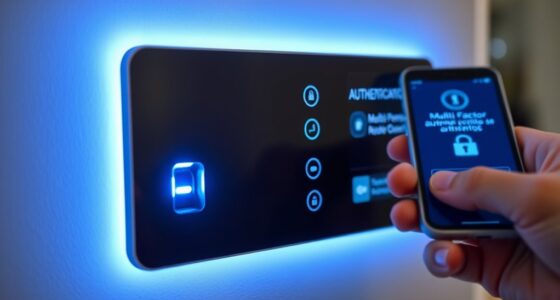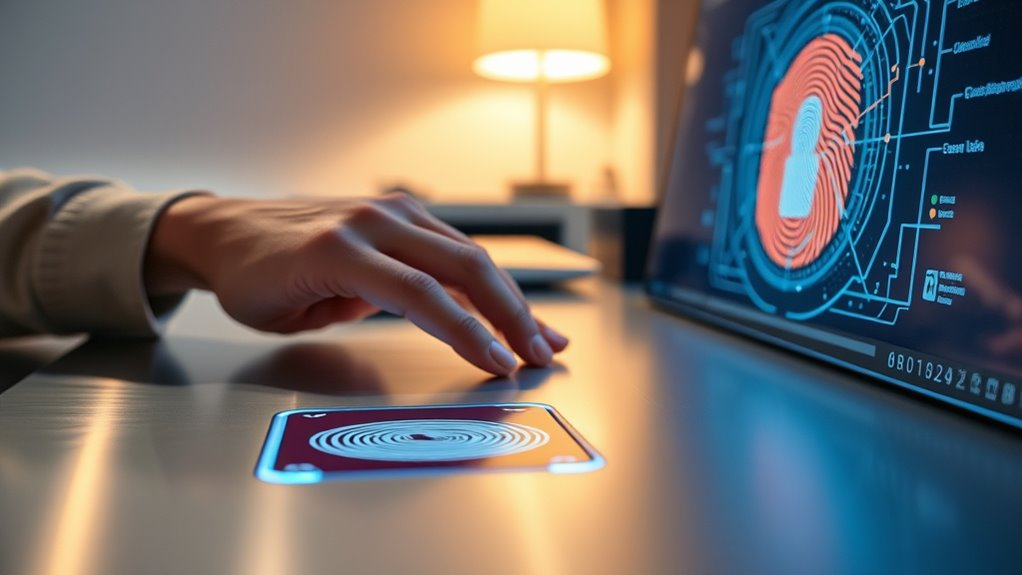

Biometrics play a vital role in continuous authentication by providing seamless and layered security that recognizes you instantly. By combining measures like fingerprint, face, voice, and behavioral patterns, you create a dynamic profile that adapts to your habits. This ongoing verification detects deviations and triggers additional checks if necessary, all while keeping your access smooth and user-friendly. If you want to discover how these technologies work together to keep you secure, there’s more to explore.

Get privacy and security gear delivered free with Prime
- Fast, free delivery on millions of items
- Prime Video, Amazon Music and more included
- Member-only deals all year
Key Takeaways
- Biometrics enable instant, ongoing user recognition, ensuring continuous access without manual login prompts.
- Multimodal biometric verification combines fingerprint, face, and voice to strengthen security layers.
- Behavioral biometrics monitor user patterns like walking or typing for real-time authentication.
- Continuous biometric analysis detects anomalies, adapting profiles to prevent unauthorized access.
- Integrating biometrics enhances user convenience while maintaining high security standards in authentication.

Have you ever wondered how your smartphone recognizes you instantly? It’s thanks to sophisticated biometric systems that perform continuous authentication, ensuring only you can access your device. One key aspect of this technology is multimodal verification, which combines multiple biometric measures—like fingerprint, face recognition, and voice—to confirm your identity. Instead of relying solely on a single method, multimodal verification creates a layered security approach, making it harder for someone else to impersonate you. This process not only enhances security but also improves user convenience, allowing seamless access without repeated prompts for passwords or PINs.
But biometric authentication isn’t static; it’s ongoing. This is where behavioral analysis comes into play. Your behavior—how you walk, type, hold your device, or even how you interact with apps—provides valuable data that can be continuously monitored. Behavioral analysis examines these patterns, establishing a biometric “signature” unique to you. If the system detects a deviation from your typical behavior, it can trigger additional verification steps or lock access temporarily. This ongoing process ensures that even if someone manages to spoof your biometric data at a single moment, they likely won’t be able to mimic your behavioral patterns consistently, providing an extra layer of security.
Continuous authentication using behavioral analysis and multimodal verification works behind the scenes, often unnoticed by you. As you go about your day, your device constantly collects and analyzes data points, creating a dynamic profile that evolves with your habits. This approach reduces the risk of unauthorized access, especially in sensitive situations like mobile banking or corporate security, where static authentication methods can fail. For example, if your face is recognized initially, but your typing rhythm suddenly changes or your gait shifts, the system recognizes these as anomalies and can prompt for additional verification or restrict access. It’s like having a vigilant security guard who’s always watching, but with the intelligence to adapt to your natural behavior.
Ultimately, this continuous verification process balances security with user experience. It minimizes interruptions while maintaining high security standards. You don’t need to remember complex passwords or carry tokens; your biometric traits and behaviors do the work. As technology advances, these systems will become even more refined, leveraging multimodal verification and behavioral analysis to keep your digital life safe and seamless—making sure that your device recognizes you instantly, every time. Additionally, incorporating biometric data from various sources further enhances the robustness of authentication systems, making them more resistant to spoofing or impersonation attempts.
multimodal biometric authentication device
As an affiliate, we earn on qualifying purchases.
As an affiliate, we earn on qualifying purchases.
Frequently Asked Questions
How Does Biometric Data Impact User Privacy and Data Security?
Biometric data profoundly impacts your privacy concerns and data security because it’s unique to you, making it a prime target for breaches. When you use biometrics, it’s crucial to guarantee strong data protection measures are in place, like encryption and secure storage. Otherwise, your sensitive information could be compromised, risking identity theft or unauthorized access. Being aware of how your biometric data is handled helps you better protect your privacy.
Can Biometric Systems Be Fooled or Spoofed Easily?
Did you know that biometric systems have a false acceptance rate of about 0.1%? While they’re generally secure, they can be fooled or spoofed through spoofing vulnerabilities, especially with advanced techniques. Attackers can sometimes bypass biometric safeguards, leading to false acceptance of unauthorized users. However, combining multiple biometric methods and implementing liveness detection considerably reduces these risks, making spoofing much harder to succeed.
What Are the Costs Involved in Implementing Biometric Authentication?
You’ll find that implementing biometric authentication involves costs related to a thorough cost analysis, including hardware, software, and integration expenses. You should also consider implementation challenges, such as ensuring system accuracy and user privacy. While initial setup costs can be high, ongoing maintenance and updates are necessary. Balancing these factors helps you determine the best approach for your organization’s security needs and budget constraints.
How Do Biometric Systems Adapt to Changes in User Appearance?
When it comes to changes in your appearance, biometric systems stay ahead of the game by using adaptive algorithms and template updates. They continuously learn and adjust to your evolving features, so you don’t have to worry about constantly re-registering. This way, the system keeps up with you as you change, ensuring reliable authentication without missing a beat—like hitting two birds with one stone.
Are There Legal or Ethical Concerns With Biometric Data Collection?
You should be aware that collecting biometric data raises legal compliance and ethical considerations. Laws like GDPR and CCPA set strict standards for data privacy and consent, ensuring your rights are protected. Ethically, you must handle biometric information responsibly, avoiding misuse or unauthorized access. By following these guidelines, you respect user privacy and maintain trust, which is essential in deploying biometric systems ethically and legally.
behavioral biometric security system
As an affiliate, we earn on qualifying purchases.
As an affiliate, we earn on qualifying purchases.
Conclusion
As you explore the evolving world of biometrics, you realize it’s more than just easy access—it’s a gateway to unseen security. Imagine a future where every glance, touch, or pulse silently verifies your identity, keeping threats at bay. But with this powerful technology come questions and challenges that remain hidden just beyond your sight. Are you prepared to trust your most personal details to a system that’s always watching, always verifying, in the shadows of your digital life?
As an affiliate, we earn on qualifying purchases.
voice recognition security device
As an affiliate, we earn on qualifying purchases.
As an affiliate, we earn on qualifying purchases.
Fall Picks
fall essentials
As an affiliate, we earn on qualifying purchases.