Adaptive authentication uses AI and real-time context to make your security smarter and more responsive. It assesses factors like your device, location, time, and activity patterns to adjust security measures dynamically. Biometrics such as fingerprints or facial recognition add an extra layer of protection, while risk scoring identifies suspicious behavior. By continuously learning from your actions and threats, this approach balances security with convenience. Keep exploring to discover how this innovative system can protect your digital world even better.
Key Takeaways
- Adaptive authentication adjusts security measures in real-time based on user behavior, device, location, and context.
- AI analyzes ongoing data patterns to identify potential threats proactively and enhance verification accuracy.
- Risk scoring evaluates login trustworthiness by examining device reputation, IP, and activity, prompting additional authentication if needed.
- Biometric verification adds a user-friendly, high-security layer through fingerprint, facial, or voice recognition.
- This approach balances security and user experience by providing tailored, context-aware protection dynamically.
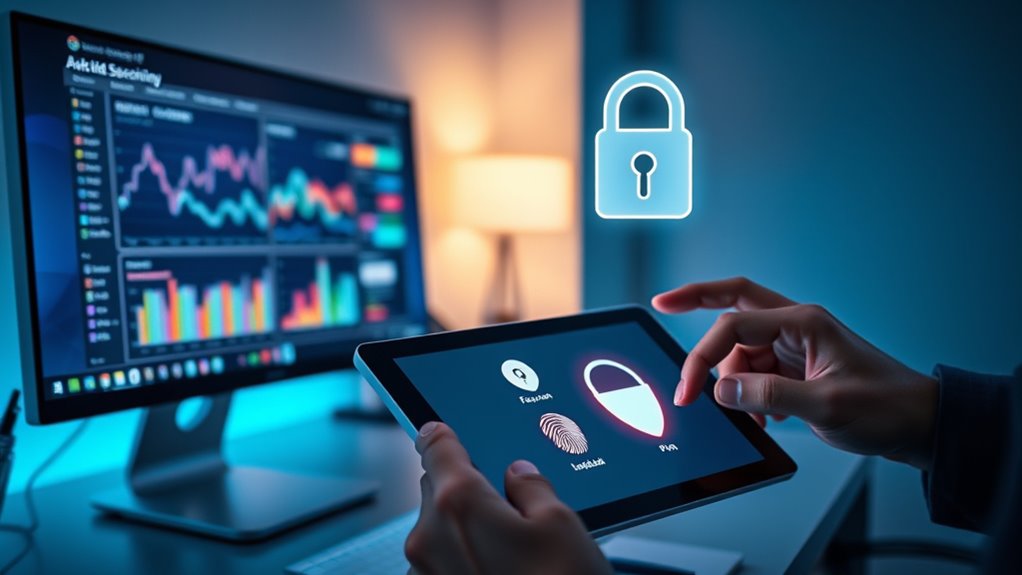
Adaptive authentication is transforming how organizations secure digital access by dynamically adjusting security measures based on user behavior and context. Instead of relying solely on static passwords or one-size-fits-all solutions, it assesses each login attempt in real-time, making security smarter and more responsive. When you try to access an account, the system doesn’t just ask for a password; it considers various factors like your device, location, time of day, and recent activity. This context-aware approach helps identify whether the attempt is legitimate or suspicious.
Adaptive authentication dynamically assesses user behavior and context for smarter, more responsive security.
A key component of adaptive authentication is biometric verification. When you log in, the system might prompt fingerprint scans, facial recognition, or voice authentication, adding an extra layer of security that’s both user-friendly and difficult for hackers to bypass. Biometrics are unique to you, making them a highly reliable method for verifying identity. As you authenticate with your fingerprint or face, the system confirms your identity quickly, reducing friction while maintaining security. This seamless process is especially valuable for high-risk transactions or access to sensitive data, where traditional methods might fall short.
Another essential element is risk scoring, which evaluates the likelihood that a login attempt is malicious. The system analyzes factors like device reputation, IP address, browsing behavior, and past login patterns to generate a risk score. If your activity appears normal, the system grants access with minimal disruption. But if something seems off—say, you’re logging in from a new device or location—the risk score increases. In such cases, the system might prompt extra verification steps, like biometric confirmation, security questions, or multi-factor authentication, to ensure you’re really who you say you are. This dynamic risk assessment allows organizations to strike a balance between security and user convenience.
By leveraging AI and real-time data, adaptive authentication constantly learns and adapts. It recognizes patterns over time, becoming better at identifying genuine users and flagging potential threats. This proactive approach helps prevent unauthorized access before damage occurs. As cyber threats evolve, so does the technology behind adaptive authentication, making it an essential tool for modern security strategies.
In essence, you benefit from a security system that’s intelligently tailored to your behavior and context. It reduces the need for cumbersome passwords while increasing protection through biometric verification and risk scoring. With adaptive authentication, organizations can provide a smoother user experience without compromising security, staying ahead of hackers and malicious activities. This innovative approach ensures your digital assets remain safe while making access easier and more intuitive for you.
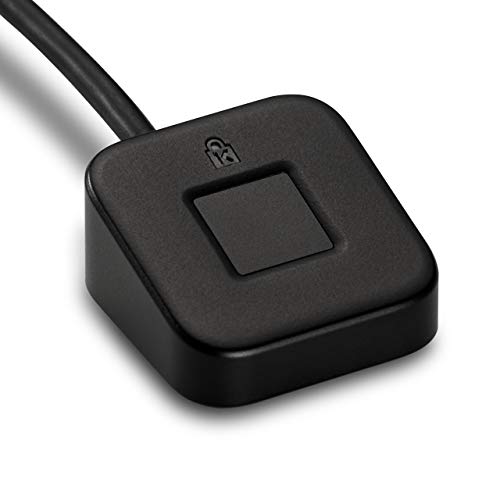
Kensington VeriMark Desktop USB Fingerprint Reader – Windows Hello, Windows 11 Fingerprint Scanner for PC, FIDO U2F, FIDO2 (K62330WW)
FIDO U2F certified, and FIDO2 WebAuthn compatible for expanded authentication options, including strong single-factor (passwordless), dual, multi-factor, and…
As an affiliate, we earn on qualifying purchases.
As an affiliate, we earn on qualifying purchases.
Frequently Asked Questions
How Does Adaptive Authentication Impact User Privacy?
Adaptive authentication can raise privacy concerns because it collects and analyzes your data to assess risks. You have to give user consent for this process, and reputable systems ensure your data is protected through data encryption. While it aims to enhance security, you should stay aware of how your information is used and stored, making sure your privacy preferences are respected throughout the authentication process.
Can Adaptive Authentication Be Bypassed by Hackers?
Yes, adaptive authentication can be bypassed by hackers through behavior spoofing or credential theft. If cybercriminals mimic your typical behavior or steal your login details, they might trick the system into granting access. While adaptive methods improve security, they aren’t foolproof. You should stay vigilant, use strong passwords, and enable multi-factor authentication to reduce the risk of unauthorized access through these tactics.
What Industries Benefit Most From Adaptive Authentication?
You benefit most from adaptive authentication in industries like financial security and healthcare privacy. It helps protect sensitive data by continuously analyzing user behavior and adjusting security measures in real time. This means you can confidently access your accounts, knowing that the system detects suspicious activity and responds accordingly. Adaptive authentication reduces fraud risks and guarantees compliance, making it essential for sectors handling critical and private information.
How Is AI Trained to Assess User Context Accurately?
AI is trained to assess user context accurately through behavioral analysis, which examines patterns like login times, device usage, and location. It learns from large datasets while prioritizing data privacy by anonymizing sensitive information. You can trust that AI models continuously improve by analyzing behaviors without exposing personal details, ensuring security and privacy. This adaptive approach allows the system to detect anomalies and verify identities efficiently.
What Are the Costs Associated With Implementing Adaptive Authentication?
Implementing adaptive authentication involves costs like technology investments, staff training, and ongoing maintenance, which you should include in your cost analysis. You’ll face implementation challenges such as integrating AI systems with existing infrastructure and ensuring data privacy. These factors can increase upfront expenses and complexity, but the enhanced security benefits often justify the investment over time. Carefully evaluate these costs and challenges to create a realistic plan.

TianfuSpanda 3D Face Recognition Door Lock with Lockbody, Video Smart Lock with Camera&Doorbell, Front Door Keyless Entry Lock, WiFi&Tuya APP Control/Fingerprint/IC Card/Password/Keys
Installation is a little DIFFICULT!!!The mortise is not suitable for standard doors, some screws involve cutting, please watch…
As an affiliate, we earn on qualifying purchases.
As an affiliate, we earn on qualifying purchases.
Conclusion
Just as Sherlock Holmes adapts his methods to crack each case, adaptive authentication evolves with you, using AI and context to keep your digital world secure. It’s like having a personal detective that learns your habits and stays one step ahead of threats. Embrace this smarter approach, and you’ll be better prepared to navigate the ever-changing landscape of cybersecurity. Remember, in the game of security, adaptability isn’t just an option—it’s your greatest asset.

Yubico – YubiKey 5C NFC – Multi-Factor authentication (MFA) Security Key and passkey, Connect via USB-C or NFC, FIDO Certified – Protect Your Online Accounts
POWERFUL SECURITY KEY: The YubiKey 5C NFC is the most versatile physical passkey, protecting your digital life from…
As an affiliate, we earn on qualifying purchases.
As an affiliate, we earn on qualifying purchases.

Engineering Data-Driven Adaptive Trust-based e-Assessment Systems: Challenges and Infrastructure Solutions (Lecture Notes on Data Engineering and Communications Technologies, 34)
As an affiliate, we earn on qualifying purchases.
As an affiliate, we earn on qualifying purchases.