

Balancing storytelling and challenge in puzzle games requires intertwining the narrative naturally with gameplay, so each puzzle advances the story and keeps you emotionally invested. Pacing puzzles to match your growing skills prevents frustration while gradually increasing difficulty aligns with story milestones. When puzzles reflect key themes and emotional beats, they deepen immersion. This harmony keeps you engaged and motivated, making your journey feel meaningful and memorable—continue exploring to uncover how to craft this perfect balance.
Key Takeaways
- Integrate story seamlessly with puzzles to ensure narrative naturally progresses alongside gameplay.
- Calibrate puzzle difficulty to match player skill, maintaining engagement without causing frustration.
- Use puzzle complexity to mirror story tension, enhancing emotional impact and thematic depth.
- Introduce puzzles gradually to build confidence and deepen narrative understanding over time.
- Align challenge peaks with key story milestones to reinforce immersion and emotional connection.
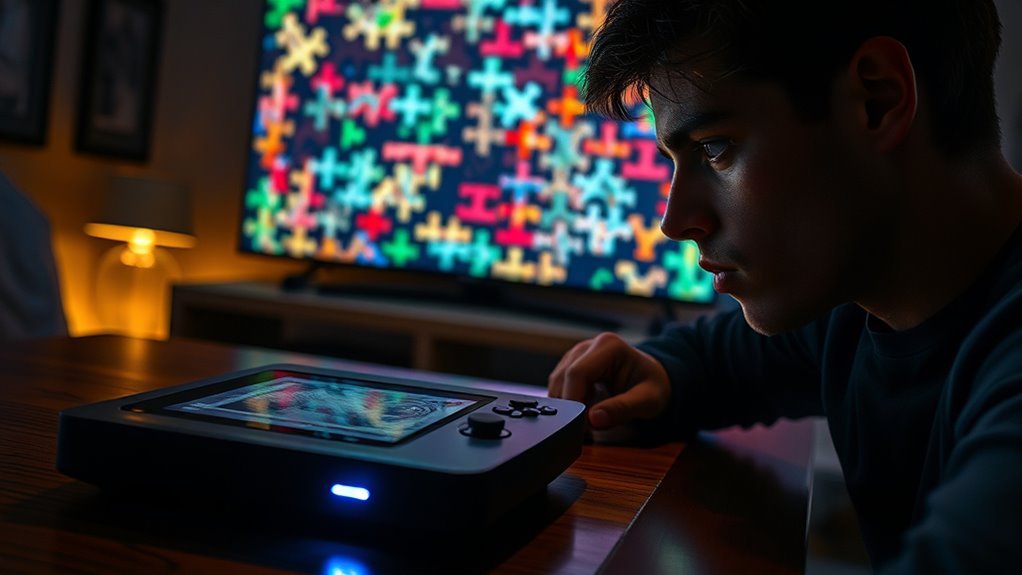
Puzzle games are often celebrated for their ability to challenge your mind while immersing you in compelling stories. When done right, they strike a perfect balance, making you feel both intellectually stimulated and emotionally engaged. One key to achieving this balance is strong narrative integration, where the story seamlessly intertwines with the puzzle-solving experience. Instead of feeling like separate elements, the narrative becomes a natural part of the gameplay, motivating you to push forward. As you progress through the game, the story unfolds alongside increasingly complex puzzles, creating a sense of continuity that keeps you invested. This integration ensures that each challenge feels meaningful, not just a test of skill but also a step deeper into the story’s world and characters. Additionally, effective pacing and difficulty calibration can help maintain player interest and prevent frustration, ensuring a smooth experience that aligns with the narrative flow. Difficulty progression is another essential aspect of balancing storytelling and challenge. If puzzles are too easy initially, you might quickly lose interest, feeling bored or under-stimulated. Conversely, puzzles that jump straight into high difficulty can frustrate players and break immersion. The best puzzle games carefully craft difficulty progression, gradually increasing complexity to match your growing skills and understanding. Early puzzles serve as a gentle introduction, allowing you to familiarize yourself with mechanics and narrative cues. As you gain confidence, puzzles become more intricate, demanding sharper thinking and deeper engagement, which heightens your emotional investment. This gradual escalation keeps the gameplay challenging without overwhelming, maintaining a steady rhythm that encourages continued exploration. Good puzzle games also use difficulty progression to reinforce the story’s themes and emotional beats. For example, as a narrative reaches a critical turning point, the puzzles might become more challenging to mirror the story’s tension or stakes. This synchronization deepens your connection to the characters and plot, making the experience more immersive. When difficulty is well-paced, it doesn’t just test your skills; it elevates the storytelling, turning each puzzle into a meaningful part of the narrative arc. You feel a sense of achievement not only because you solved a challenging puzzle but because it contributed to a greater understanding of the story. Moreover, understanding the importance of cybersecurity in protecting game data and user information enhances the overall experience and trust in puzzle gaming platforms. Ultimately, balancing storytelling and challenge in puzzle games hinges on thoughtful narrative integration and carefully calibrated difficulty progression. When these elements work together, you don’t just solve puzzles—you experience a story that evolves with your actions, keeping you engaged, motivated, and emotionally connected from start to finish. This harmony transforms a simple puzzle game into a memorable journey where every challenge enhances the story and vice versa.
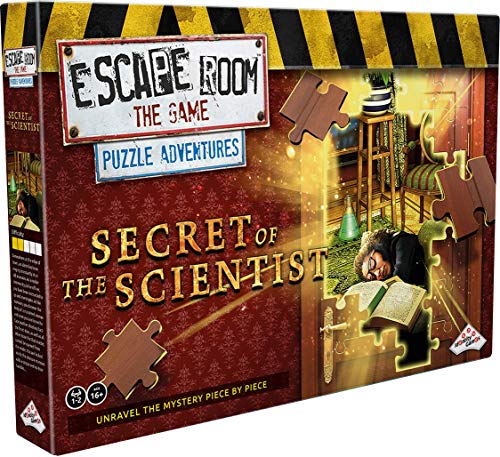
Escape Room: Puzzle Adventures – Secret of The Scientist Jigsaw Puzzle & Escape Room Board | 1-2 Players – Games for Family Game Night | for Kids and Adults Ages 16+ | English Version
ESCAPE ROOM & JIGSAW PUZZLE IN 1 – In this Escape Room-meets-jigsaw puzzle board game, you must solve…
As an affiliate, we earn on qualifying purchases.
As an affiliate, we earn on qualifying purchases.
Frequently Asked Questions
How Do Developers Measure Player Engagement in Puzzle Games?
You measure player engagement in puzzle games by tracking engagement metrics like session length, frequency, and progression rates. Monitoring player retention helps you see how well players stay interested over time. Analyzing these metrics reveals which puzzles captivate players and where they lose interest. By continually evaluating this data, you can adjust difficulty and storytelling elements to keep players motivated and engaged, ensuring your game remains compelling and fun.
What Are Common Pitfalls in Blending Story With Gameplay?
Think of blending story and gameplay as walking a tightrope—you risk imbalance. You might rush the narrative, sacrificing emotional resonance, or slow pacing too much, frustrating players. Common pitfalls include neglecting narrative pacing, making story feel disconnected from gameplay, or overwhelming puzzles with plot, diluting engagement. To succeed, guarantee your story complements gameplay seamlessly, maintaining emotional depth and steady pacing, so players stay immersed without feeling overwhelmed or underwhelmed.
How Can Difficulty Be Adjusted for Different Player Skill Levels?
You can adjust difficulty by implementing adaptive difficulty and skill-based scaling, which respond to your player’s performance in real-time. As you play, the game analyzes your success rate and adjusts puzzle complexity accordingly, ensuring it’s neither too easy nor too frustrating. This personalized approach keeps you engaged and challenged at your skill level, providing a seamless balance between fun storytelling and appropriate challenge throughout your gaming experience.
What Role Do Visual and Audio Cues Play in Puzzle Storytelling?
Visual and audio cues are essential in puzzle storytelling because they provide clear sensory feedback, guiding you through the narrative and solving process. Visual storytelling, like character expressions or environmental details, immerses you in the story, while audio cues—such as sounds or voiceovers—highlight important clues or emotional beats. Together, these cues enhance engagement, making the puzzle feel more meaningful and intuitive without overwhelming or distracting you.
How Do Cultural Differences Influence Puzzle Game Design?
You’re shaping puzzle game design, and cultural differences are your secret weapon. By understanding cultural symbolism, you can create puzzles that resonate deeply with diverse players, making the experience unforgettable. Design aesthetics that reflect local art and traditions can turn your game into a cultural tapestry, engaging players emotionally. Embracing these differences transforms your puzzles from simple challenges into powerful stories that connect across borders, making your game an instant classic worldwide.
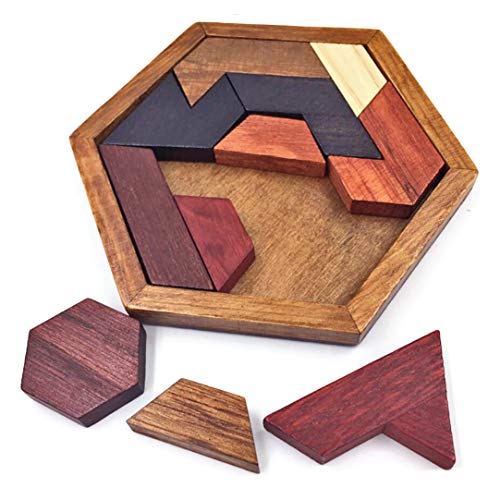
KINGOU Hexagon Tangram Puzzle Wooden Brain Puzzles for Kids & Adult Challenge Wooden Brain Teasers Puzzle Games for Family Party Gift – Brain Games for Kids
Material: High quality timber. Size: 5.5 x 4.72 inch. ★KINGOU is a registered brand, the trademark number is…
As an affiliate, we earn on qualifying purchases.
As an affiliate, we earn on qualifying purchases.
Conclusion
As you dive deeper into puzzle games, remember that finding the right balance between storytelling and challenge keeps the experience thrilling. Push too hard on complexity, and the story might get lost; lean too much on narrative, and the puzzles may feel dull. The true mastery lies in knowing when to intensify the challenge and when to let the story breathe. Stay curious—something unexpected could be just around the corner, waiting to change everything.

The Game Master’s Handbook of Proactive Roleplaying: Guidelines and strategies for running PC-driven narratives in 5E adventures (The Game Master Series)
As an affiliate, we earn on qualifying purchases.
As an affiliate, we earn on qualifying purchases.

Tile Story: Match Puzzle Game
* Enjoy easy and fun gameplay.
As an affiliate, we earn on qualifying purchases.
As an affiliate, we earn on qualifying purchases.