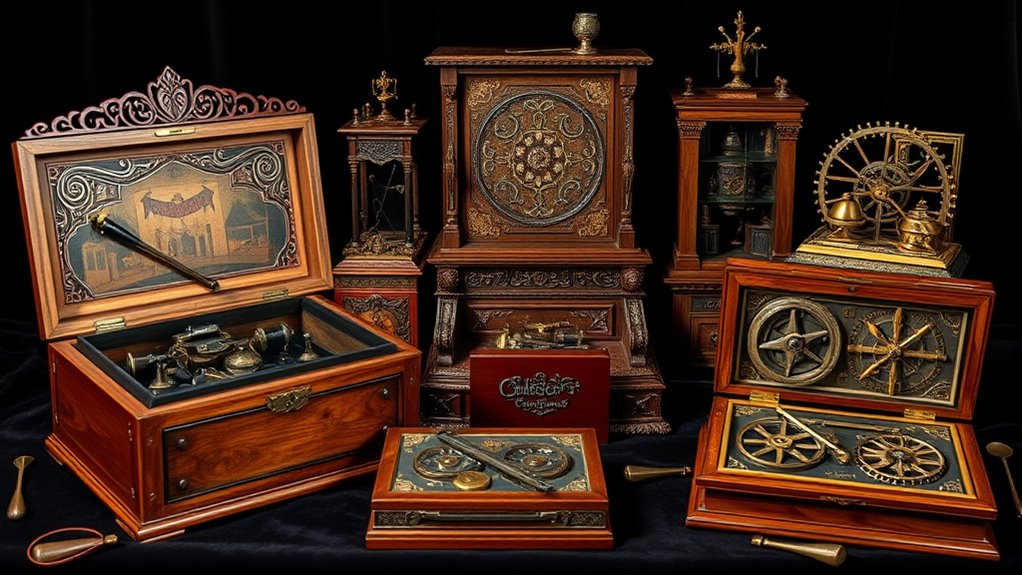

To build puzzle boxes and mechanical puzzles, you need to carefully craft secure lock mechanisms like pin tumblers or interlocking levers that challenge users to think critically. Incorporate artistic elements such as carvings, motifs, or painted scenes to boost visual appeal and create clues. Balance form and function by integrating these artistic details seamlessly with functioning mechanics, often inspired by pinball movements. Mastering craftsmanship and testing guarantees your puzzle is both beautiful and rewarding—if you’re curious to learn more, keep exploring.
Key Takeaways
- Design secure, hidden lock mechanisms such as pin tumblers or interlocking levers to challenge and engage users.
- Incorporate artistic elements like carvings, motifs, and textures to enhance visual appeal and conceal clues.
- Ensure harmony between mechanical components and artistic design for an intuitive, seamless user experience.
- Draw inspiration from pinball mechanics and moving parts to create dynamic triggers and surprises.
- Prototype, test, and refine multiple versions to achieve precise functionality and aesthetic integration.
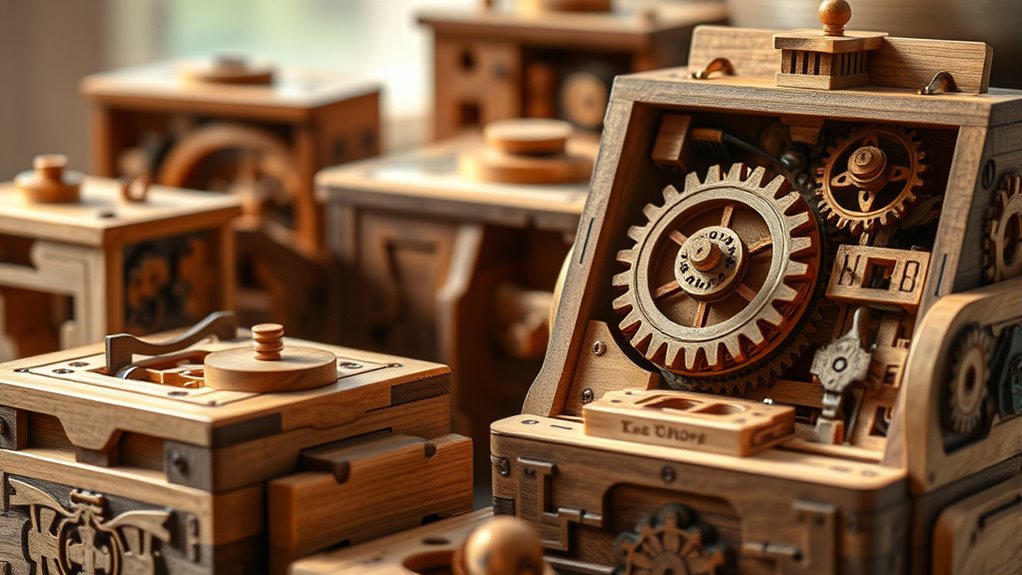
Building puzzle boxes and mechanical puzzles is a rewarding craft that combines creativity, engineering, and problem-solving. As you explore into this intricate world, you’ll discover that every detail counts—from the choice of lock mechanisms to the artistic designs that make each piece unique. Your goal is to create something that challenges the mind while also showcasing your artistic flair. To do this effectively, you need to understand how lock mechanisms work and how to incorporate artistic designs that captivate and delight.
When designing a puzzle box, the lock mechanisms serve as the heart of the challenge. You might choose traditional pin tumblers, hidden latches, or more complex systems like multiple interlocking levers. The beauty of these mechanisms lies in their ability to conceal the solution, requiring the solver to think critically and experiment. You’ll want your lock mechanisms to be both secure and elegant, blending seamlessly into the overall design. Crafting these parts demands precision and a good grasp of mechanics, guaranteeing that the puzzle remains satisfying without becoming frustrating. As you test and refine your lock mechanisms, you’ll develop a deeper understanding of how different configurations influence difficulty and user experience.
Equally important are the artistic designs you embed into your puzzles. The visual appeal draws people in and invites curiosity. You might carve intricate patterns, paint detailed scenes, or incorporate thematic motifs that tell a story. Artistic designs aren’t just about aesthetics—they also serve as clues or hidden elements that enhance the puzzle’s complexity. For example, a decorative motif might align with a secret compartment or function as part of the unlocking process. As you experiment with materials, colors, and textures, you’ll find that thoughtful artistic touches elevate your puzzle from a simple mechanical challenge to an engaging piece of art. Balancing form and function assures that your puzzle is not only visually stunning but also intuitive enough for users to enjoy.
Additionally, understanding the mechanics of pinball machines can inspire innovative moving parts and trigger mechanisms in your puzzles, adding dynamic elements that surprise and delight solvers. Building these puzzles requires patience and attention to detail. You’ll often prototype multiple versions, testing different lock mechanisms and artistic elements until everything aligns perfectly. Every successful puzzle reflects your craftsmanship—each lock, each design element carefully integrated to create a harmonious whole. As you gain experience, you’ll develop your own style, blending technical ingenuity with artistic expression. Whether you’re making a small, delicate box or a large, elaborate puzzle, the process is rewarding. When someone finally opens your creation after hours of effort, you’ll feel a sense of pride knowing you crafted something that challenges the mind and delights the eye.

ROKR 3D Wooden Puzzles for Adults Mechanical Music Box-Starry Night, DIY Rotating Music Box Model Building Kits for Teens, DIY Crafts/Hobbies/Gifts Desk Decor for Boys Ages 14+ (Starry Night)
This ROKR 3D wooden puzzle music box kit comes with pre-cut plywood. Wooden materials are non-toxic, safe, and…
As an affiliate, we earn on qualifying purchases.
As an affiliate, we earn on qualifying purchases.
Frequently Asked Questions
What Are the Best Materials for Constructing Durable Puzzle Boxes?
You should choose hardwoods like oak, maple, or walnut for constructing durable puzzle boxes because they’re strong and resistant to wear. Use tight joint types such as dovetail or box joints to guarantee stability and longevity. These materials and joint methods provide the durability you need, preventing the box from falling apart over time while maintaining a sleek, professional look.
How Can I Customize a Puzzle Box for Personal Use?
Imagine transforming a plain treasure chest into your own secret vault. You can customize a puzzle box for personal use by adding unique puzzle box decoration and crafting personalized locking mechanisms. Choose materials that reflect your style, engrave meaningful symbols, or paint intricate designs. Incorporate personal touches like initials or favorite motifs, making the puzzle box a reflection of your personality—turning it into a one-of-a-kind masterpiece that keeps your secrets safe.
What Tools Are Essential for Building Intricate Mechanical Puzzles?
You’ll need precise tools like a mini saw or Dremel, files, and small screwdrivers to build intricate mechanical puzzles. Always follow safety precautions, such as wearing goggles and working in a well-ventilated area. Use your design inspiration to choose the right tools for delicate components. These tools help you craft detailed, reliable mechanisms, ensuring your puzzle functions smoothly and looks impressive.
How Do I Ensure the Safety of Moving Parts in a Puzzle Box?
Think of your puzzle box as a delicate dance, where safety mechanisms act as cautious partners guiding the movement. To guarantee safety, incorporate sturdy stops and secure mechanisms to prevent accidental pinches or damage. Regularly check moving part maintenance, lubricating joints and inspecting for wear. This vigilance keeps your puzzle’s dance smooth, protecting both the intricate parts and the enthusiastic hands seeking to open its secrets.
Are There Beginner-Friendly Kits for Making Mechanical Puzzles?
Yes, you can find simple starter kits perfect for beginners interested in making mechanical puzzles. These beginner-friendly projects often include all necessary parts and clear instructions, making the process enjoyable and manageable. Look for kits labeled as beginner or easy, which help you learn fundamental techniques without feeling overwhelmed. They’re a great way to build confidence and develop your skills before tackling more complex mechanical puzzles.
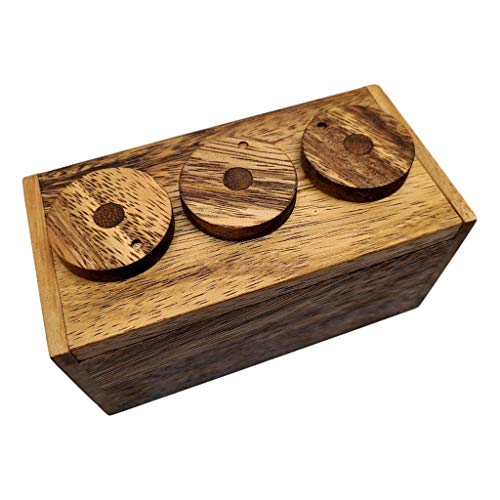
3 Wheel Combination Secret Lock Puzzle Box
Unique box from Creative Crafthouse – You must align the 3 wheels to a position that will allow…
As an affiliate, we earn on qualifying purchases.
As an affiliate, we earn on qualifying purchases.
Conclusion
As you finish your puzzle, imagine sliding open the intricate lid, revealing a hidden compartment glowing softly inside. The smooth wood and cold metal feel satisfying beneath your fingertips, each piece fitting perfectly like a secret waiting to be uncovered. With a gentle click, the mystery unfolds, leaving you with a sense of achievement and wonder. You’ve crafted more than just a puzzle—you’ve created a tangible world of ingenuity and discovery, waiting for your next challenge.

Masterpieces Puzzle Box Stand – Jigsaw Puzzle Stand Accessory – Ages 15+
SECURE PUZZLE LID HOLDER: Keep your puzzle box lid upright and visible while you assemble your jigsaw puzzle….
As an affiliate, we earn on qualifying purchases.
As an affiliate, we earn on qualifying purchases.
Trend Accents Interlocking Puzzle
Precut and ready to use in green, yellow, blue, red, purple, and orange.
As an affiliate, we earn on qualifying purchases.
As an affiliate, we earn on qualifying purchases.