
Emerging laws now focus on protecting your privacy as a teen by imposing stricter rules on how companies collect and use your data. These laws require clearer privacy settings, parental controls, and explicit consent before data is gathered, especially for minors. They also enforce better security measures to prevent breaches and hold companies accountable. Staying informed about these changes helps you understand your rights—continue exploring to learn more about how these laws impact you.
Key Takeaways
- New laws prioritize teen privacy by regulating data collection from social media, gaming, and educational apps.
- Enhanced parental controls enable guardians to monitor activity and set restrictions on online usage.
- Regulations require companies to clearly disclose privacy settings and data handling practices for teen users.
- Explicit consent from teens or guardians is mandatory before collecting or using their personal data.
- Laws enforce stronger data security measures and hold companies accountable for breaches involving teen information.
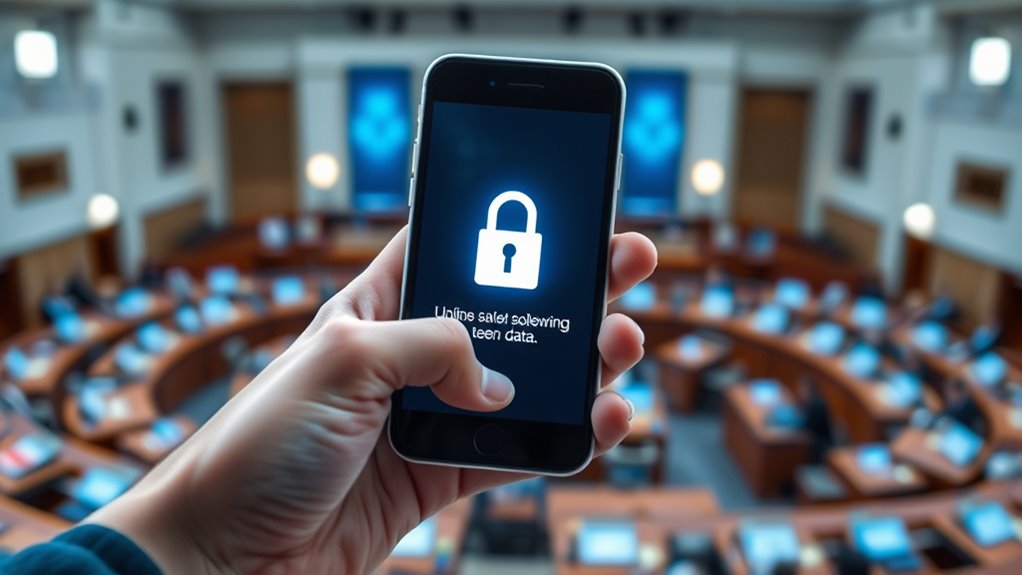
As more states introduce new laws to protect teen data, it’s clear that safeguarding young people’s privacy is becoming a top priority. You might notice that these laws aim to address growing privacy concerns, especially with the increasing amount of personal information shared online. Teenagers often use social media, gaming platforms, and educational apps, which collect and store significant amounts of data. Without proper protections, this information can be vulnerable to misuse or breaches. That’s why legislators are focusing on establishing clearer rules about how companies handle teen data, ensuring that minors’ privacy is respected and protected.
Protecting teen data is a top priority as new laws address online privacy concerns and data security.
One key aspect of these emerging laws involves empowering parents and guardians with better tools for oversight. Parental controls are becoming more sophisticated, allowing you to set limits on what your teen can access and share. These controls can restrict app downloads, monitor usage, or even block certain websites altogether. The goal is to give you peace of mind, knowing that your child’s online activities are safer and more private. Companies are also required to make privacy settings more transparent, so you and your teen can easily understand and manage what information is being collected and how it’s used. Additionally, the laws emphasize the importance of legal regulations that establish clear boundaries for data collection and usage.
Furthermore, these laws emphasize the importance of consent. You’re likely to see regulations that mandate companies to obtain explicit permission from teens or their parents before collecting sensitive data. This shift not only reinforces your role as a protector but also encourages companies to be more transparent about their data practices. In many cases, there are restrictions on data collection for children under a certain age, often 13, aligning with existing federal guidelines but expanding protections for teenagers as well. This means that your teen’s personal information won’t be used for targeted advertising or shared without proper consent.
Another essential point is the enforcement of data security standards. These laws require companies to implement stronger safeguards to prevent data breaches. You want your teen’s information to be stored securely, and these regulations aim to hold companies accountable if they fail to protect user data. Finally, these laws are designed to promote ongoing transparency from digital platforms, providing you with clear notices about data collection practices and giving you control over your teen’s digital footprint.

BIGGERFIVE Smart Watch for Kids, 1.8" Fitness Tracker Watch Pedometer, Heart Rate, Sleep Monitor, IP68 Waterproof, Calorie Step Counter, Puzzle Games with/Without APP for Girls Boys Teens 5-16, Black
All-Day Activity Tracking: BIGGERFIVE BRAVE 2 Smart Watch for Kids Teens Automatically counts steps, distance, calories burned, and…
As an affiliate, we earn on qualifying purchases.
As an affiliate, we earn on qualifying purchases.
Frequently Asked Questions
How Do Emerging Laws Define “Teen” for Data Protection?
Emerging laws typically define “teen” based on age thresholds set within legal definitions, often ranging from 13 to 17 years old. As you navigate data protection policies, you’ll find that these laws specify the exact ages that classify someone as a teen, ensuring their data receives special protections. These age thresholds help enforce stricter rules on collecting, storing, and sharing data from minors, safeguarding their privacy effectively.
Are There Penalties for Companies Violating Teen Data Laws?
If a company violates teen data laws, you’ll face legal penalties, including hefty fines and possible lawsuits. For example, a social media platform might be fined millions for collecting teens’ data without consent. Enforcement mechanisms, like government investigations and regulatory actions, guarantee compliance. These measures pressure companies to prioritize teen privacy, making violations costly and risky, and protecting young users from data misuse.
How Do These Laws Affect Teens’ Social Media Usage?
These laws make you more aware of your privacy, encouraging social media platforms to implement stricter social media monitoring. They also push for better privacy education, so you understand how your data is collected and used. As a result, you may notice enhanced privacy settings and more transparent policies. These changes aim to protect your personal information while helping you make informed decisions about your social media activity.
What Rights Do Teens Have Over Their Data Under New Laws?
Under new laws, you have the right to control your teen privacy and decide how your data is used. These laws require that companies get your data consent before collecting or sharing your information, giving you more say over your online presence. You can request access to your data, ask for it to be deleted, and know how it’s being used. Stay informed and exercise these rights to protect your privacy.
How Are Parents Involved in Teen Data Privacy Enforcement?
Parents are the eyes and ears in teen data privacy, acting as the frontline for enforcement. They provide essential oversight by monitoring online activity and ensuring compliance with privacy laws. You should also prioritize privacy education, teaching teens about their rights and safe digital habits. Remember, guiding your teen through these laws helps them make informed decisions, creating a safety net that keeps their data protected while building trust and awareness.

Teracube Thrive Kids Smart Phone – Safe Android Phone for Kids & Teens with Parental Controls, Block/Limit Social Media and Internet, GPS, Talk & Text, Spam Blocker (Monthly Plan Required)
BUILT-IN PARENTAL CONTROLS: Parents can remotely manage and monitor their kids cell phone with the Thrive Parent app…
As an affiliate, we earn on qualifying purchases.
As an affiliate, we earn on qualifying purchases.
Conclusion
As you navigate these new laws, remember they’re your shield in the digital jungle. Emerging protections act like a safety net, catching your personal data before it slips away. Stay informed and vigilant, because your online privacy is your treasure map—guiding you safely through the digital world. Embrace these laws as your allies, and you’ll steer clear of pitfalls, ensuring your online adventures stay fun, safe, and in your control.

Cybersecurity for Teens: Learn the Terms
As an affiliate, we earn on qualifying purchases.
As an affiliate, we earn on qualifying purchases.

Thunderbird Email 2025 Basics: Master The Complete Guide To Setting Up Customizing Organizing Securing And Automating Email For Productivity Privacy And Efficiency In Daily Life
As an affiliate, we earn on qualifying purchases.
As an affiliate, we earn on qualifying purchases.