
TL;DR

Get privacy and security gear delivered free with Prime
- Fast, free delivery on millions of items
- Prime Video, Amazon Music and more included
- Member-only deals all year
U.S. District Judge Sara Hill ruled that a Tulsa County sheriff’s deputy violated a woman’s Fourth Amendment rights by searching Flock Safety license-plate data without a warrant. Hill ordered evidence gathered after the search suppressed, while emphasizing that her ruling does not set binding precedent.
A federal judge has ruled that a Tulsa County sheriff’s deputy violated a woman’s Fourth Amendment rights by searching Flock Safety’s license-plate database for her vehicle without a warrant. Judge Sara Hill said the deputy had “no apparent reason” to search for the woman’s plate beyond its California registration, and ordered evidence obtained after the search suppressed.
According to the ruling described by TechCrunch and 404 Media, the deputy searched Flock’s records for the woman’s license plate and then relied on her recorded travel history in seeking to search her car. The search allegedly led to the discovery of 91 pounds of methamphetamine. Hill ruled that evidence obtained after the Flock search “must be suppressed as the fruit of a poisonous tree,” meaning prosecutors cannot use that evidence in the case covered by her decision.
Hill’s reasoning addressed more than the circumstances of this individual search. She wrote that location tracking can become constitutionally problematic when police passively record people’s movements over time and later use that information for any purpose. She described Flock as a system that gathers information about vehicles passing network-connected cameras and makes those records available to law enforcement on demand.
The ruling is not binding precedent, according to the report, so it does not automatically determine how other courts must treat Flock searches. Still, it is among the first reported instances of a federal judge finding a Flock database search unconstitutional, giving the decision significance beyond the immediate case.
Limits on Police Plate Searches
The decision puts a federal court’s scrutiny on how police access automated license-plate reader data, rather than only on what officers do after obtaining it. Flock cameras can record passing vehicles at multiple locations; searches across those records may reveal patterns of movement. Hill’s ruling signals that, in her view, that kind of accumulated location history can raise Fourth Amendment concerns even when the underlying observations took place in public.
For the woman involved, the immediate consequence is the exclusion of evidence gathered after the database search, as described in the ruling. For police departments and prosecutors, the decision is a warning that the legal basis for searching such systems may be challenged, especially where an officer cannot point to a specific reason or warrant. Its reach remains limited: the ruling does not establish a nationwide rule, and other judges may assess different facts or legal arguments.
The dispute also lands amid broader debate over Flock’s use by public agencies. The source report says several local and state governments, including Florida and Texas, have said they will stop using the technology. The ruling adds a legal challenge to privacy, policy and operational questions already facing agencies that use plate readers.
As an affiliate, we earn on qualifying purchases.
A Growing Fight Over Flock
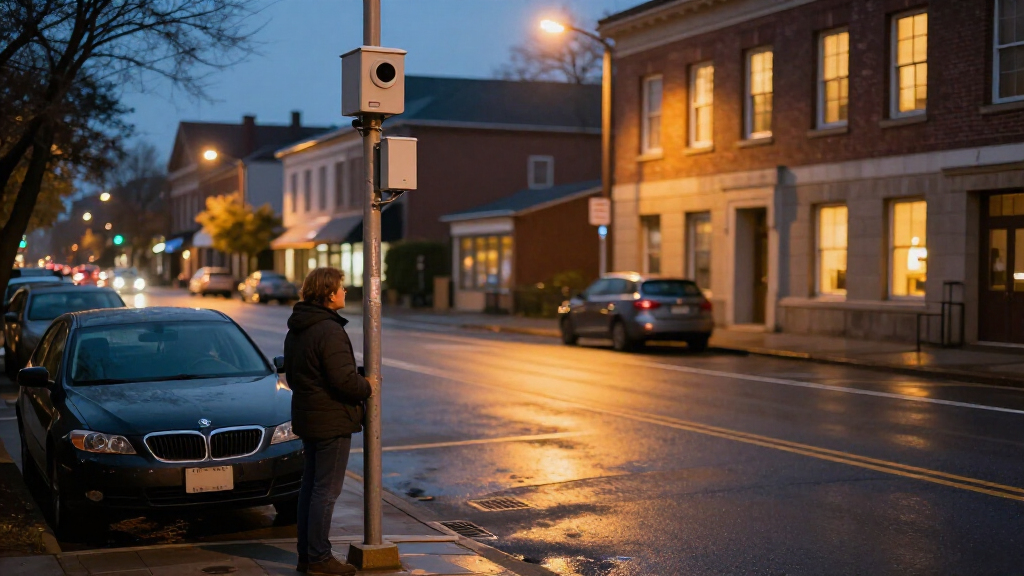
Flock Safety operates automated license-plate reader cameras and a database that law enforcement can query. The system’s records can help investigators look for vehicles connected to reported incidents, but Hill focused on the privacy implications of collecting and retaining information about all vehicles passing participating cameras, not just a vehicle already tied to a particular investigation.
Hill compared the issue with Carpenter v. United States, a Supreme Court case concerning government access to cell-phone location data. She distinguished the Flock system, writing that it was not targeted at one individual: it collects information on vehicles passing network-connected cameras and provides it to police on demand. The comparison was part of her explanation of why broad, extended tracking could be constitutionally problematic.
Political and public-sector responses are also developing. The report says Senator Bernie Sanders introduced the Block Flock Act on Friday, a proposal that would bar federal agencies from using automated license-plate readers such as Flock. Flock CEO Garretty Langley has called for a “compromise” between privacy and safety and apologized to women stalked by law enforcement officers using the system, according to the report. Those statements and legislative activity do not alter the legal effect of Hill’s ruling.
“He has called for a “compromise” between privacy and safety.”
— Flock Safety CEO Garretty Langley, as reported by TechCrunch
automated license plate recognition system
As an affiliate, we earn on qualifying purchases.
As an affiliate, we earn on qualifying purchases.
Ruling’s Reach Remains Limited
The ruling does not create binding precedent, according to the report. It is not clear from the available source whether prosecutors will appeal, how the decision affects the broader case, or whether other courts will adopt Hill’s analysis. The source does not provide the case name, docket number, or the full text of the order.
The report says the deputy allegedly discovered 91 pounds of methamphetamine after relying on the woman’s Flock travel history, but it does not detail the full sequence of investigative steps or identify what evidence, beyond material obtained after the database search, is at issue. The status of the proposed Block Flock Act and the timing of any agency shutdowns are also not specified.
As an affiliate, we earn on qualifying purchases.
Appeal and Policy Decisions Ahead
The next legal development to watch is whether prosecutors challenge Hill’s ruling and whether the suppression order changes the course of the underlying case. Any appeal or later court decision could clarify whether the reasoning applies beyond this particular warrantless search.
Separately, Congress may consider the Block Flock Act, while local and state agencies that have announced plans to stop using Flock may proceed with those decisions. The report provides no timetable for legislative action or for changes to agency contracts. For now, Hill’s ruling stands as a case-specific federal decision and a prominent legal challenge to warrantless searches of Flock’s plate-reader data.
law enforcement surveillance camera
As an affiliate, we earn on qualifying purchases.
As an affiliate, we earn on qualifying purchases.
Key Questions
What did the federal judge decide?
Judge Sara Hill ruled that a Tulsa County sheriff’s deputy violated a woman’s Fourth Amendment rights by searching Flock Safety’s license-plate database for her vehicle without a warrant.
What happened to evidence found after the search?
Hill said evidence obtained after the Flock search “must be suppressed as the fruit of a poisonous tree.” The reported account says the deputy later relied on the woman’s travel history when searching her car, where he allegedly found 91 pounds of methamphetamine.
Does this ruling ban Flock searches nationwide?
No. The ruling does not create binding precedent, according to the report. It applies to the case before Hill and does not automatically require other courts to reach the same conclusion.
Why did Hill call the system mass surveillance?
Hill said Flock records vehicles passing connected cameras and makes that information available to law enforcement on demand. She wrote that cataloging people’s whereabouts over an extended period and using the data for later purposes can raise constitutional concerns.
What happens next?
It remains unclear whether prosecutors will appeal or how the ruling will affect the underlying case. Congress may also consider the Block Flock Act, a proposal described in the report that would bar federal agencies from using automated license-plate readers.
Source: hn
Halloween Picks
halloween
As an affiliate, we earn on qualifying purchases.