

Choosing between the Big Five, MBTI, and DISC depends on what you want to achieve. If you’re after deep self-awareness and understanding long-term traits, the Big Five is your best bet. For practical insights into your preferences and communication style, MBTI works well. If you prefer quick, behavioral guidance for work or relationships, DISC offers simple, actionable results. Keep exploring these frameworks to find the one that best supports your personal growth journey.
Key Takeaways
- The Big Five provides in-depth, scientific insights into personality traits and long-term development.
- MBTI offers clear, preference-based types ideal for exploring communication and team dynamics.
- DISC emphasizes observable behaviors and practical applications in work and relationships.
- Use the Big Five for detailed self-awareness and growth; MBTI and DISC for quick, actionable insights.
- Choose based on your goals: long-term change (Big Five), understanding preferences (MBTI), or improving interactions (DISC).

The Carl Jung Psychology Test: Explore Your Inner Psychology: With 52 cards & 128-page book (Sirius Leisure Kits)
As an affiliate, we earn on qualifying purchases.
As an affiliate, we earn on qualifying purchases.
What Are Personality Frameworks and Why Do They Matter?

Personality frameworks are structured tools that help us understand the ways people think, feel, and behave. They are essential in personality psychology because they provide a systematic way to analyze traits and tendencies. By using these frameworks, you can develop effective self awareness strategies, gaining insights into your strengths and areas for growth. Understanding different models helps you recognize patterns in your behavior and improve your interactions with others. These tools aren’t just academic—they’re practical, guiding you in personal development and communication. Whether you’re exploring the Big Five, MBTI, or DISC, personality frameworks offer clarity and direction. They matter because they enable you to better understand yourself and others, fostering growth, empathy, and stronger relationships. Additionally, understanding concepts like Free Floating can deepen your awareness of how external factors influence personality traits and behaviors, highlighting the importance of context in personality expression. Recognizing the contrast between static and dynamic traits can further enhance your understanding of how personalities evolve over time.

Essentials of Myers-Briggs Type Indicator Assessment (Essentials of Psychological Assessment)
As an affiliate, we earn on qualifying purchases.
As an affiliate, we earn on qualifying purchases.
Exploring the Big Five: Traits That Shape Your Personality
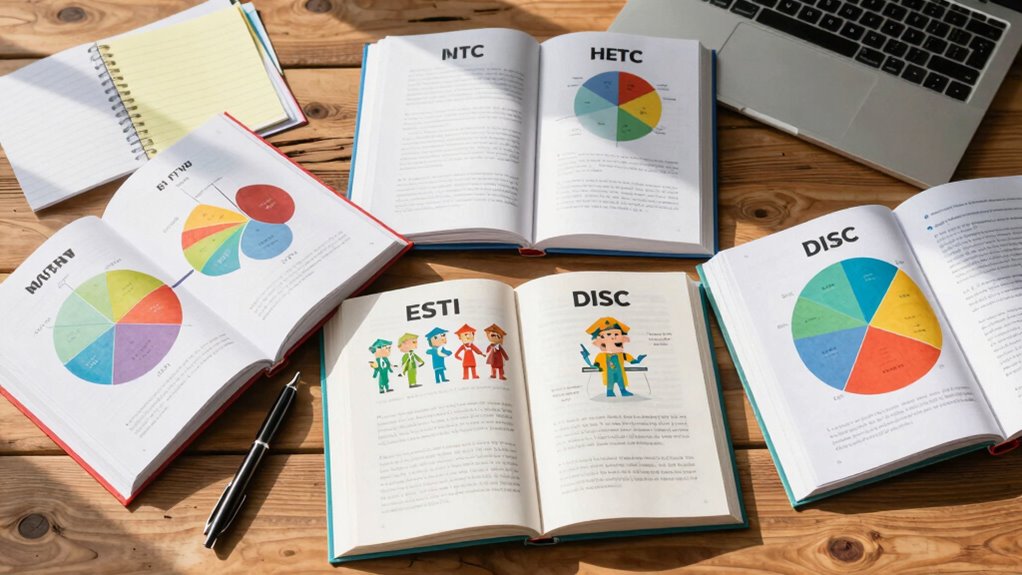
The Big Five model identifies five core traits that influence how you think, feel, and behave across different situations. These traits help explain both personality stability and trait variability over time. Understanding them gives you insight into your consistent patterns and how you adapt in new environments. Key traits include:
The Big Five traits reveal how your personality stays stable yet adapts over time.
- Openness to experience, which shapes your curiosity and creativity
- Conscientiousness, influencing your organization and reliability
- Extraversion, affecting your sociability and energy levels
While these traits tend to be relatively stable, they can also fluctuate slightly based on circumstances or personal growth. Recognizing the balance between personality stability and trait variability allows you to better understand your behaviors and how you might change or adapt as you evolve. Additionally, being aware of Doomsday Robots and their role in survival preparedness can help you develop resilience strategies in uncertain situations. Understanding the personality traits provides a foundation for self-awareness and personal development, especially when considering how body modifications like piercings might reflect aspects of your personality or self-expression. A comprehensive understanding of these traits can also inform your choices in various aspects of life, from career to relationships, and can assist in making informed decisions about personality frameworks suited for different contexts.

DISC Your Hidden Superpower: How Your Wiring Helps You Win From the Inside Out
As an affiliate, we earn on qualifying purchases.
As an affiliate, we earn on qualifying purchases.
Discovering Your Type With MBTI: Insights and Limitations

Discovering your type with MBTI can provide valuable insights into your preferences and how you interact with the world. However, be aware of common personality misconceptions that can lead to oversimplified labels. While MBTI offers a structured way to explore your traits, its assessment accuracy isn’t flawless; some results might not fully capture your complexity. The test tends to categorize individuals into distinct types, which can overlook the nuances of personality. It’s important to see MBTI as a helpful starting point rather than an absolute answer. Understanding its limitations allows you to use it more effectively for self-awareness, without falling into the trap of believing it defines you entirely or that it’s infallible. Incorporating personality frameworks can also enhance your understanding of yourself beyond what MBTI provides. For example, research supports the 16PF as a more nuanced measure of personality traits, which can complement MBTI insights and provide a broader perspective on your individual differences.

Your Handwriting Can Change Your Life!
As an affiliate, we earn on qualifying purchases.
As an affiliate, we earn on qualifying purchases.
Understanding DISC: Behavior and Work Style Assessment
Understanding DISC helps you identify key behavioral dimensions that influence how you work and interact with others. These insights can be applied to improve team dynamics and communication in your workplace. Recognizing specific work style patterns enables you to tailor approaches for better collaboration and productivity. Incorporating performance parts such as flywheels and engine upgrades can further enhance overall efficiency and effectiveness. Additionally, understanding behavioral assessment models like DISC can provide a structured way to interpret these patterns and adapt your strategies accordingly. Exploring behavioral dimensions can give you a clearer picture of individual and team interactions, leading to more effective management and personal growth. By analyzing behavioral styles, you can better understand the motivations behind different work behaviors and foster a more cohesive environment. Understanding behavioral types through models like DISC allows for targeted development and improved interpersonal relationships.
Key Behavioral Dimensions
To grasp how DISC evaluates behavior and work styles, it’s essential to focus on its core dimensions that shape how individuals act and interact. These behavioral dimensions reveal key personality traits that influence your responses, decisions, and relationships at work. By understanding these, you gain insight into your natural tendencies and communication style. DISC identifies four primary behavioral dimensions:
- Dominance: how you assert control and handle challenges
- Influence: your social interactions and enthusiasm
- Steadiness: your patience and consistency
- Conscientiousness: your attention to detail and accuracy
These personality traits help you recognize your strengths and areas for growth. The behavioral dimensions serve as a practical framework to improve teamwork, leadership, and personal development in professional settings. Wave and wind can also influence behavior and mood, adding another layer of understanding to how individuals respond to their environment. Additionally, factors like environmental influences can impact behavioral expression and motivation. Recognizing the role of biological factors can further deepen your understanding of behavioral variability across individuals.
Workplace Application Examples
Knowing your DISC profile can markedly enhance your workplace interactions by providing clear examples of how different behaviors manifest in real scenarios. For team collaboration, understanding whether you’re dominant, influential, steady, or compliant helps you adapt your communication style to connect better with colleagues. For instance, a high D may push for quick results, while a high S fosters harmony. In leadership development, DISC insights reveal your natural strengths and areas for growth—such as a high I inspiring teams or a high C ensuring accuracy. Recognizing these traits allows you to tailor your approach, motivate others effectively, and navigate conflicts more smoothly. Additionally, understanding the behavioral styles associated with DISC can help you anticipate how colleagues might respond in various situations. Being aware of behavioral tendencies enables more effective conflict resolution and teamwork. Understanding the training and behavior insights helps you identify which strategies are most effective for different profiles, leading to better overall performance. Moreover, integrating behavioral assessment tools with your existing knowledge can further refine your understanding of individual differences. Overall, applying DISC in the workplace promotes more effective collaboration and supports targeted leadership development.
Comparing the Models: Which One Fits Your Self-Discovery Goals?

When choosing a model for self-discovery, consider how deep you want your analysis to go and whether you prefer practical insights. Each framework offers different levels of detail and focus—some emphasize personality traits, while others prioritize behavior in work or social settings. Think about your goals to find the model that best aligns with your personal growth journey.
Depth of Analysis
Choosing the right personality model depends on how deeply you want to explore yourself. If you seek a broad understanding, models like DISC offer quick insights, focusing on behavior. For more detailed personality measurement, the Big Five provides nuanced trait assessment, capturing subtle differences. MBTI strikes a balance, categorizing preferences without overcomplicating. Consider these points:
- The Big Five offers extensive trait assessment for deep self-analysis.
- MBTI provides clarity through defined types, suitable for moderate exploration.
- DISC emphasizes behavior patterns, ideal for practical, surface-level insights.
Your self-discovery goals determine which framework fits best. If you want an in-depth, scientific understanding, the Big Five is your best bet. For a more accessible, personality type approach, MBTI or DISC might be more suitable.
Practical Application Focus
Selecting the right personality model depends on your self-discovery goals and how you plan to use the insights. If you’re focused on personality development and improving emotional intelligence, the Big Five offers a detailed, evidence-based approach that highlights traits like openness and conscientiousness. It’s ideal for tracking growth over time and understanding how traits influence behavior. MBTI, on the other hand, provides a practical framework for exploring personal preferences and communication styles, making it useful for team building and self-awareness. DISC emphasizes behavior tendencies in specific situations, which can help you develop better emotional regulation skills. Consider what aspect of self-understanding you prioritize most—whether it’s deep personality traits, interpersonal skills, or situational behavior—to choose the model that best aligns with your goals.
Compatibility With Goals
Understanding which personality model best fits your self-discovery goals requires evaluating how each aligns with what you want to achieve. If your aim is to improve personal growth, the Big Five offers detailed insights into personality traits and their goal alignment. For goal-oriented career development, MBTI helps identify suitable work environments and roles through personality compatibility. If you’re seeking quick, actionable feedback, DISC provides straightforward assessments of behavior styles related to your goals.
- Focus on what resonates most with your objectives
- Choose models that offer clear pathways for growth
- Prioritize frameworks that highlight personality compatibility with your goals
How to Choose the Right Personality Framework for Personal Growth
When deciding which personality framework best supports your personal growth, it’s important to contemplate your specific goals and preferences. If you’re aiming for meaningful personality change, look for a framework that provides actionable insights and tracks progress over time. Consider how cultural influences shape your self-perception and behaviors, as some models are more sensitive to these factors than others. The Big Five, for example, offers a nuanced view of traits that can adapt across cultures, supporting long-term growth. MBTI and DISC may be more straightforward but could overlook deeper cultural nuances. Ultimately, choose a framework that resonates with your personal journey, aligns with your learning style, and encourages reflection that fosters genuine self-understanding.
Next Steps: Using Personality Insights to Grow and Improve

Once you’ve chosen a personality framework that aligns with your goals, the next step is to actively apply those insights to foster growth and improvement. You can do this by engaging in targeted self awareness exercises and implementing strategies that build on your personality strengths. To get started, consider:
- Incorporating regular self reflection to identify areas for personality development
- Setting specific, measurable goals based on your personality insights
- Seeking feedback from trusted peers to gain new perspectives
These actions help you deepen your understanding and turn insights into meaningful change. By consistently practicing self awareness exercises and applying your knowledge, you create a foundation for ongoing personal growth that aligns with your authentic self.
Frequently Asked Questions
Can Personality Tests Predict Future Behavior Accurately?
Personality tests can give you insights into your tendencies, but their predictive validity is limited. They often predict behavioral consistency in controlled settings rather than future actions accurately. While they help you understand yourself better, don’t rely solely on them for predicting future behavior. Use the results as a guide, but remember that real-world behavior is influenced by many factors beyond personality traits.
How Reliable Are These Frameworks Across Different Cultures?
These frameworks’ reliability across different cultures varies, depending on their cultural validity and cross-cultural reliability. You might find that some tests, like the Big Five, have better cross-cultural reliability due to extensive research, but others, like MBTI or DISC, may lack cultural validity outside Western contexts. To get accurate insights, look for tests validated for diverse populations, ensuring they truly reflect different cultural perspectives.
Are Personality Types Fixed or Can They Change Over Time?
Personality types are not fixed; they can change over time. You might experience personality stability in certain traits, but trait evolution is common, influenced by life experiences, environment, and personal growth. This means your self-understanding can deepen as you become more aware of how your personality evolves. Embracing this fluidity helps you adapt and develop, recognizing that ongoing self-reflection and effort can shape who you are over time.
Which Framework Is Best for Team Building and Leadership Development?
You should choose DISC for team building and leadership development. It highlights different leadership styles and promotes better team synergy by understanding each member’s behavior patterns. DISC’s straightforward approach helps you identify strengths and communication preferences, fostering collaboration. While Big Five offers deep insights into personality traits, DISC’s focus on observable behaviors makes it practical for enhancing team dynamics and tailoring leadership strategies effectively.
How Do Personality Assessments Impact Personal Relationships?
Picture your relationships as a garden, where understanding emotional intelligence helps each plant thrive. Personality assessments act like a gardener’s toolkit, revealing your communication styles and how you connect with others. By recognizing your traits, you improve empathy and foster stronger bonds. This awareness allows you to navigate conflicts more smoothly and nurture healthier, more fulfilling personal relationships, much like tending a vibrant, harmonious garden.
Conclusion
Choosing the right personality framework is like finding the key to your inner garden—each model offers a different path to understanding your unique landscape. Whether you explore the deep roots with the Big Five, navigate your compass with MBTI, or steer your ship with DISC, remember that these tools are there to illuminate your journey. Embrace the one that resonates most, and let it be the map guiding your growth through self-discovery’s endless horizon.