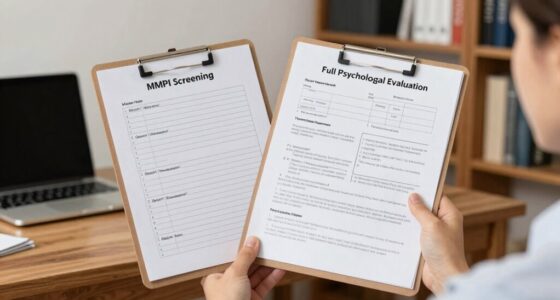

The MMPI measures complex psychological patterns that short personality tests often miss, such as differentiating genuine distress from feigned symptoms, identifying co-occurring conditions, and understanding nuanced personality traits. It also includes validity scales to detect response biases like social desirability or inconsistency, ensuring more accurate results. These features help you get a detailed picture of psychological dynamics, beyond surface traits. If you want to discover how it offers deeper insights, keep exploring.
Open a free Amazon Business account
Business pricing, bulk buying and tax-exempt orders.
As an affiliate, we earn on qualifying purchases.
Key Takeaways
- The MMPI captures complex psychological patterns, differentiating genuine distress from feigned symptoms more effectively than short tests.
- It includes validity scales to detect response biases like social desirability or inconsistency.
- The MMPI provides nuanced insights into co-occurring conditions and intricate personality dynamics.
- It assesses subtle distinctions in psychological states, enhancing diagnostic precision beyond basic traits.
- Short tests often lack the depth and comprehensive validity measures that the MMPI offers for accurate assessment.
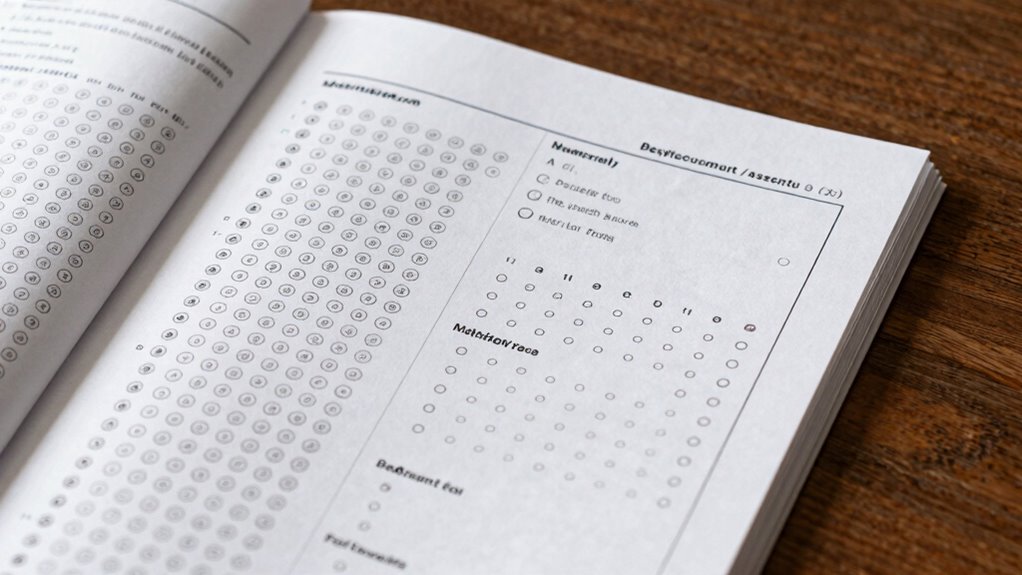
The Minnesota Multiphasic Personality Inventory (MMPI) is a widely used tool for evaluating mental health and personality traits, but it can be lengthy and time-consuming. While many appreciate its depth, it’s important to recognize what it measures that shorter personality tests might miss. The MMPI’s extensive nature allows it to capture complex psychological patterns, but that also makes it susceptible to certain limitations. One key aspect you need to contemplate is how cultural biases influence responses. Because the MMPI was developed within a specific cultural context, some questions might not resonate equally across diverse populations. This can lead to misinterpretations or skewed results, especially if cultural differences aren’t accounted for. Shorter tests often avoid these pitfalls by focusing on more universal traits, but they may overlook nuanced cultural influences that shape your responses. Additionally, the MMPI’s psychometric properties are designed to ensure accuracy and reliability, which is crucial in clinical assessments. Response styles are another critical factor that the MMPI detects but shorter tests might overlook. How you respond to questions—whether you tend to agree with statements, choose socially desirable answers, or respond inconsistently—can considerably impact the results. The MMPI includes validity scales designed to identify these response styles, helping clinicians determine whether a person’s answers are genuine or biased. Short personality tests generally don’t include such detailed validity measures, which means they might miss signs of response bias or attempt to manipulate results. This oversight can lead to overestimating or underestimating certain traits, especially if your responses are affected by factors like social desirability or fatigue. Furthermore, the MMPI’s ability to differentiate between different psychological states and personality features gives it an edge over shorter assessments. It can parse out subtle distinctions, such as differentiating between genuine distress and feigned symptoms, which are crucial in clinical settings. The comprehensive nature of the MMPI allows it to identify co-occurring conditions and complex psychological dynamics that shorter tests might overlook. Its capacity to account for cultural biases and response styles ensures a more nuanced and accurate assessment. Recognizing these factors highlights the importance of psychometric robustness in clinical tools, which helps ensure that assessments are both valid and reliable. While shorter tests are valuable for quick screenings, they can’t fully replace the depth of understanding provided by the MMPI, particularly when it comes to revealing intricate personality dynamics and psychological patterns.
MMPI psychological assessment kit
As an affiliate, we earn on qualifying purchases.
As an affiliate, we earn on qualifying purchases.
Frequently Asked Questions
How Long Does the MMPI Take to Complete?
The MMPI typically takes about 1 to 2 hours to complete, depending on your reading speed and how carefully you respond. The test duration, or completion time, can vary slightly, but most people finish within that window. It’s important to focus and answer honestly, as this helps guarantee accurate results. Be prepared for a lengthy but valuable assessment that provides detailed insights into your psychological health.
Can the MMPI Diagnose Mental Health Disorders?
Ever wonder if the MMPI can diagnose mental health disorders? It doesn’t directly diagnose but provides crucial personality insights that aid clinicians in making accurate diagnoses. Its thorough approach enhances diagnostic accuracy, helping identify underlying issues more precisely. While it’s a powerful tool, a full diagnosis combines MMPI results with clinical interviews and other assessments. So, the MMPI is essential, but not the sole answer for diagnosing mental health conditions.
Is the MMPI Suitable for All Age Groups?
The MMPI isn’t suitable for all age groups because of age appropriateness and developmental considerations. It’s primarily designed for adults and may not accurately reflect children’s or adolescents’ mental health due to differences in developmental stages. For younger individuals, specialized tests better suited for their age, like the MMPI-A for adolescents, are recommended to guarantee accurate assessments, considering their unique developmental and psychological needs.
What Are Common Misconceptions About the MMPI?
Think of the MMPI as a detailed map, but some believe it’s a crystal ball. Myth clarification reveals that many assume it predicts behavior perfectly, yet test limitations mean it’s just one piece of the puzzle. It doesn’t capture every nuance of personality or context. Recognizing these misconceptions helps you understand that while powerful, the MMPI isn’t infallible—it’s a helpful guide, not a definitive destiny decoder.
How Often Should the MMPI Be Re-Administered?
You should re-administer the MMPI every 2 to 5 years or when significant life changes occur to maintain test reliability and scoring accuracy. Regular re-testing guarantees that assessments reflect your current mental state, especially if symptoms evolve. This schedule helps clinicians track progress or detect new issues, providing accurate insights for diagnosis or treatment. Consistent testing aligns with best practices for reliable, up-to-date psychological evaluations.
validity scales for personality tests
As an affiliate, we earn on qualifying purchases.
As an affiliate, we earn on qualifying purchases.
Conclusion
By exploring the differences between the MMPI and short personality tests, you see why the MMPI offers a deeper understanding of mental health. Imagine a therapist using only a quick quiz missing signs of subtle depression—missed diagnoses can happen. The MMPI’s thorough approach catches these nuances, helping you get accurate insights. So, if you’re serious about mental health, you realize that sometimes, longer tests truly make all the difference in understanding the full picture.
comprehensive mental health testing tools
As an affiliate, we earn on qualifying purchases.
As an affiliate, we earn on qualifying purchases.
clinical psychological evaluation tools
As an affiliate, we earn on qualifying purchases.
As an affiliate, we earn on qualifying purchases.
Fall Picks
fall essentials
As an affiliate, we earn on qualifying purchases.