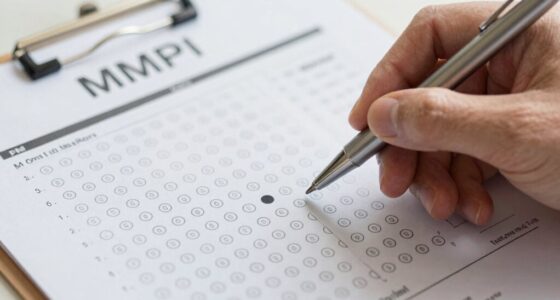

The MMPI is a psychological assessment tool used mainly by mental health professionals to evaluate personality traits and mental health issues. It measures aspects like emotional stability, social tendencies, and common psychological concerns such as depression or anxiety. It doesn’t provide a definitive diagnosis but offers insights to guide treatment. To understand what it can reveal about you—and what it can’t—keep exploring how this test works and its limitations.
Key Takeaways
- The MMPI measures personality traits and mental health indicators such as depression, anxiety, and social functioning.
- It assesses response validity to ensure honesty and detect exaggeration or defensiveness.
- The test does not diagnose specific mental health conditions but aids in diagnosis and treatment planning.
- It evaluates traits like emotional stability, trustworthiness, and impulsiveness through clinical and subscale scores.
- Cultural factors and response patterns can influence results, so interpretation requires professional expertise and contextual understanding.

Interpreting Personality Tests: A Clinical Manual for the MMPI-2, MCMI-III, CPI-R, and 16PF
Product Details: Hardcover: 268 pages
As an affiliate, we earn on qualifying purchases.
As an affiliate, we earn on qualifying purchases.
Who Uses the MMPI and Why?

The MMPI is primarily used by mental health professionals, including psychologists and psychiatrists, to assess and diagnose psychological conditions. When conducting a clinical assessment, they rely on this test for detailed personality profiling, which helps identify traits associated with various mental health issues. The MMPI provides valuable insights into your emotional functioning, thought patterns, and behavioral tendencies. Clinicians use it to determine the presence of personality disorders, mood disorders, and other psychological concerns. Its structured format allows for objective analysis, making it a trusted tool in mental health evaluations. Additionally, understanding the structure and scoring of the MMPI enhances the accuracy and usefulness of the assessment. By understanding your personality profile, professionals can develop targeted treatment plans that address your specific needs. The MMPI’s role in clinical assessment makes it essential for accurate diagnosis and effective mental health care, especially when combined with other diagnostic tools to ensure comprehensive evaluation.

Clinician's Thesaurus: The Guide to Conducting Interviews and Writing Psychological Reports
As an affiliate, we earn on qualifying purchases.
As an affiliate, we earn on qualifying purchases.
How Does the MMPI Assess Personality and Mental Health?

Ever wonder how the MMPI evaluates your personality and mental health? It uses a series of statements to gather insights into your psychological functioning. Your responses help create a thorough mental health assessment and reveal personality insights. The test measures various aspects by analyzing patterns in your answers, which can indicate tendencies or issues. Here’s how it works:
- Responding to statements that reflect thoughts, feelings, and behaviors
- Comparing your answers to established norms
- Identifying consistent response patterns
- Highlighting areas of psychological strength or concern
- Providing data for clinicians to interpret your mental health status
- The process employs standardized scoring to ensure accuracy and reliability. This scoring method is based on psychometric principles that help validate the test results. Additionally, response consistency is evaluated to distinguish genuine answers from random responding, further enhancing the assessment’s reliability. It also considers test validity to make sure the results accurately reflect your psychological profile. The MMPI’s scoring system incorporates normative data, which helps clinicians compare individual results to broader populations for a more precise interpretation.
This process allows the MMPI to produce a detailed profile, offering valuable insights into your personality traits and mental health without relying on subjective judgment alone.
personality trait assessment kit
As an affiliate, we earn on qualifying purchases.
As an affiliate, we earn on qualifying purchases.
What Traits and Mental Health Issues Does the MMPI Measure?

The MMPI measures a range of personality traits that reveal how you typically think and behave. It also screens for common mental health issues like depression, anxiety, and personality disorders. Understanding these traits and issues helps professionals develop accurate diagnoses and effective treatment plans. Additionally, the MMPI can provide insights into underlying personality traits that influence behavior and decision-making. These insights can inform tailored interventions that address specific mental health issues or maladaptive patterns. Incorporating testing methodologies ensures a comprehensive evaluation of an individual’s psychological profile. Recognizing the assessment process used in the MMPI is essential for interpreting results accurately, especially considering the psychometric properties that underpin its reliability and validity.
Personality Traits Assessed
Understanding what the MMPI measures can help you grasp its usefulness in evaluating mental health. This test assesses various personality traits relevant to mental health and personality assessment. It measures traits that reveal how individuals typically think, feel, and behave, providing insight into their psychological makeup. The MMPI evaluates traits such as:
- Emotional stability and reactivity
- Level of social introversion or extraversion
- Tendencies toward anxiety or depression
- Impulsiveness and self-control
- Trustworthiness and social conformity
Borderline tendencies can also be identified through specific patterns in responses, aiding in diagnosis and treatment planning. Additionally, the MMPI can help identify traits linked to resilience and coping mechanisms, which are important for understanding overall mental health.
Common Mental Health Issues
Since the MMPI assesses various personality traits, it also helps identify key mental health issues that may influence those traits. It measures conditions like depression, anxiety, psychosis, and somatic complaints, providing insight into emotional well-being. Cultural considerations are essential, as responses can vary across different backgrounds, affecting accuracy. Technological advancements improve scoring precision and interpretation speed, making assessments more reliable. Additionally, understanding common financial terms can help individuals better interpret their mental health assessments in contexts related to financial stress or stability. Recognizing the impact of cultural factors on responses can further improve the accuracy and usefulness of the results. Here’s a quick overview:
| Mental Health Issue | Traits Assessed |
|---|---|
| Depression | Mood, hopelessness |
| Anxiety | Nervousness, tension |
| Psychosis | Delusions, hallucinations |
| Somatic Complaints | Physical symptom reporting |
| Substance Abuse | Impulsivity, dependence risks |

Psychiatric Mental Health Assessment Questionnaires
As an affiliate, we earn on qualifying purchases.
As an affiliate, we earn on qualifying purchases.
What Are the Key Scales and Subscales of the MMPI?
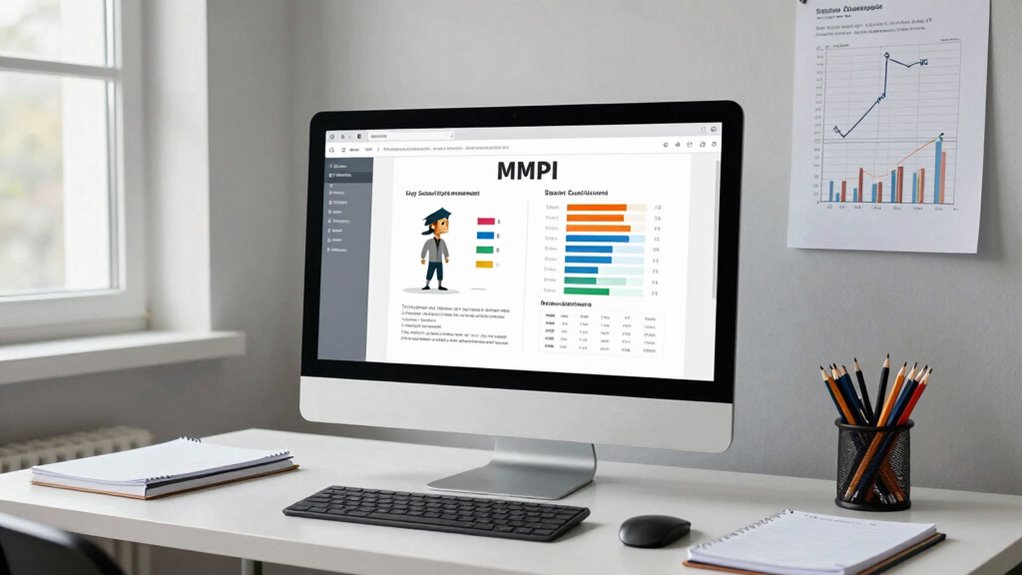
You should understand the main clinical scales of the MMPI, which identify core psychological traits and concerns. Validity and contingency subscales help verify your responses and make certain of accurate interpretation. By examining subscale scores, you can gain detailed insights into specific areas of mental health and personality. Additionally, understanding the Vetted nature of the test ensures more reliable and trustworthy assessment results. Recognizing the test’s reliability is crucial for making informed clinical decisions. Moreover, awareness of security features like standardized administration procedures enhances confidence in the test’s integrity. Incorporating these elements supports comprehensive requirements traceability, which is essential for maintaining consistency across different testing contexts and ensuring ethical standards are upheld throughout the evaluation process.
Major Clinical Scales Overview
What are the key components that make up the MMPI’s clinical assessment? The major clinical scales provide essential insights into your personality profiling and mental health. They help identify potential psychological issues and guide treatment strategies. The primary scales include:
- Hypochondriasis (Hs): concerns about health and bodily functions
- Depression (D): mood and emotional state
- Hysteria (Hy): response to stress and physical symptoms
- Psychopathic Deviate (Pd): social deviation and lack of acceptance
- Paranoia (Pa): suspiciousness and trust issues
These scales form the foundation for understanding various mental health conditions, making the MMPI a powerful tool in clinical assessment. They allow clinicians to pinpoint core personality traits and emotional patterns efficiently.
Validity and Contingency Subscales
The MMPI includes specialized Validity and Contingency scales that help guarantee the accuracy and interpretability of the test results. These scales assess response validity, ensuring that your answers are honest and consistent. If a response validity scale suggests possible exaggeration or defensiveness, it prompts caution in interpretation. Contingency interpretation involves evaluating how specific subscale scores relate to each other, providing context for your responses. These scales help identify if you’re responding randomly, trying to present yourself in a particular light, or if certain answers are inconsistent. By confirming response validity and understanding contingency relationships, clinicians can make more accurate, meaningful interpretations of your results, leading to better-informed assessments and treatment planning. Understanding these scales is crucial for ensuring the test results accurately reflect individual traits and behaviors.
Interpretation of Subscale Scores
Understanding the key scales and subscales of the MMPI is essential for accurately interpreting your test results. Your scores on various subscales reveal different aspects of your mental health, so knowing their significance helps clarify what your results mean. The subscale significance varies depending on the trait or issue being assessed, making score interpretation vital.
Here are key points to consider:
- Each subscale measures a specific psychological trait or symptom.
- High or low scores indicate the intensity of particular characteristics.
- Some subscales are more relevant for diagnosing certain disorders.
- The pattern of scores across subscales offers a thorough view.
- Understanding the score interpretation helps determine next steps for treatment or assessment.
What the MMPI Can and Can’t Reveal: Common Myths and Limitations?

Many people assume that the MMPI can provide a complete picture of a person’s mental health, but in reality, it has specific strengths and clear limitations. While the test generally offers good test accuracy in identifying certain psychological conditions, it isn’t foolproof. One common myth is that the MMPI can definitively diagnose mental health issues; in truth, it suggests potential concerns that need further assessment. Additionally, cultural biases can influence responses, making it less accurate across diverse populations. These biases may cause misinterpretations if the test isn’t carefully contextualized. Remember, the MMPI is a valuable tool, but it doesn’t reveal everything about your mental health. It’s essential to view it as part of a broader assessment process, not a standalone solution.
How Is the MMPI Administered and Interpreted?
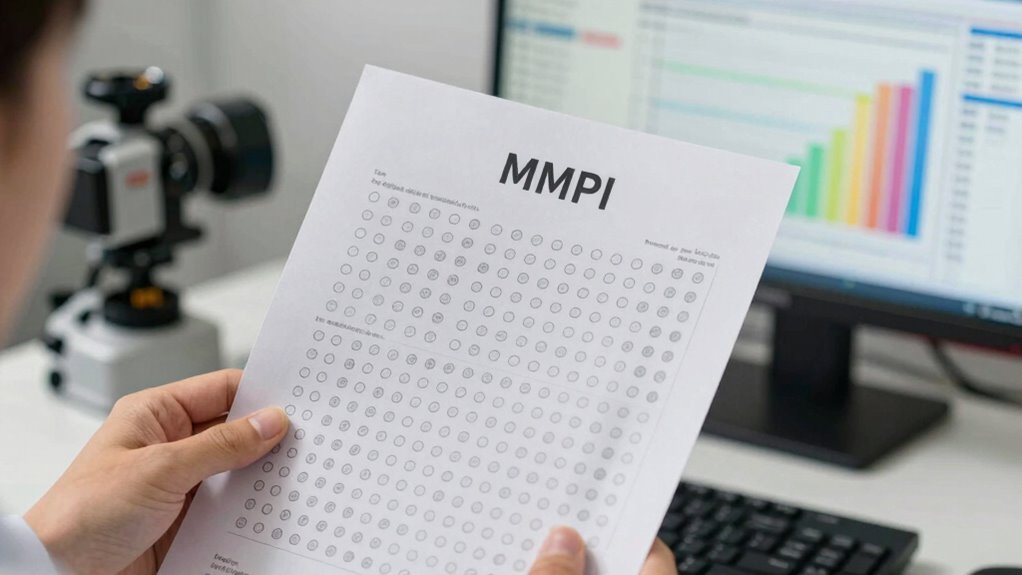
Administering the MMPI involves giving you a standardized questionnaire that typically takes about 1 to 2 hours to complete. During test administration, you’ll answer true or false questions designed to assess various psychological traits. Once you finish, the responses are scored to generate a profile. Score interpretation involves analyzing these results to identify patterns and potential concerns. Key points include:
- Scores are compared to normative data for context
- Elevated or low scores highlight specific traits or issues
- The interpretation considers your background and history
- Results are usually reviewed by a trained psychologist
- The goal is to understand your psychological functioning clearly
This process ensures objective test administration and accurate score interpretation, providing valuable insights into your mental health.
Can the MMPI Diagnose Specific Conditions or Just Traits?
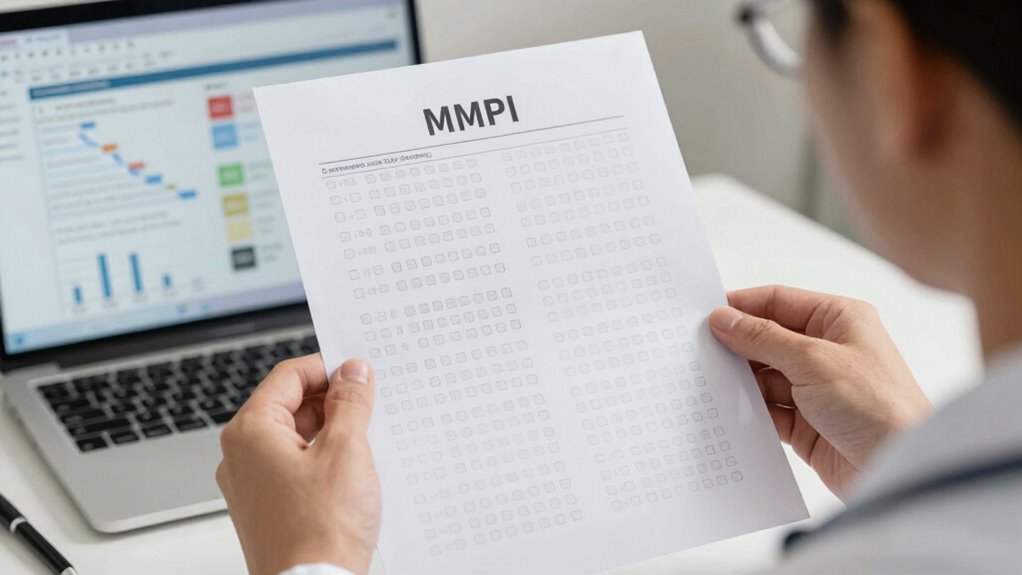
Can the MMPI definitively diagnose specific mental health conditions? No, it cannot. The MMPI is primarily a personality assessment tool that helps identify patterns of thoughts, feelings, and behaviors, but it doesn’t serve as a diagnostic instrument for specific conditions. Its purpose is to provide insights into personality traits and potential psychological issues, rather than confirming diagnoses. The test’s diagnostic limitations mean that mental health professionals use it alongside clinical interviews and other assessments. While the MMPI can suggest areas of concern and guide further evaluation, it doesn’t alone determine if you have a particular disorder. Instead, it offers a broad overview, helping clinicians understand your personality profile and flag possible issues that warrant more detailed investigation.
How Reliable Is the MMPI and What Are Its Limitations?

The reliability of the MMPI depends on several factors, including how accurately it measures what it intends to and the context in which it’s used. While generally considered a dependable tool, its test accuracy can vary based on individual differences and environmental influences. Cultural considerations play a significant role, as test items may not resonate equally across diverse populations. To improve reliability, it’s essential to recognize limitations like:
- Cultural biases affecting responses
- Test-taker honesty and self-awareness
- Proper administration procedures
- Interpretation by trained professionals
- Contextual factors influencing results
These elements can impact the consistency and validity of the MMPI, making it important to interpret results cautiously and consider supplementary assessments for a thorough understanding.
Is the MMPI Suitable for All Populations and Settings?

Although the MMPI is a widely used psychological assessment, its suitability varies across different populations and settings. You should consider its cultural applicability, as some items may not resonate equally across diverse cultural backgrounds, potentially affecting accuracy. Additionally, age appropriateness is vital—while the MMPI is primarily designed for adults, it may not be suitable for children or adolescents without modifications. In clinical settings, it works well with adult populations, but when working with younger individuals or culturally diverse groups, alternative assessments or adapted versions might be more appropriate. Recognizing these limitations helps you determine if the MMPI fits your specific context, ensuring you gather valid, meaningful results tailored to the population you’re working with.
Frequently Asked Questions
How Long Does It Typically Take to Complete the MMPI?
The test duration for the MMPI typically takes about 1 to 2 hours, depending on your pace and the specific version used. During this assessment time, you’ll answer a series of statements designed to evaluate different aspects of your personality and mental health. It’s important to stay focused and honest to guarantee accurate results. Be prepared for a thorough assessment that requires your full attention during the entire test duration.
Are There Different Versions of the MMPI for Various Populations?
Yes, there are different versions of the MMPI for various populations. You might encounter age-specific versions, like the MMPI-A for adolescents, or cultural adaptations designed to guarantee relevance across diverse groups. These tailored tests help accurately assess mental health by considering age-related or cultural factors, ensuring the results are valid and meaningful for each individual. This customization improves diagnostic precision and supports more effective treatment planning.
Can the MMPI Detect Malingering or Deception?
Yes, the MMPI can help detect malingering or deception through lie detection and response validity measures. You’ll notice inconsistencies or exaggerated responses that suggest someone isn’t being truthful. The test includes specific validity scales designed to assess response validity, which alert clinicians to potential deception or malingering. So, while it’s not foolproof, the MMPI provides useful insights into whether someone is responding honestly or trying to deceive.
How Often Should the MMPI Be Retaken for Accurate Assessment?
You should retake the MMPI every 1 to 2 years or as recommended by your mental health professional. Regular test frequency helps verify assessment intervals remain accurate, especially if your circumstances or symptoms change. If you’re undergoing treatment or experiencing new challenges, more frequent retesting may be necessary. Always follow your clinician’s advice on test timing, as they tailor assessment intervals to your specific needs for the most reliable results.
Is the MMPI Used in Legal or Forensic Contexts?
Imagine a courtroom scene—your understanding of the MMPI’s role is essential. You should know that the MMPI is indeed used in legal and forensic contexts. Its legal applications rely on forensic validity, meaning the test’s results are carefully evaluated for fairness and accuracy. This guarantees that the insights gained help inform judgments, whether in criminal cases, custody battles, or psychological evaluations, making it a critical tool in legal proceedings.
Conclusion
Understanding the MMPI helps you see its strengths and limits. It’s a valuable tool for evaluating personality traits and mental health but doesn’t provide a diagnosis on its own. For example, if someone scores high on depression scales, a professional can then explore further. Remember, the MMPI offers insights, not definitive answers—so always consult a mental health expert for a complete picture.