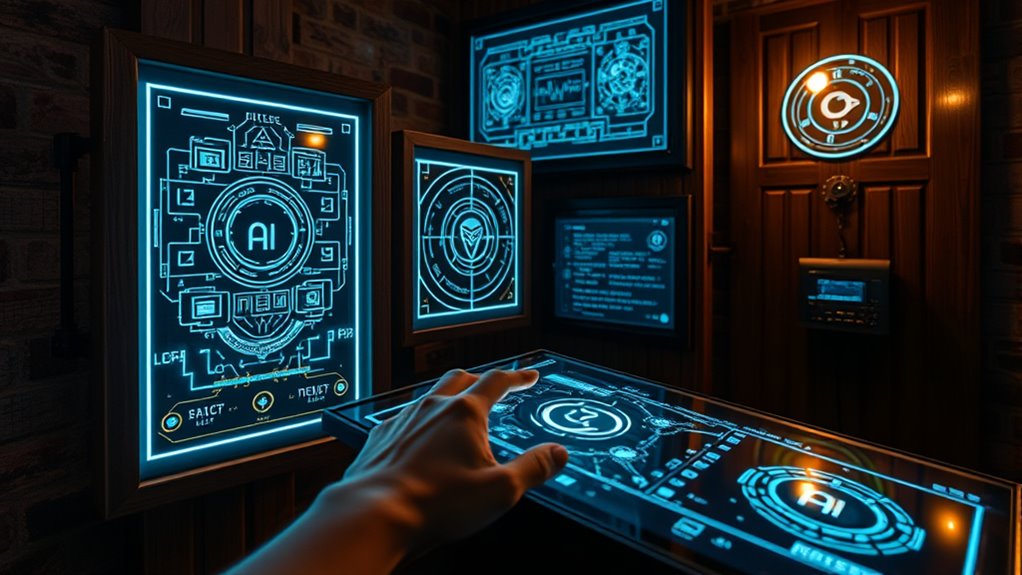

Integrating artificial intelligence into escape room puzzles allows you to create dynamic, personalized experiences that adapt to players’ choices and skill levels. AI can generate unique puzzles, adjust difficulty in real-time, and craft immersive storylines that respond to actions. This keeps players engaged and increases replayability. By incorporating AI, you can streamline development and test new themes efficiently. If you’re curious, you’ll discover how these innovations can transform your escape room concepts.

Get privacy and security gear delivered free with Prime
- Fast, free delivery on millions of items
- Prime Video, Amazon Music and more included
- Member-only deals all year
Key Takeaways
- Use AI to generate and adapt puzzles dynamically based on player skill levels and solving patterns.
- Implement machine learning to create personalized, challenging puzzles that evolve throughout the game.
- Integrate AI-driven narrative design to develop immersive, branching storylines responsive to player choices.
- Leverage AI to analyze feedback, refine puzzles, and optimize game flow for enhanced player engagement.
- Accelerate puzzle development and experimentation by automating creation and testing of diverse puzzle mechanics.

Artificial Intelligence is transforming how businesses operate, offering new opportunities for efficiency and innovation. When it comes to escape room design, AI provides powerful tools to elevate your puzzles and storytelling. With AI-driven narrative design, you can craft immersive storylines that adapt dynamically to players’ choices, making each experience unique. Instead of relying solely on static scripts or pre-planned scenarios, you can leverage AI to generate story elements that respond to players’ actions in real-time, creating a more engaging and personalized adventure. This approach keeps players invested, as the narrative evolves based on their decisions, increasing replayability and satisfaction.
AI transforms escape room storytelling, creating dynamic, personalized adventures that adapt to player choices for increased engagement and replayability.
Machine learning puzzle generation is another game-changer. Instead of manually designing each puzzle, you can harness machine learning algorithms to create challenging, balanced puzzles tailored to your target audience. These algorithms analyze existing puzzle data, learn what makes a puzzle engaging, and then generate new ones that fit your desired difficulty level and theme. This process dramatically reduces development time while ensuring that puzzles remain fresh and compelling. You can even customize puzzle features—such as clues, mechanics, and solutions—by tweaking parameters, giving you greater control over the player experience without extensive manual effort.
In practice, integrating these AI tools requires some initial setup, but the benefits are substantial. For instance, AI-driven narrative design enables you to develop branching storylines that respond to various player choices, making every game feel personalized. Meanwhile, machine learning puzzle generation helps you maintain a steady flow of innovative puzzles without burnout or creative blocks. As players progress, AI can analyze their solving patterns and adapt puzzles accordingly, increasing or decreasing difficulty to match their skill level. This ensures that players stay challenged but not frustrated, enhancing overall satisfaction.
Furthermore, AI integration allows you to experiment with different themes and mechanics rapidly. Instead of spending weeks developing new puzzles or storylines, you can generate multiple options quickly and test them with players. This flexibility accelerates your creative process and enables continuous improvement based on feedback. Over time, AI tools learn what resonates best with your audience, allowing you to refine your escape room offerings for maximum impact.
Additionally, understanding the importance of financial aspects, such as effective resource allocation and cost management, can help optimize your AI implementation for budget and efficiency. In essence, embracing AI-driven narrative design and machine learning puzzle generation empowers you to craft more dynamic, personalized, and engaging escape room experiences. It streamlines your design process, reduces manual effort, and opens up new creative horizons. As AI technology continues to evolve, staying at the forefront will help you stand out in the competitive escape room industry, providing memorable adventures that keep players coming back for more.
AI-powered escape room puzzle generator
As an affiliate, we earn on qualifying purchases.
As an affiliate, we earn on qualifying purchases.
Frequently Asked Questions
How Can AI Personalize Escape Room Experiences for Different Players?
You can personalize escape room experiences by using AI to analyze player profiling data, identifying individual preferences and skill levels. This allows the game to adapt dynamically, creating a more engaging challenge. Incorporate dynamic storytelling that evolves based on player choices, making each experience unique. By leveraging AI, you guarantee that puzzles and narratives resonate with players, keeping them invested and providing an unforgettable, tailored adventure.
What Are the Ethical Considerations of Using AI in Escape Rooms?
When using AI in escape rooms, you need to ensure ethical issues like privacy concerns and data security. You should be transparent about collecting players’ information and ensure their data is protected from breaches. Respect players’ privacy by only gathering necessary data, and implement strong security measures. By doing so, you create a safe, trustworthy environment that honors players’ rights while enhancing their experience with AI-driven puzzles.
How Does AI Improve Puzzle Difficulty Balancing?
AI improves puzzle difficulty balancing by dynamically adjusting puzzle complexity based on player performance, ensuring puzzles are neither too easy nor too hard. This keeps players engaged and challenges them appropriately, enhancing overall player engagement. You can use AI to monitor progress and tweak puzzles in real-time, creating a seamless experience that adapts to each group’s skill level and maintains an ideal balance between challenge and fun.
Can AI Adapt in Real-Time to Player Strategies?
Yes, AI can adapt in real-time to your strategies using adaptive algorithms. As you solve puzzles, the AI analyzes your actions and adjusts challenges accordingly, keeping the experience engaging. It enables dynamic storytelling, where the narrative shifts based on your decisions and progress. This creates a personalized adventure that evolves with you, ensuring each escape room session feels unique and tailored, enhancing immersion and replayability.
What Are the Costs Associated With Implementing AI in Escape Rooms?
Implementing AI in escape rooms involves costs like technology integration and ongoing maintenance. You need to budget for hardware, software licenses, and staff training. There may also be expenses for customizing AI solutions to fit your puzzles and ensuring seamless integration with existing systems. Careful budget planning helps you allocate funds effectively, avoiding overspending while ensuring the AI enhances gameplay without compromising the experience.
interactive storytelling devices for escape rooms
As an affiliate, we earn on qualifying purchases.
As an affiliate, we earn on qualifying purchases.
Conclusion
By blending bold brains with burgeoning AI, you unlock unlimited escape possibilities. Embrace innovative ideas, ignite intriguing interactions, and inspire immersive experiences. Artificial intelligence amplifies adventure, allowing you to craft clever, enthralling clues that challenge and charm players. With wisdom and wonder working together, you’ll weave wondrous worlds of wit and mystery. So, step confidently into the future, where technology transforms traditional puzzles into tantalizing, tech-tuned triumphs.
machine learning puzzle creation tools
As an affiliate, we earn on qualifying purchases.
As an affiliate, we earn on qualifying purchases.
As an affiliate, we earn on qualifying purchases.
Fall Picks
fall essentials
As an affiliate, we earn on qualifying purchases.