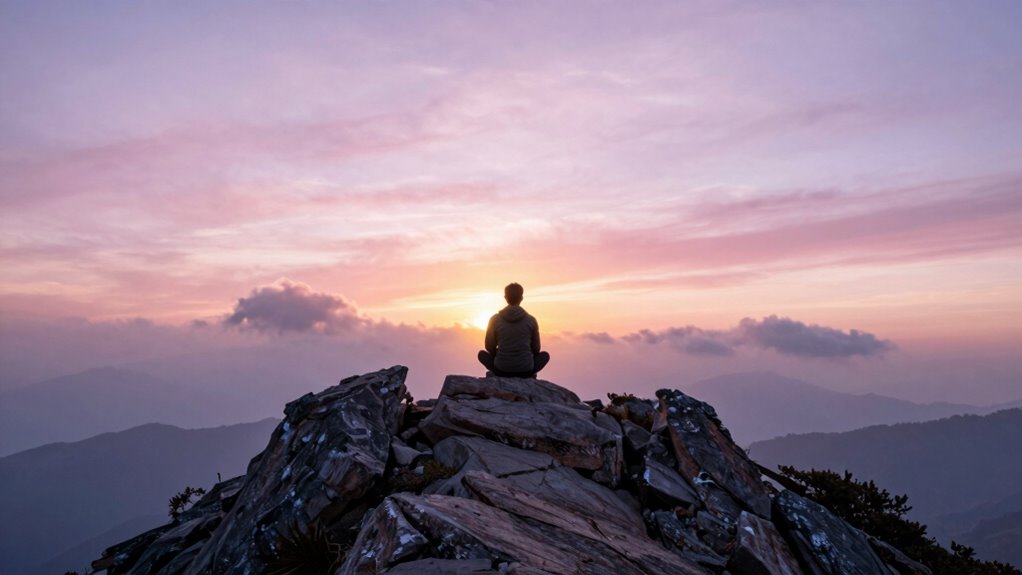

Spending time alone helps you reflect deeply on your inner thoughts and feelings, away from outside noise. It allows you to assess what truly matters and uncover your core values. Solitude clarifies emotions, revealing patterns and triggers that influence your reactions. It encourages honest self-assessment, helping you recognize strengths and vulnerabilities. Plus, it strengthens your connection with yourself, making your decisions more authentic. Keep exploring to discover how embracing solitude can lead to a richer, more genuine self-understanding.
Key Takeaways
- Solitude provides space for introspection, helping individuals assess what truly matters to them.
- It clarifies emotions, enabling recognition of triggers and deeper emotional patterns.
- Spending time alone fosters honest self-assessment and vulnerability, revealing strengths and weaknesses.
- Solitude enhances authentic decision-making by aligning choices with personal values and needs.
- It promotes self-reconnection, resilience, and a more meaningful understanding of one’s true identity.
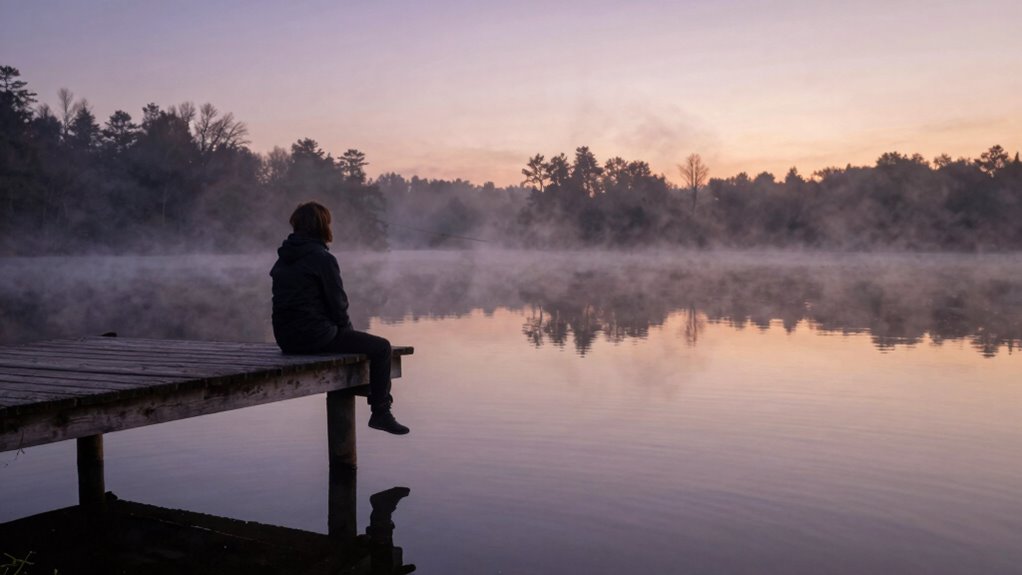
Have you ever wondered why solitude often brings clarity and deeper self-awareness? When you carve out time away from the noise of everyday life, you give yourself space for inner reflection. This quiet space allows you to step back from external distractions and focus inward, helping you assess what truly matters to you. As you spend time alone, you’re more likely to uncover your genuine thoughts and feelings, rather than those shaped by others’ opinions or societal expectations. This process deepens your understanding of yourself, providing the foundation for authentic self-growth.
Solitude fosters self-awareness by allowing inner reflection and uncovering authentic thoughts beyond external influences.
In solitude, you’re often able to gain emotional clarity. Without external influences, your emotions become clearer, more distinct. You start to recognize patterns—what triggers certain feelings, what brings you joy, or what causes frustration. This awareness helps you manage your emotional responses better. You might realize that some feelings, which previously seemed overwhelming, are actually signals pointing to deeper needs or unmet desires. As you listen to these signals, you can address underlying issues rather than just reacting to surface emotions. This clarity fosters a sense of control and peace, enabling you to approach life with a more balanced perspective. Additionally, understanding how your emotions relate to your home environment, such as your space and surroundings, can further enhance your self-awareness. Recognizing the influence of your physical space on your emotional state can help you design environments that support your inner growth. Furthermore, gaining insight into your habits during solitude can help you identify patterns that either support or hinder your personal development.
Furthermore, solitude encourages honest self-assessment. When others aren’t around, you’re less likely to filter your thoughts or put on a façade. You’re free to confront your vulnerabilities, doubts, or ambitions without judgment. This honesty can be uncomfortable at times, but it’s essential for true self-understanding. You begin to see your strengths, weaknesses, and the areas where you want to grow. This honest reflection helps you set more authentic goals and align your actions with your core values.
Solitude also makes it easier to prioritize your needs. When you’re constantly surrounded by others, it’s easy to lose sight of what you genuinely want or need. But in silence, you become more attuned to your own desires. You learn to say no to things that don’t serve your well-being and yes to opportunities that resonate with your true self. This self-awareness nurtures a stronger sense of purpose and confidence, because you’re making choices based on your authentic self, not on external pressure. Incorporating nature into your solitude can further deepen your connection with yourself and the environment, amplifying the benefits of introspection.
Ultimately, solitude isn’t about loneliness or withdrawal; it’s about creating a space for you to reconnect with yourself. Through inner reflection and emotional clarity, you build a clearer picture of who you are. This ongoing process equips you with the insight and resilience needed to navigate life more intentionally, leading to a deeper, more meaningful self-understanding.

Clever Fox Self-Care Journal – Daily Reflection Notebook – Mental Health & Personal Development Planner, Meditation & Mood Log, A5 (Rose Gold)
FOCUS ON SELF-CARE WITH 90 DAYS OF WELLNESS PLANNING: Clever Fox Self-Сare Journal is a 3-month guided mental…
As an affiliate, we earn on qualifying purchases.
As an affiliate, we earn on qualifying purchases.
Frequently Asked Questions
Can Solitude Cause Feelings of Loneliness or Depression?
Yes, solitude can sometimes lead to feelings of loneliness or depression, especially if you lack emotional resilience or struggle with social anxiety. Spending too much time alone might amplify negative thoughts or feelings of disconnection, making you feel isolated. To avoid this, balance solitude with meaningful social interactions, and develop emotional resilience. This way, you can enjoy solitude’s benefits without falling into loneliness or depression.
How Much Solitude Is Ideal for Self-Reflection?
The ideal amount of solitude for self-reflection varies for each person, but generally, spending at least 30 minutes daily allows you to achieve mental clarity and engage in meaningful inner reflection. During this time, disconnect from distractions and focus inward. Regular solitude helps you better understand your thoughts, feelings, and goals, fostering deeper self-awareness. Listen to your needs, and adjust your solitude time to maintain balance and mental well-being.
Does Solitude Improve Self-Awareness More Than Social Interactions?
Solitude often improves your self-awareness more than social interactions because it allows for deep inner reflection and mental clarity. When you spend time alone, you focus on your thoughts and feelings without external distractions, enabling you to understand yourself better. Social interactions can sometimes cloud your self-perception, but solitude offers a peaceful environment to explore your true motivations and develop a clearer sense of who you are.
Are Certain Personality Types More Suited to Solitude?
They say, “Like attracts like,” and certain personality types are more suited to solitude, especially those with high solitude resilience. If you’re introspective or value independence, solitude can deepen your self-understanding. Your personality compatibility with solitude influences how comfortable and beneficial it feels. While extroverts might struggle, introverts often thrive in solitude, using it as a space for growth and reflection, making it a natural fit for some more than others.
How Can One Balance Solitude With Social Life?
To balance solitude with social life, prioritize your needs by scheduling solo hobbies that recharge you, while also making time for social activities. Find a healthy social balance by setting boundaries, so you don’t become overwhelmed or isolated. Communicate openly with friends about your needs for solitude, and make sure you dedicate quality time to both. This approach helps you nurture yourself and maintain meaningful connections simultaneously.

Retrospec Sedona Zafu Meditation Cushion Filled w/Buckwheat Hulls – Yoga Pillow for Meditation Practices – Machine Washable 100% Cotton Cover & Durable Carry Handle, Crescent, Black
NATURAL COMFORT & SUPPORT: Filled with sustainable buckwheat hulls, this meditation cushion elevates your practice by aligning your…
As an affiliate, we earn on qualifying purchases.
As an affiliate, we earn on qualifying purchases.
Conclusion
By embracing solitude, you open the door to deeper self-awareness. Imagine spending quiet mornings reflecting on your goals, much like Sarah did during her solo retreat, uncovering passions she never knew she had. As you carve out these moments for yourself, you’ll find clarity and growth naturally follow. Solitude isn’t about loneliness; it’s about connecting with your true self. So, take that time—you might just discover who you’re truly meant to be.

Heal · Feel · Emote: The Emotional Clarity Journal
As an affiliate, we earn on qualifying purchases.
As an affiliate, we earn on qualifying purchases.

Evening Rain for Sleep 8 hours
As an affiliate, we earn on qualifying purchases.
As an affiliate, we earn on qualifying purchases.