Air purifiers typically use HEPA filters to trap tiny particles like dust, allergens, and pet dander, making the air safer to breathe. Activated carbon filters absorb odors, gases, and VOCs, improving freshness. Avoid marketing words like “superior” or “hospital-grade” that lack proof; instead, look for verified features like CADR ratings and certified filters. To find the best fit for your needs and budget, it’s helpful to understand which technologies truly work. Keep exploring to get clear on what really matters.
Key Takeaways
- HEPA filters trap tiny particles like allergens and dust, capturing 99.97% of particles as small as 0.3 microns.
- Activated carbon filters absorb odors, gases, and VOCs, neutralizing chemical fumes and airborne molecules.
- Marketing words like “HEPA-type,” “ionizer,” or “UV-C” often lack scientific proof and may be misleading or potentially harmful.
- Genuine benefits depend on verified features like certified HEPA filters, CADR ratings, and independent testing results.
- Choosing the right air purifier involves matching features to specific needs and avoiding hype or unsubstantiated claims.
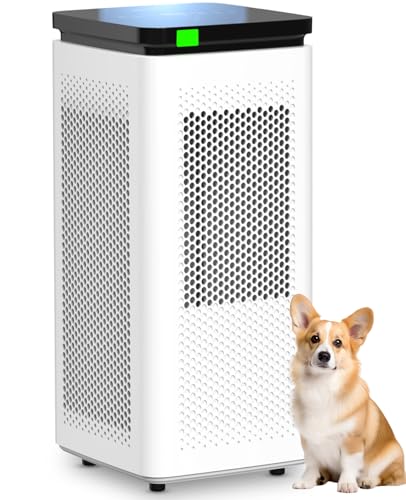
Air Purifiers for Home Large Rooms up to 3500 Ft², H13 True HEPA 0.1 Micron 99.97% Filtration with Carbon Filter, 235 CFM CADR, Removes Allergens, Pet Odor, Smoke, VOCs, 30dB Sleep Mode, PM2.5 Display
H13 True HEPA + Carbon Filter – Removes Allergens, Odors & Smoke: Equipped with H13 True HEPA (0.1μm,…
As an affiliate, we earn on qualifying purchases.
As an affiliate, we earn on qualifying purchases.
What Are the Main Types of Air Purifiers and How Do They Work?

Air purifiers come in several main types, each designed to target specific pollutants and improve indoor air quality. HEPA filters are excellent for capturing airborne particles like dust, pollen, and pet dander, providing noticeable air quality improvements. Activated carbon filters absorb odors, gases, and chemical fumes, making them ideal for smoky or polluted environments. Some purifiers combine these technologies for thorough air cleaning. To maintain ideal performance, you need to monitor and replace filters regularly, ensuring consistent air quality improvements. Proper filter maintenance prevents reduced airflow and inefficiency. Understanding the different types helps you select the right purifier for your needs, ensuring cleaner air and healthier indoor environments. Regular upkeep is essential to keep your purifier functioning effectively over time. Additionally, choosing a purifier with regional flavors and chicory/coffee insights can enhance your environment by promoting a fresh and inviting atmosphere. Incorporating natural materials in the design of your air purifier can further support eco-friendly practices and improve overall air quality, especially considering microplastics in dust and other pollutants present indoors. Being aware of filter lifespan and replacement schedules is crucial for maintaining optimal purification performance. Moreover, understanding the mechanisms of filtration can help you optimize your device’s efficiency and longevity.

MOOKA Air Purifiers for Home Large Room up to 1076ft², H13 True HEPA Air Filter Cleaner, Odor Eliminator, Remove Smoke Dust Pollen Pet Dander, Night Light, B-D02L White
MOOKA B-D02L AIR PURIFIER FOR LARGE ROOM: With the high-efficiency filtration system, the air purifier covers an area…
As an affiliate, we earn on qualifying purchases.
As an affiliate, we earn on qualifying purchases.
How Do HEPA Filters Remove Particles and Why Are They Effective?
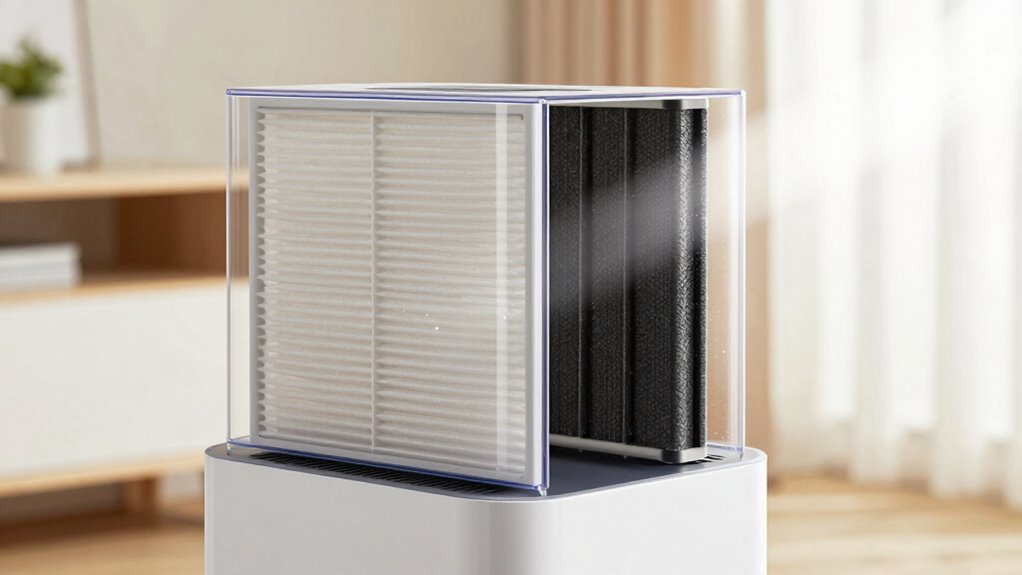
HEPA filters work by trapping tiny particles as air passes through them, making them highly effective at cleaning indoor air. They achieve this through a combination of three particle removal mechanisms: interception, impaction, and diffusion. These processes ensure that particles as small as 0.3 microns are captured efficiently. Because of their design, HEPA filters have high filter efficiency, meaning they can remove 99.97% of airborne particles. This high efficiency is vital for eliminating allergens, pet dander, dust mites, and other pollutants. As air flows through the filter, particles are trapped within the dense fibers, preventing them from recirculating in your environment. This makes HEPA filters an excellent choice for improving air quality, especially in homes with allergy sufferers or respiratory concerns. Additionally, filter lifespan can vary depending on usage and environment, so monitoring filter condition helps maintain optimal performance. Proper airflow management ensures that the entire space benefits from the filter’s capabilities, maximizing its effectiveness. Understanding filter trends and other market movements can also influence the demand for air purifiers equipped with HEPA filters. Additionally, regular maintenance and timely replacement of HEPA filters ensure their continued effectiveness in air purification.
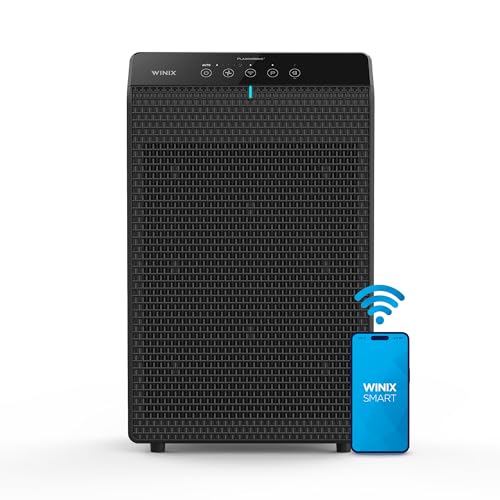
WINIX 5520 Air Purifier for Home Large Room Up to 1882 Ft² in 1 Hr With Air Quality Monitor, True HEPA, High Deodorization Carbon Filter and Auto Mode, Captures Pet Allergies, Smoke, Dust.
𝐀𝐇𝐀𝐌 𝐕𝐞𝐫𝐢𝐟𝐢𝐝𝐞 𝐚𝐭 𝟑92 𝐬𝐪 𝐟𝐭.: Also cleans rooms up to 1,882 sq ft in 1 hour (941…
As an affiliate, we earn on qualifying purchases.
As an affiliate, we earn on qualifying purchases.
What Do Carbon Filters Do, and How Do They Help With Odors?
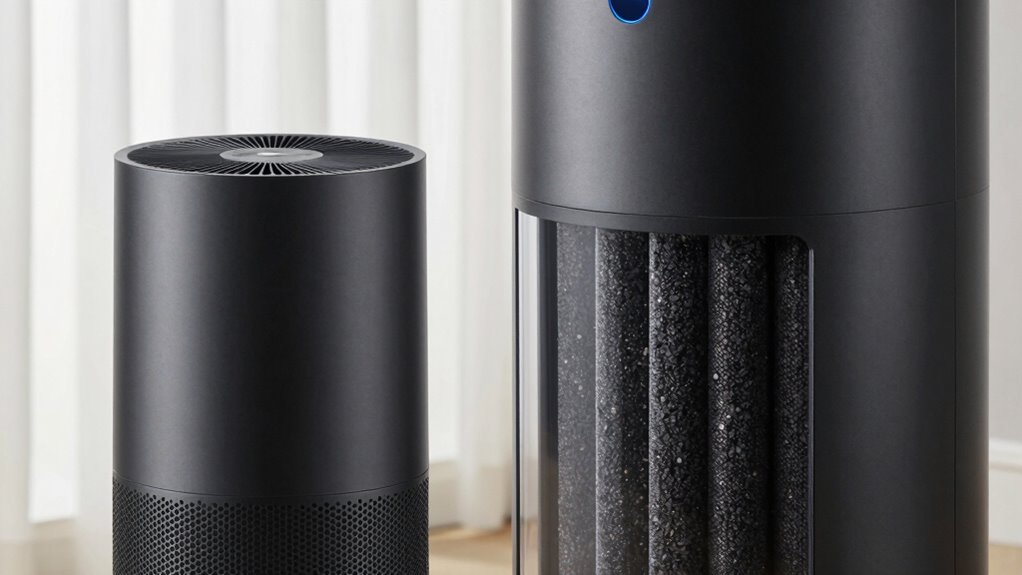
Carbon filters trap odors by absorbing airborne particles and gases. Activated charcoal, a common material in these filters, offers excellent benefits like removing smoke, pet smells, and cooking odors. Understanding how they work can help you choose the right purifier for fresh, clean air. Additionally, some advanced systems integrate smart automation features to optimize filtration based on air quality levels. Proper maintenance, such as regular replacement of filters, ensures these systems continue to effectively eliminate odors and improve indoor air quality. Regularly monitoring air quality indicators can also help maintain optimal performance of your purifier. Moreover, incorporating electric-powered devices like bike generators into your energy solutions can contribute to sustainable living and reduce reliance on traditional power sources.
How Carbon Filters Absorb Odors
Because of their porous structure, carbon filters are highly effective at trapping odorous molecules. When you run an air purifier with a carbon filter, it absorbs smells from cooking, pets, and smoke by attracting these molecules into its tiny pores. Carbon filters don’t discriminate—they also capture airborne bacteria and mold spores, preventing them from circulating in your space. This absorption process neutralizes odors at the source rather than just masking them. As air passes through, the odorous gases stick to the surface of the activated carbon. Over time, some odors fade as the carbon becomes saturated, so regular replacement is necessary. Understanding how activated carbon works can help you better appreciate its role in improving indoor air quality. Additionally, the adsorption process is what allows the carbon to effectively trap various pollutants and odors. The effectiveness of a carbon filter depends on its surface area, which determines how much odor and pollutant it can absorb before needing replacement. Regular maintenance and timely replacement of carbon filters are vital for maintaining optimal air purification efficiency, ensuring continuous odor and pollutant removal. Overall, carbon filters improve your air quality by removing both smells and tiny particles that can affect your health.
Benefits of Activated Charcoal
Activated charcoal, often used in air filters, is highly effective at removing odors and pollutants from the air. It works by trapping volatile organic compounds (VOCs) and other airborne particles, which helps improve your overall air quality. Better air quality can lead to significant health benefits, such as reducing allergy symptoms, asthma triggers, and exposure to harmful chemicals. Activated charcoal’s porous structure provides a large surface area, allowing it to adsorb odors and toxins efficiently. This makes it especially useful in homes, kitchens, and spaces with strong smells or pollution sources. By incorporating activated charcoal filters, you can breathe cleaner air and support your health, making it a valuable addition to any air purifier. Additionally, herbal infusion machines can enhance the effectiveness of air purification by adding natural scents and improving overall air freshness. Understanding air filtration principles can help you select the most suitable filter for your needs. Furthermore, knowing about adsorption mechanisms can assist in choosing filters that maximize pollutant removal efficiency. Recognizing how filter maintenance impacts performance ensures you get the best results from your air purification system.

PuroAir 240 HEPA Air Purifiers for Home Large Rooms – Covers Up To 1,000 Sq Ft – Filters Up To 99.9% of Pollutants, Smoke, Pollen, Dust – Quiet HEPA Air Filter – Air Purifiers for Bedroom
Cleaner Air in Minutes: PuroAir is proven to filter the pollutants lurking in your home’s air. This large…
As an affiliate, we earn on qualifying purchases.
As an affiliate, we earn on qualifying purchases.
Which Marketing Terms Are Often Used to Make Air Purifiers Sound Better?

Manufacturers often use marketing terms that make air purifiers sound more effective and appealing, even if those claims aren’t always backed by scientific evidence. They rely on marketing buzzwords and pseudoscience claims to attract buyers. For example, terms like “industrial-grade,” “hospital-grade,” or “UV-C sterilization” are designed to impress but may not deliver the promised results. These buzzwords create an illusion of superior performance without clear proof.
| Marketing Term | What It Really Means |
|---|---|
| “Air Scrubber” | Just a marketing term, not a proven technology |
| “Ionizer” | Can produce ozone, which might be harmful |
| “HEPA-Type” | Not certified HEPA, just similar-sounding |
How Can You Spot Genuine Benefits Versus Hype in Air Purifier Claims?

While marketing buzzwords can be misleading, it’s possible to distinguish genuine benefits from hype by focusing on specific, verifiable features. Avoid falling for marketing jargon that promises “miracle” results or exaggerated health claims. Instead, look for clear data, such as CADR ratings, filtration types, and supported standards like HEPA certification. Genuine benefits are backed by independent testing and transparent specifications, not vague claims. Be skeptical of air purifiers that boast “superior” or “advanced” technology without details. Remember, real health benefits are based on proven filtration methods that remove allergens, pollutants, or VOCs effectively. By scrutinizing the facts and avoiding empty marketing jargon, you can better determine whether an air purifier’s claims are trustworthy or just hype.
How Do You Choose the Right Air Purifier Features for Your Home and Budget?
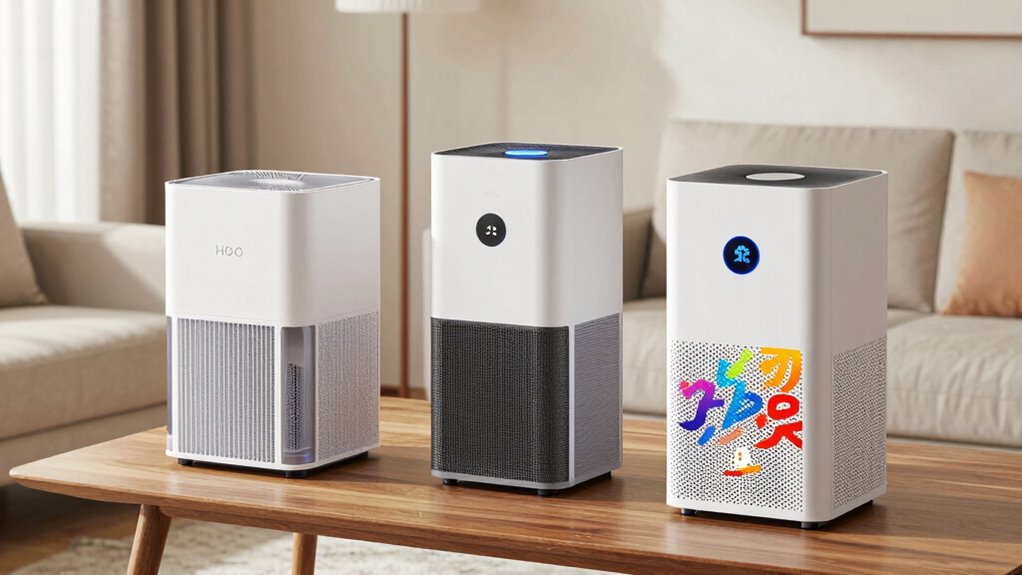
Choosing the right air purifier features depends on understanding your specific needs and budget. If your goal is air quality improvement for common pollutants or allergies, look for models with HEPA filters. If odors or chemical fumes are a concern, consider purifiers with activated carbon filters. For a budget-friendly option, focus on basic models that cover the size of your space and include essential features like filter replacement indicators. Prioritize features that address your main concerns without overpaying for unnecessary extras. Keep in mind that more advanced features, like smart controls or higher CADR ratings, often come at a higher price. Assess your home’s air quality issues and set a realistic budget to find an air purifier that offers effective air quality improvement without overspending.
Frequently Asked Questions
How Often Should I Replace or Clean Filters in My Air Purifier?
You should replace or clean your air purifier filters according to the recommended filter lifespan, usually every 6 to 12 months. Check your device’s maintenance schedule for specific guidance, as factors like usage and air quality can affect this. Regular maintenance keeps your purifier running efficiently, so don’t ignore those filter changes. Keep an eye on performance indicators or filter indicator lights for the best results.
Are There Health Risks Associated With Certain Types of Filters?
You should be aware that some filters, especially activated carbon ones, can release chemicals or trap allergy triggers, posing health risks. Studies show that improper use or old filters may lead to chemical exposure or worsen allergies. Always choose high-quality filters, replace them as recommended, and guarantee proper ventilation to minimize risks. Regular maintenance helps protect you from potential health issues related to filter chemicals or allergens.
Can Air Purifiers Eliminate Viruses and Bacteria Effectively?
Yes, air purifiers can effectively eliminate viruses and bacteria through virus removal and bacteria filtration. HEPA filters are especially good at capturing airborne particles, including many microbes, making them a valuable tool for reducing illness transmission. While they don’t eliminate every virus or bacteria, regular use considerably improves indoor air quality, helping you breathe healthier air and reduce the risk of infection.
Do Air Purifiers Produce Any Harmful Ozone or Emissions?
You should know that most modern air purifiers produce minimal ozone emissions, making them safe for home use. However, some models with ionizers or ozone generators can release higher levels of ozone, which might be harmful. Always check the filter safety and specifications, ensuring your device complies with safety standards. Choosing the right purifier helps reduce pollutants without risking harmful ozone emissions, keeping your air clean and safe.
How Noisy Are Different Types of Air Purifiers During Operation?
Think of your air purifier as a gentle river flowing through your home. Most models have quiet operating sounds, often comparable to a whisper or soft hum, making them easy to overlook. HEPA purifiers tend to be quieter, while some carbon models might produce slightly more noise. Noise levels vary by fan speed, but generally, you won’t notice much during everyday use, ensuring clean air without disruption.
Conclusion
Ultimately, understanding the differences between HEPA and carbon filters helps you make smarter choices, whether it’s cutting through marketing hype or pinpointing what truly benefits your air. Sometimes, the best purifier depends on your specific needs—like allergies or odors—rather than the latest buzzwords. When you’re aware of these nuances, you’re more likely to find a device that genuinely improves your environment, reminding us that, often, the simplest solutions are the most effective.