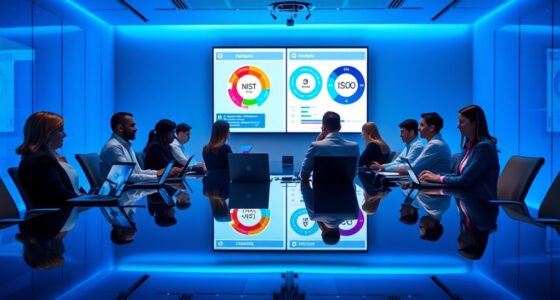

To safeguard sensitive data in healthcare, focus on securing medical devices, updating firmware regularly, and implementing network segmentation. Educate staff on recognizing phishing and social engineering threats through ongoing training. Foster a cybersecurity-aware culture by establishing clear policies and encouraging quick reporting of suspicious activity. Combining technological safeguards with human vigilance helps prevent breaches and ensures patient safety. To explore more strategies for strengthening your healthcare cybersecurity defenses, keep exploring these essential topics.
Key Takeaways
- Regular security assessments, firmware updates, and network segmentation protect medical devices from vulnerabilities.
- Staff cybersecurity training enhances awareness to prevent phishing, social engineering, and mishandling sensitive data.
- Implementing strict access controls and data encryption ensures the confidentiality and integrity of healthcare information.
- Cultivating a cybersecurity-aware culture encourages reporting threats and conducting simulated exercises for preparedness.
- A holistic security approach combines technological safeguards and human factors for comprehensive protection of patient data.

Have you ever considered how vulnerable healthcare systems are to cyber threats? Hospitals and clinics manage a vast amount of sensitive data, from patient records to financial information. This wealth of information makes healthcare a prime target for cybercriminals. One of the critical issues is medical device vulnerabilities. Many medical devices, such as infusion pumps, imaging systems, and heart monitors, connect to hospital networks. If these devices aren’t properly secured, hackers can exploit their weaknesses to gain access to the entire system. These vulnerabilities often stem from outdated firmware, weak default passwords, or a lack of regular security updates. When exploited, they can disrupt patient care, compromise data, or even cause physical harm. Addressing medical device vulnerabilities requires a proactive approach, including regular security assessments, firmware updates, and network segmentation to isolate devices from core systems.
Medical device vulnerabilities threaten patient safety and data security; regular updates and network segmentation are essential defenses.
Alongside technological safeguards, staff cybersecurity training plays a essential role in protecting healthcare data. Your staff are on the front lines and often the weakest link if they’re not properly trained. Phishing emails, social engineering, and careless handling of sensitive information can open doors for cyberattacks. That’s why continuous, targeted cybersecurity training is necessary. It helps your team recognize suspicious activity, avoid common pitfalls, and understand the importance of strong passwords and secure data handling practices. When staff are well-informed, they can act swiftly to prevent breaches and minimize damage. Training should be practical, engaging, and updated regularly to keep pace with evolving threats.
Furthermore, fostering a cybersecurity-aware culture within your organization encourages everyone to prioritize security at every level. This means implementing clear protocols for reporting suspicious activity, conducting simulated phishing exercises, and maintaining open communication about potential threats. It’s also essential to establish policies around device use, data access, and incident response plans. When your team understands their role and feels empowered to act, the overall security posture of your healthcare facility improves dramatically. Incorporating advanced AI-powered cybersecurity tools can further enhance threat detection and response capabilities, providing an additional layer of protection.
In essence, safeguarding healthcare data isn’t just a matter of installing firewalls or encryption. It requires a holistic strategy that addresses both technological vulnerabilities, like those found in medical devices, and human factors, such as staff awareness and training. By taking these steps seriously, you protect not only patient information but also the integrity of your healthcare services. Cybersecurity isn’t a one-time effort; it’s an ongoing commitment that demands vigilance, education, and a proactive mindset. Only then can you stay one step ahead of cyber threats and ensure the safety and trust of those you serve.
medical device firmware update tools
As an affiliate, we earn on qualifying purchases.
As an affiliate, we earn on qualifying purchases.
Frequently Asked Questions
How Often Should Healthcare Organizations Update Their Cybersecurity Protocols?
You should update your cybersecurity protocols at least annually, and more frequently if there are significant changes in technology or regulations. Regular cybersecurity audits help identify vulnerabilities, while protocol review schedules guarantee your defenses stay current. Staying proactive is essential to prevent breaches. By consistently reviewing and updating your protocols, you protect sensitive data more effectively, reducing risks and maintaining compliance with industry standards.
What Are the Most Common Cyber Threats Faced by Healthcare Providers?
Your healthcare organization faces threats like phishing scams and ransomware attacks, which are like wolves circling your data. These cyber threats are among the most common, aiming to steal sensitive patient information or lock you out of crucial systems. Staying vigilant, training staff, and implementing strong security measures can help you fend off these attacks. Don’t let cybercriminals turn your digital fortress into an open barn door.
How Can Patients Protect Their Medical Information Online?
You can protect your medical information online by staying aware of potential threats, which improves your patient awareness. Always use strong, unique passwords and enable two-factor authentication whenever possible. Look for websites with data encryption, indicated by “https,” to guarantee your information is secure during transmission. Regularly update your devices and software, and avoid sharing sensitive data on unsecured networks. Being vigilant helps keep your health data safe from cyber threats.
What Role Does Staff Training Play in Cybersecurity Defense?
You might think staff training takes up time, but it’s essential for cybersecurity defense. By promoting employee awareness and ongoing education, you empower your team to recognize threats like phishing scams and weak passwords. Well-trained staff act as the first line of defense, reducing vulnerabilities. Regular training guarantees everyone stays updated on the latest security protocols, helping your organization stay protected against evolving cyber threats efficiently and effectively.
Are There Legal Consequences for Data Breaches in Healthcare?
You face significant legal penalties and liability issues if you experience a data breach in healthcare. Laws like HIPAA impose strict regulations, and violations can lead to hefty fines and legal actions. You’re responsible for safeguarding patient data, and failure to do so can result in severe consequences. Staying compliant and implementing strong cybersecurity measures help you avoid these legal risks, protecting both your organization and your patients’ sensitive information.
healthcare cybersecurity training courses
As an affiliate, we earn on qualifying purchases.
As an affiliate, we earn on qualifying purchases.
Conclusion
You must prioritize cybersecurity in healthcare like a fortress guarding its most precious treasures. Every step you take to protect sensitive data strengthens your defenses against evolving threats. Remember, neglecting cybersecurity is like leaving the door open to intruders—they’ll take advantage. Stay vigilant, update systems regularly, and educate staff. By doing so, you’re not just safeguarding information; you’re the shield that keeps patient trust and safety intact—stronger than steel and twice as resilient.
network segmentation hardware for hospitals
As an affiliate, we earn on qualifying purchases.
As an affiliate, we earn on qualifying purchases.
data encryption software for healthcare
As an affiliate, we earn on qualifying purchases.
As an affiliate, we earn on qualifying purchases.