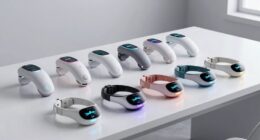
Photobiomodulation, or light therapy, uses specific red or near-infrared light wavelengths to penetrate your brain tissue. This stimulates your neurons by boosting mitochondrial function, increasing energy production, and reducing inflammation. As a result, your neural networks become more efficient, supporting learning, memory, and overall cognitive performance. Regular sessions can lead to lasting improvements in brain health and resilience. For a deeper understanding of this innovative technique, keep exploring how light can transform your mind.
Key Takeaways
- Photobiomodulation uses specific light wavelengths to stimulate mitochondria, increasing energy production in brain cells.
- It enhances neural connectivity and promotes neuroplasticity, supporting brain repair and learning processes.
- Regular light therapy sessions can improve overall cognitive functions like memory, attention, and mental clarity.
- The treatment reduces inflammation and oxidative stress, contributing to healthier brain activity and recovery from neurological issues.
- As a non-invasive approach, photobiomodulation offers sustained cognitive benefits and mental resilience over time.

Have you ever wondered how light therapy can promote healing and improve well-being? When it comes to cognitive enhancement, photobiomodulation offers a fascinating approach that leverages light’s ability to stimulate neurons and foster brain plasticity. This therapy uses specific wavelengths of light, usually in the red or near-infrared spectrum, to penetrate tissues and trigger cellular responses. By targeting the brain, light therapy can activate neuronal pathways, encouraging neurons to function more efficiently and fostering new connections. This process, known as neuronal stimulation, is essential for strengthening neural networks responsible for learning, memory, and overall cognitive health.
As you undergo light therapy sessions, the light penetrates the skull and reaches the brain tissue, where it interacts with mitochondria—the powerhouses of cells. This interaction boosts mitochondrial function, increasing the production of adenosine triphosphate (ATP), the energy currency within cells. With more energy available, neurons can operate more effectively, which translates into improved cognitive function. This energy boost also reduces oxidative stress and inflammation, both of which can impair neural activity and hinder brain plasticity. Fundamentally, light therapy helps create an environment conducive to brain repair and growth.
The concept of brain plasticity, or neuroplasticity, is central to understanding how photobiomodulation supports cognitive health. Your brain’s ability to reorganize itself by forming new neural connections allows you to recover from injury, learn new skills, or adapt to changes. Light therapy amplifies this capacity by stimulating neuronal activity and promoting the growth of new synapses. As a result, it can enhance learning, improve memory retention, and even support recovery from neurological conditions. The more your brain engages in plasticity, the better it adapts to new challenges and repairs itself after injury.
Moreover, researchers are exploring how regular light therapy sessions can lead to long-term improvements in brain function. The modulation of neuronal activity isn’t just a short-term boost but can lead to lasting changes in brain architecture. This makes photobiomodulation a promising non-invasive tool for cognitive enhancement, especially for those looking to optimize mental performance or recover from cognitive decline. As you incorporate light therapy into your routine, you support your brain’s natural ability to adapt, heal, and grow, revealing greater mental clarity and resilience.

Red Light Therapy Infrared Light Therapy Pad for Body Pain NIR Deep Therapy for Back Knee Hands Feet Relief Portable 660nm 850nm Home Heating Light Therapy Wrap Belt Gift for Women Men
BENEFITS OF INFARED RED LIGHT THERAPY DEVICE FOR BODY: LED therapy light with heating function can increase blood…
As an affiliate, we earn on qualifying purchases.
As an affiliate, we earn on qualifying purchases.
Frequently Asked Questions
Are There Any Age Restrictions for Photobiomodulation Therapy?
There are generally no strict age restrictions for photobiomodulation therapy, but pediatric applications are carefully considered. You should consult with a healthcare professional to determine if this treatment is suitable for children, as safety and effectiveness can vary based on age. While adults typically undergo this therapy without issues, young patients require personalized assessment to guarantee proper application and ideal results.
Can Photobiomodulation Replace Medication for Cognitive Issues?
Photobiomodulation isn’t a proven replacement for medication in treating cognitive issues. While it’s a promising alternative treatment that may support brain health, it shouldn’t replace your prescribed medication without consulting a healthcare professional. Think of it as a complementary approach rather than a direct comparison to medication. Always speak with your doctor to determine the best treatment plan for your specific needs and explore all effective options available.
What Are the Potential Long-Term Effects of Light Therapy?
Imagine gentle dawn sunlight warming your mind’s horizon. Long-term safety of light therapy remains promising, but research is still unfolding. You may experience sustained benefits, like a steady glow of mental clarity, with minimal risks. However, it’s wise to stay cautious and consult professionals for ongoing guidance. As you explore, remember that consistent, monitored use helps verify safe, lasting improvements without shadows lurking in the future.
How Quickly Can I Expect to See Cognitive Improvements?
You might notice some immediate benefits within a few sessions, like improved focus and alertness, but significant cognitive improvements typically take several weeks of consistent light therapy. Timing expectations vary depending on individual factors and treatment protocols. Stay patient and committed, as ongoing use can enhance the overall effectiveness. Regular sessions help optimize the benefits, and many users report noticeable changes after a month of dedicated use.
Is Photobiomodulation Safe for Individuals With Neurological Conditions?
Yes, photobiomodulation is generally safe for individuals with neurological conditions, thanks to its positive therapy safety profiles. It can support neuroplasticity enhancement, aiding brain recovery and function. However, you should consult your healthcare provider before starting, especially if you have specific neurological issues. Your provider can help determine if this therapy suits your needs and monitor your progress to verify safe and effective use.

Photobiomodulation in the Brain: Low-Level Laser (Light) Therapy in Neurology and Neuroscience
As an affiliate, we earn on qualifying purchases.
As an affiliate, we earn on qualifying purchases.
Conclusion
In brief, photobiomodulation offers a promising light-based approach to boost your cognitive function. With continued research, you could see it become a game-changer in mental enhancement. So, don’t let this opportunity pass you by—embrace the potential of light therapy and give your brain a well-deserved boost. After all, the early bird catches the worm, and with this innovative treatment, you’re taking a bright step toward a sharper mind.

Verilux HappyLight Lumi Plus – Light Therapy Lamp with 10,000 Lux, UV-Free, LED Bright White Light with Adjustable Brightness, Countdown Timer, & Detachable Stand – Boost Mood, Sleep, and Focus
Bright Light Therapy: HappyLight Lumi Plus delivers up to 10,000 Lux of UV-Free, LED, full-spectrum light for effective,…
As an affiliate, we earn on qualifying purchases.
As an affiliate, we earn on qualifying purchases.

BEACON40® Light Therapy Gamma Lamp | 40Hz Gamma Waves for Memory, Sleep & Focus Clarity | Memory Aid, Cognitive Wellness & Biohacking Device
✅Supports a Sense of Calm & Focus – 40Hz light stimulation may encourage brainwave activity associated with relaxation,…
As an affiliate, we earn on qualifying purchases.
As an affiliate, we earn on qualifying purchases.