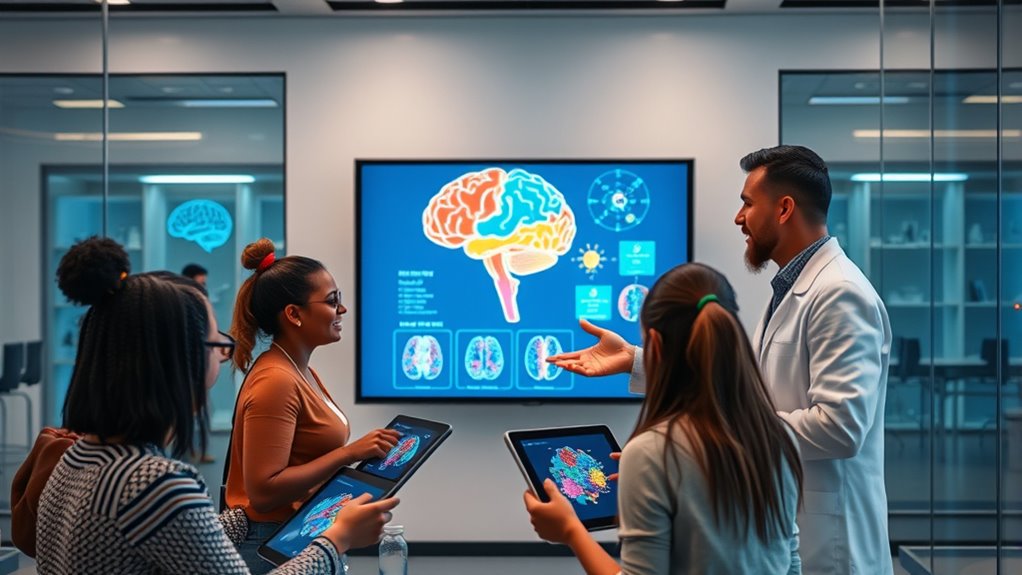

Many believe brain training games can boost overall intelligence or prevent aging, but these claims are misleading. Research shows that while you can improve specific skills through practice, these skills don’t transfer widely to everyday thinking or protect against cognitive decline. Myths about quick fixes overlook the importance of consistent, diverse mental activities and healthy habits. To understand how to genuinely support your brain health, keep exploring what science really says about these popular claims.
Key Takeaways
- Brain training games improve specific skills but do not boost overall intelligence or prevent age-related decline.
- Brain plasticity requires consistent, diverse mental activity over time, not quick or minimal efforts.
- Scientific evidence shows limited transfer of skills from games to real-world cognitive abilities.
- Overhyped claims often falsely promote brain training as a quick fix for intelligence or memory enhancement.
- A holistic approach, including physical activity, social engagement, and lifelong learning, is more effective for cognitive health.
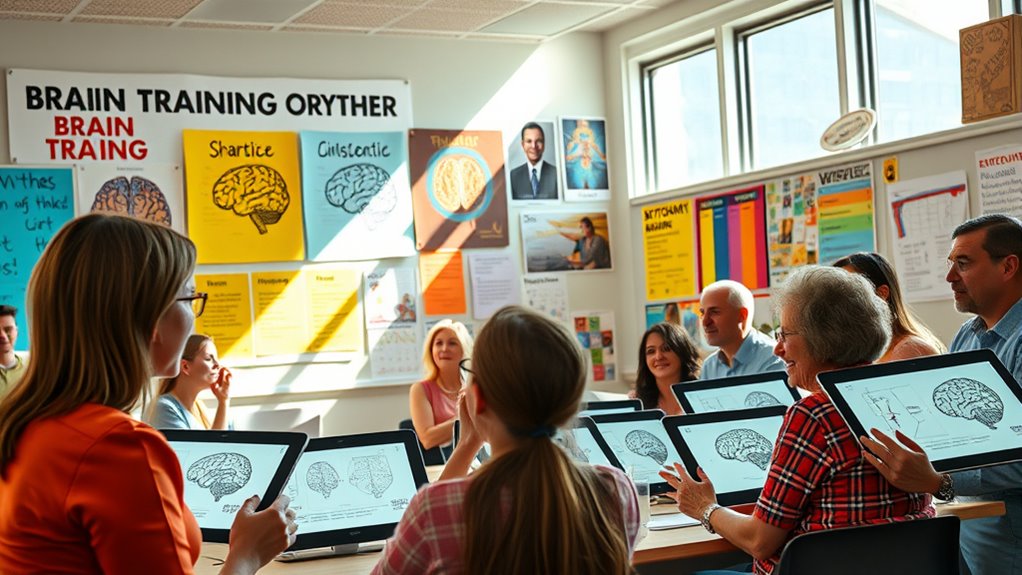
Many people believe that brain training games can dramatically boost intelligence and prevent cognitive decline, but these claims often aren’t backed by solid science. This misconception stems from neuroplasticity myths—ideas that the brain can change and adapt instantly or that specific exercises will lead to sweeping improvements in overall mental ability. While it’s true that your brain is capable of rewiring itself, the reality is more nuanced. Brain training can help improve certain skills, like working memory or problem-solving, but it doesn’t automatically translate to a broader increase in intelligence or a shield against aging-related decline. Overhyping these benefits leads to memory enhancement misconceptions, where people assume that playing certain games will make them smarter in everyday life. The truth is, these games often target narrow skills rather than general cognitive capacities.
Brain training improves specific skills but doesn’t boost overall intelligence or prevent cognitive decline.
It’s tempting to believe that by regularly engaging with brain training apps, you’ll see a substantial boost in your mental sharpness, but scientific evidence suggests otherwise. Many studies show that improvements are usually confined to the specific tasks you practice, with limited transfer to real-world abilities. For example, if you get better at a particular puzzle game, it doesn’t mean your memory or reasoning in daily situations has improved markedly. This misunderstanding fuels the myth that brain training is a magic bullet for intelligence or aging, but it’s more about skill-specific practice rather than broad cognitive enhancement.
Understanding neuroplasticity myths helps you set realistic expectations. Your brain does have an impressive ability to adapt, but this isn’t something that occurs overnight or through a few sessions of training. Instead, meaningful change requires consistent, diverse mental activity over time. Relying solely on brain games can lead you to overlook other essential aspects of cognitive health, like physical exercise, proper nutrition, social engagement, and lifelong learning, which are proven to support brain function more effectively. Advancements in neural networks continue to improve our understanding of how specific exercises influence brain structure and function, emphasizing the importance of a holistic approach.
Moreover, many memory enhancement misconceptions suggest that these games are a quick fix for forgetfulness or mental decline. In reality, maintaining cognitive health involves a wide-ranging approach. While brain training can be a fun and engaging way to challenge your mind, it shouldn’t replace habits like reading, learning new skills, or staying physically active. Recognizing the limitations of neuroplasticity myths and dispelling memory enhancement misconceptions empowers you to make smarter choices, focusing on evidence-based strategies that truly support your cognitive well-being over the long term.

Shakven Left & Right Brain Development Card for Parent-Child Interaction | Brain Training Card Game,20 Brain Training Card Game,Hand-Brain Coordination Card Fine Motor Skills
✒Ensured Child Safety: Ensuring your child's safety, our brain training cards are crafted with thickened, durable cardboard and…
As an affiliate, we earn on qualifying purchases.
As an affiliate, we earn on qualifying purchases.
Frequently Asked Questions
Can Brain Training Prevent Alzheimer’s Disease?
Brain training can’t prevent Alzheimer’s disease, but engaging in neuroplasticity exercises may slow cognitive decline. By regularly challenging your brain with puzzles, memory games, or learning new skills, you strengthen neural connections, supporting overall mental health. While these activities won’t stop the disease, they can help maintain your cognitive abilities longer and improve quality of life as you age. Stay active mentally to give your brain the best chance to stay sharp.
Are All Brain Training Apps Scientifically Proven Effective?
Many mind-mending apps claim to boost brainpower, but not all boast scientific validation. You should scrutinize effectiveness studies to determine if a brain training app truly delivers benefits. While some apps are backed by credible research, others simply sprout superficial solutions. Don’t be dazzled by dazzling designs; instead, explore scientific evidence to decide if an app genuinely enhances your cognitive capabilities.
How Long Does It Take to See Results From Brain Training?
You can start noticing results from brain training in a few weeks, thanks to brain plasticity that promotes cognitive enhancement. Consistent practice helps your brain adapt and strengthen neural connections, leading to improved memory, focus, and problem-solving skills. While individual progress varies, staying committed and engaging in regular sessions accelerates benefits, making your efforts worthwhile as your cognitive abilities evolve over time.
Is Brain Training Suitable for Children and Seniors?
Imagine guiding a lively child’s developing mind or nurturing a senior’s cognitive health like tending a garden. Brain training suits both, supporting child development and maintaining senior mental agility. It’s tailored for all ages, helping children build skills early and seniors stay sharp longer. With engaging activities, you can foster growth and preserve mental vitality, making brain training a valuable tool across generations.
Can Brain Training Replace Traditional Education Methods?
Brain training can’t replace traditional education methods because it mainly focuses on cognitive enhancement and skill development in specific areas. While it helps improve memory, attention, and problem-solving, it doesn’t provide the exhaustive learning experience you get from classroom instruction. You still need foundational knowledge, social interaction, and critical thinking skills gained through traditional education to succeed. Think of brain training as a supplement, not a substitute, for formal learning.

Large Print Memory Puzzles: 175+ Puzzles and Activities for Adults to Exercise Memory and Improve Focus – Includes Spiral Bound / Lay Flat Design and … Font for Easy Reading (Brain Busters)
As an affiliate, we earn on qualifying purchases.
As an affiliate, we earn on qualifying purchases.
Conclusion
Now that you see through the fog of false promises, remember that brain training isn’t a magic wand but a tool you can sharpen like a blade. Don’t fall for quick fixes or grandiose claims; instead, focus on consistent mental exercises and healthy habits. Think of your brain as a garden—nurture it patiently, and it’ll bloom with genuine growth. Keep questioning myths, and your mind will stay sharp as a razor.

Neuroplasticity For Beginners: How to Boost Brain Cognition, Brain Health, and Improve Memory to Slow Down Age-related Cognitive Decline
As an affiliate, we earn on qualifying purchases.
As an affiliate, we earn on qualifying purchases.

Qunol Brain Health Memory Plus with B6, Magnesium L-Threonate & Citicoline, Clinically Tested Ingredients to Improve Memory, Focus, Attention and Productivity, 60 Count (Pack of 1)
IMPROVES MEMORY & COGNITIVE FUNCTION – Qunol Brain Health Memory Plus with B6 contains Citicoline to improve memory,…
As an affiliate, we earn on qualifying purchases.
As an affiliate, we earn on qualifying purchases.