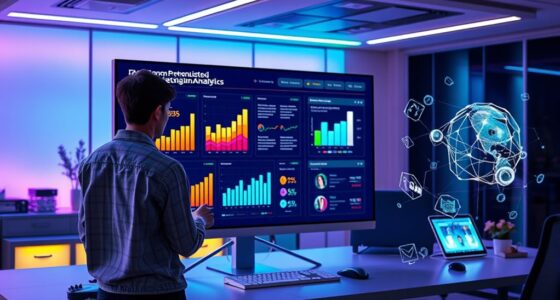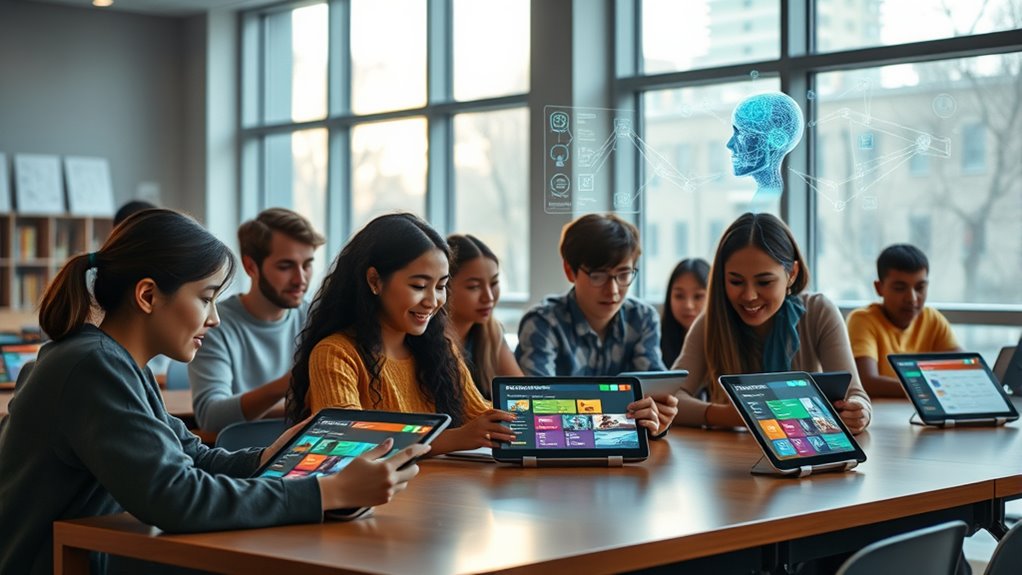

AI in education helps you get personalized learning experiences by analyzing your interactions, strengths, and weaknesses. It adapts lessons and assessments in real-time to support your unique needs, making learning more engaging and effective. By providing tailored resources, AI enhances your chances of success. However, it also raises important questions about data privacy and ethics. If you want to understand how these challenges fit into AI’s role in transforming education, keep exploring further.
Key Takeaways
- AI enables personalized learning experiences by adapting content and assessments based on individual student needs.
- It analyzes student interactions to identify strengths and weaknesses for targeted support.
- AI-driven assessments provide objective, real-time feedback, improving evaluation accuracy.
- Personalized resources help increase engagement and improve learning outcomes.
- Responsible implementation ensures privacy, transparency, and fairness in AI-powered education.

Have you ever wondered how artificial intelligence is transforming the way we learn? AI is revolutionizing education by creating more personalized learning experiences and assessments, making education more engaging and effective. However, as you embrace these innovations, it’s essential to consider the ethical implications, especially around AI ethics and data privacy. These concerns are at the forefront as AI systems collect and analyze vast amounts of data to tailor educational content to individual needs.
When AI personalizes learning, it analyzes your interactions, strengths, and weaknesses to adapt lessons in real-time. This customization boosts motivation and helps you learn at your own pace. For instance, if you struggle with a particular concept, the AI can provide additional resources or alternative explanations, making learning more efficient. But this personalization hinges on collecting significant amounts of data about your behavior and progress, which raises questions about data privacy. You need to trust that your information is handled responsibly, securely, and transparently. Educational institutions and AI providers must prioritize data privacy to prevent breaches or misuse, ensuring your data isn’t exploited beyond its educational purpose.
AI personalizes learning by analyzing your data, so trust must be maintained through responsible, transparent privacy practices.
AI ethics play a critical role here. Developers and educators must ensure that AI tools are fair, unbiased, and transparent. It’s vital that these systems don’t reinforce stereotypes or discriminate against certain groups. You should feel confident that AI-driven assessments are objective and that your performance isn’t influenced by unfair algorithms. Transparency about how AI makes decisions and what data it uses helps build that trust. You also have a right to understand how your data is being used and to have control over it. Additionally, the integration of AI in education must consider the evolving landscape of AI in Education, including its impact on traditional roles and methods.
Moreover, ethical AI in education involves considering the long-term impacts of these technologies. Should AI replace traditional teaching methods entirely? How do we guarantee that AI supports human educators rather than diminishes their role? These are important questions that educators and policymakers are continuously debating. The goal is to create a balanced approach where AI enhances personalized learning without compromising your privacy or ethical standards. As a learner, you benefit from more tailored education, but only if the responsible use of AI and data privacy are prioritized.
Ultimately, the integration of AI in education offers exciting possibilities for personalized learning and assessment. But to fully realize its benefits, stakeholders must address AI ethics and data privacy concerns head-on. When done right, AI can help you learn better and faster while respecting your rights and fostering trust in the technology.
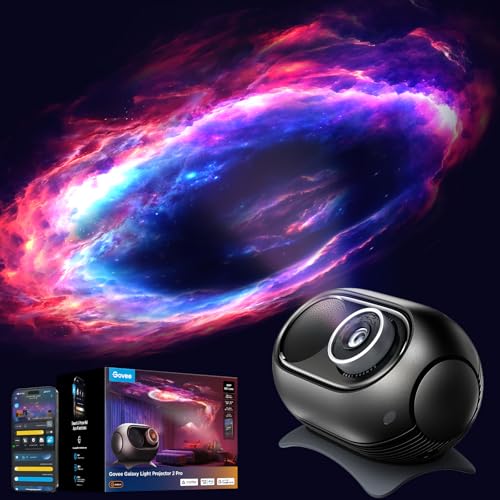
Govee Galaxy Light Star Projector 2 Pro, 4 Megapixel HD Lens, Planetarium Projector work with Matter, Night Light Projector with 20+ Preset Scenes, Star LED Lights Projector, Room Decor, Gift for Kids
4MP High-Definition Lens with True-to-Life Rendering: Govee star projector lights incorporates a 4-megapixel high-resolution optical lens, offer exceptional...
As an affiliate, we earn on qualifying purchases.
Frequently Asked Questions
How Does AI Handle Diverse Learning Styles?
AI handles diverse learning styles by providing adaptive learning experiences tailored to each student. It analyzes your progress and adjusts content to match your strengths and preferences, ensuring more effective learning. Through individualized instruction, AI identifies the methods that work best for you, whether visual, auditory, or kinesthetic. This personalized approach helps you stay engaged and motivated, making learning more efficient and enjoyable.
What Are the Privacy Concerns With AI in Education?
Like a vault protecting treasures, your student data faces privacy concerns. You might worry about data security breaches or unauthorized access, risking sensitive info falling into the wrong hands. AI systems collect and analyze personal data, raising questions about how securely this information is stored and used. You need assurances that your data remains confidential, and safeguards are in place to prevent misuse, ensuring trust in the educational technology you rely on.
Can AI Replace Human Teachers Entirely?
AI can’t replace human teachers entirely because robot teachers lack emotional intelligence, which is essential for understanding students’ feelings and fostering motivation. You need human teachers to provide empathy, encouragement, and nuanced support that AI can’t replicate. While AI can assist with personalized learning, it’s the human touch that creates a truly engaging and supportive educational environment, ensuring students thrive both academically and emotionally.
How Accessible Is AI Technology for Underfunded Schools?
You might find that AI technology isn’t very accessible for underfunded schools, often due to funding disparities and infrastructure challenges. Coincidentally, these schools struggle to afford advanced tools, making it harder to bridge the gap with wealthier districts. While AI has potential, without targeted investments, underfunded schools face hurdles in implementing these innovations, leaving many students behind despite the technology’s promise.
What Are the Potential Biases in Ai-Driven Assessments?
You should be aware that AI-driven assessments can have biases like algorithm fairness issues and cultural bias. These biases may unfairly favor certain groups or perspectives, leading to inaccurate evaluations. Algorithms might be trained on data that doesn’t fully represent diverse backgrounds, which can skew results. Recognizing these potential biases helps you work toward more equitable assessment tools, ensuring all students are judged fairly and accurately.

Planetarium Projector Pro for Bedroom, 13 in 1 Star Projector Galaxy Light, Ceiling Night Light Milky Way Mood Lighting with Timer, LED Space Galaxy Lamp Bedroom Room Decor for Adults Kids - White
【Planetarium Projector Pro 2025】- Doubling previous brightness with 30% wider projection, this galaxy projector for bedroom now immerses...
As an affiliate, we earn on qualifying purchases.
Conclusion
Embracing AI in education transforms learning into an unstoppable force, more powerful than any traditional method. You have the potential to revolutionize how students grow and succeed, making personalized learning accessible to everyone. By harnessing AI, you’re not just keeping up—you’re shaping the future of education itself. Don’t underestimate the impact you can make; with AI, you hold the key to unfastening limitless possibilities that could change lives forever.
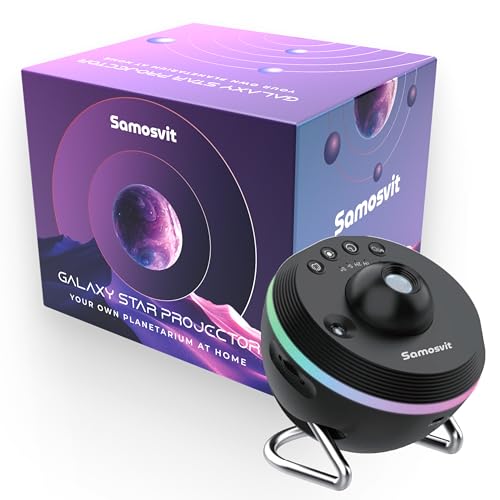
Samosvit 4K Home Planetarium Galaxy Projector for Bedroom - LED Sky Galaxy Night Light Star Planet for Kids - Meteor Effect Ceiling Lights Projector with One Replaceable Moon Nebula - Gift for Kids
IMMERSIVE GALAXY EXPERIENCE: Transform any room with the Samosvit Galaxy Projector. Upgraded lens technology projects lifelike stars, nebula...
As an affiliate, we earn on qualifying purchases.

FlyLily Galaxy Projector, 13 in 1 HD Planetarium Star Projector for Bedroom, 360 Rotating Star Light with Adjustable Knob and Timer for Kids, Ceiling, Gifts, Room Decoration
【13 IN 1 Realistic Planetarium Projector】: The galaxy Projector for Bedroom comes with 13 different HD galaxy discs,...
As an affiliate, we earn on qualifying purchases.