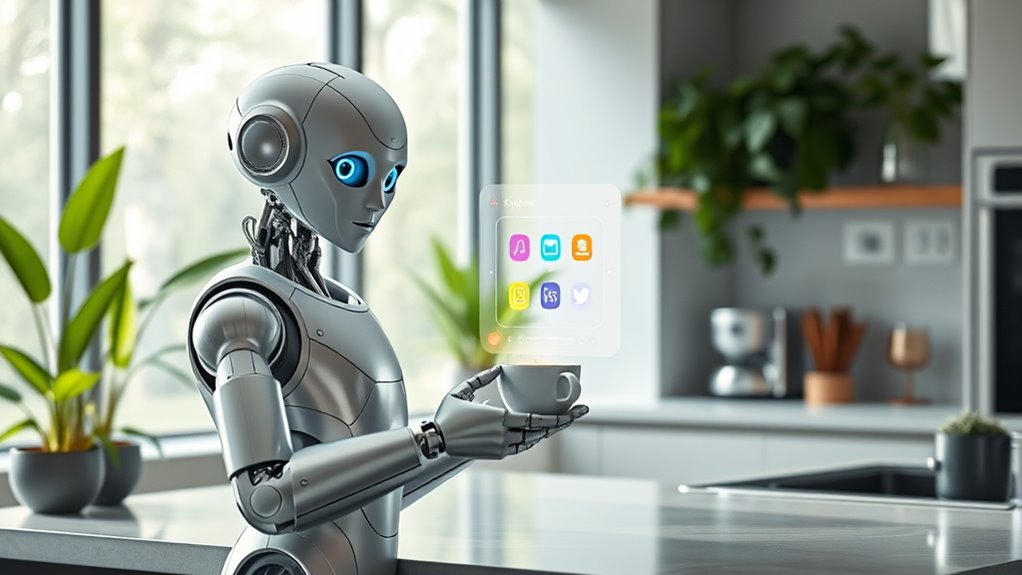

When designing AI companions for everyday life, focus on creating emotionally intelligent systems that recognize subtle cues like tone, facial expressions, and context to foster trust and understanding. Prioritize privacy by ensuring data is secure and clearly communicated, and respect personal boundaries to avoid intrusion. Tailor interactions to cultural and individual preferences for relevance and comfort. By integrating these elements, your AI can become a genuine, supportive presence—exploring these aspects further can help you build truly meaningful connections.
Key Takeaways
- Incorporate emotional intelligence to recognize subtle cues and foster natural, empathetic interactions.
- Prioritize privacy through secure data handling, transparent communication, and user control options.
- Balance emotional responsiveness with respect for personal boundaries and ethical considerations.
- Customize interactions based on cultural and individual preferences for relevance and sensitivity.
- Integrate seamlessly with other digital tools to provide meaningful support and strengthen user trust.

As artificial intelligence continues to evolve, designing AI companions has become a fascinating challenge that combines technology, psychology, and ethics. You need to create systems that can genuinely connect with users, understanding emotions and responding appropriately. Emotional intelligence plays a fundamental role here; your AI must interpret subtle cues like tone, facial expressions, or contextual hints to respond empathetically. This isn’t just about programming responses but about fostering a sense of understanding and trust, making interactions feel natural and meaningful. Striking this balance requires advanced algorithms capable of recognizing and adapting to a user’s emotional state in real-time, ensuring the AI can offer comfort, encouragement, or enthusiasm as needed. Yet, this emotional sophistication raises significant privacy considerations. You must navigate how sensitive data—like voice tone, facial expressions, or personal stories—is collected, stored, and used. Ensuring user privacy isn’t just a legal obligation but a cornerstone of trust; users need to feel safe sharing their feelings without fearing misuse or breaches. Transparency becomes essential—clearly communicating what data is collected, why it’s needed, and how it’s protected. You should implement robust security measures, encrypting data and limiting access to prevent unauthorized use. Additionally, giving users control over their information, including options to delete data or opt out of certain features, strengthens their confidence in your AI companion. Balancing emotional intelligence with privacy considerations means designing systems that are both perceptive and respectful. You want your AI to be empathetic and engaging, but never intrusive or invasive. This involves not only technical safeguards but also ethical guidelines that prioritize user well-being and autonomy. As you develop these AI companions, consider how cultural differences, individual preferences, and contextual factors influence emotional responses, and tailor interactions accordingly. Incorporating advanced integration with other digital tools can enhance personalization and responsiveness. Remember, the goal isn’t just to create a responsive machine but to foster genuine connections that enhance daily life, whether by providing companionship, support, or simple engagement. By focusing on emotional intelligence and privacy considerations, you’re crafting AI that feels trustworthy, caring, and respectful—turning technology into a true partner rather than just a tool. Ultimately, your challenge lies in designing AI companions that are perceptive and empathetic without compromising user privacy, ensuring these digital allies can enrich lives while safeguarding personal boundaries.

umissfun Emotional AI Companion Device,AI Chat Companion, AI Desktop Robot Companion,Voice Understanding,Personality Design,Tech&Gadget Gift,Geek,Desktop Setup,True Empathy AI-Grows with You (White)
A family member: constant companionship. We've created not just another screen, but a shoulder you can lean on….
As an affiliate, we earn on qualifying purchases.
As an affiliate, we earn on qualifying purchases.
Frequently Asked Questions
How Do AI Companions Adapt to Individual User Preferences?
AI companions adapt to your preferences through personalization techniques that analyze your interactions and behaviors. They actively learn from your user feedback, adjusting their responses and suggestions accordingly. By continuously integrating your feedback, these companions become more attuned to your needs, offering tailored experiences. This ongoing process guarantees they stay relevant and helpful, making your interactions more natural and satisfying over time.
What Privacy Measures Protect User Data With AI Companions?
Imagine your AI companion as a trusted friend who keeps your secrets safe. It uses strict privacy policies and data encryption to protect your personal info, ensuring it’s locked away from prying eyes. Regular security audits and user control over data further strengthen this shield. You can rest easy knowing your conversations and preferences stay private, just like a diary kept under lock and key.
Can AI Companions Develop Emotional Intelligence Over Time?
Yes, AI companions can develop emotional intelligence over time. They analyze your interactions to foster emotional growth and empathy development, making responses more personalized and understanding. As you continue to engage, the AI learns your preferences and emotional cues, improving its ability to support you emotionally. This ongoing learning process helps create a more empathetic and responsive companion that better understands and connects with your feelings.
How Do AI Companions Handle Ethical Dilemmas?
AI companions handle ethical dilemmas by applying moral reasoning algorithms that evaluate the situation based on predefined principles. They also incorporate bias mitigation techniques to guarantee fair and unbiased responses. You can trust that they analyze conflicting values carefully, aiming to provide ethical guidance aligned with human norms. This combination helps AI companions navigate complex dilemmas responsibly, supporting you while respecting diverse perspectives and minimizing potential biases.
What Are the Limitations of Current AI Companion Technologies?
Think of AI companions as delicate bridges—they connect you but haven’t yet mastered the full span. Currently, they lack emotional resilience, meaning they can struggle with nuanced human feelings, and social integration, which limits authentic interactions. These limitations mean you might not always get the genuine empathy or understanding you seek. As technology evolves, expect these bridges to strengthen, offering more resilient support and smoother social connections.

EMEET PIXY Dual-Camera AI-Powered PTZ Camera 4K, AI Tracking, PDAF&AI Autofocus 0.2s, 1/2.55'' Sony Sensor, 3 Mics, Presets, Gesture Control, 4K Webcam for Streaming and OBS/Twitch/Switch 2 Compatible
World's 1st Dual-Camera AI-Powered PTZ 4K Webcam – EMEET PIXY combines a 4K main imaging camera with PDAF…
As an affiliate, we earn on qualifying purchases.
As an affiliate, we earn on qualifying purchases.
Conclusion
As you consider designing AI companions, remember that over 60% of people now prefer digital assistants for daily tasks. This shows how essential these AI friends are becoming in your life, providing support, companionship, and convenience. When you focus on creating empathetic and adaptable AI, you’re shaping a future where technology seamlessly fits into your routine. Embrace this opportunity to make AI truly your helpful, personalized partner in everyday moments.

Digital Persona 88003-001U.are.u 4500 Reader 70" Cable
Target Applications – Desktop PC security, Mobile PCs, Custom applications
As an affiliate, we earn on qualifying purchases.
As an affiliate, we earn on qualifying purchases.
umissfun Emotional AI Companion Device,AI Chat Companion, AI Desktop Robot Companion,Voice Understanding,Personality Design,Tech&Gadget Gift,Geek,Desktop Setup,True Empathy AI-Grows with You (White)
A family member: constant companionship. We've created not just another screen, but a shoulder you can lean on….
As an affiliate, we earn on qualifying purchases.
As an affiliate, we earn on qualifying purchases.