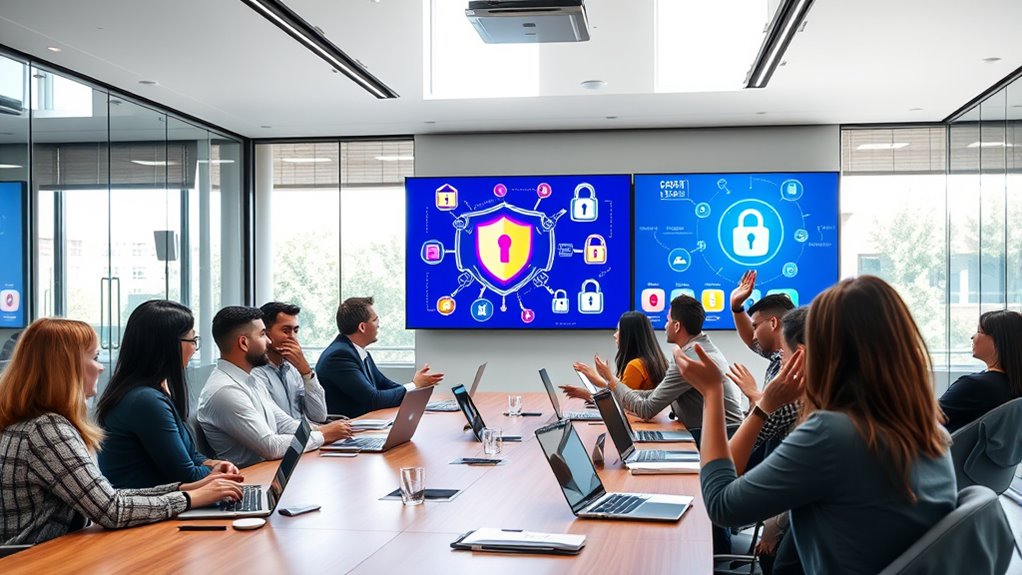

Security awareness training is vital for helping you recognize and respond to cyber threats like phishing and malware. It boosts your ability to identify suspicious emails, links, and requests while teaching you to create strong, unique passwords. By staying informed and vigilant, you contribute to a more secure environment for yourself and your organization. Staying proactive and participating in regular training strengthens your defenses against cybercriminals—if you want to know how to stay protected, keep exploring these important tips.

Get privacy and security gear delivered free with Prime
- Fast, free delivery on millions of items
- Prime Video, Amazon Music and more included
- Member-only deals all year
Key Takeaways
- Enhances individuals’ ability to recognize and respond to cyber threats, reducing security breach risks.
- Promotes a security-conscious culture that encourages vigilance and proactive reporting of suspicious activity.
- Improves password management practices, including creating strong passwords and avoiding reuse across platforms.
- Equips employees with practical skills to identify phishing attempts and prevent scams.
- Strengthens organizational resilience by fostering shared responsibility for cybersecurity protection.

Have you ever wondered how organizations protect themselves from cyber threats? One of the most effective methods is through security awareness training. This training equips you with the knowledge to recognize and respond to potential dangers, markedly reducing the risk of a breach. A key component of this training focuses on phishing prevention, which is essential because phishing attacks are among the most common and damaging cybersecurity threats today. You learn to spot suspicious emails, links, or requests for sensitive information, preventing you from falling victim to scams that could compromise your organization’s data. Recognizing the signs of a phishing attempt—such as unexpected sender addresses, urgent language, or strange attachments—becomes second nature when you’re regularly trained. This proactive approach helps you avoid giving away passwords or confidential details to malicious actors.
Security awareness training teaches you to identify and prevent phishing attacks, safeguarding organizational and personal data.
Another indispensable aspect of security awareness training is emphasizing good password management. You’re taught the importance of creating strong, unique passwords for each account, which makes it much harder for hackers to gain access. The training encourages the use of password managers, tools that securely store your login information and generate complex passwords for you. By adopting these practices, you reduce the likelihood of password-related breaches, which are often the weakest link in cybersecurity. You’ll also learn the importance of changing passwords regularly and avoiding common pitfalls like reusing passwords across multiple platforms. This knowledge helps create a layered defense, making it more challenging for cybercriminals to penetrate your systems. Additionally, understanding self-awareness can help you recognize your own vulnerabilities and biases when it comes to security habits.
Security awareness training isn’t just about understanding threats; it’s about changing your behavior. It empowers you to become a vigilant participant in your organization’s security posture. When you’re aware of the tactics cybercriminals use and understand how to counteract them, you become a critical line of defense. The training also emphasizes the importance of reporting suspicious activity promptly, which can help your organization respond quickly to potential breaches. Over time, these lessons foster a security-conscious culture, where everyone understands their role in protecting sensitive information.
Ultimately, investing in security awareness training boosts your organization’s resilience against cyber threats. It arms you with practical skills like phishing prevention and effective password management, which are essential in today’s digital landscape. By staying informed and vigilant, you help safeguard not only your organization’s data but also your personal information. Cybersecurity isn’t just an IT issue—it’s a shared responsibility, and your participation makes all the difference.
As an affiliate, we earn on qualifying purchases.
Frequently Asked Questions
How Often Should Security Awareness Training Be Refreshed?
You should refresh your security awareness training at least annually to stay current with evolving threats. Implementing regular refresh strategies, such as quarterly updates or short modules, helps reinforce best practices. This consistent training guarantees you’re always aware of new phishing tactics, scam techniques, and security policies. By maintaining frequent updates, you’ll be better prepared to recognize and respond to cybersecurity risks, keeping your organization safer.
What Are the Best Methods to Measure Training Effectiveness?
You probably think a simple quiz assessment or feedback survey will do the trick, right? Well, think again! To truly measure your training effectiveness, you need a mix of both. Quiz assessments test knowledge retention, while feedback surveys reveal how employees feel about the training. Combine these tools, analyze the results, and you’ll get a clear picture of what’s working—and what’s not. Spoiler: No magic wand included.
Can Small Businesses Afford Comprehensive Security Training?
Yes, small businesses can afford extensive security training by conducting a cost analysis to identify affordable options. You can prioritize essential topics, use online or self-paced courses, and leverage free resources to stay within your budget constraints. Investing in targeted training helps protect your business without overspending, ensuring your team understands security risks and best practices, ultimately saving money by preventing costly breaches.
How Do We Handle Employee Resistance to Security Training?
You handle employee resistance by boosting engagement with interactive training sessions and clear communication about its benefits. Offer training incentives like rewards or recognition to motivate participation. Address concerns openly, emphasizing how security awareness protects everyone and the company’s success. By making the training relevant and rewarding, you’ll foster a positive attitude, encouraging employees to actively participate and see security training as a valuable part of their role.
What Are the Latest Trends in Security Awareness Training?
You should focus on the latest trends like phishing simulations and gamified learning to boost engagement. Phishing simulations help employees recognize real threats, while gamified learning makes training more interactive and memorable. Incorporate these methods to keep your team vigilant and motivated, ensuring they stay updated on evolving cyber threats. Staying current with these trends enhances your security posture and reduces risks effectively.
phishing detection email scanner
As an affiliate, we earn on qualifying purchases.
As an affiliate, we earn on qualifying purchases.
Conclusion
By now, you understand how crucial security awareness training is in protecting your organization. Did you know that 95% of cybersecurity breaches are due to human error? That’s a striking reminder that, with proper training, you can greatly reduce risks. Investing in ongoing education keeps you alert to new threats and empowers you to act confidently. Stay proactive, stay informed, and make security awareness a priority—your organization’s safety depends on it.
security awareness training course
As an affiliate, we earn on qualifying purchases.
As an affiliate, we earn on qualifying purchases.
multi-factor authentication device
As an affiliate, we earn on qualifying purchases.
As an affiliate, we earn on qualifying purchases.
Fall Picks
fall essentials
As an affiliate, we earn on qualifying purchases.