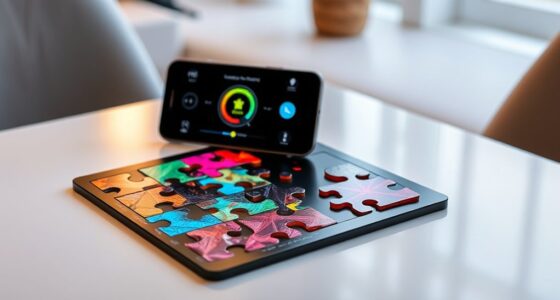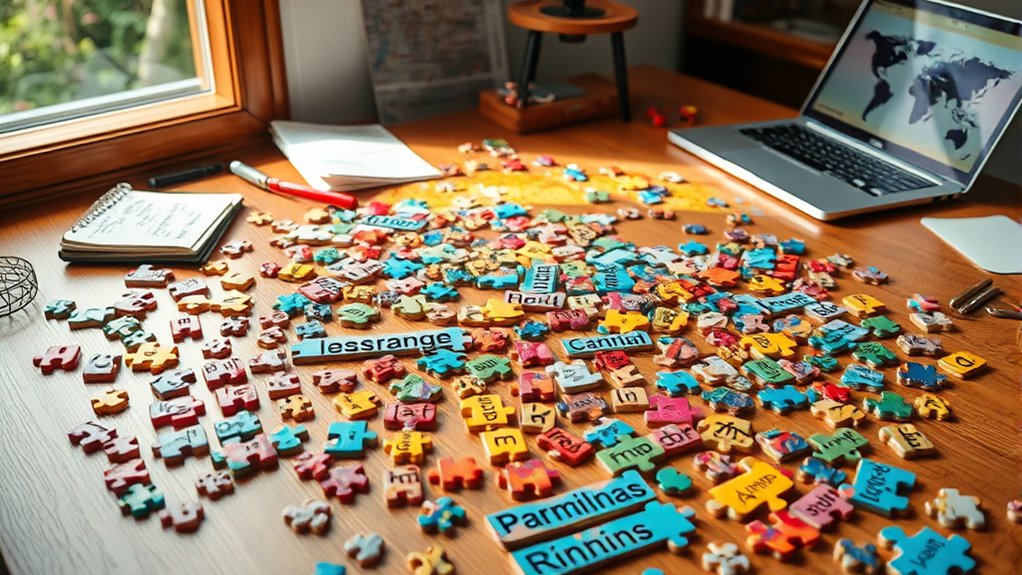

Using puzzles to learn a new language makes the process fun and engaging. They challenge you to think actively about vocabulary, grammar, and cultural nuances while reinforcing what you already know. Puzzles adapt to your skill level and keep you motivated by offering variety and a sense of progress. As you solve, you’ll strengthen cognitive skills like problem-solving and memory. Keep exploring this approach, and you’ll discover even more ways to boost your language skills effortlessly.

Get privacy and security gear delivered free with Prime
- Fast, free delivery on millions of items
- Prime Video, Amazon Music and more included
- Member-only deals all year
Key Takeaways
- Puzzles promote active engagement, making language learning enjoyable and enhancing vocabulary, grammar, and sentence structure skills.
- They strengthen cognitive functions like memory, problem-solving, and pattern recognition, supporting overall language proficiency.
- Tailoring puzzles to different skill levels keeps learners motivated and accelerates progress through achievable challenges.
- Incorporating cultural references and idioms in puzzles deepens understanding of authentic language use and cultural nuances.
- Puzzle-based learning diversifies study routines, boosts confidence, and fosters faster, more effective language acquisition.

Learning a new language can be challenging, but puzzles make the process both engaging and effective. When you incorporate puzzles into your language learning routine, you tap into a powerful tool that enhances your language acquisition skills. Puzzles compel you to actively think about vocabulary, grammar, and sentence structure, which accelerates your understanding and retention. Unlike passive methods, puzzles require your full attention, making learning feel less like a chore and more like an enjoyable challenge. As you solve crosswords, word searches, or riddles in your target language, you reinforce what you’ve learned and discover new words in context, which deepens your grasp of the language’s nuances.
One of the key advantages of using puzzles is the cognitive benefits they offer. They stimulate your brain in ways that traditional studying often don’t. As you work through language-based puzzles, your brain strengthens connections related to memory, problem-solving, and pattern recognition. This mental workout improves your overall cognitive flexibility, making it easier for you to switch between languages and understand complex structures. Puzzles also promote more active learning, encouraging you to think critically about language rules and usage rather than passively absorbing information. Over time, this active engagement helps solidify your knowledge and boosts your confidence in using the language in real-life situations.
Furthermore, puzzles can adapt to your skill level, making them suitable whether you’re just starting out or already conversational. Beginners might enjoy simple vocabulary puzzles that help build foundational words, while advanced learners can challenge themselves with idiomatic expressions or grammatical puzzles. The versatility of puzzles keeps your learning journey dynamic and tailored to your needs. They also add variety to your study routine, preventing burnout and maintaining your motivation. When you see progress through puzzle completion, it fuels your desire to learn more, creating a positive feedback loop that accelerates your language acquisition.
In addition, puzzles foster a deeper understanding of cultural context. Many puzzles incorporate idioms, slang, or cultural references specific to the language you’re learning. This exposure helps you grasp not only the language but also the cultural nuances that make communication more authentic. This is especially relevant when considering the color accuracy of visual materials, as authentic cultural content can enhance your overall learning experience. As you solve puzzles, you develop a more intuitive sense of how words and expressions fit together naturally, which is essential for becoming fluent. Overall, integrating puzzles into your language learning plan makes the journey more interactive, cognitively stimulating, and ultimately more successful. You’ll find that your progress is faster, your skills sharper, and your confidence higher when you approach language learning with a puzzle-solving mindset.
As an affiliate, we earn on qualifying purchases.
Frequently Asked Questions
How Do Puzzles Improve Pronunciation Skills?
Puzzles improve your pronunciation skills by engaging you in phonetic drills and pronunciation puzzles that challenge you to match sounds accurately. As you solve these puzzles, you actively practice producing specific phonemes, which enhances your accent and clarity. This interactive process reinforces correct pronunciation patterns in a fun way, helping you become more confident and precise when speaking your new language.
Can Puzzles Help With Understanding Cultural Context?
Imagine opening a treasure chest filled with cultural insights and language nuances as you solve puzzles. You’ll actively engage with authentic idioms, traditions, and social cues woven into clues, deepening your understanding of the culture. Puzzles make it fun and immersive, helping you grasp subtle meanings and context that typical lessons might miss. This hands-on approach sharpens your cultural awareness, making your language learning richer and more meaningful.
What Types of Puzzles Are Most Effective for Beginners?
You should start with simple word searches and crossword puzzles. Word searches help you recognize basic vocabulary quickly, while crossword puzzles challenge you to recall words and their meanings. These puzzles are effective for beginners because they make learning fun and engaging without overwhelming you. As you progress, try more complex puzzles to deepen your understanding. Consistent practice with these puzzle types builds your confidence and language skills steadily.
How Often Should I Practice Puzzles to See Progress?
You should practice puzzles consistently—daily if possible—to see steady progress. Skipping days slows your learning, but regularity builds momentum. Mix up puzzle types to keep your mind engaged and challenge different skills. Don’t wait for perfect moments; even short, focused sessions make a difference. Stay committed, and over time, you’ll notice your language skills improving faster than you’d imagined, all through the power of steady, varied practice.
Are There Digital Platforms Offering Language Puzzles?
Yes, many digital platforms offer language puzzles through interactive challenges and gamified learning. You can explore apps like Duolingo, Memrise, and Babbel, which incorporate puzzles to make learning engaging and effective. These platforms regularly update their content, so you can practice daily or several times a week. By doing so, you’ll stay motivated, improve your vocabulary, and develop your language skills faster while having fun with interactive challenges.
As an affiliate, we earn on qualifying purchases.
Conclusion
So, who would’ve thought that cracking puzzles could actually help you master a new language? It’s funny how something so simple—filling in a crossword or solving a riddle—can be more effective than endless textbooks. Turns out, the key to fluency isn’t just memorization but having fun and embracing mistakes. So next time you struggle with pronunciation, remember: sometimes, the best way to learn is to just puzzle your way through it.
language vocabulary word search puzzles
As an affiliate, we earn on qualifying purchases.
As an affiliate, we earn on qualifying purchases.
cultural language learning riddles
As an affiliate, we earn on qualifying purchases.
As an affiliate, we earn on qualifying purchases.
Fall Picks
fall essentials
As an affiliate, we earn on qualifying purchases.