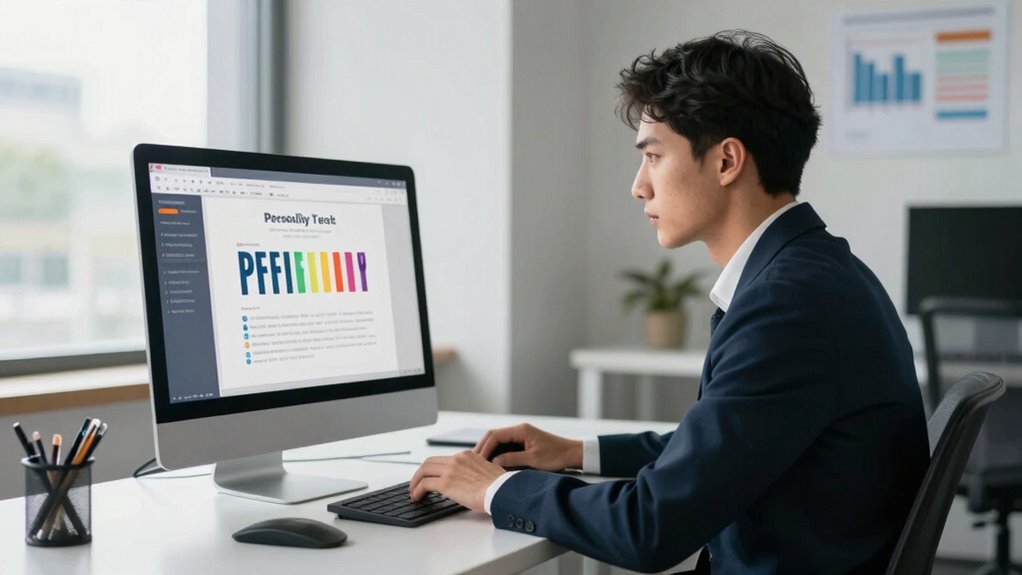
You might not realize it, but personality tests often influence hiring decisions early in the process, sometimes even before your face-to-face interview. Employers use these assessments to gauge cultural fit and determine if your traits align with the team’s environment. They serve as filters, helping companies narrow down candidates early on. Being honest and confident during these tests is essential, and if you keep exploring, you’ll discover how these early steps can shape your chances for success.

Get privacy and security gear delivered free with Prime
- Fast, free delivery on millions of items
- Prime Video, Amazon Music and more included
- Member-only deals all year
Key Takeaways
- Employers often incorporate personality tests during initial application screening, before interviews, to assess cultural fit early.
- Candidates may encounter personality assessments as part of early online tests, not just in later interview stages.
- Many organizations use personality testing to filter candidates upfront, making it a preliminary step rather than a final evaluation.
- Personality assessments influence initial hiring decisions, often without candidates realizing they’re being evaluated on traits first.
- Early introduction of personality tests guides both employer and candidate preparations, emphasizing honesty and authenticity from the start.
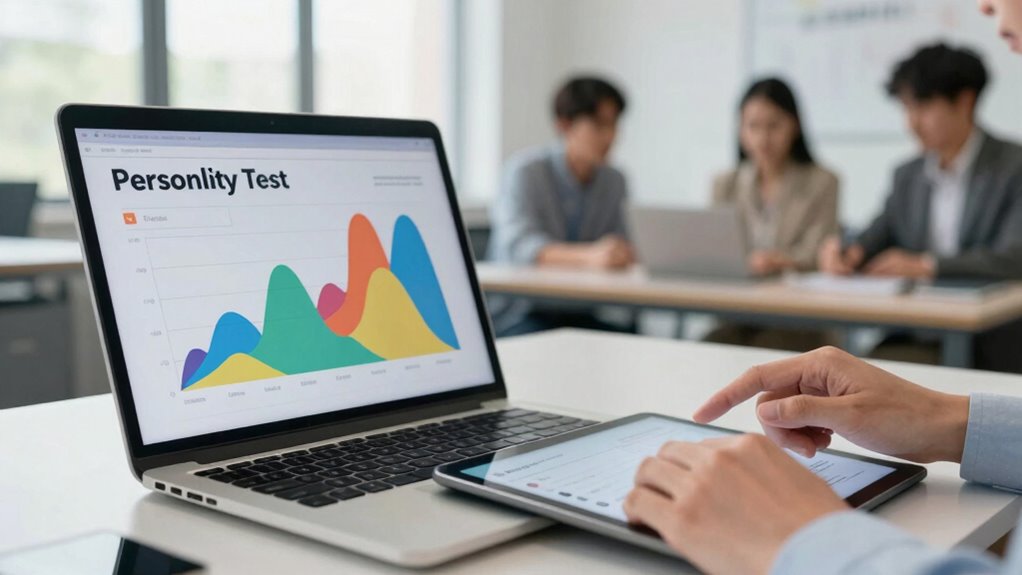
Personality testing has become a popular tool for employers seeking to find the right fit for their teams. You might assume these assessments only come into play during later interview stages, but in reality, they often influence the hiring process much earlier than you expect. Many employers incorporate personality tests into initial screening or even preliminary application stages, making them an essential part of their overall interview strategies. This approach helps them gauge not only your skills but also whether your personality aligns with the company’s culture from the outset.
Personality tests influence hiring decisions early, helping employers assess cultural fit from the initial application stage.
When you first submit an application or engage in a phone screen, employers might ask you to complete a personality assessment. These early evaluations serve as filters that help decide whether your personality traits suggest you’ll thrive within their team environment. For example, if a company values collaboration and open communication, they’ll look for traits like extraversion and agreeableness early in the process. This means that even before a face-to-face interview, your responses to these tests give hiring managers insights into your potential cultural fit—whether your work style matches their organizational values. Additionally, understanding the role of assessments in the hiring process can help you better prepare for how these evaluations impact your overall candidacy.
Your interview strategies, including how you prepare for these assessments, can profoundly impact your chances. Being honest and consistent in your responses is key, as these tests are designed to detect authenticity. Employers want to ensure that your personality aligns with the role’s demands and the team dynamics. If your results show a mismatch with their cultural expectations, they might reconsider your fit even before the interview stage, saving everyone time and effort. Moreover, knowing that personality tests are often used early in the process can help you approach them with greater confidence and authenticity. Recognizing the influence of personality assessments on interview structure can help you anticipate and respond more effectively during the process.
Furthermore, understanding the importance of early assessments allows candidates to better showcase their genuine qualities rather than trying to tailor responses solely for the interview. In essence, personality testing isn’t just a final step or a formality; it’s embedded throughout the early hiring process. It influences how employers perceive your cultural fit, guides their interview strategies, and helps them decide if you’re the right person for the team. By understanding that these tests show up earlier than you expect, you can approach them with honesty and confidence, knowing they’re a key part of shaping your future role.
Products Worth Considering

Logitech MX Keys S Wireless Keyboard, Graphite

LG 24G414B-B 24-Inch UltraGear Full HD IPS Gaming Monitor

Logitech MX Brio Ultra HD 4K Webcam, Graphite
As an affiliate, we earn on qualifying purchases.
Frequently Asked Questions
Can Personality Tests Predict Job Performance Accurately?
Personality tests can predict job performance fairly well, but their accuracy depends on candidate consistency and test validity. When candidates answer honestly and consistently, the results offer valuable insights into their suitability. However, if candidates manipulate responses or the test isn’t properly validated, predictions may be less reliable. So, while useful, personality tests should be combined with other assessments for the best prediction of job success.
Are Personality Tests Biased Against Certain Demographics?
Personality tests can sometimes be biased against certain demographics due to cultural bias, which affects test fairness. You might notice that questions favor specific cultural norms, leading to unfair disadvantages for some candidates. To improve fairness, employers should choose tests that are validated for diverse populations and regularly review their methods. This way, they guarantee that personality assessments fairly evaluate all candidates, regardless of background.
How Often Should Personality Tests Be Updated?
You should update personality tests regularly to guarantee test reliability and cultural fairness—at least every one to two years. As the saying goes, “change is the only constant,” and so are the dynamics of workplace diversity and understanding. Frequent updates help address biases, reflect evolving job roles, and maintain the accuracy of your assessments. This proactive approach ensures your hiring process remains fair, reliable, and aligned with current standards.
Do Personality Tests Replace Interviews Entirely?
Personality tests don’t replace interviews entirely, but they do supplement them by evaluating candidate authenticity and test validity. These assessments provide insights into traits that interviews might miss, helping you make better hiring decisions. However, relying solely on tests can overlook the nuances of personality, so integrating both methods ensures an all-encompassing understanding of a candidate’s fit. This balanced approach improves overall hiring accuracy and reduces bias.
What Are Legal Considerations in Personality Testing?
You need to guarantee legal compliance and uphold ethical standards when using personality tests in hiring. Avoid discrimination by choosing validated, job-related assessments, and provide candidates with fair, consistent testing procedures. Clearly communicate the purpose of the tests and obtain informed consent. Regularly review your testing practices to stay aligned with evolving legal regulations, and document your compliance efforts to protect your organization from potential legal challenges.
Conclusion
So, next time you walk into a hiring process, don’t be surprised if personality tests catch you off guard. It’s almost like they’ve been quietly waiting in the wings, just before you even realize they’re there. Sometimes, the most unexpected moments reveal the most about who you really are—long before you step into the interview room. It’s a reminder that in hiring, as in life, what’s hidden often shows up right when you least expect it.