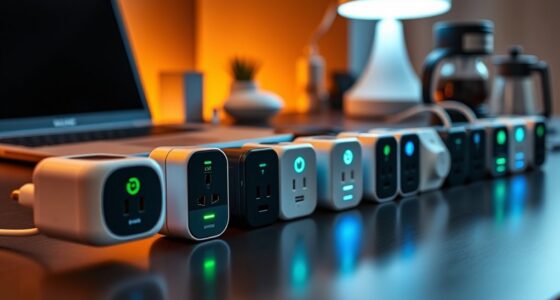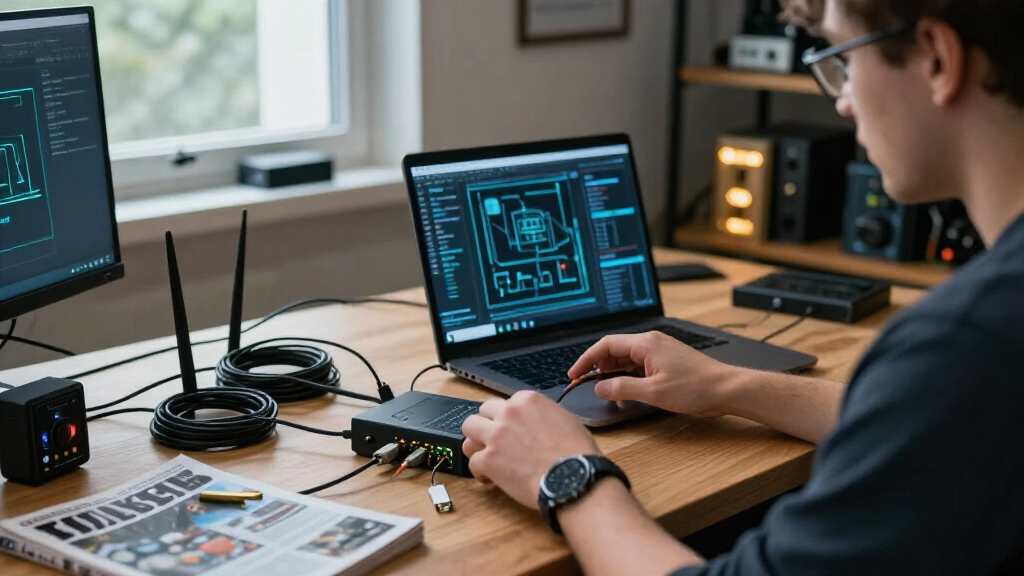

For most authorized security work, the Flipper Zero Portable Cybersecurity Multitool is the best overall pick here because it combines several hardware-testing functions in a compact device. The Hak5 WiFi Pineapple Mark VII is a more focused choice for Wi-Fi assessments, while a Kali Linux bootable USB provides a flexible software environment without buying a dedicated multitool. The main tradeoff is breadth versus specialization: compact gadgets are convenient, but they do not replace a configured laptop, and overlapping USB listings can be hard to distinguish. A dual-frequency RF detector serves a different purpose—finding signal activity rather than conducting a full penetration test. Read on for the full breakdown, selection criteria, and guidance on matching a tool to your authorized testing scope.

Get privacy and security gear delivered free with Prime
- Fast, free delivery on millions of items
- Prime Video, Amazon Music and more included
- Member-only deals all year
Key Takeaways
- Flipper Zero ranks as the broadest portable option: its multitool approach suits varied hardware experiments, though it is not a substitute for a laptop-based assessment setup.
- The WiFi Pineapple Mark VII is the specialist pick: it makes more sense for focused, authorized Wi-Fi testing than for general-purpose field work.
- Kali USB drives prioritize software access over dedicated hardware: compare their included version, persistence options, documentation, and update process rather than relying on the product name alone.
- The two Flipper Zero listings are functionally overlapping choices: buyers should verify what differs between the listings before treating one as a distinct tool.
- The RF detector keychain has a narrower role: it can help identify RF activity, but detection alone does not establish what a signal is or whether a network is vulnerable.
| Dual-Frequency RF Field Detector Keychain |  | Best Compact RF Check | Frequency range: 125 kHz and 13.56 MHz | Material: PC | Size: Approximately 5.3 × 3.4 cm (2.09 × 1.34 in) | VIEW LATEST PRICE | See Our Full Breakdown |
| Kali Linux Bootable USB for Ethical Hacking and Cybersecurity |  | Best Flexible Kali Starter Drive | Storage capacity: 8 GB | Connectors: USB-A and USB-C | Compatible architectures: amd64 and supported arm64 | VIEW LATEST PRICE | See Our Full Breakdown |
| Kali Linux 2026.2 Bootable USB Drive |  | Best Plug-and-Boot Kali Option | Operating system: Kali Linux 2026.2 (listing also names Kali Live 2024.4) | Kernel: 6.19 | Desktop environments: GNOME 50 and KDE Plasma 6.6 | VIEW LATEST PRICE | See Our Full Breakdown |
| Flipper Zero Portable Cybersecurity Multitool |  | Best All-in-One Learning Multitool | Power source: Rechargeable battery | Radio and interfaces: Sub-GHz radio, NFC, infrared, and GPIO | Display: Color display | VIEW LATEST PRICE | See Our Full Breakdown |
| Hak5 WiFi Pineapple Mark VII |  | Best Dedicated Wi-Fi Audit Platform | Model: Pineapple Mark VII | Wireless bands: 2.4 GHz and 5 GHz | Wireless standards: 802.11ac, 802.11b, 802.11g, 802.11n | VIEW LATEST PRICE | See Our Full Breakdown |
| Flipper Zero Portable Cybersecurity Multitool | | Best for Hands-On Learning | Power source: Battery powered; rechargeable battery | Connectivity: Wireless | Maximum range: 1 km | VIEW LATEST PRICE | See Our Full Breakdown |
| penetration testing gadget | Dimensions |
|---|---|
| Dual-Frequency RF Field Detect | — |
| Kali Linux Bootable USB for Et | 2.5 × 0.5 × 0.5 in |
| Kali Linux 2026.2 Bootable USB | — |
| Flipper Zero Portable Cybersec | 6 × 4 × 3 inches |
| Hak5 WiFi Pineapple Mark VII | — |
| Flipper Zero Portable Cybersec | 6 x 4 x 3 inches |
More Details on Our Top Picks
Dual-Frequency RF Field Detector Keychain
For a quick check of common access-control fields, this passive keychain detector is the lightest-duty option in the lineup. Its LEDs indicate activity at 125 kHz and 13.56 MHz, so I can see whether a compatible reader or tag is producing a field without carrying a powered instrument. At about 5.3 × 3.4 cm, it is easier to keep on hand than the Kali USB drives or the larger Flipper Zero. That convenience comes with a narrow role: it detects field presence, not signal strength, protocol details, or vulnerabilities. I would choose it as a simple field indicator alongside a broader testing setup, not as a substitute for the Flipper Zero or WiFi Pineapple when interactive testing is needed.
Pros:- Indicates fields on two common RF frequency bands
- Passive operation needs no battery or charging
- Small keychain format is easy to carry
- Built-in LEDs provide a simple visual indication
Cons:- Shows field presence only, without detailed signal measurements
- Limited to the two listed frequency bands
- Does not provide the active testing capabilities of the Flipper Zero
Best for: Authorized assessors and access-control technicians who want a pocketable, battery-free check for 125 kHz and 13.56 MHz fields.
Not ideal for: Buyers who need signal measurements, protocol analysis, or an active tool for broader penetration-testing workflows.
- Frequency range:125 kHz and 13.56 MHz
- Material:PC
- Size:Approximately 5.3 × 3.4 cm (2.09 × 1.34 in)
- Power:Battery-free, passive operation
- Indicator:Built-in LEDs
- Package includes:1 frequency detection card
Our verdict“Choose this as a low-maintenance pocket check for compatible access-control fields, not as a standalone penetration-testing platform.”
Kali Linux Bootable USB for Ethical Hacking and Cybersecurity
This drive is the more adaptable of the two Kali USB options here: its USB-A and USB-C connectors make it easier to move between older laptops and newer computers, while live booting lets me use Kali without replacing the installed operating system. The included environment is described as containing more than 600 security tools, and compatible ISO files can be used for customization. Compared with the Kali Linux 2026.2 drive, this model gives more explicit connector and boot-mode details, including Legacy BIOS and UEFI support. The tradeoff is its 8 GB capacity, which leaves limited room for extra files, and ARM support applies only to supported devices. It suits users who value connection flexibility over a clearly specified recent software build.
Pros:- USB-A and USB-C connectors support a wider range of host computers
- Can run Kali live or install it on compatible systems
- Includes more than 600 security and penetration-testing tools
- Supports Legacy BIOS, UEFI, and compatible ISO customization
Cons:- 8 GB capacity limits room for extra tools and files
- ARM compatibility is limited to supported devices
- Write speed is listed as 25 MB/s, which may slow large file transfers
Best for: Learners and authorized testers who need one Kali boot drive for computers with either USB-A or USB-C ports and want to customize its boot image.
Not ideal for: Users who need substantial storage for additional tools or data, or who require confirmed compatibility with a specific ARM computer.
- Storage capacity:8 GB
- Connectors:USB-A and USB-C
- Compatible architectures:amd64 and supported arm64
- Boot support:Legacy BIOS and UEFI
- Read speed:450 MB/s
- Write speed:25 MB/s
- Dimensions:2.5 × 0.5 × 0.5 in
- Warranty:1 year
Our verdict“Pick this Kali drive if connector flexibility and customizable boot options matter more than extra storage or a precisely identified current build.”
Kali Linux 2026.2 Bootable USB Drive
This USB is aimed at buyers who want a ready-made live Kali environment rather than a multipurpose gadget. Booting without installation can keep a host computer’s existing setup untouched, making it a practical option for authorized lab work on compatible machines. Its listing names Kali Linux 2026.2, kernel 6.19, and GNOME 50 or KDE Plasma 6.6, giving more software-version detail than the dual-connector Kali drive. But the listed model name says Kali Live 2024.4, and the broad compatibility claim does not identify tested systems, so I would verify the supplied image before relying on those version details. The 8 GB capacity and Type-A-only connector also make it less flexible than the TECH STORE ON drive, which offers USB-C as well.
Pros:- Boots into a live environment without installing Kali on the host
- Lists specific operating-system, kernel, and desktop versions
- USB 3.0 interface
- Useful for portable security-learning and lab sessions
Cons:- 8 GB storage leaves limited room for added tools and files
- Type-A connector lacks the flexibility of the dual-connector Kali drive
- Listing gives conflicting software-version and model-name details
Best for: Authorized security students or lab users who want a preconfigured live Kali USB for a compatible computer with a USB Type-A port.
Not ideal for: Buyers who need USB-C, substantial storage, or confidence that the listed software version and model details are consistent.
- Operating system:Kali Linux 2026.2 (listing also names Kali Live 2024.4)
- Kernel:6.19
- Desktop environments:GNOME 50 and KDE Plasma 6.6
- Storage capacity:8 GB
- USB interface:USB 3.0
- Connector:USB Type-A
- Read speed:12 MB/s
- Bootable:Yes
Our verdict“Choose this for a simple live Kali boot on a USB-A computer only after confirming which software image the drive actually includes.”
Flipper Zero Portable Cybersecurity Multitool
The Flipper Zero earns its place by combining several hands-on interfaces in one portable device: Sub-GHz, NFC, infrared, and GPIO support let it span compatible wireless signals and electronics projects. That breadth makes it more versatile for learning and prototyping than the RF keychain detector, which only signals the presence of two frequency bands. It is also a more interactive pocket tool than either Kali USB, though it does not replace a computer-based Kali environment or the WiFi Pineapple’s dedicated Wi-Fi auditing workflow. The display, backlit keyboard, and rechargeable battery make standalone work possible, but the feature set is best suited to people willing to learn each interface. Its listed 1 km maximum range depends on signal and conditions, so I would not treat that figure as a guaranteed working distance.
Pros:- Combines Sub-GHz, NFC, infrared, and GPIO capabilities
- Portable battery-powered design with a color display and backlit keyboard
- Supports both cybersecurity learning and electronics prototyping
- More interactive and versatile than the passive RF detector
Cons:- Broad feature set may take time to learn
- Does not replace a Kali computer setup or dedicated Wi-Fi auditing device
- Listed maximum range can vary with signal and conditions
Best for: Cybersecurity learners and electronics hobbyists who want a portable, multi-interface device for authorized testing and GPIO prototyping.
Not ideal for: Buyers seeking a dedicated Wi-Fi auditing appliance, a detailed RF measurement instrument, or a simple tool with little setup and learning.
- Power source:Rechargeable battery
- Radio and interfaces:Sub-GHz radio, NFC, infrared, and GPIO
- Display:Color display
- Input:Backlit keyboard
- Maximum range:Listed as 1 km; depends on signal and conditions
- Dimensions:6 × 4 × 3 inches
- Weight:10.4 ounces
- Color:Orange
Our verdict“Choose the Flipper Zero for a portable, hands-on learning tool across compatible signals and electronics, rather than for focused Wi-Fi audits.”
Hak5 WiFi Pineapple Mark VII
For authorized Wi-Fi assessments, the Mark VII is the most focused network tool in this group. Its dual-band 2.4 GHz/5 GHz radios, Linux-based app ecosystem, and interactive web dashboard are built around auditing wireless environments and producing vulnerability reports. That specialization sets it apart from the Flipper Zero, whose strength is broader work across compatible signals and electronics, and from the Kali USB drives, which offer a general-purpose software environment rather than a dedicated appliance. Remote access through Cloud C2 can help manage campaigns, but it may be unsuitable in restricted networks or for teams with strict remote-access policies. The feature set also brings a steeper learning curve than the simple RF detector or a live Kali boot drive. I would reserve it for trained testers working with clear authorization.
Pros:- Dual-band radios support testing across 2.4 GHz and 5 GHz
- Interactive dashboard and Linux app ecosystem support campaign workflows
- Designed to automate Wi-Fi auditing and generate vulnerability reports
- More focused on wireless network assessment than the Flipper Zero
Cons:- Complex feature set can be difficult for beginners
- Cloud C2 may raise privacy, policy, or connectivity concerns
- Dedicated Wi-Fi focus makes it less versatile for electronics and non-Wi-Fi testing
Best for: Experienced penetration testers conducting authorized Wi-Fi audits who want a dedicated dual-band platform, dashboard, and reporting workflow.
Not ideal for: Beginners seeking a simple learning gadget, or teams whose test environments prohibit cloud-connected remote management.
- Model:Pineapple Mark VII
- Wireless bands:2.4 GHz and 5 GHz
- Wireless standards:802.11ac, 802.11b, 802.11g, 802.11n
- Operating system:Linux
- Management:Interactive web dashboard and Cloud C2 remote access
- LAN port bandwidth:1000 Mbps
- Listed maximum upstream data transfer rate:1300 Mbps
- Security protocols:WPA2-PSK, WPA-Enterprise, WPA3
Our verdict“Choose the Mark VII for authorized, focused Wi-Fi auditing if you can manage its learning curve and Cloud C2 considerations.”
Flipper Zero Portable Cybersecurity Multitool
The Flipper Zero earns its place for learners who want one portable device to explore several kinds of wireless signals and connect experiments to physical electronics. Its Sub-GHz, NFC, and infrared capabilities offer broader hands-on scope than the WiFi-focused Hak5 WiFi Pineapple Mark VII, while the GPIO pins let users attach external hardware for prototyping. That flexibility comes with a steeper learning curve: this is better suited to someone comfortable with cybersecurity concepts and electronics than to a beginner seeking a guided, single-purpose tool. The rechargeable, battery-powered design and built-in display and keyboard support portable use, but the product data does not state battery life. I’d choose it for varied learning projects, not as a replacement for a dedicated WiFi testing platform.
Pros:- Combines Sub-GHz, NFC, and infrared functions in one portable device
- GPIO pins support connections to external electronics
- Color display and backlit keyboard provide onboard controls
- Useful for both cybersecurity learning and electronics prototyping
Cons:- Requires familiarity with cybersecurity and electronic devices
- Battery life is not specified in the supplied product data
- Its broad feature set is less focused than a dedicated WiFi testing platform
Best for: Cybersecurity learners and electronics hobbyists who want a portable, multi-radio device with GPIO support for authorized testing and prototyping.
Not ideal for: Beginners who want a guided, WiFi-specific testing tool, or field users who need a stated battery runtime before choosing equipment.
- Power source:Battery powered; rechargeable battery
- Connectivity:Wireless
- Maximum range:1 km
- Wireless functions:Sub-GHz radio transceiver, NFC reader/writer, infrared transceiver
- Hardware interface:GPIO pins
- Display and controls:Color display and backlit keyboard
- Dimensions:6 x 4 x 3 inches
- Weight:10.4 ounces
- Color:Blanco
Our verdict“Choose the Flipper Zero for portable, multi-signal learning and hardware experiments; pick the Hak5 WiFi Pineapple Mark VII for a more WiFi-centered toolkit.”
How We Picked
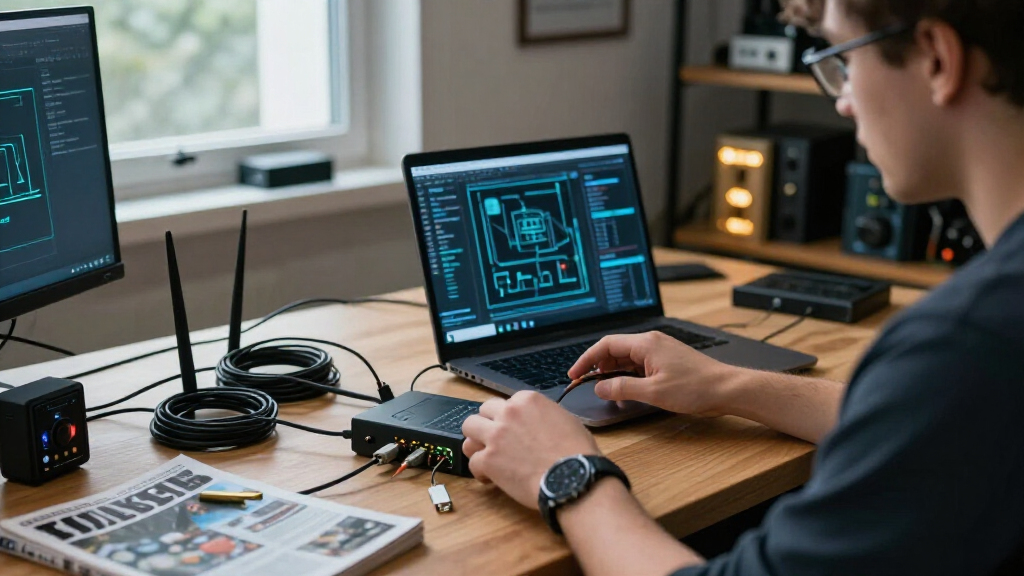
I ranked these gadgets by how directly they support authorized penetration-testing tasks, how much setup they demand, and how useful they are across realistic testing situations. I also weighed portability, clarity about what each product provides, and whether a buyer can expand its use through a laptop, software, or accessories. These are different tool types, so the ranking reflects practical scope rather than a claim that one device replaces the others.
The Flipper Zero leads for its wide range of portable hardware functions. The WiFi Pineapple follows for buyers whose work is specifically Wi-Fi focused, while the Kali USB options offer a more adaptable software route but require a compatible computer and careful verification of the drive contents. The RF detector ranks lower for penetration testing because its signal-detection role is narrower. Since two entries are Flipper Zero listings and two are Kali USB listings, I treat each pair as overlapping options rather than inventing unverified differences.
Factors to Consider When Choosing Best Penetration Testing Gadgets
Before choosing a gadget, match it to the authorized test you actually need to perform. A compact device can make field tasks easier, but no single item in this lineup covers every part of an assessment. I would prioritize scope, compatibility, and the learning or maintenance work required over a long feature list.
Match the device to your written scope
Start by listing the systems, bands, and test activities you are explicitly authorized to assess. A Wi-Fi-focused engagement calls for different equipment from a hardware-interface investigation or a general Linux testing environment. Buying a versatile gadget before defining the task can leave you with functions you cannot use and gaps in the work you need to do. Confirm that the device’s capabilities fit the permitted environment and rules of engagement. For shared or client-owned networks, get written approval and agree on test windows before connecting equipment. This step narrows choices more reliably than comparing feature counts.
Budget for the supporting setup
A gadget rarely works in isolation: bootable Linux media needs a compatible computer, and field devices may need cables, storage, power, or a reliable management device. Check boot compatibility and firmware or software requirements before buying a USB drive, especially if your computer uses secure boot or has limited ports. Small accessories can affect portability as much as the main device. Buyers often mistake a convenient form factor for a complete testing kit. Build a list of what is already available and what the task requires, then compare the total setup rather than the device alone. This is often where a focused tool proves simpler than a broad but incomplete kit.
Choose breadth or specialization deliberately
Multitools appeal when one device can support several kinds of authorized hardware work, but breadth does not guarantee depth in any one area. A specialist Wi-Fi tool may be a better fit when wireless assessment is the central task and repeatable workflows matter more than unrelated functions. A Linux environment offers another kind of flexibility: software tools can change, but the user must supply the host computer and configuration work. Avoid paying for capabilities that fall outside your regular scope. If tasks vary widely, prioritize portability and expandability; if they are consistent, prioritize fit and workflow. The right balance depends on what you expect to test most often.
Check updates, persistence, and maintenance
Security tools need upkeep, and the work differs by product type. A bootable drive may need refreshed images, verified downloads, and deliberate decisions about whether settings or files persist between sessions. Dedicated gadgets may require firmware updates and compatible companion software. Before buying, check whether the seller clearly identifies the software version and explains how updates are handled. Do not assume a version number in a listing guarantees current support or authentic media. Maintenance also includes keeping test data separate from personal data and restoring devices after an engagement. A tool that is easy to maintain is more useful than one that is only convenient on day one.
Verify listing identity and what is included
Similar product names can conceal differences in included accessories, software images, or seller preparation. This matters especially when listings repeat the same device name or describe a Kali USB without clear details about the image and setup. Compare manufacturer information, included contents, version details, and return terms rather than assuming two listings are equivalent. For duplicated entries in a roundup, treat them as the same underlying product until a verifiable difference appears. Ask whether the drive is writable, whether persistence is supported, and whether the image source is documented. Clear provenance reduces both setup friction and supply-chain risk.
Plan for safe, legal testing
Penetration-testing hardware can interact with devices and networks beyond the intended target if settings or scope are unclear. Use equipment only on systems you own or have explicit permission to test, and keep experiments isolated from public or production networks unless the engagement authorizes them. Wireless testing can disrupt nearby users, so agree on boundaries and timing in advance. A detector or multitool does not provide permission, and it does not automatically identify the owner or purpose of a signal. Keep notes on configuration and test actions so results can be explained and reproduced. Responsible operation is part of choosing a tool, not an afterthought.
Frequently Asked Questions
Which gadget should I buy if I am starting with one device?
I would start with the Flipper Zero if you want a portable device for varied, authorized hardware experiments and are prepared to learn its limits. If your work is specifically wireless-network assessment, the WiFi Pineapple is a more focused starting point. A Kali USB makes more sense if you already have a compatible laptop and want a software environment rather than another dedicated device. None of these is a complete penetration-testing setup by itself. Choose based on the first task you can describe clearly, not on the broadest-sounding feature list.
Are the two Kali Linux USB products meaningfully different?
The listed names alone do not establish a reliable difference in contents or capability. Before choosing between them, check the exact image version, whether the media is writable, how persistence is handled, and whether the seller explains the image source. Also verify that your computer can boot from the drive and that you can update or replace the image yourself. If those details are absent, treat the listings as overlapping products rather than paying for an assumed upgrade. Buyers comfortable creating their own boot media may prefer to control the image and setup directly.
Can a Flipper Zero replace a laptop for penetration testing?
No single compact multitool in this lineup replaces a laptop-based testing environment. A Flipper Zero is better viewed as a portable tool for selected hardware interactions, while a computer provides a broader environment for analysis, documentation, and software workflows. The Kali USB option still depends on a host computer, even when it boots into a separate operating system. Your assessment may also require adapters, test devices, or other equipment that a handheld gadget does not include. Think of the Flipper as one component in a kit, not a complete workstation.
When does a WiFi Pineapple make more sense than a general-purpose gadget?
It makes more sense when authorized Wi-Fi assessment is a recurring, central part of your work and a dedicated wireless workflow is more useful than a broad collection of hardware functions. For occasional wireless checks alongside other tasks, a laptop with suitable software may be a more flexible starting point. Before selecting a dedicated appliance, confirm that its workflows fit your test plan, network equipment, and level of experience. Also account for safe isolation and written authorization, since wireless activity can affect devices outside a test target. Specialization is valuable when it matches your regular work, not simply because a tool is purpose-built.
Is an RF detector keychain a penetration-testing tool?
It can support limited reconnaissance by indicating RF activity, but that is not the same as testing a system for vulnerabilities. A detector generally does not tell you who is transmitting, what the signal contains, or whether a device is insecure. It is more suited to signal-awareness tasks than to a full assessment workflow. If your goal is network testing, prioritize equipment that supports the protocols and methods in your authorized scope. Treat any detection as a prompt for further verification, not as a finding by itself.
Conclusion
For the best overall balance of portability and varied hardware functions, I recommend the Flipper Zero Portable Cybersecurity Multitool, while recognizing that its two listings appear to represent overlapping options. The best specialized pick is the Hak5 WiFi Pineapple Mark VII for authorized Wi-Fi work. For a software-first, potentially best-value route, choose a Kali USB only after verifying its image, persistence, and compatibility; the listing names alone do not establish which drive is the better buy. Beginners should select the tool that fits a clearly defined first task and avoid assuming any gadget works without setup or practice. For RF signal awareness, the detector keychain has a specific supporting role, but it is not a replacement for penetration-testing equipment. Match the device to your permission, equipment, and workflow before choosing.