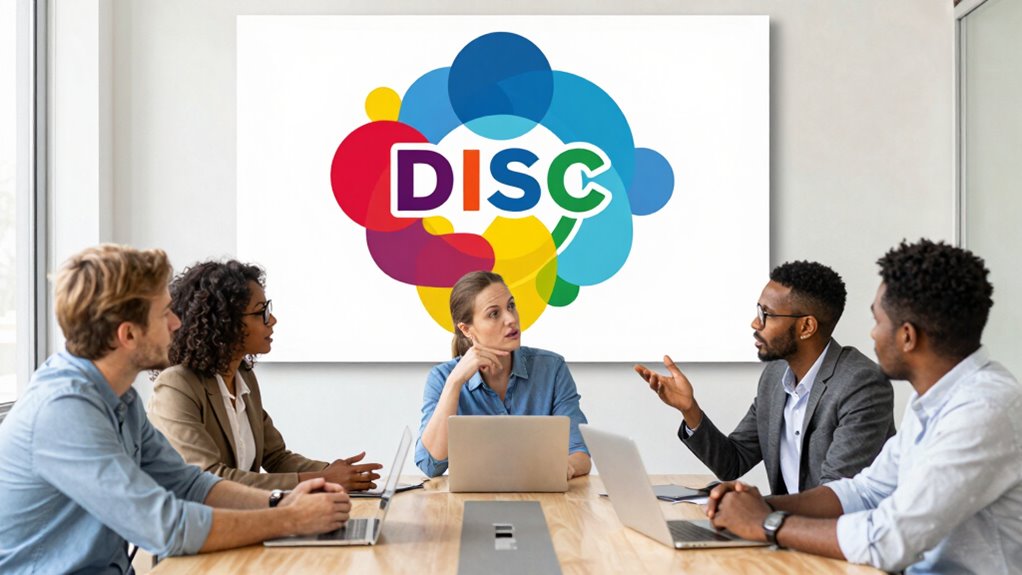

To use DISC without reducing people to four boxes, focus on it as a flexible map of tendencies rather than strict categories. Recognize that behaviors are fluid and can shift based on the context or mood. Adjust your communication styles to fit individual preferences, understanding that traits aren’t fixed. By seeing traits as dynamic and open to growth, you’ll build stronger, authentic relationships. Keep exploring, and you’ll discover how this adaptable approach can enrich your interactions even further.
Key Takeaways
- View DISC as a spectrum of behaviors rather than fixed categories to acknowledge individual complexity.
- Focus on tendencies and preferences, understanding behaviors can shift based on context and mood.
- Use DISC insights to adapt communication styles, respecting unique traits without labeling or limiting individuals.
- Foster growth by recognizing personality flexibility and encouraging development beyond initial DISC tendencies.
- Cultivate empathy and self-awareness to build genuine relationships, seeing DISC as a dynamic tool, not a box.
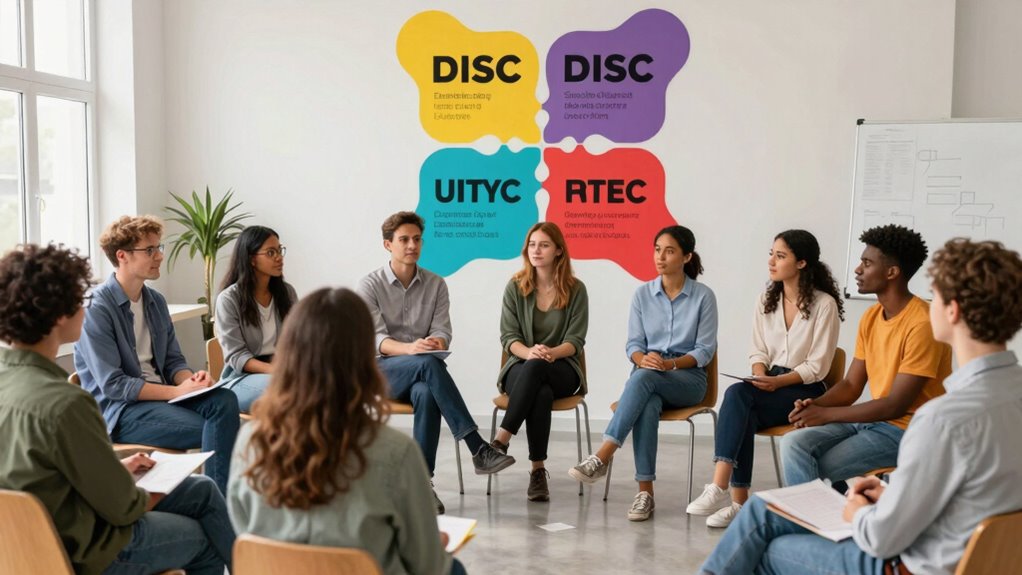
Understanding how to use DISC can transform your communication and teamwork skills. It’s a powerful tool that helps you recognize different behavioral styles, but it’s essential to remember that no one fits neatly into just four categories. Instead, DISC provides a framework for understanding personality flexibility and communication adaptation. When you approach it this way, you avoid reducing people to stereotypes and instead see each individual as dynamic and capable of growth.
Rather than thinking of DISC as a rigid box, see it as a map that highlights tendencies and preferences. People are complex, and their behaviors shift depending on context, mood, or environment. You might notice someone generally exhibits dominant traits but can be surprisingly accommodating in certain situations. This understanding encourages you to adapt your communication style, making your interactions more effective and respectful. You don’t have to change who you are; instead, you learn to adjust your approach to connect better with others, fostering collaboration and trust.
See DISC as a map of tendencies; adapt your communication to build trust and foster collaboration.
In practice, this means observing and listening with an open mind. When you recognize a person’s DISC tendencies, you can tailor your message to resonate with their style. For example, a person with a high dominance score might appreciate directness and efficiency, while someone with a high influence trait values enthusiasm and personal connection. But always remember, these are tendencies, not labels. They serve as guides for communication adaptation, not as limitations.
By focusing on personality flexibility, you allow room for growth and change. People can develop new skills or behaviors, especially if they feel understood and supported. This perspective helps you avoid pigeonholing others, which can lead to misunderstandings or resistance. Instead, you create a more inclusive environment where everyone’s unique traits are acknowledged and valued. You’re not trying to fit people into predefined boxes but to understand their underlying motivations and preferences.
This mindset also benefits your self-awareness. Recognizing your own DISC style helps you identify how you naturally communicate and where you might need to stretch or adjust. The goal isn’t to become someone else but to expand your communication toolkit. When you use DISC thoughtfully, it becomes a dynamic resource for fostering better relationships—one that respects the complexity of human personalities and promotes genuine connection. Ultimately, mastering DISC isn’t about labeling others; it’s about cultivating empathy, flexibility, and effective communication. Recognizing behavioral tendencies as part of a flexible framework allows for more compassionate and adaptable interactions. Embracing this personality flexibility can lead to stronger, more authentic relationships in all areas of life.

Taking Flight!: Master the DISC Styles to Transform Your Career, Your Relationships…Your Life
As an affiliate, we earn on qualifying purchases.
As an affiliate, we earn on qualifying purchases.
Frequently Asked Questions
How Can DISC Be Adapted for Diverse Cultural Backgrounds?
You can adapt DISC for diverse cultural backgrounds by recognizing cultural nuances that influence behavior and communication styles. Use adaptation strategies like customizing your approach, avoiding stereotypes, and being open-minded. Focus on understanding individual differences rather than relying solely on categories. This way, you foster more inclusive interactions, respecting each person’s cultural context and ensuring DISC remains a useful, flexible tool that promotes effective communication across cultures.
What Are Common Misconceptions About DISC Assessments?
You might believe DISC assessments pigeonhole personalities into stereotypes, but that’s a misconception. Many think they offer a complete picture, yet assessment limitations mean they only highlight certain traits, not the full individual. Rather than restricting you to fixed boxes, DISC serves as a tool to understand tendencies. Use it as a starting point, not a definitive label, and remember that every person’s personality is more nuanced than any assessment suggests.
How Do Personality Types Influence Team Dynamics Beyond DISC?
Personality types influence team dynamics through subtle personality nuances and cultural adaptability. You’ll see how individuals bring unique strengths, communication styles, and perspectives that extend beyond basic types. Embracing these differences helps your team adapt to diverse situations and cultures, fostering collaboration and innovation. By recognizing these nuances, you improve understanding, reduce conflicts, and create a more inclusive environment where everyone’s contributions are valued.
Can DISC Be Integrated With Other Behavioral Assessment Tools?
Yes, you can integrate DISC with other behavioral assessment tools to enhance cross-cultural communication and understanding. Combining assessments like Myers-Briggs or StrengthsFinder with DISC provides a more thorough view of individual differences. This assessment integration helps you tailor communication strategies and team dynamics across diverse cultures, ensuring you recognize unique behavioral patterns and preferences. It ultimately leads to better collaboration, reduced misunderstandings, and more effective leadership in multicultural environments.
How Often Should Someone Retake a DISC Assessment?
Think of your DISC assessment like a weather forecast—it’s best checked periodically to stay updated. You should consider retaking the DISC assessment every 12 to 18 months, depending on changes in your role or personal growth. Regular assessment timing helps you understand evolving behaviors and adapt strategies accordingly. Retake frequency guarantees your insights stay relevant, guiding you to improve communication, teamwork, and self-awareness over time.
adaptive communication skills training
As an affiliate, we earn on qualifying purchases.
As an affiliate, we earn on qualifying purchases.
Conclusion
By embracing the DISC model without limiting yourself to just four boxes, you open up a richer understanding of human behavior. Think of it as a dynamic spectrum rather than fixed categories—visualizing traits and tendencies as interconnected rather than isolated. This approach allows you to see the complexity behind each person’s actions, helping you connect more authentically and adaptively. Ultimately, using DISC creatively enhances your communication and relationships, moving beyond stereotypes to truly understand others.
emotional intelligence development books
As an affiliate, we earn on qualifying purchases.
As an affiliate, we earn on qualifying purchases.
personality flexibility coaching programs
As an affiliate, we earn on qualifying purchases.
As an affiliate, we earn on qualifying purchases.