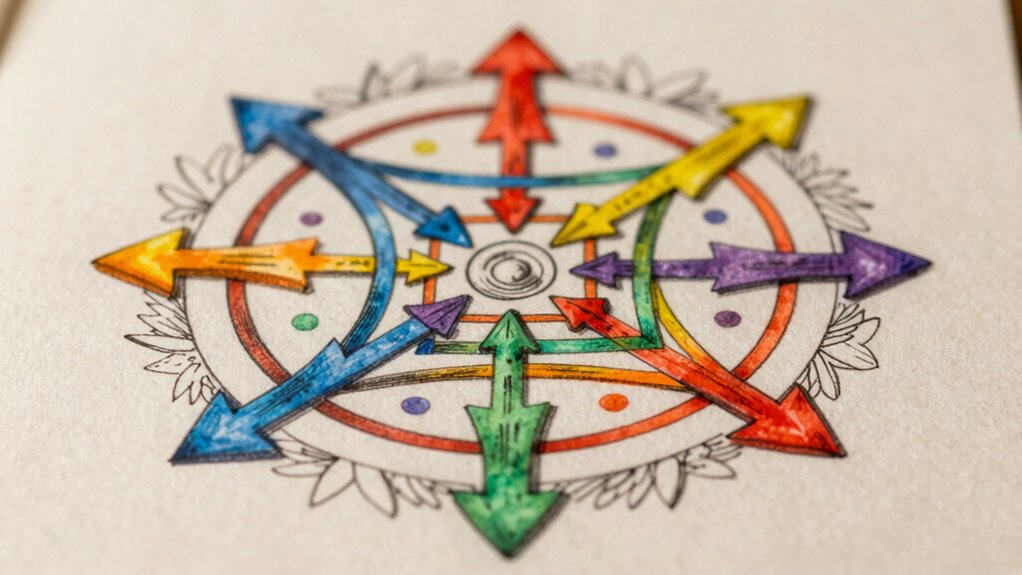

Enneagram arrows and wings add depth to your type descriptions by showing how your personality evolves under stress and security, revealing dynamic shifts in behavior and growth. Wings influence subtle traits and how you express core characteristics, making your personality more nuanced. Arrows indicate movement towards other types, helping you understand reactions in challenging or secure moments. Recognizing these aspects encourages deeper self-awareness and growth—if you want to explore how these factors shape you further, keep exploring.

Get privacy and security gear delivered free with Prime
- Fast, free delivery on millions of items
- Prime Video, Amazon Music and more included
- Member-only deals all year
Key Takeaways
- Wings influence core traits, adding subtle nuances that enrich personality descriptions.
- Arrows depict movement under stress or growth, revealing dynamic behavioral patterns.
- Understanding both helps interpret how individuals adapt and respond in various situations.
- Wings and arrows together illustrate personality as a fluid, evolving blend, not fixed traits.
- Recognizing these layers deepens self-awareness and enhances insights into others’ behavior.
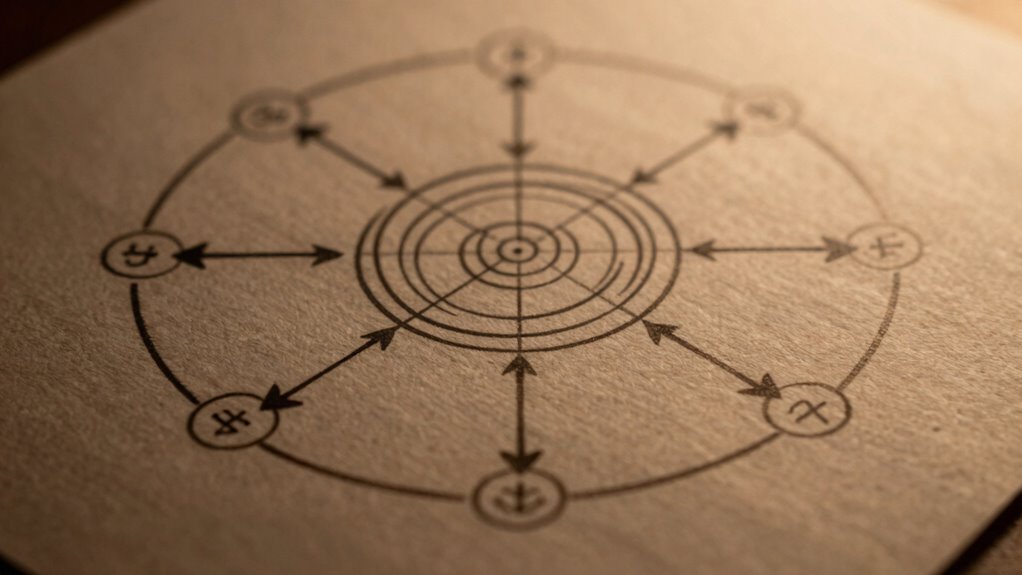
Have you ever wondered how the Enneagram’s interconnected dynamics influence your personality? It’s more than just knowing your core type; it’s about understanding how your type interacts with others and evolves over time. This understanding can help you develop a more balanced personality that adapts to different situations. This is where the concepts of arrows and wings come into play, adding layers of depth to your personality development and emotional intelligence. Your core type provides a foundation, but arrows and wings reveal the nuanced ways you grow and respond in different situations. They help you see how your personality isn’t static but a dynamic blend of tendencies that shift with experience, relationships, and self-awareness.
Understanding how your Enneagram type interacts with others and evolves over time deepens your emotional intelligence and personal growth.
Wings are adjacent types that sit on either side of your main type, influencing your personality with subtle traits that complement or challenge your core characteristics. For example, if you’re a Type 3, your wings could be Type 2 or Type 4, which bring different flavors to your personality. These wings shape how you express your ambitions, emotions, and interpersonal skills, making your personality richer and more adaptable. They also play an essential role in your emotional intelligence, helping you recognize and regulate your feelings while understanding others better. By exploring your wings, you develop a more nuanced self-awareness, which is indispensable for personal growth and building stronger connections.
Arrows are another key element, showing the directions you’re likely to move under stress or security. When you experience stress, you tend to adopt behaviors from the type opposite your main one; in times of growth, you shift toward a different, healthier aspect of another type. This movement influences your personality development because it encourages flexibility and resilience. For example, if you’re a Type 6, during stress, you might exhibit traits of Type 3—becoming more self-assured but also more competitive. In security, you might move toward Type 9, becoming more relaxed and accepting. Recognizing these shifts helps you understand your emotional responses and develop greater emotional intelligence, so you can manage your reactions more consciously. Understanding personality dynamics can enhance your capacity for empathy and adaptability in various situations.
Additionally, understanding these interconnected dynamics can help you become more aware of how your personality may adapt in various contexts, leading to greater self-awareness and empathy for others. Recognizing these patterns can also improve your communication skills and your ability to respond appropriately in different social settings. Together, arrows and wings deepen your understanding of yourself and others, making your personality more adaptable and authentic. They show that growth isn’t linear but involves exploring different facets of your personality, especially during challenging or transformative times. By paying attention to how your arrows and wings influence your reactions and behaviors, you can actively work on your emotional intelligence, fostering healthier relationships and a more balanced personality. Ultimately, embracing these dynamics enables you to develop a more complete, resilient sense of self—one that continues to evolve and flourish through ongoing self-awareness and personality development.
As an affiliate, we earn on qualifying purchases.
Frequently Asked Questions
Can Someone Have Multiple Wings or Arrows Simultaneously?
You can’t have multiple wings or overlapping arrows simultaneously, but you can find influences from neighboring types. Your primary wing is usually the one closest to your core type, while overlapping arrows indicate tendencies to move toward certain types under stress or growth. This dynamic adds depth, showing how your personality can shift slightly, but only one wing and set of arrows would be dominant in your Enneagram profile.
How Do Arrows Influence Stress and Growth in Types?
Arrows dramatically shape how your personality adapts under stress or growth, acting like a powerful compass guiding your emotional resilience and adaptability. When you move in the stress direction, you might become overwhelmed or defensive, revealing your vulnerabilities. Conversely, growth arrows encourage positive change, boosting your confidence and emotional strength. This dynamic interplay helps you understand your reactions better, making you more adaptable and resilient in life’s unpredictable challenges.
Are Wings Fixed or Can They Change Over Time?
Wings can change over time due to wing flexibility, meaning your dominant wing isn’t fixed and can shift with personal growth or life experiences. Arrow variability also influences your type’s expression, and sometimes your tendencies may lean toward a neighboring type’s wing. You have the capacity to explore different aspects of your personality, so don’t think of your wings as set in stone—they’re adaptable as you evolve.
Do Arrows Indicate Future Development Paths?
Think of arrows as signposts on your personality map, pointing toward potential development paths. They indicate possible future growth or integration, guiding your personality evolution. As you explore your developmental pathways, these arrows help you understand where you might expand or shift your traits. So, yes, arrows signal future development, offering insight into how you can evolve and grow within your type over time.
How Do Arrows and Wings Interact Within a Type?
Arrows and wings influence your personality dynamics by shaping how your type interacts with growth and stress, adding Enneagram nuances. Your wing provides subtle traits, enriching your core type, while arrows suggest potential movement toward neighboring types, revealing evolving aspects of your personality. Together, they create a layered understanding, showing how your core traits adapt over time and under different circumstances, making your Enneagram profile more thorough and nuanced.
Enneagram personality type guide
As an affiliate, we earn on qualifying purchases.
As an affiliate, we earn on qualifying purchases.
Conclusion
So, next time you’re stuck figuring out if you’re a “wing-wielding” or “arrow-aiming” type, just remember: it’s all about adding spice to your self-awareness stew. Whether you’re a fiery arrow or a gentle wing, these nuances make the Enneagram a little more fun—and a lot less boring. Embrace your quirks, and maybe, just maybe, you’ll stop taking yourself so seriously. After all, who knew self-discovery could be this entertaining?
Enneagram self-awareness journal
As an affiliate, we earn on qualifying purchases.
As an affiliate, we earn on qualifying purchases.
As an affiliate, we earn on qualifying purchases.
Fall Picks
fall essentials
As an affiliate, we earn on qualifying purchases.