TL;DR

Get privacy and security gear delivered free with Prime
- Fast, free delivery on millions of items
- Prime Video, Amazon Music and more included
- Member-only deals all year
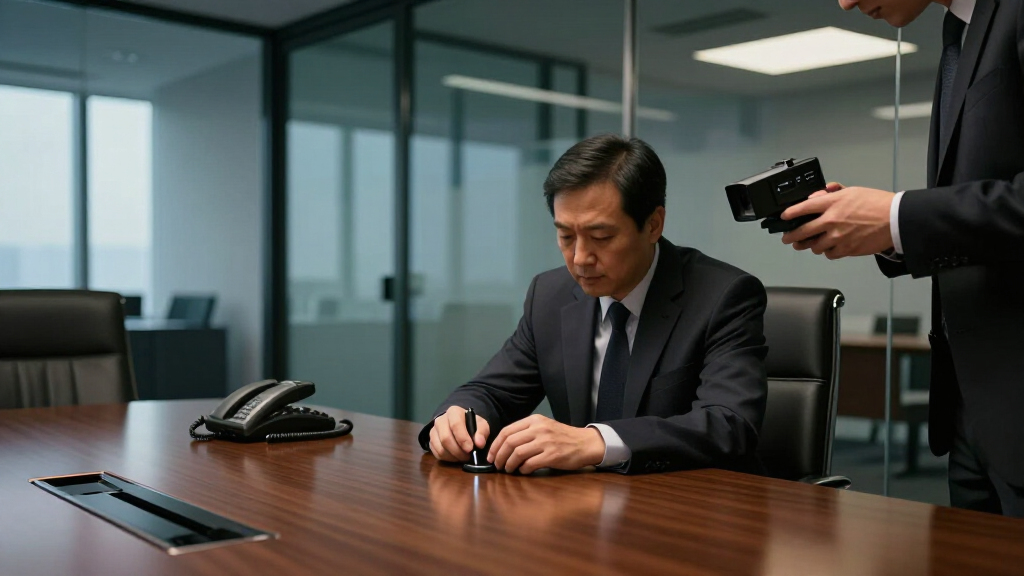
OpenAI engineer Abdulrahman Alfozan was arrested Friday and charged with using or attempting to use a device to intercept oral communications after a recording device was found in an executive conference room. Prosecutors allege he placed it there and cite a second device and related online queries; those allegations have not been proven in court. Alfozan remains in custody after his initial appearance Tuesday.
OpenAI engineer Abdulrahman Alfozan was arrested Friday and charged with using or attempting to use a device to intercept oral communications after a recording device was found in an executive conference room at the company’s San Francisco headquarters, federal prosecutors said. Alfozan, 35, remains in custody after appearing in federal court Tuesday; the allegations have not been tested at trial.
According to the criminal complaint, OpenAI personnel found the device on September 30, connected to a USB port behind a television and concealed in toilet paper. The company determined it had been installed around September 28. Prosecutors said its contents were encrypted. Court filings identify the device as a Seeed XIAO ESP32-S3 Sense, a small development board with a digital microphone and microSD storage.
Prosecutors allege that surveillance footage showed Alfozan near the conference room on multiple dates, although he was not authorized to enter it or attend meetings there. They also say he used a productivity tool to seek information about OpenAI offices, meeting rooms, calendars and the locations of leadership and outside-partner meetings. A chatbot account tied to his spouse, which prosecutors say shared identifiers with Alfozan’s account, submitted prompts from September 24 to 30 about building, concealing and remotely accessing a recording device.
The complaint describes another device found in an unattended bag left in a printer on October 5. Security personnel found Alfozan’s wallet and identification inside, along with a recording device that OpenAI later examined. The FBI affidavit says it had a recording microcontroller and was customized to obscure stored data. When Alfozan retrieved the bag the next day, the device was no longer inside, prosecutors allege. He reported other items missing but, according to the affidavit, did not mention the device.
Security Risks for OpenAI Research
The alleged recording attempt concerns meetings that prosecutors say regularly covered confidential technical, commercial and strategic information, including proprietary research, product plans and government engagements. If established, the conduct could expose sensitive company discussions and raise questions about access controls and protection of valuable AI work. The complaint does not establish that any meeting audio was captured, recovered or shared.
The case also brings federal counterintelligence attention to security at a prominent AI company. U.S. Attorney Craig Missakian described the matter as a national-security issue, while FBI officials said protecting sensitive research and U.S. AI innovation is a priority. Those statements reflect the agencies’ assessment; the charge against Alfozan remains an allegation, and prosecutors must prove it in court.
OpenAI said its technical surveillance countermeasures team found the device during a conference-room sweep. The company also said it used its AI models to help identify the device and analyze forensic images of its storage. The account shows how an employer may combine physical security checks and technical analysis after a suspected intrusion, but the available material does not establish what data, if any, was recorded.
As an affiliate, we earn on qualifying purchases.
From Device Discovery to Arrest
OpenAI said it referred the matter to the FBI after discovering the device. The company said it coordinated the timing of Alfozan’s termination with the bureau to avoid disrupting the investigation. According to OpenAI, it progressively restricted his access to systems and spaces between September 30 and his arrest, then suspended his physical and network access, placed him on leave and secured company equipment. The company said he was terminated Friday.
Prosecutors say Alfozan had worked as an engineer at OpenAI since July 2025 and had been a U.S. lawful permanent resident since September 2020. The complaint alleges that the chatbot account submitted questions about a specific device later found by investigators, including on September 27 and 28. Those prompts and the account’s relationship to Alfozan are evidence prosecutors cite; they do not by themselves establish who entered the prompts or what was done with any recording.
The federal charge is using or attempting to use a device to intercept oral communications. Prosecutors said a conviction could carry up to five years in prison, a $250,000 fine and three years of supervised release. Those are maximum potential penalties reported in the source material, not a sentence or finding of guilt.
““For us it is a matter of national security.””
— U.S. Attorney Craig Missakian
As an affiliate, we earn on qualifying purchases.
What Investigators Have Not Established
Alfozan has been charged, not convicted, and the source material does not report a plea or trial outcome. It remains unclear whether the device recorded any conversations, whether any audio was retrieved or transmitted, and whether anyone outside the company accessed data. Prosecutors say the device’s contents were encrypted, while OpenAI described capabilities it said were designed to transfer data discreetly.
The allegations about the second device, online prompts and Alfozan’s movements are drawn from a complaint, affidavit and statements by investigators and the company. The source material does not include a response from Alfozan or his lawyer. OpenAI said it had evidence that he intended to place other devices in sensitive spaces, but details supporting that assertion were not provided in the report.
microphone for microcontroller projects
As an affiliate, we earn on qualifying purchases.
As an affiliate, we earn on qualifying purchases.
Federal Case Moves to Court
Alfozan remains in custody following his initial appearance in federal court Tuesday. The case is being prosecuted by the National Security, Cyber & Special Prosecutions Section of the U.S. attorney’s office for the Northern District of California. The source report did not specify a next hearing date, whether prosecutors will seek additional charges, or when further filings may be made.
Further court proceedings are expected to clarify the evidence, the status of the devices and whether investigators believe any communications were intercepted. Until evidence is presented and tested in court, the central claims remain allegations.
As an affiliate, we earn on qualifying purchases.
Key Questions
Who was arrested in the OpenAI conference room case?
Abdulrahman Alfozan, a 35-year-old OpenAI engineer, was arrested Friday, according to federal prosecutors. He remains in custody after his initial appearance in federal court Tuesday.
What are prosecutors accusing him of doing?
He is charged with using or attempting to use a device to intercept oral communications. Prosecutors allege a recording device was concealed behind a television in an executive conference room and cite a second device found in a bag.
Was a recording of an OpenAI meeting confirmed?
No. The report says the device’s contents were encrypted, but does not establish that conversations were successfully recorded, recovered or shared.
Has Alfozan been convicted?
No. He has been charged, and the allegations have not been proven in court. The source material does not report a plea or trial outcome.
What could happen if he is convicted?
Prosecutors said the charge carries a potential maximum of five years in prison, a $250,000 fine and three years of supervised release. These are possible penalties, not a sentence.
Source: hn
Halloween Picks
halloween
As an affiliate, we earn on qualifying purchases.